









Unique archaeological finds in and around the Waaldijk
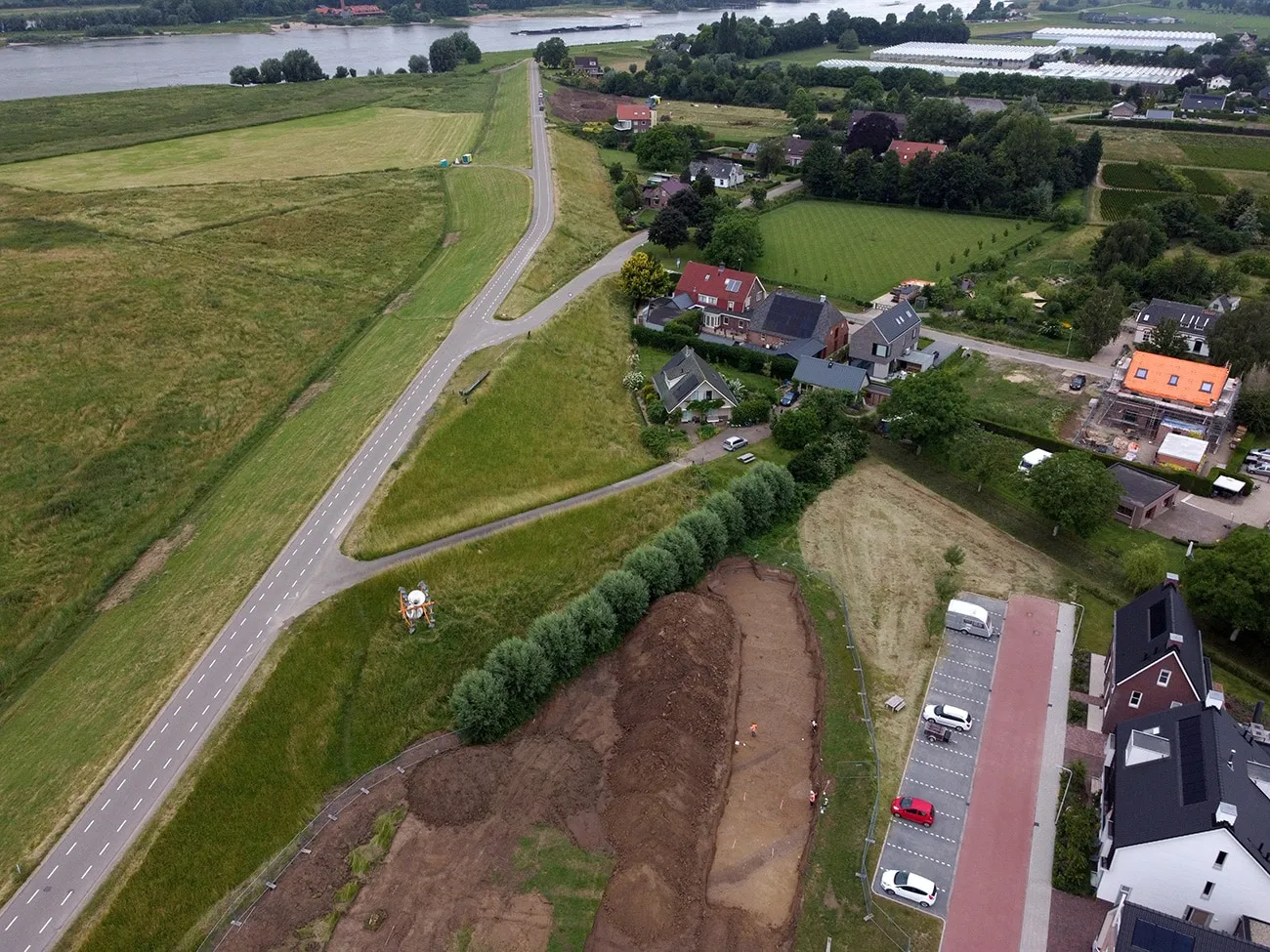
To ensure the Waaldijk reinforcement works progress as smoothly as possible, construction consortium De Betuwse Waard has incorporated archaeology as an integral part of both the design and the construction work. This is just as well, because the ground in and around the Waaldijk is proving to be extremely valuable from a historical perspective. Archaeological research and consultancy firm RAAP has already secured several unique archaeological objects, including remains of major infrastructure projects from Roman times.
RAAP is the largest archaeological and cultural heritage research and consultancy firm in the Netherlands. “We have been involved in the project since the planning stage,” says project manager Eric Norde. “The great thing about the construction consortium is that it treats archaeology as a serious subject rather than a necessary evil. Commissioning archaeological research is a government requirement and, in this case, a requirement of Waterschap Rivierenland too, but there are still different ways of approaching it. The consortium regards it as an integral part of the project and its schedule. This prevents surprises and unforeseen delays during construction.”
Archaeologically responsible design
By asking RAAP to take a look at the design during the planning phase, potential issues can be identified in good time. “In our field, we archaeologists also play an advisory role, among other things. For example, we look at whether it is possible to dig slightly less deep in certain areas and avoid archaeological investigation. That may sound a little contradictory,” Norde acknowledges. “But the principle underpinning Dutch legislation is that archaeology should be preserved wherever possible. On the one hand, it is a matter of cost, but on the other, objects have been underground for hundreds or thousands of years; that is often the best way to preserve them. What is more, research methods are advancing rapidly, and even better techniques will become available in the future. Together with the client and the construction consortium, we therefore aim to arrive at a design that is as efficient as possible and archaeologically responsible. That has been achieved exceptionally well here.”
Infrastructure dating back 2,000 years
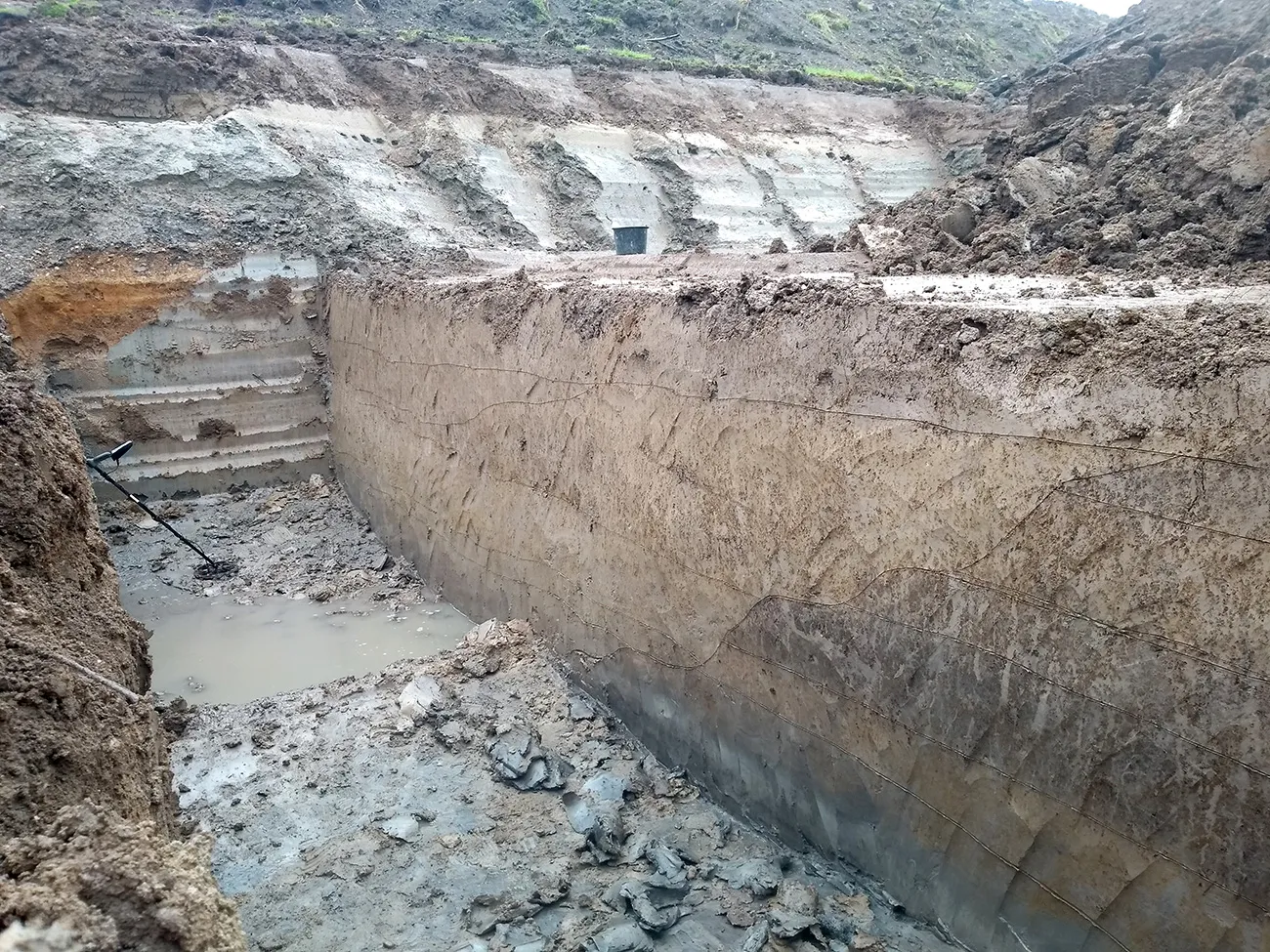
More than two years ago, RAAP carried out fieldwork to identify sites of interest. “Based on the results of numerous hand auger surveys, we mapped several sites of archaeological value,” Norde explains. “At sites where we suspected the archaeology might be damaged, we investigated further below ground. This led us to excavate a number of trial trenches between Wolferen and Sprok from March 2021, and we immediately found a great deal. For example, we discovered a rare Roman road running from Nijmegen towards the west of the country. It appears to have been one of the main roads in Roman times. This is the first time such a find has been confirmed in the eastern river area.
The route consists of a cambered gravel road with a wide drainage ditch on either side. The Roman army used it to move quickly. From the same period is an 11-metre-wide canal, which attracted international attention, that we exposed over a length of 60 metres. It may once have connected the Waal and the Rhine. A similar bypass is known in the Westland between the Maas and the Rhine, but not in the eastern river area. We hope to trace the canal further in the future using boreholes. It is quite remarkable that the current dike reinforcement project is uncovering the remains of infrastructure built 2,000 years ago!”
Medieval skeleton
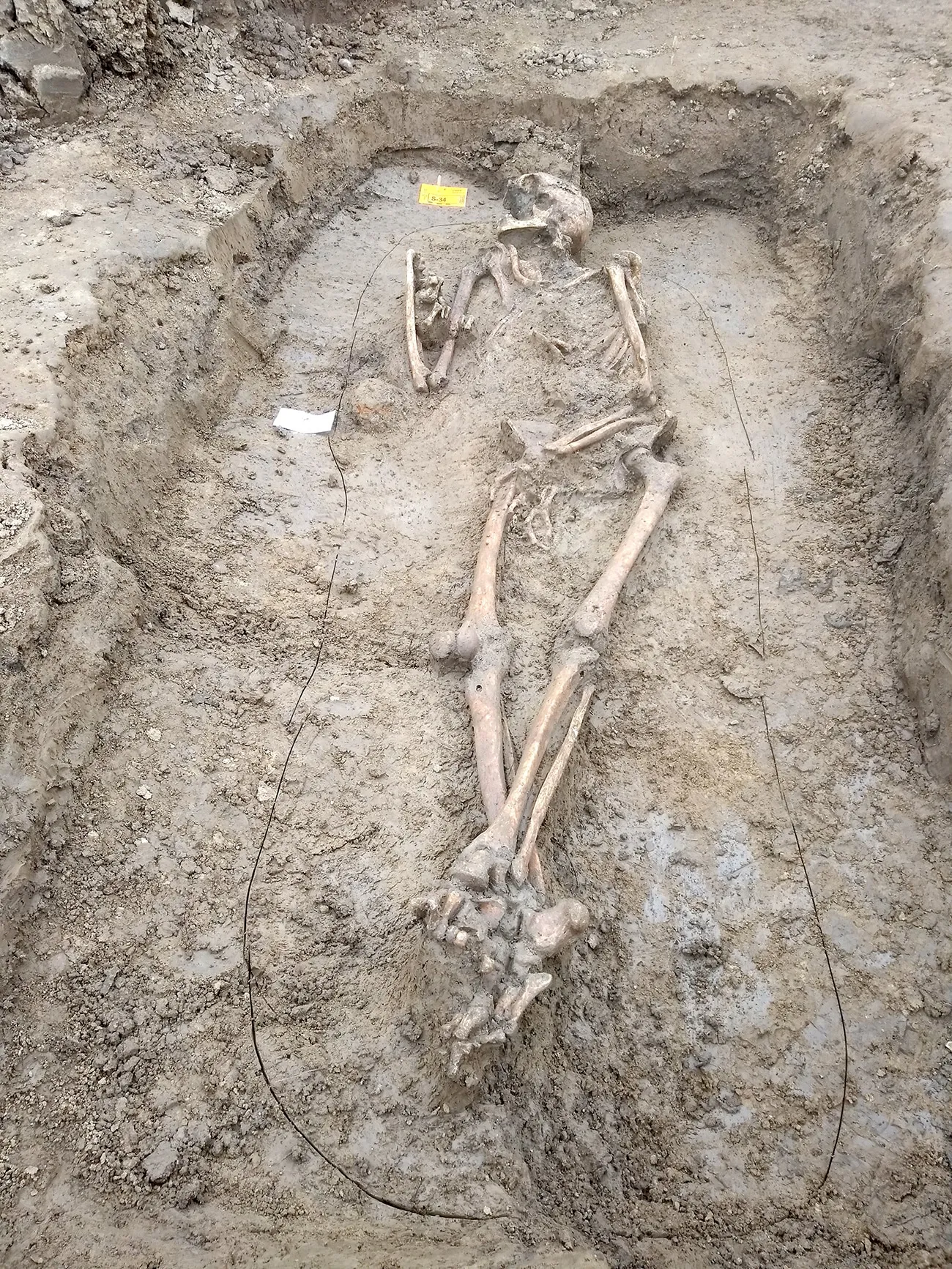
The many remarkable objects found by RAAP show that the area around the Waaldijk flourished in Roman times. “Although we were working in the shadow of Nijmegen, which was already an important city in Roman times, we expected to find a simple farming community. That assumption does not seem to be entirely correct. Apparently, wealthier people also settled alongside the road and canal at the time, as shown by the more luxurious objects discovered, such as a small statue of a god, oil lamps and five styli. Such finds are not generally seen in an ordinary farming community.” RAAP also found a skeleton from the time of Charlemagne at a depth of just 1 metre. “Graves from this period are rarely found. More research is needed to establish the precise date. Another interesting find, although entirely different and much more recent, was the remains of a so-called T-shaped farmhouse from the 17th century, discovered in Oosterhout. This is particularly interesting for local residents. It is familiar to them and provides a strong link with their surroundings. The construction consortium understands this very well and is involving the local community closely in these fascinating finds, so that people experience more than just the disruption caused by the project.”
The many archaeological finds are further proof of the area’s exceptionally rich history. “It is all the more remarkable because this is happening in a narrow strip immediately alongside a dike that has stood there for a thousand years. It is a pleasant surprise that all this archaeology has been preserved, and credit goes to the construction consortium for securing it without further delays and for taking our work extremely seriously. That makes for a very positive experience for everyone.” RAAP is currently studying the finds in detail. The team has two years to complete the work, after which the finds will be transferred to the provincial depot in Nijmegen.
Question about this story? Ask your question
Keep following this
Get an email when a new story is published. No account needed.
- SubjectNews







