









Timber ‘Blauwe Loper’ connects Groningen residents
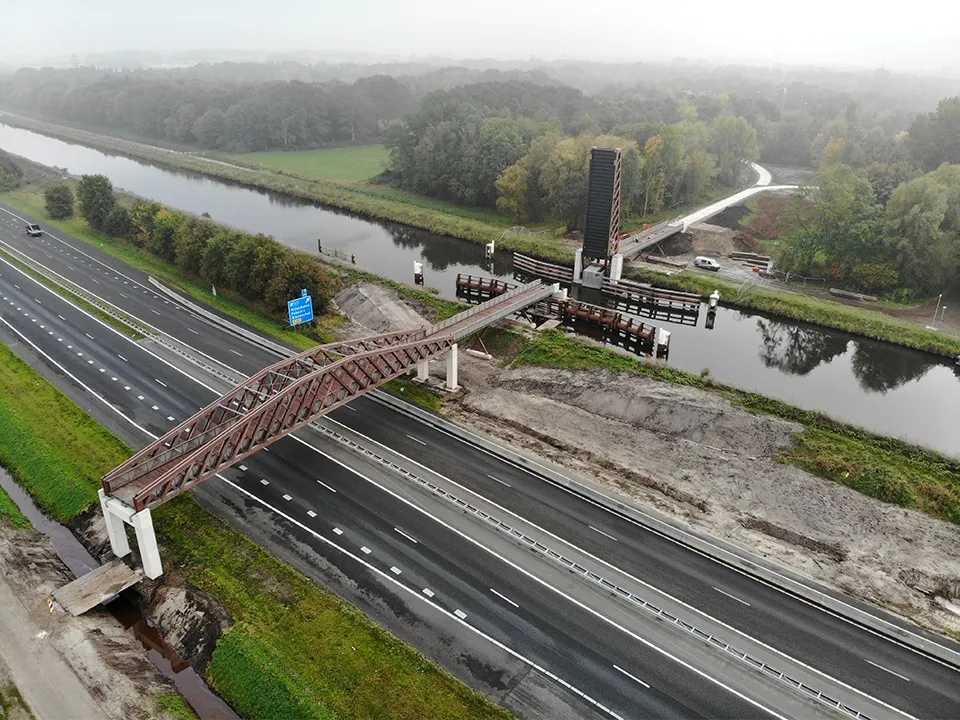
Everyone knows a red carpet, but what is the Blauwe Loper? It is Europe’s longest cycle bridge, a trendsetter in its field for sustainability.
The structure is 800 metres long and links Winschoten with the new residential area of Blauwestad. The material used tells a remarkable story, one that goes beyond the bridge itself.
Sustainability was an important element in the tender criteria for the Blauwe Loper. The use of timber naturally has many advantages, but questions remained about whether the material could meet the required performance standards. The Province of Groningen and the Municipality of Oldambt, the clients for the project, therefore carefully assessed whether timber could realistically play such a prominent role. Alongside this assessment of performance, the life cycle analyses (LCA) and other sustainability aspects of the materials to be used were also examined. The decision was ultimately to build with as much timber as possible, in order to meet both the performance and sustainability requirements.
Building bridges
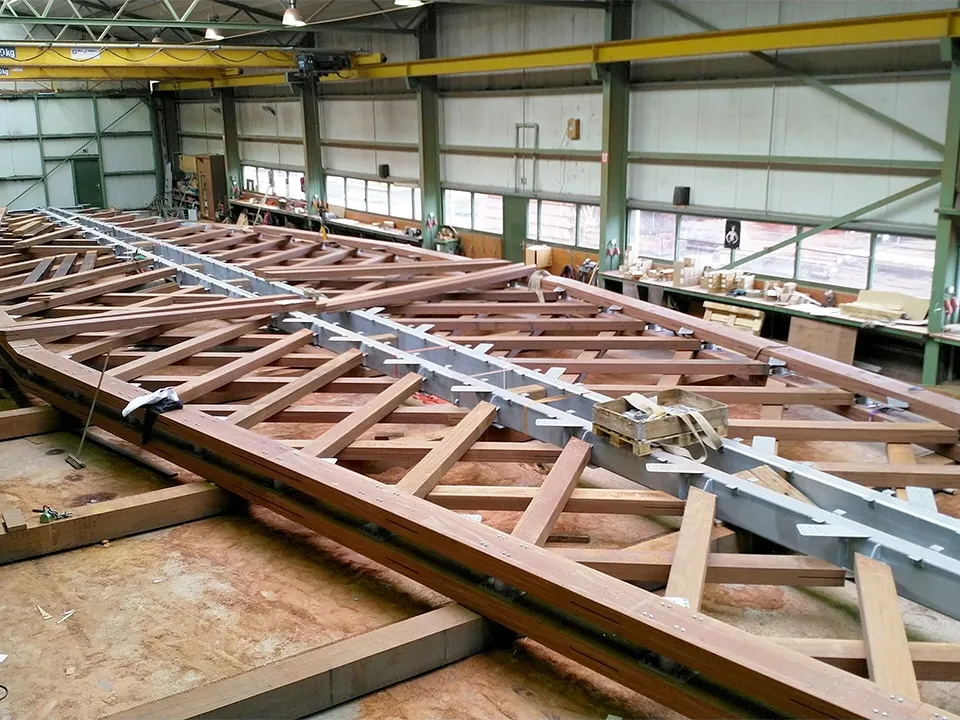
All parties were involved in the design phase, including the architect, the clients and the contractors. They faced an impressive challenge: the project involved a number of large timber elements, including a span over the A7 (42 metres clear span, weighing 92 tonnes) and a bascule bridge combining timber and steel. The many bridge sections were installed in sequence on timber trestles, with concrete foundations beneath them in the water. After almost a year, the final design was approved. The plans were then ready for the 800-metre-long ‘Blauwe Loper’, which crosses the Winschoterdiep, the adjacent A7 and the Oldambtmeer.
A hybrid mix
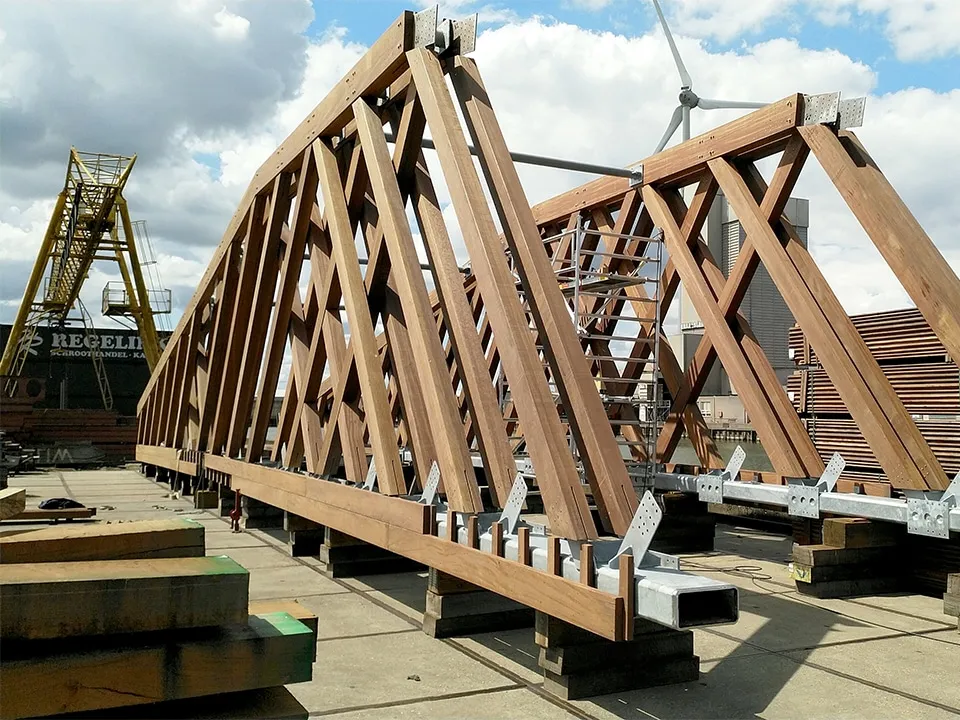
The entire superstructure and the timber trestles were prefabricated in Kampen by Wijma using FSC-certified azobé hardwood, then installed on site under the supervision of GertJan Schuurman. The bascule bridge is mostly steel, clad in azobé and featuring structural timber diagonals. It is a modern hybrid mix, with a timber appearance that fits perfectly with the original concept for the Blauwe Loper. Work on installing the superstructure began after the summer, so the first cyclists and pedestrians can cross the bridge by the end of this year.
Sustainable, tropical and certified
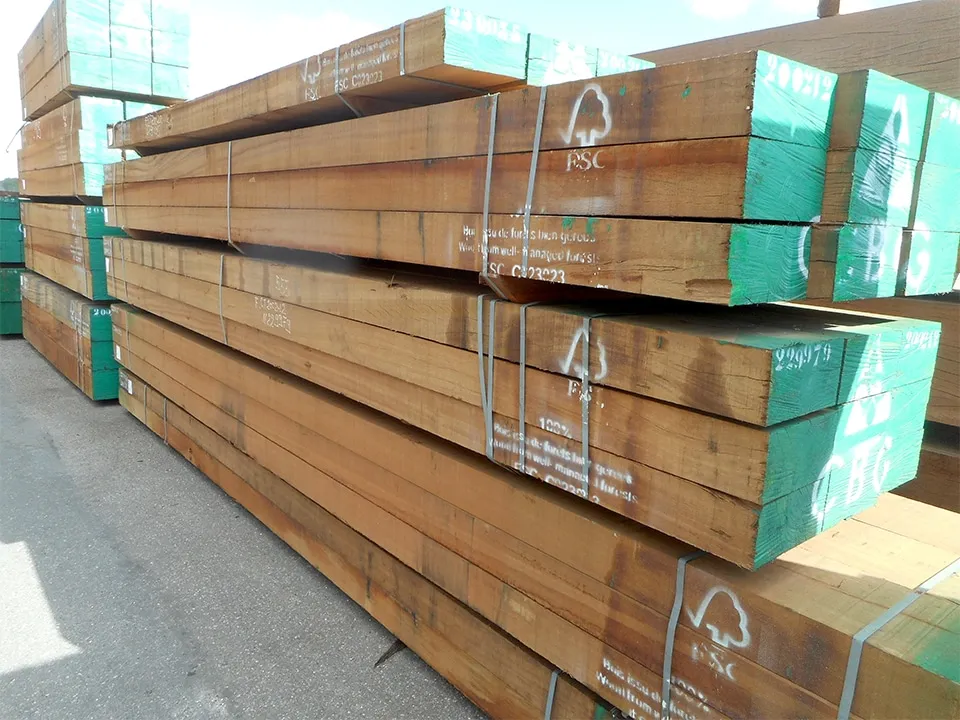
The timber used in the project comes from sustainably managed forests in West Africa (Gabon and the Republic of the Congo). Mark Kemna: “This means harvesting is highly selective. On average, one tree is felled per hectare, after which that part of the forest is left undisturbed for thirty years. That is where the protective value of sustainable forest management lies: harvesting and using that one tree ensures that the surrounding forest remains standing and cannot be cleared for, for example, an oil palm or soya plantation.”
Impressive
“In short, the Blauwe Loper project is impressive because so much timber has been used in a unique way. But let’s not forget that the story behind it, about the timber’s origin, is every bit as remarkable.”
About sustainable forest management
Sustainable forest management involves first assessing how much timber can responsibly be felled, after which the forest is left undisturbed for a specified period so that its flora and fauna remain intact and the remaining trees can continue to grow.
An important principle of sustainable forest management is to look beyond the timber itself. Forests provide vital ecosystem services, such as capturing CO2 and producing oxygen, and they also affect water management and air quality. Preventing erosion, for example, is another important function of forests.
The United Nations estimates that 1.6 billion people worldwide depend on forests for some of their food supply or for other products and services, such as medicines, raw materials, ecosystem services or part of their livelihood. Under sustainable forest management, local people retain a say in what happens to the forest, while timber production also provides employment.
The greatest threat to forests is their conversion to other forms of land use, often agriculture to meet growing demand for agricultural products such as palm oil, rubber, cocoa, soya and meat. By giving forests economic value through timber production, the risk of deforestation is greatly reduced.
Given the enormous construction challenge facing the Netherlands, with 75,000 new homes to be built each year from 2020 to 2025, there is a major opportunity to use more timber. Demand for certified forest products is crucial to expanding sustainable forest management. Under the Covenant for the Promotion of Sustainable Forest Management, various parties, including government, trade unions, civil society and trade associations, work together to promote sustainable forest management. They see stimulating demand for timber from sustainably managed forests as an important way to reduce the risk of deforestation. Would you also like to switch to demonstrably sustainable timber for your project? Find out more at www.inkoopduurzaamhout.nl.
Question about this story? Ask your question
Who worked on it
Blauwe Loper in Oldambt
- clientProvince of Groningen
- clientGemeente Oldambt
Keep following this
Get an email when a new story is published. No account needed.
- ProjectBlauwe Loper
- SubjectNews
- CompanyProvince of Groningen
- CompanyGemeente Oldambt







