









Timber and the environment
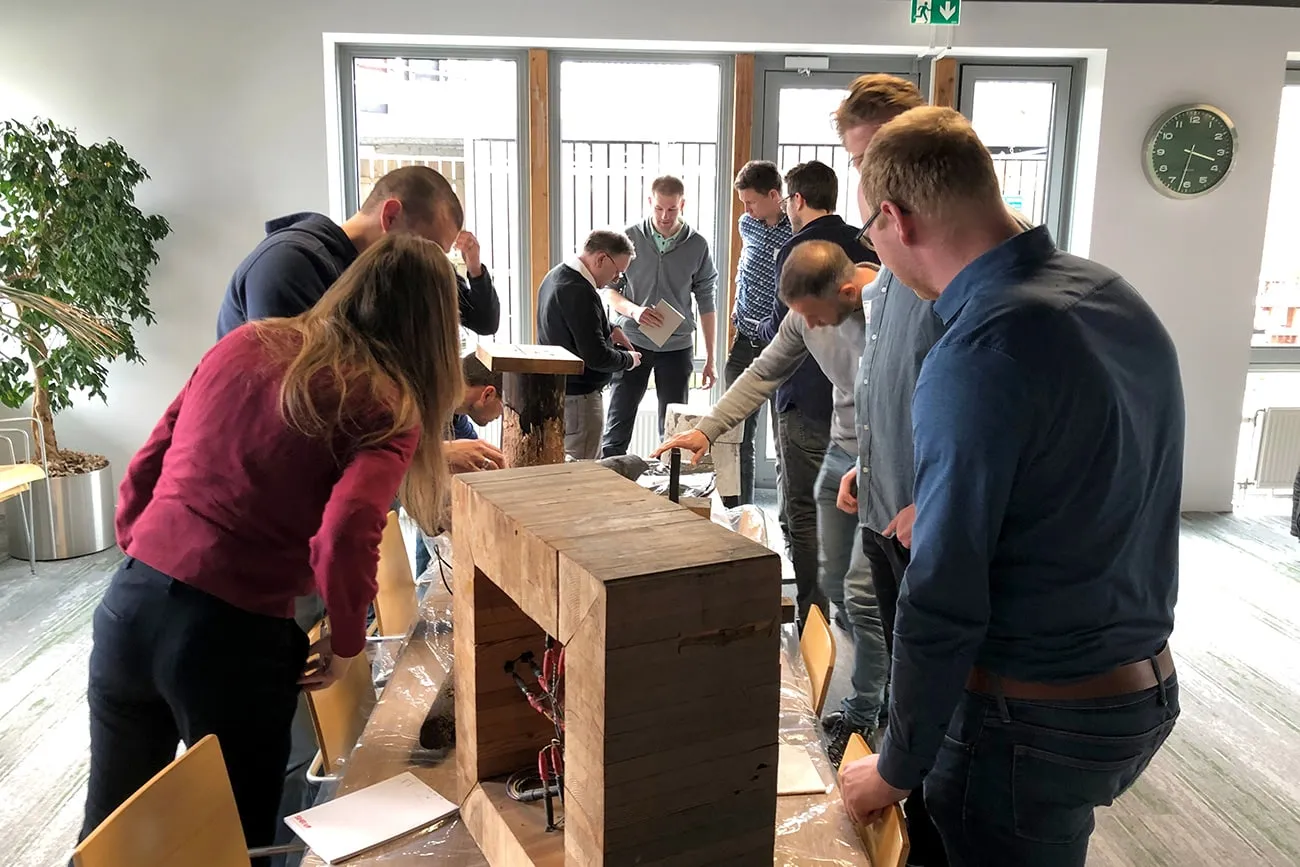
Timber needs to be processed by people with the right expertise. And that expertise is not always available. So says René Klaassen, scientist and timber expert at SHR. “As a result, timber is often unfairly portrayed in a negative light in environmental debates. Even the model used by the National Environmental Database, which is widely used in civil engineering and infrastructure, is flawed.” With a current programme of six technical courses, SHR is helping to ensure the steady expansion of timber use in infrastructure and the built environment.
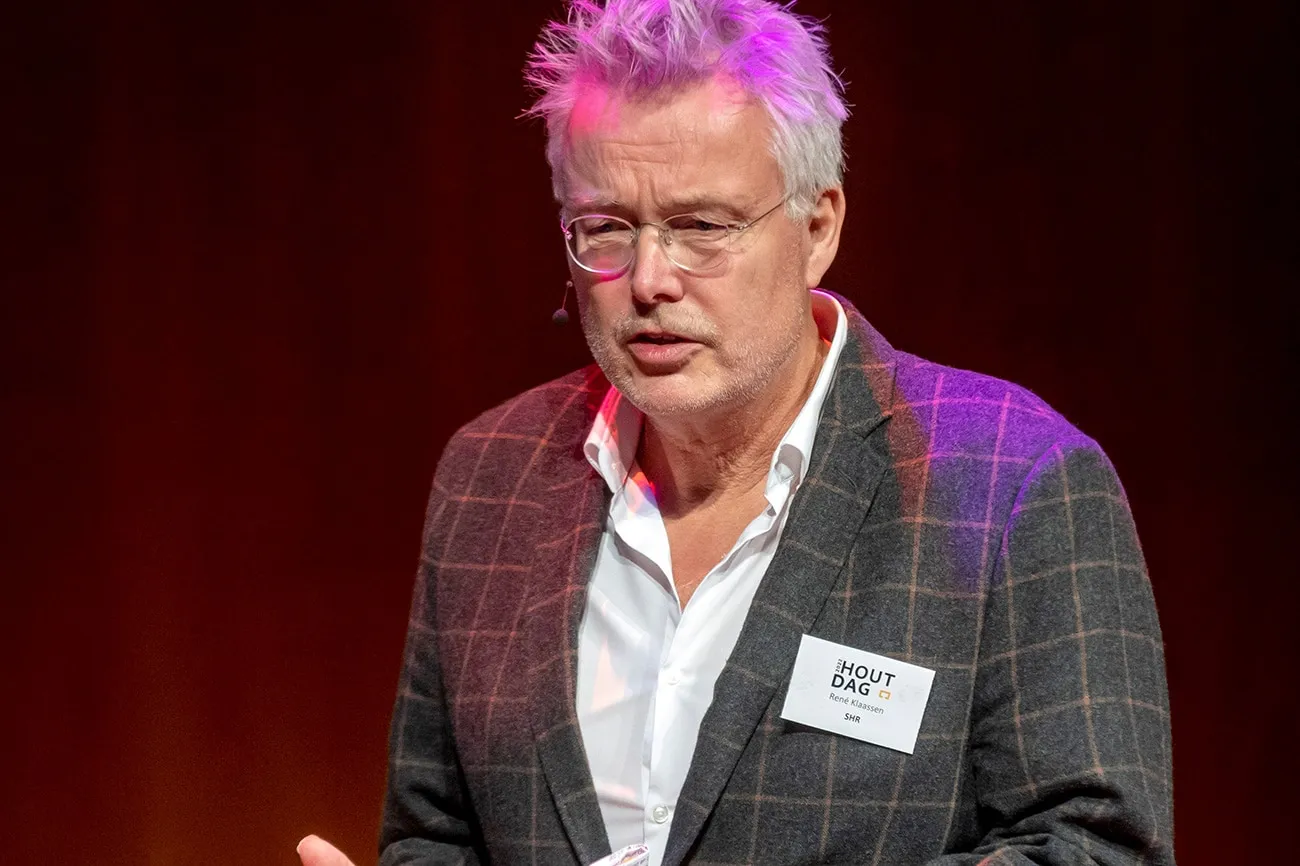
We live in an era in which the environment receives a great deal of attention, Klaassen acknowledges. “Discussions about nitrogen and CO2 emissions are in the media every day. The aim is to achieve a circular economy by 2050. Everyone has something to say about it, and even producers of polluting materials are ‘happily’ jumping on the bandwagon. Whether they actually act on it is increasingly open to question. Timber is also misrepresented in this debate. It is inherently a very environmentally friendly, renewable resource, but this is not always adequately reflected in the calculations used by the National Environmental Database, for example. Producers of polluting materials are only too happy to exploit this to make their own materials appear ‘clean’. In our view, that is outright greenwashing!”
Consumable resource
Timber is a wonderful, environmentally friendly material. “If it is produced properly, it does not burden the land. In fact, we need forests. They are good for biodiversity, and they retain fine particulate matter and water,” Klaassen stresses. “The idea that using timber always leads to deforestation is nonsense. There are well-managed production forests, and forests are being established that serve multiple purposes, combining timber production with other forest functions. In European forests, less is harvested than grows back. In that sense, timber use does not have to be circular, and timber can be seen as a consumable resource. Circularity is essential only for finite resources, where the material must be recovered and reprocessed. And that is where things often go wrong, because many companies reuse materials in lower-grade applications. That is not circular. The plastic soup may be the best-known example. The collection and reprocessing of finite resources are being deferred to the future. The aim should be to use less new material and reprocess everything into the original, clean raw material.”
Challenging the nonsense
Given the arguments above, you might expect timber to score extremely well in environmental calculations. Nothing could be further from the truth. “The timber sector is really struggling with this,” Klaassen says. “That is why we at SHR have taken up the challenge and started carrying out environmental calculations ourselves, to get a better feel for how the system works. We were astonished time and again by what we found. There is still a great deal to improve before the calculations give an accurate picture of reality. We keep sharing our findings with people in the sector so they can take action at policy level. This is also one of the reasons we have put together a programme of six technical courses on the use of timber in construction and infrastructure. The aim is to galvanise the timber sector, get it speaking with one voice and challenge all the nonsense being spouted in a consistent way.”
Klaassen argues that calculations should not assign an environmental burden to renewable resources that can be replenished. “This is also an important issue for timber use in civil engineering and infrastructure,” he says. “You cannot simply pull up a timber sheet-pile wall and reuse it elsewhere. Is it still just as strong and durable? That requires a fair amount of research. And that is something we at SHR are working on too. We provide training based on the knowledge we develop. We are currently carrying out an in-depth analysis of the process of decay in timber piles, which could lead to a new preservation technique and save us billions of euros!”
Question about this story? Ask your question
Keep following this
Get an email when a new story is published. No account needed.
- SubjectNews







