









The search for unexploded ordnance
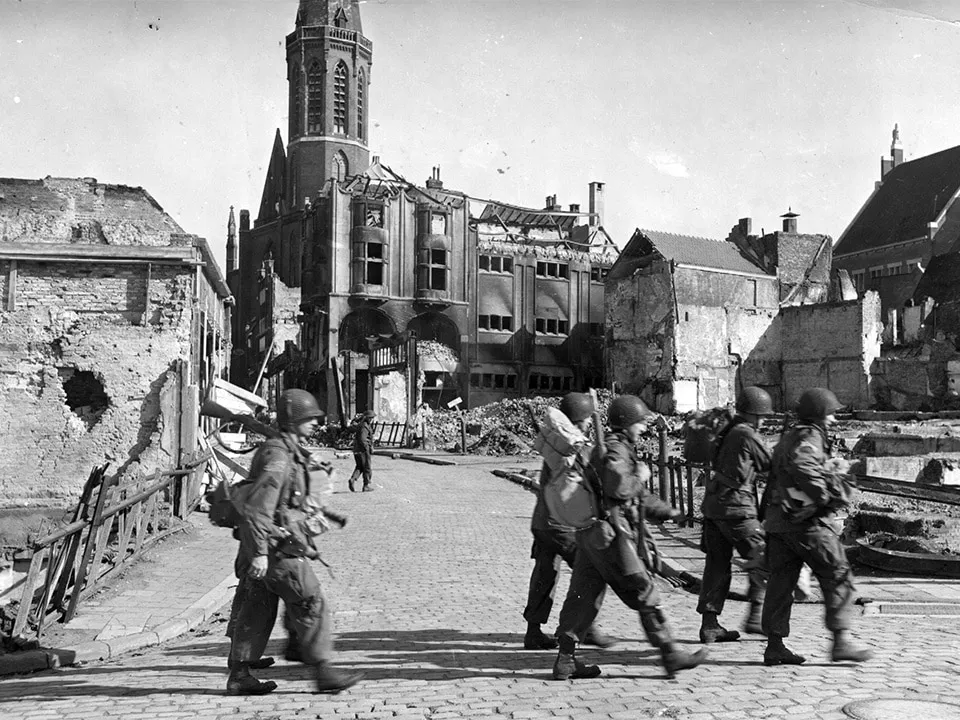
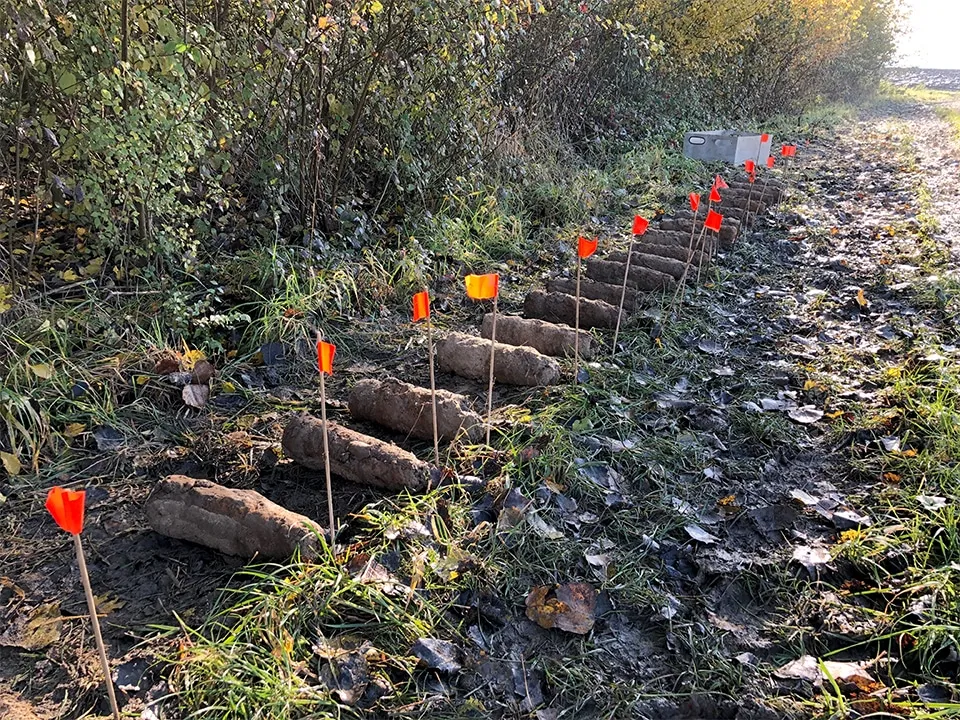
Every year, 2,500 items of unexploded ordnance (UXO) from the Second World War are still found in the Netherlands. Some are discovered by chance, forcing construction projects to be halted at short notice.
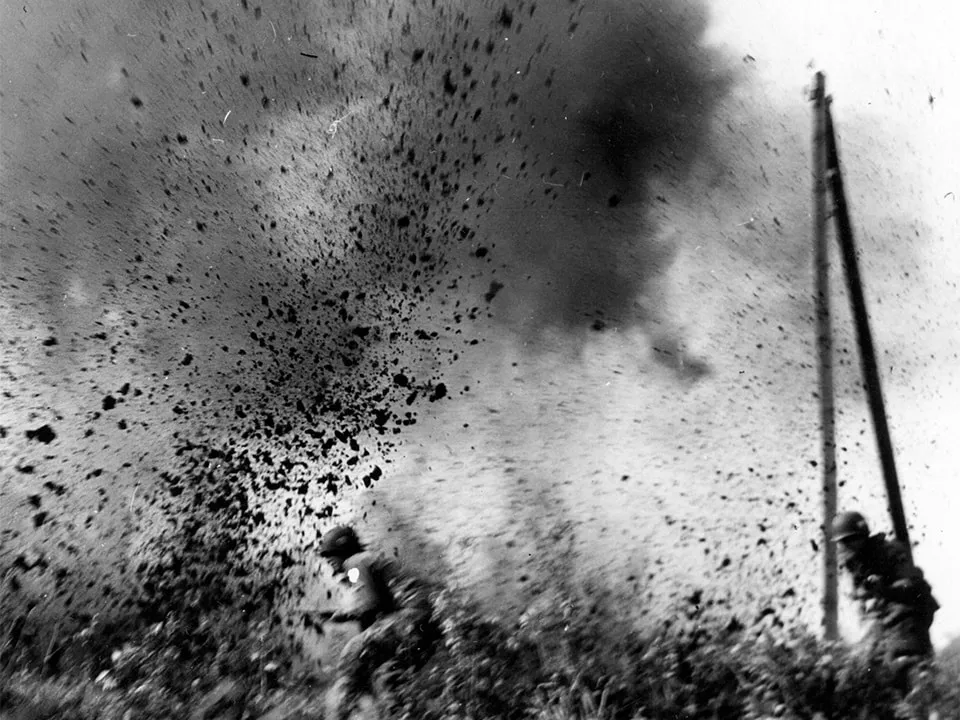
Artillery shells, rockets or aircraft bombs: when ground-disturbing work is carried out in an area where explosives are still present in the soil, there is a risk of uncontrolled detonation. “That’s something you don’t want to experience,” stresses Hans Smulders, director of Bombs Away and senior explosives detection adviser. “You want to know where to expect explosives and how to rule out the risks in advance.”
Bombs Away is based in a listed building on Utrecht’s Maliebaan. The building has a turbulent history. During the Second World War, it housed the Sicherheitspolizei, which was closely linked to the German occupiers’ secret intelligence service, the Sicherheitsdienst. History is palpable in the rooms, and can also be seen in the large ‘Strike Photos’ on the walls, taken during Allied air raids. Mapping and documenting wartime events is therefore part of everyday work here. Every detail can help to map and trace unexploded ordnance.
Explosives still being found
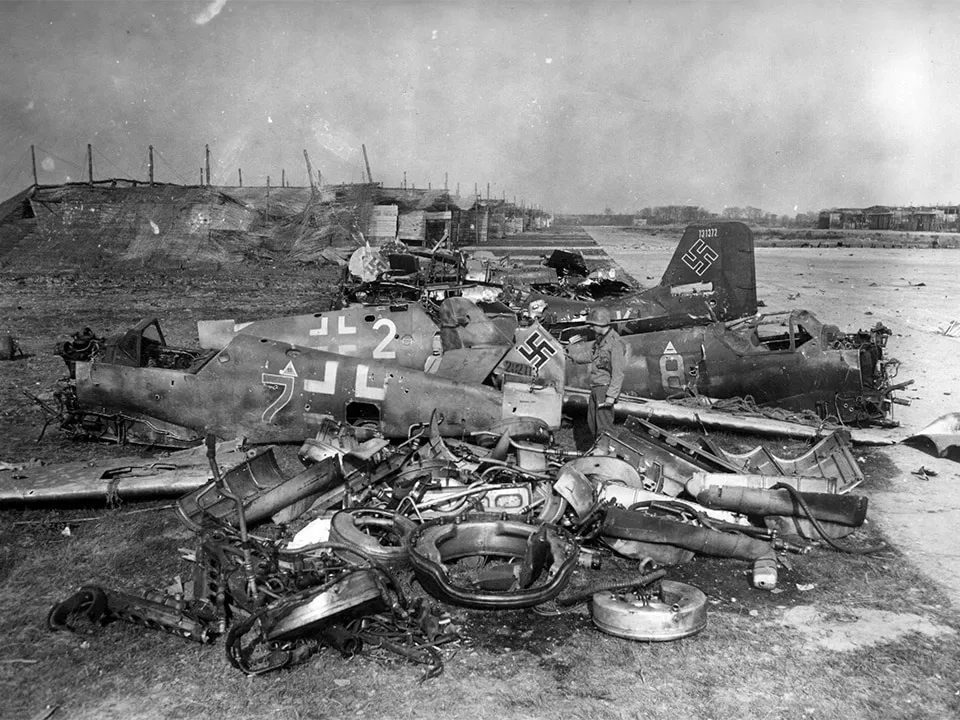
Although the Second World War ended more than 75 years ago, unexploded ordnance is still being found in the ground in the Netherlands. Until the late 1990s, the detection and clearance of explosives was the exclusive responsibility of the Explosieven Opruimingsdienst (EOD). Later, private companies were also permitted to carry out explosives detection. However, the destruction of the recovered ordnance remained the responsibility of the EOD.
Historical preliminary investigation
A key part of Bombs Away’s work is conducting historical preliminary investigations. These involve consulting Dutch and foreign archives, analysing aerial photographs and locating eyewitnesses, with the aim of identifying sites where there is an increased risk of finding unexploded ordnance. “It’s an intensive process,” says Maxim Kuiten, project manager and adviser at Bombs Away. “Hundreds of aerial photographs were taken of some bombing raids. We have to compare them to interpret even the smallest details correctly. Sometimes it’s a simple calculation. If an archive records that six bombs were dropped, but the aerial photographs show only five craters, you know the count hasn’t yet reached zero.”
Eyewitness interviews
Some investigations involve interviewing eyewitnesses. “We sometimes spend several hours with a witness,” explains Linda Hofland-Timmers, Risk Analysis project manager. “Even if the information we’re looking for could be shared in a minute. But if someone is willing to help us, we give them plenty of time to tell their story. They are an important source of information for us, helping to make our investigation that little bit more accurate.”
Independent consultancy
Bombs Away’s approach is unique. “We determine whether unexploded ordnance is present solely on the basis of historical sources,” says Smulders. “If the sources consulted indicate that there is an increased risk of unexploded ordnance in the ground within a project area, we provide tailored advice. The next steps, such as carrying out detection, are handled by other parties. This allows Bombs Away to remain independent and gives us a unique position in the market.”
Risk analysis
If there are suspected areas within the project boundary, Bombs Away sometimes recommends a risk analysis. Kuiten explains: “We do this when we expect post-war activities, such as construction, excavation and/or raising ground levels, to have affected the situation with regard to explosives in the soil. We then map the ground-disturbing work carried out in the area since the war. For example, we may discover that a projectile is present but safely covered by a six-metre-thick layer of soil. In that case, the analysis shows that the contractor faces no risk.”
Knowledge and expertise
The archive Bombs Away has been building since 2011 has now grown to an impressive size. Large, tall walls are lined with books on specific areas in the Netherlands and abroad, wartime events and geography. And that’s not to mention the material stored digitally. “A lot of information is already second nature to our staff,” says Smulders. “Over the years, they have carried out many preliminary investigations into explosives. As a result, they have a wealth of knowledge and expertise, not only to conduct preliminary investigations but also to give clients the right advice.”
No standard investigations
Whether large or small, Bombs Away’s investigations are never standard. One example was in Tilburg in December 2020, where the company carried out an explosives investigation in a development area. “We conducted the preliminary investigation, carried out the risk analysis and organised the field detection work for the client,” says Kuiten. “In that case, we took full responsibility. We provided site management, selected the specialist companies and handled communications with the landowners. A project team was set up with representatives from, among others, the EOD, emergency services and RWS. We prepared the clearance in detail and managed traffic within a 600-metre radius. But however sure we were of our findings, I didn’t sleep a wink the night before, and my heart was pounding when the fuzes were removed from two colossal aircraft bombs.”
Even so, Kuiten says this would never prompt him to look for another job. “The great thing about this work is that you keep growing. You’re constantly exposed to new areas of knowledge. When piling caused too much vibration at one site, I learnt about bored piles. In the same way, I’ve gained insight into solar panels, sewer systems and asphalt surfacing. It also calls for diplomacy. It’s rewarding to guide everyone involved through the process with as little disruption as possible, then assure them that they can safely continue with their project.”
Question about this story? Ask your question
Keep following this
Get an email when a new story is published. No account needed.
- SubjectNews







