









The power of the ‘flat jack’
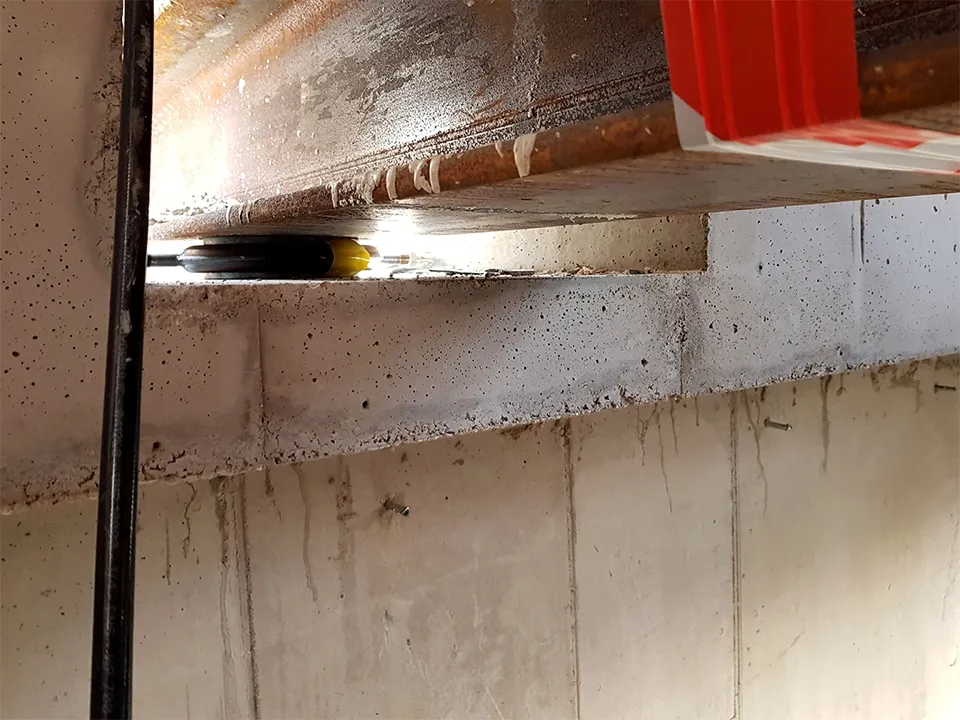
Traditional jacking techniques are often labour-intensive and require heavy equipment and costly temporary works.
There are also situations where there is not enough space to install traditional jacks. In all these cases, and many others, the flat jack proves its worth. We speak to Jurgen Jochims, director of Tebecon | Freyssinet, about the power of the flat jack.
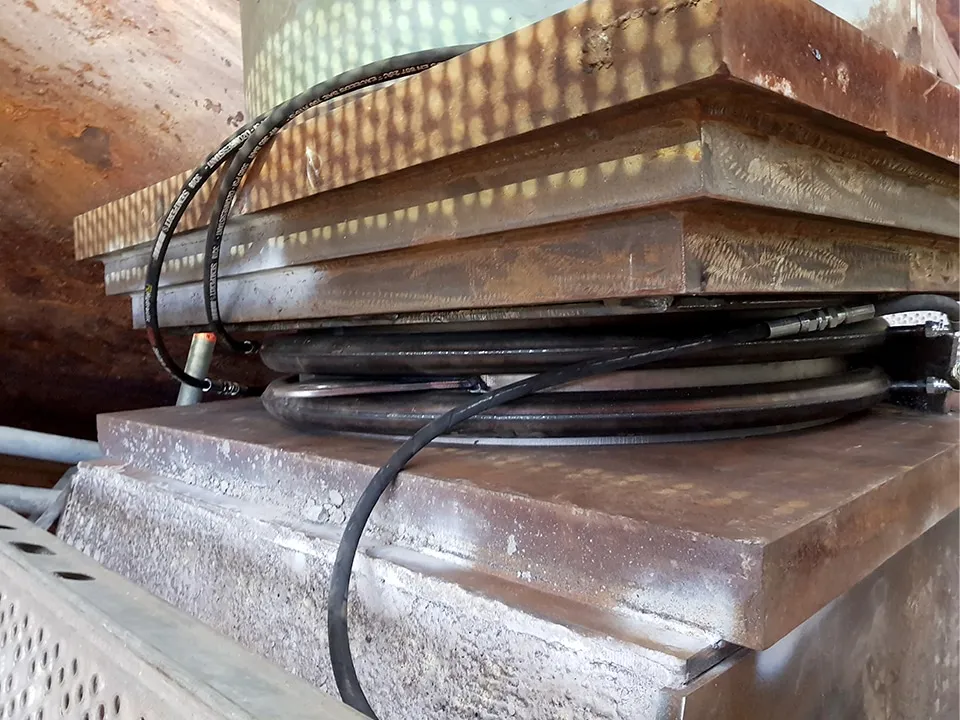
Jacks can be used in a range of sectors, from temporarily supporting building structures to jacking civil engineering structures. “In these situations, using flat jacks can often deliver significant savings,” says Jochims. “Flat jacks are circular and have a very low installation height of 20 to 50 millimetres, allowing a relatively long jacking stroke. Their capacity ranges from 80 to 10,000 kN per jack, with a stroke of 20 to 55 millimetres. The jacks can also be stacked to increase the stroke. This low installation height, combined with relatively high capacity, makes the flat jack suitable for a wide range of applications.”
An indispensable tool
“Flat jacks are an underused technique, particularly in civil engineering,” Jochims acknowledges. “Hydraulic jacks are often the first choice. This makes jacking a specialist and costly operation. In many cases, a flat jack is a much more attractive alternative. Its low installation height means it can be fitted in confined spaces. The jack has therefore become an indispensable tool for actively taking up loads in hard-to-reach locations. Pressurising it with water or grout, depending on whether the application is temporary or permanent, causes the jack to expand and lift the structure. In many cases, the jack remains in the structure and is injected with a cement-based grout. This technique was recently used to ‘repair’ a structure in Leeuwarden. The abutments had subsided slightly towards each other, causing the essential expansion joint to close. A temporary structure was used to position several Freyssinet jacks in the space beneath the joint and ‘reverse’ the settlement. They now form a permanent part of the structure.”
The Freyssinet flat jack is made of Corten steel, giving it an expected service life equal to that of its surroundings. Jochims says the closed system is being used increasingly often. “For example, we are involved in the refurbishment of Paleis het Loo, where we are replacing the hydraulic jacks with permanent flat jacks that will remain in the structure. At the Zeesluis of IJmuiden, flat jacks with a diameter of 1,016 millimetres have been used, the largest standard jack size. They are being used to take over the load from the propping structure, allowing it to be removed in a different sequence of works. This saves a great deal of time. And there are many other potential applications in civil engineering.”
Question about this story? Ask your question
Keep following this
Get an email when a new story is published. No account needed.
- SubjectNews







