









The Netherlands is the birthplace of CSC certification
“The CSC label guarantees the sustainable production of concrete. Companies can only use the CSC label if they meet strict requirements for reliability, expertise, sustainability and occupational safety.” Wilfred Oosterling, building technology adviser at Betonhuis, explains. “Initially, most CSC certificates were awarded in the Netherlands. CSC has since spread across Europe and the rest of the world. At first, certification was only available to ready-mix concrete companies, but it now covers the entire concrete industry, including many precast concrete producers.” CSC looks not only at the producer itself, but also at its raw material suppliers. “A CSC score can therefore improve the more certified suppliers you work with,” says Oosterling.
CSC certification is spreading across Europe and the rest of the world
CSC-certified sand and gravel
Oosterling notes that sand and gravel extracted on land could be CSC-certified, but marine aggregates could not. “Even though sand and gravel from the sea are typically Dutch. That prompted us to approach CSC to bring about a change. CSC’s response was: ‘Betonhuis, fine, sort it out.’ Working with a number of companies and Wageningen University (Marine Research faculty), we investigated the issue and ultimately succeeded in getting sand and gravel from the sea certified too. This shows once again that CSC is constantly developing, and that its requirements are becoming increasingly stringent. Alongside the CSC Bronze, Silver and Gold certificates, a CSC Platinum certificate is now also available. One of our members, De Goudse Betoncentrale, has also obtained the R-module (for recycled concrete). Other companies are now using it too. The latest module is the CO2 module, with a four-tier ‘star rating’. You can take part in the R and CO2 modules if you have achieved CSC Silver.” In the Netherlands, a baseline for CO2 is set, against which performance is assessed. “The number of stars achieved shows how much better you perform than this baseline.”
By 2030, 100% of concrete must be returned to the supply chain
The Betonakkoord states that by 2030, 100% of concrete in the Netherlands must be returned to the supply chain. “We can see that a lot of work is already under way, and it should be achievable. Nowadays, not only concrete aggregate but also entire elements are being reused,” says Oosterling. “That is why it is so important for concrete producers to obtain CSC certification. If you want to assess whether CSC certification is achievable, I recommend taking the CSC Quickscan. You can find the link on the Betonhuis website. We are the official ‘Regional Systems Operator’ for CSC certification. You can come to us for advice and we support companies, but assessments are carried out by independent bodies such as KIWA, SGS and SKG-IKOB. Obtaining CSC certification means building a solid future. If, for example, a tender specifies a BREEAM requirement, simply show your CSC certificate and you have automatically demonstrated that you meet the BREEAM requirements. CSC-certified concrete is expected to become a standard part of tender specifications.”
These companies have already achieved CSC certification
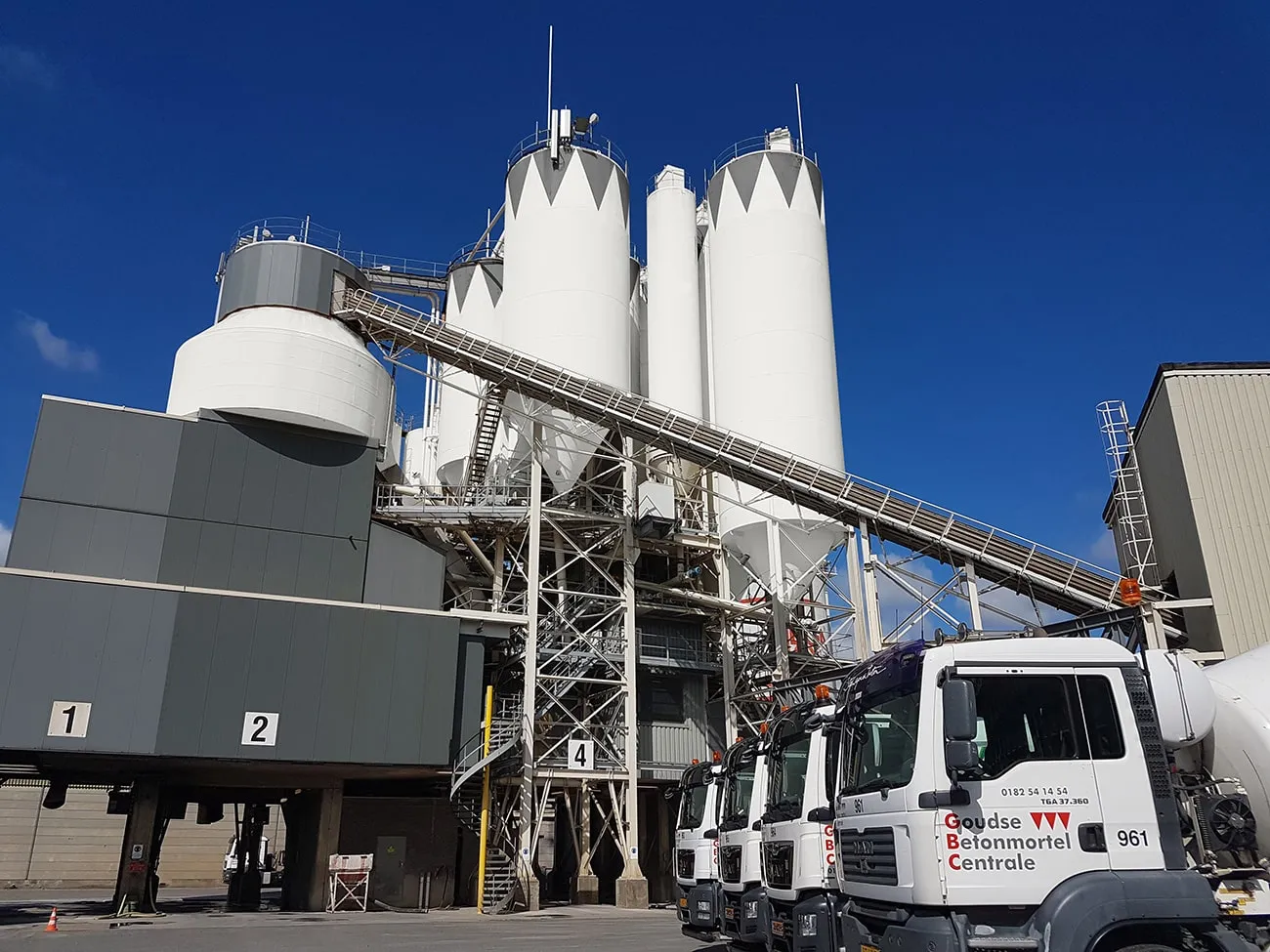
We speak to Goudse Betonmortel Centrale. “Our motivation for obtaining CSC certification is generally the green ethos we pursue as a company, reducing CO2 emissions and the fact that this helps our customers. Demand for sustainable concrete was also increasing. That is why we produce good-quality cubic metres of concrete with the lowest possible environmental impact. We focus on secondary materials that can be returned to the supply chain. We ensure that demolition concrete is responsibly returned to the supply chain. We also give careful thought to logistics, trying to minimise the number of vehicle movements. And when we do drive, we prefer to use hybrid or electric vehicles. We ask our suppliers to be environmentally responsible, especially when it comes to sand, gravel and cement.” Asked whether it took much effort to obtain CSC certification, the answer is: “We already had the foundations for working sustainably in place. To obtain CSC certification, we mainly had to demonstrate this and undergo an audit. The figures simply have to add up. Validation is important. We do need to look ahead, though, as we may face shortages of locally sourced raw materials, such as fly ash slag, sand and gravel.”
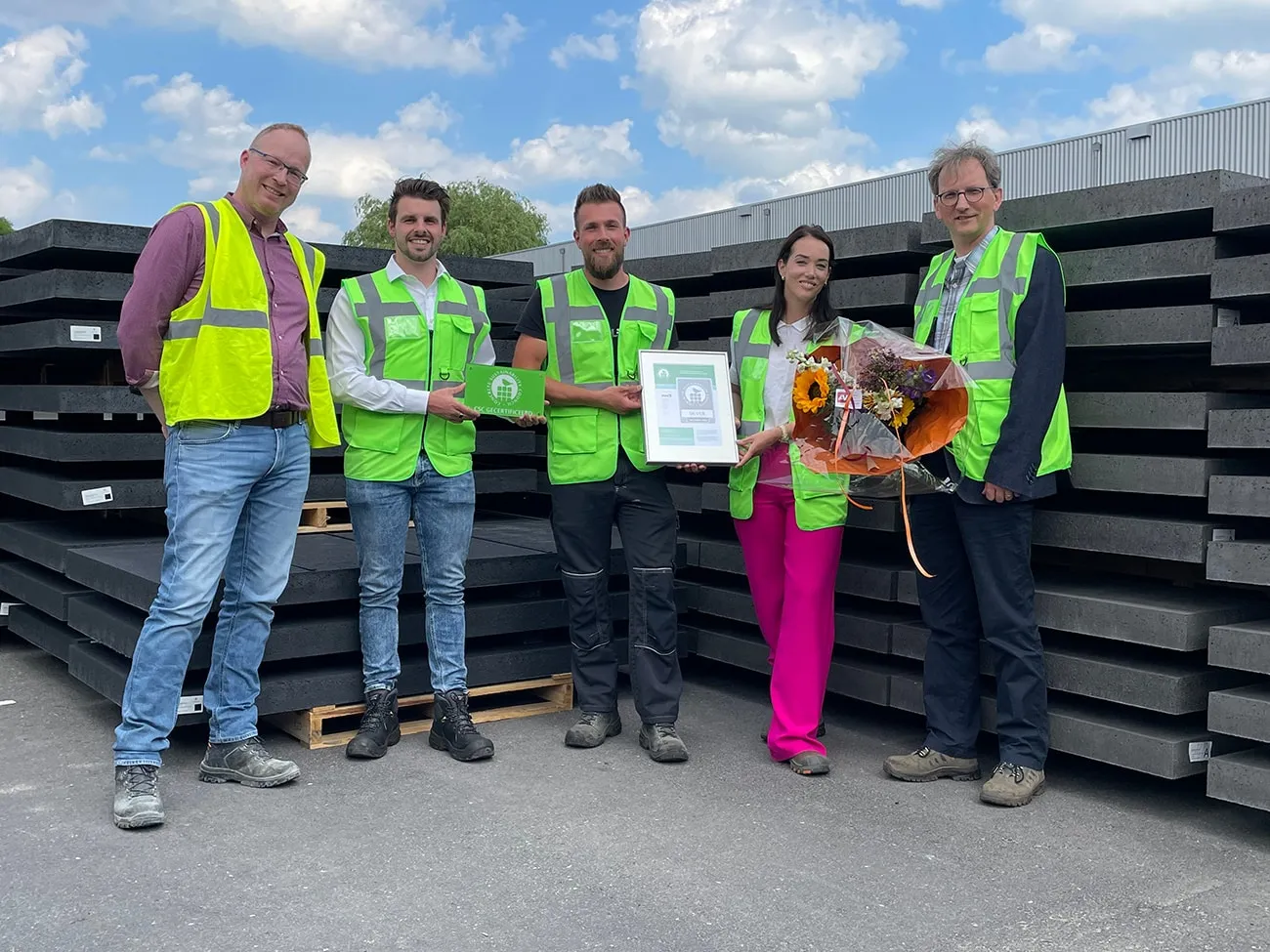
Schellevis is also CSC-certified and produces decorative paving and concrete elements. Meike Hover of Schellevis says: “We were certified in April this year. We had already held a Green Label for several years, and are now one of the first concrete paving slab manufacturers to receive the CSC label. We wanted to obtain it because CSC measures several aspects across different areas. It gives us a clear picture of where raw materials come from and whether production is sustainable. We want to know that we are doing the right things in terms of sustainability, and we also want to guarantee sustainability to our customers. It is our way of making a ‘small contribution’ to responsible stewardship of nature. We are doing well, from our suppliers through to the machinery we use. For example, we have developed our production lines further with the supplier to make them more energy-efficient. We also air-dry our concrete products. CSC certification confirms that we are on the right track, from sourcing raw materials through to delivering finished products. Another benefit is that CSC gives us all the tools we need to keep improving. We were already operating sustainably, but CSC is an excellent way of assessing sustainable business practices. The certificate we have achieved is valuable not only in the Netherlands, but also abroad.”
Three Dycore sites achieve CSC Silver certification
Dycore’s three sites in Breda, Lelystad and Oosterhout have achieved CSC Silver certification for precast concrete. On behalf of SGS, Jeroen Pos, auditor at SGS Intron, presented the certificates to a delegation from Engineering: Gerwin Korpershoek, Philip van den Elshout, Daniel Lowitzky, Willem Snijders and Hans van Steen. This took place on 14 June at the Beton Event. Dycore scored highly for its supply chain, with a large proportion of all materials used purchased from CSC-certified companies. With the CSC certificate, Dycore can officially demonstrate that the raw materials it uses come from traceable and responsible sources. The certificate therefore serves as a sustainability label for all Dycore products: wide slab, ribbed, hollow-core and service duct floor units. Oosterling says: “As one of the leading organisations in the precast sector, Dycore sees it as its responsibility to offer sustainable solutions. CSC enables the company to make a substantial contribution to its clients’ sustainability goals.” Alongside the focus on the origin of raw materials, compliance with legislation, including human rights and working conditions, and providing a safe working environment are key aspects of the certificate. The various management systems and Dycore’s ‘16 life-saving rules’ are the main pillars in this area. “Dycore also scored highly here. CSC provides assurance for organisations that want to build sustainably, for example in line with BREEAM-NL certification,” Oosterling concludes.
Question about this story? Ask your question
Companies in this story
Keep following this
Get an email when a new story is published. No account needed.
- ThemeMaterials and techniques for infrastructure
- SubjectNews
- CompanySGS INTRON B.V.







