









‘The family history is repeating itself’
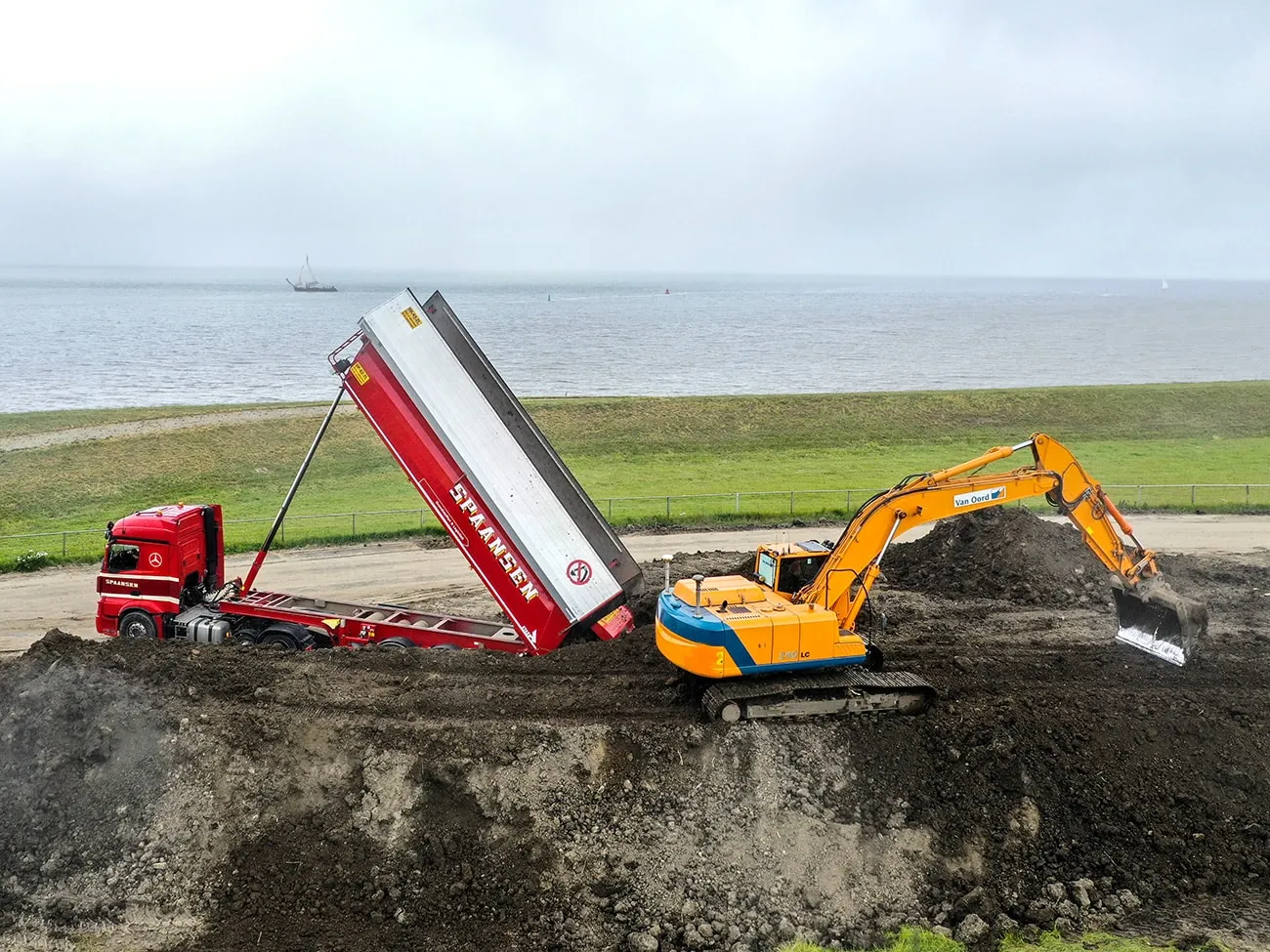
Johan Spaansen is the third generation of the Spaansen family to supply sand for the Afsluitdijk. That makes this project especially significant for the family business.
Special sand for the sand bed
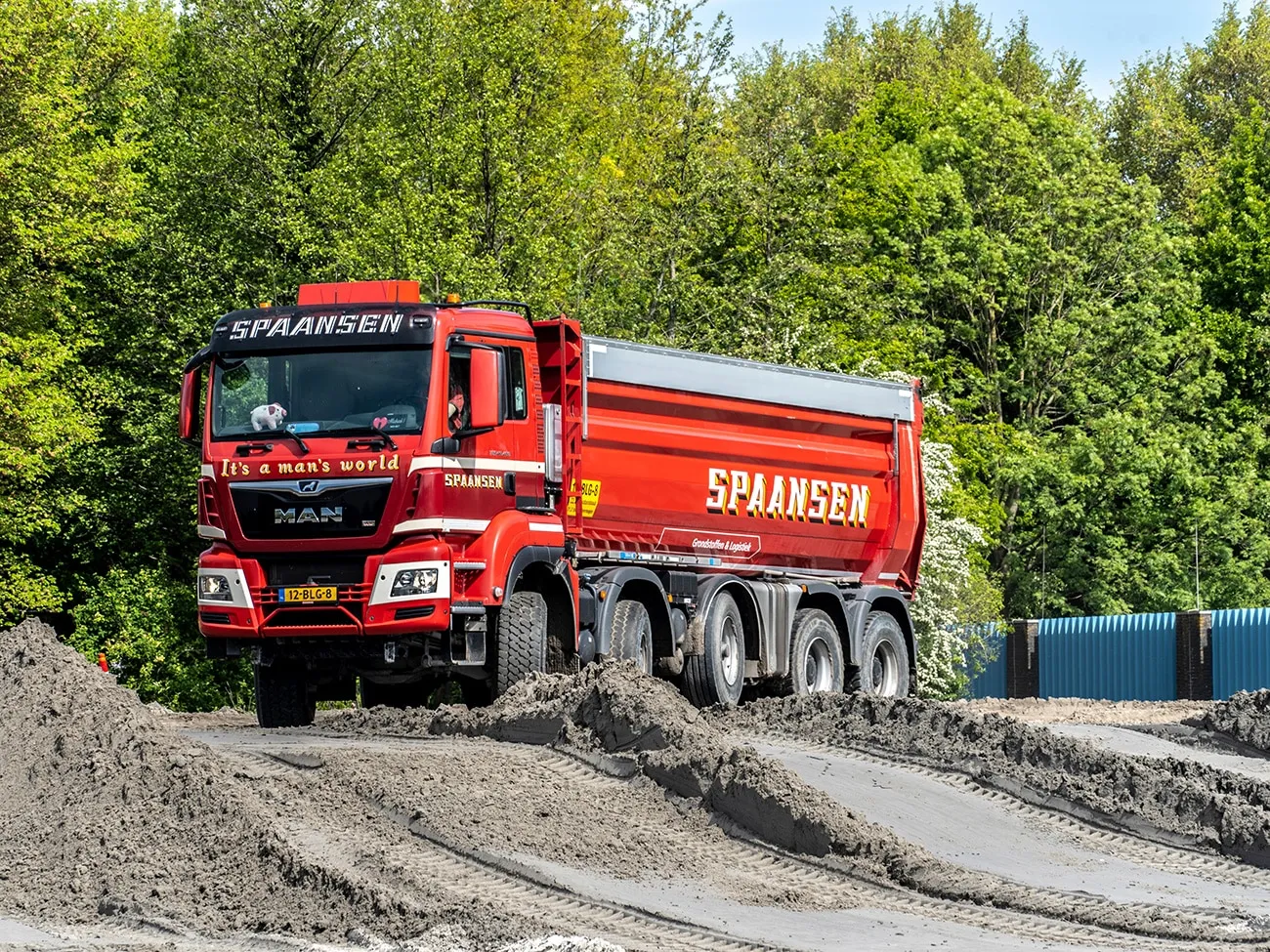
With 14 transhipment sites in North Holland and Friesland, Spaansen ships a great deal of sand and soil every year. It does so using its own lorries and vessels. “The advantage of having so many transhipment sites is that you need very little transport, so you can deliver very efficiently and sustainably,” explains Johan, Managing Director of Spaansen Groep. It was his grandfather, Bertus, who bought his first lorry in 1946. The Second World War had just ended, and the country was being rebuilt. At first, Spaansen’s drivers mainly transported fruit and vegetables. The purchase of the first tipper truck meant that sand and soil transport became the mainstay of the business. The family firm is still a major player in this field today. Alongside the Raw Materials & Logistics division, Spaansen Groep has two other divisions: Building Systems and Garden & Paving.
Innovative transhipment terminal
Harlingen is one of the transhipment sites. In this Frisian city, the brothers devised and built a unique system by setting up an impressive, innovative transhipment terminal for sand and gravel. The cargo arrives by ship; the material is processed before being delivered by lorry to its destination. “This allowed us to organise the supply and transport of sand for the Afsluitdijk efficiently from Harlingen.” Spaansen supplied a total of 731,000 cubic metres of sand for raising the Afsluitdijk, transported by water. “This is special sand for the sand bed, sourced from the North Sea and the Wadden Sea. The first vessels set off in the summer of 2019, and the last shipment was in May 2022. The sand was distributed among the sites at Kornwerderzand, Den Oever and Breezanddijk.”
Navigating high and low water
Transporting sand may seem straightforward, but it is not. The location of the Afsluitdijk calls for considerable flexibility. “We had a lot of easterly winds, which led to even lower water levels. You also have to take the depth of the shipping channel into account. The difference between high and low water is often as much as a metre and a half. You also have to keep track of the tides. And when the wind comes from the north-west, it can create significant waves. In short, we could load and unload whenever the weather allowed, and we had to be flexible.”
The third generation on the dyke
Supplying sand for the Afsluitdijk was a very special experience for Spaansen. “My grandfather supplied sand in the 1950s, and my father and uncles did so in the 1960s and 70s. Now that the Afsluitdijk is being prepared for the future, we have the chance to make our contribution too. The family history is repeating itself!”
Question about this story? Ask your question
Keep following this
Get an email when a new story is published. No account needed.
- SubjectNews







