









The Afsluitdijk: a breeding ground for innovation and sustainable energy
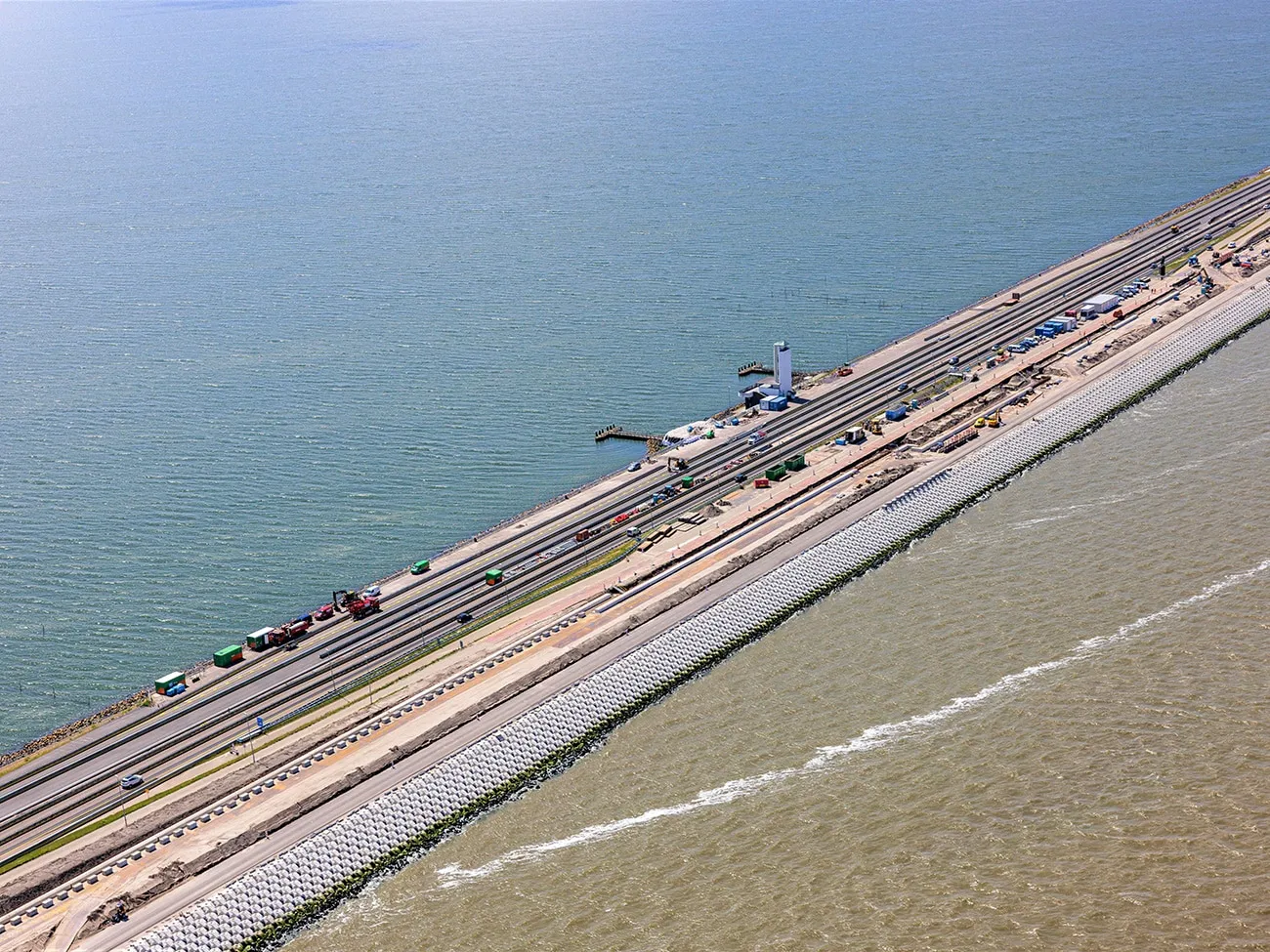
The Afsluitdijk is world famous. For 90 years, it has protected our country from the power of the water. That also means the dike is now 90 years old. A lot has changed over that time, not least the effects of climate change. On top of that, the Afsluitdijk no longer meets the requirements of the current Water Act. The time has come for a major renovation and reinforcement. This also creates opportunities for many innovative and sustainable initiatives.
Dutch ingenuity
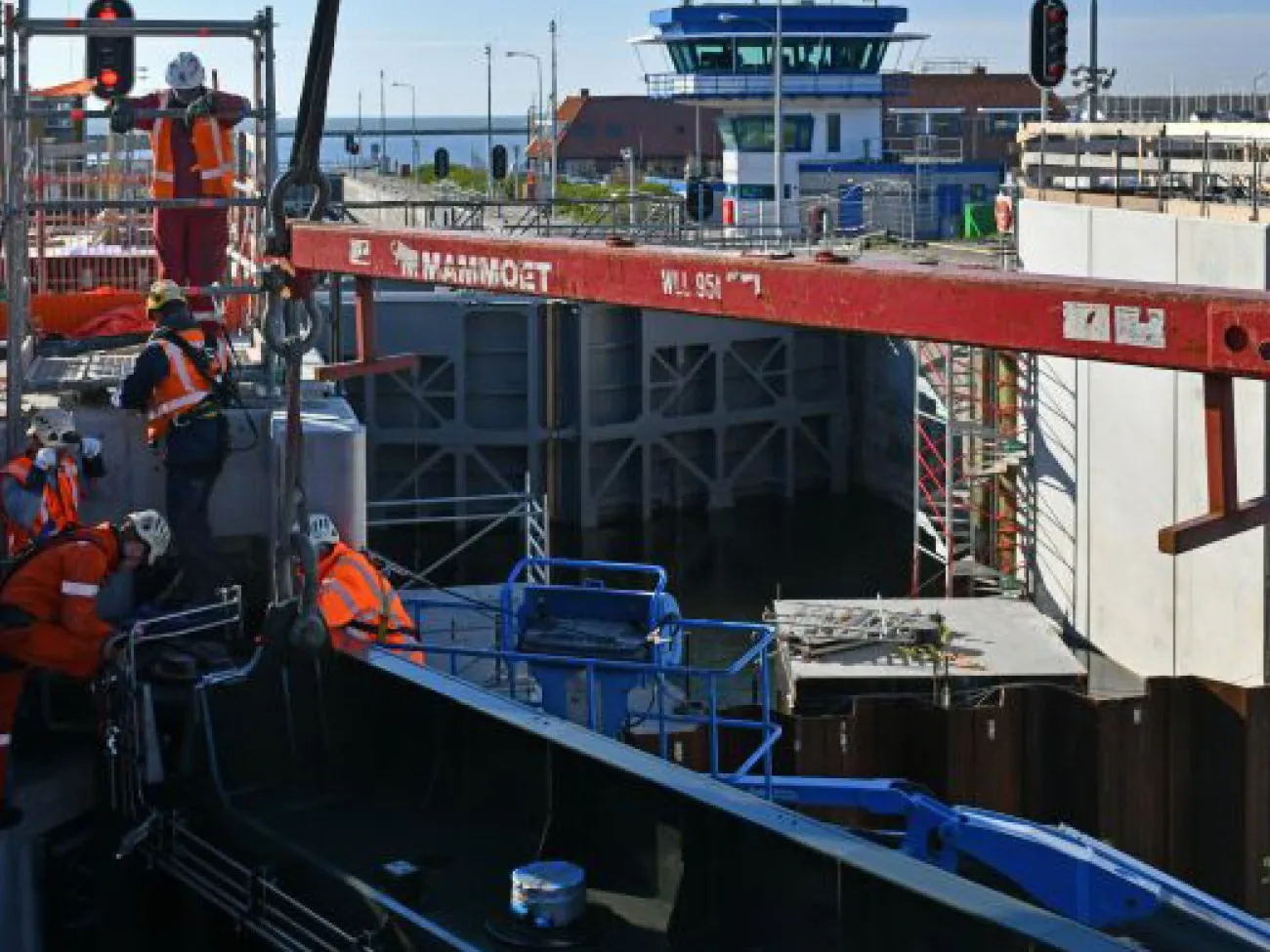
“The brief for the renovation and reinforcement of the Afsluitdijk had two parts: ensure that the existing Afsluitdijk once again meets water safety standards, and increase its discharge capacity so that the water level in the IJsselmeer can be maintained,” explains Wop Schat, project manager at Rijkswaterstaat. “The first part involves upgrading the existing sluice complexes, building two new movable barriers to serve as flood defences, and making the dike itself resistant to overtopping. This means it can withstand an extreme storm that might occur once every 10,000 years. In addition, water inflows to the IJsselmeer will become more erratic in the future. We will therefore need to discharge more water over short periods, which was the second part of the brief. That is why we are building two additional sluices and two pumping stations at Den Oever. The energy used by the sluices and pumps will be generated sustainably using solar power on and around the Afsluitdijk.”
A multifunctional dike
The renovation and reinforcement will, in a sense, turn the Afsluitdijk into a multifunctional dike. In the past, its main purpose was to protect the hinterland from high water. Today, it is a flood defence, an important link between Friesland and North Holland in the form of the A7, and a hub for innovation. Examples include the Fish Migration River and its composite lock gates, the Levvel-blocs, the Quattroblocks and the sand conveyor belt across the A7, which you can read more about in the following articles. Schat says: “The renovation of the A7 also deserves attention. We have made it safer. The major challenge was that widening it was not straightforward, as there is water on both sides. We therefore narrowed the central reservation by installing an innovative safety barrier, which allowed us to widen the hard shoulders. The road surface has also been completely renewed. Low Energy Asphalt Concrete (LEAB) was used for this. This type of asphalt is produced at a temperature as much as 30% lower than conventionally produced asphalt, saving energy and reducing CO2 emissions. The project itself also gave us the opportunity to challenge the parties involved to consider sustainable energy,” Schat explains. “As a result, the solar park at Den Oever has made the dike energy-neutral. To reduce energy consumption even further, our guiding principle is: we discharge water when we can, and pump it only when we have to.”
Experience the history at Vlietermonument
Although it was not originally part of the renovation, Vlietermonument is also being restored. Rijkswaterstaat is returning this building, designed by Dudok, to its original state while also modernising it. “We are adding a larger hospitality area with views over the IJsselmeer, as well as a new footbridge. The statue of Lely will retain its prominent position, and a large viewing terrace will be built on the Wadden Sea side. All of this will make Vlietermonument a place where everyone can experience the history of the Afsluitdijk.”
Dutch ingenuity, achieved through blood, sweat and tears
The renovation of the dike is an exceptionally special and complex project, expected to take a total of eight years. Work began in 2018, with completion planned for 2025. In addition to being technically complex, it is also a major logistical undertaking. “Looking back, Rijkswaterstaat and Levvel underestimated that,” says Schat. “It has taken a lot of blood, sweat and tears. That makes us all the prouder that everyone involved has worked together to make the Afsluitdijk fit for the future. Together, we have been able to ‘lift’ the iconic structure built by engineer Lely into the modern era, with due regard for engineering and spatial integration. The Afsluitdijk has become even more beautiful and is the ultimate example of Dutch ingenuity!”
Question about this story? Ask your question
Keep following this
Get an email when a new story is published. No account needed.
- SubjectNews







