









Special membrane system guarantees watertightness of Nieuwe Sluis
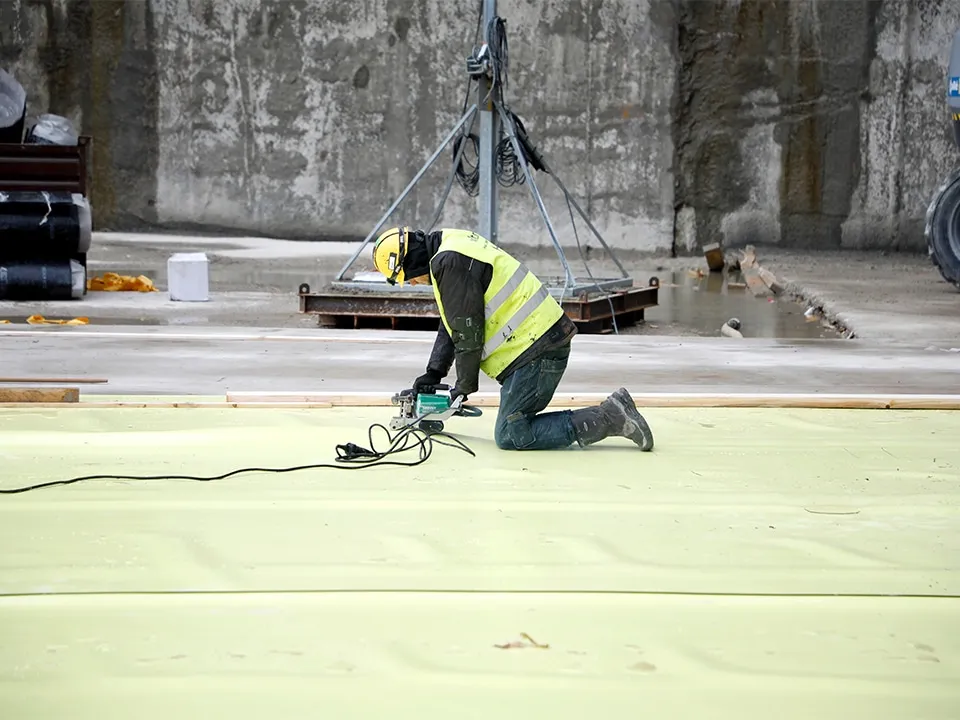
At the start of the coronavirus crisis, Luc Cousin, business development manager at Sika Nederland, was approached by BAM, a member of the Sassevaart contracting consortium.
“Given the complexity of the project, extra care had to be taken with the waterproofing of Nieuwe Sluis. BAM and Sika have worked together on this before, so we were invited to join the discussion and help find the right solution,” Cousin begins.
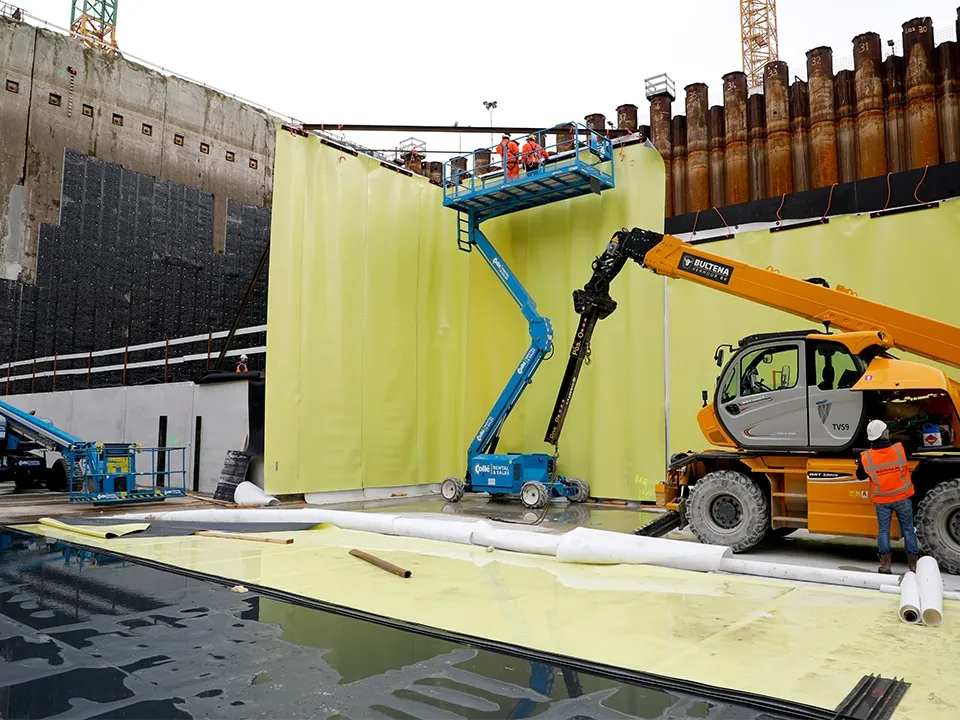
The solution was to use a compartmentalised membrane system (sheet membrane), an area of expertise for Sika Group. Eroll Breukers, construction sales manager at Sika, explains: “Of course, the lock has been designed to be safe. A great deal of reinforcement is already used in the concrete, but because the concrete is subject to settlement, Bouwcombinatie Sassevaart wanted to take every precaution. What we are doing now prevents problems and saves money in the future.”
Every detail is made extra watertight
The compartmentalised membrane system is used to waterproof the sills and maintenance tunnels. Installation began in early October 2020 in the outer head of the lock. Cousin says: “We trained the people installing the system. It was agreed with the construction consortium that only people trained by us would be allowed to carry out this work. The training took place in Utrecht, remotely via Teams in a COVID-safe manner, with help from a trainer at Sika Nederland and an expert from Slovenia.”
How does it work?
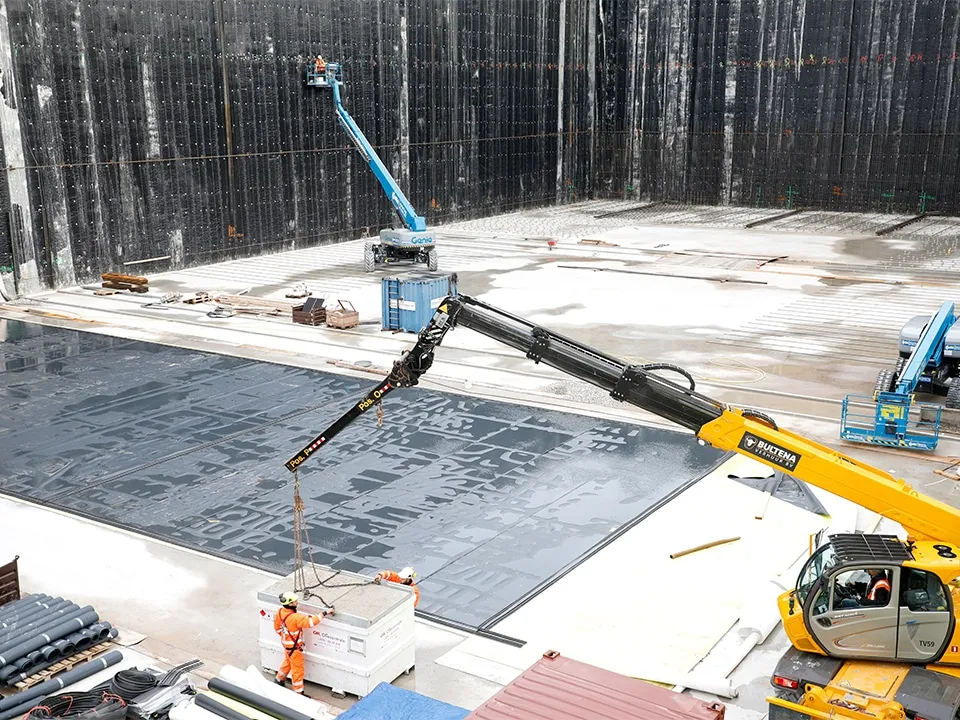
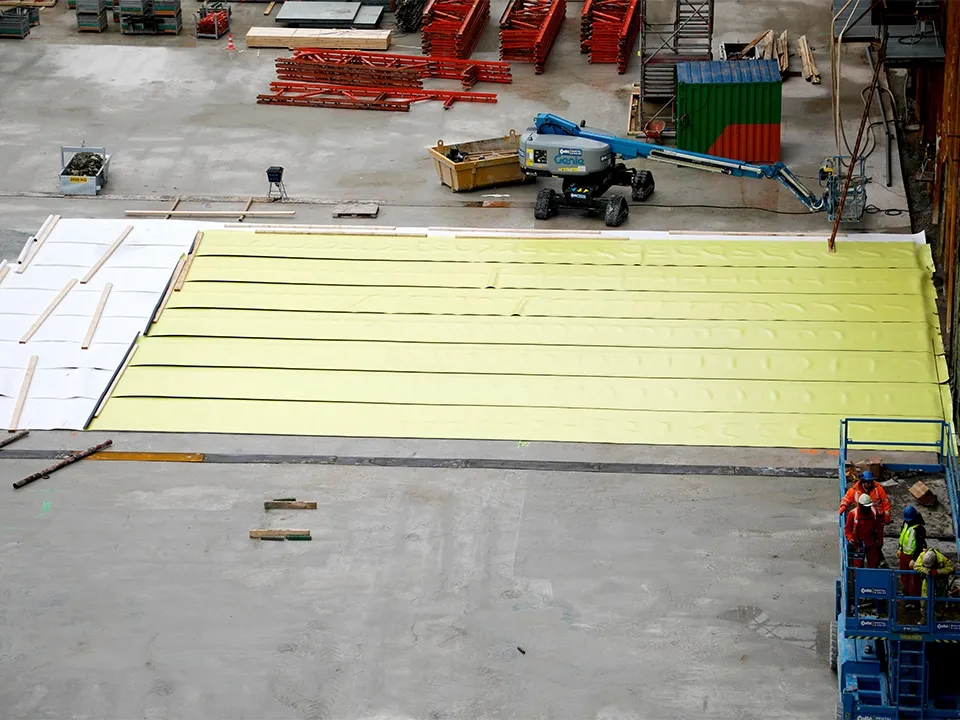
Work on the outer head has now been completed and the team has started on the inner head. “We are now in phase 1. What is unique in the Netherlands is that the system consists of separate compartments. These can be injected afterwards in the event of an emergency, ensuring that a high level of watertightness is maintained,” Breukers explains. “We work in sections of 150 m2, bounded by a joint profile cast into the concrete. Each 150 m2 section has five injection points, connected by hoses to a kind of ‘junction box’. If water comes out of one of the hoses, injecting that hose with injection material is a quick, targeted solution.”
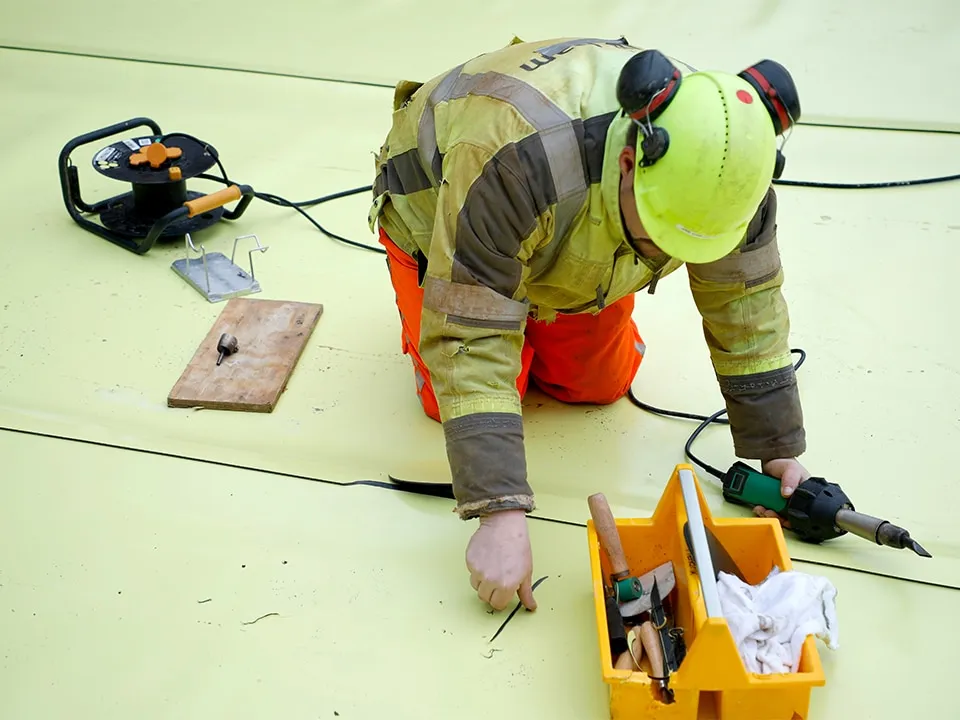
Preparing the work took longer and was more intensive than carrying it out. “The people at Sassevaart certainly deserve credit,” Cousin continues. “Sika, Sassevaart and the applicators are in daily contact. Sassevaart, Gacon and Vilton have between eight and ten people working on site at all times. In total, around 4,000 m2 of wall and floor are being treated. The concrete structure comprises underwater concrete, followed by the working floor, then our waterproofing system, consisting of geotextile and the Sikaplan wp 1100-31 HL 2 waterproof membrane. Sika waterstops and injection points are installed on this Sikaplan membrane. The seams are welded together fully automatically. A Sika protection sheet is also installed to prevent damage, for example from reinforcement. Everything is tested in accordance with the protocol: the seams are pressure-tested, we carry out tests and carefully record the results in a logbook.”
Watertightness is a specialist field
“What we are doing in Terneuzen is a bespoke solution, based on our expertise in watertightness. The design was engineered in 3D in consultation with Sassevaart and a team of specialists from Sika Corporate. We have an excellent working relationship with Sassevaart’s senior site manager Ben Bosboom and project coordinator Joost van Kempen. Phase 2 began on 4 January. This way of working is sustainable and highly redundant. Quality assurance is extremely important, which is one reason Sassevaart chose us. On 14 May 2019, the Senate passed the Quality Assurance (Building) Act (Wkb). The aim of the Act is to improve construction quality and building supervision through the involvement of private quality assurance providers. It also extends contractors’ liability towards private and professional clients. The Act comes into force on 1 January 2022.”
Cousin concludes: “What we are doing now is unique in the Netherlands. The method we are using provides verifiable assurance that the structure is watertight. This is important because we are dealing with a brackish water environment. Salt water is highly damaging to the reinforcement in the concrete. With this approach, the Sassevaart contracting consortium ensures a dry and safe concrete structure.”
Question about this story? Ask your question
Keep following this
Get an email when a new story is published. No account needed.
- SubjectNews







