









Smart combined wall shares real-time information
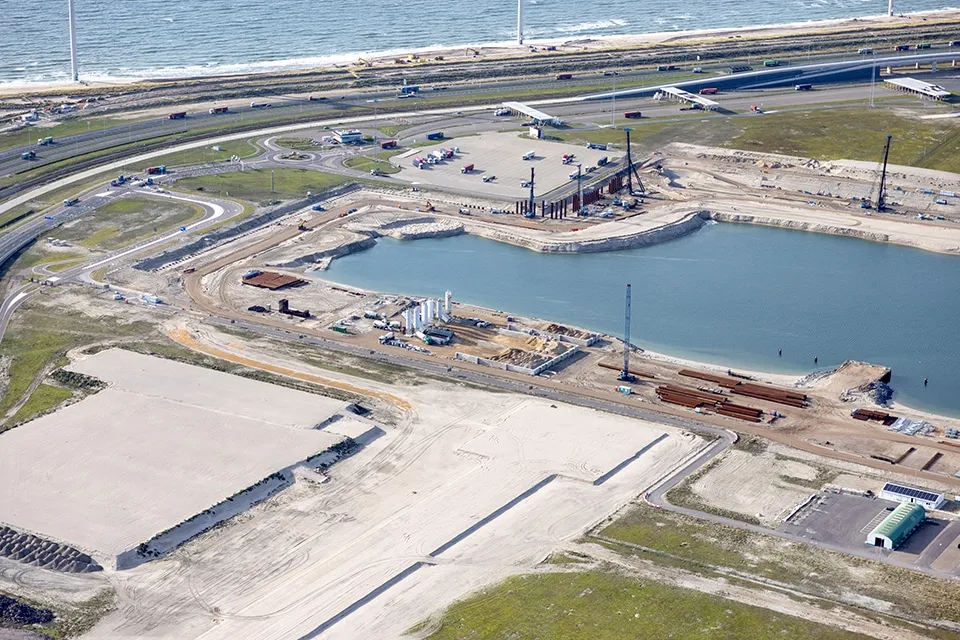
As container volumes at the Port of Rotterdam are expected to continue rising sharply in the coming years, the quay at Prinses Amaliahaven is being extended. The construction of new deep-sea and inland waterway quays will enable cargo handling companies to further develop the undeveloped sites around this part of the port. To monitor the behaviour of the quay structure during both installation and operation, the Port of Rotterdam Authority is using a ‘smart’ combined wall supplied by ArcelorMittal Projects.
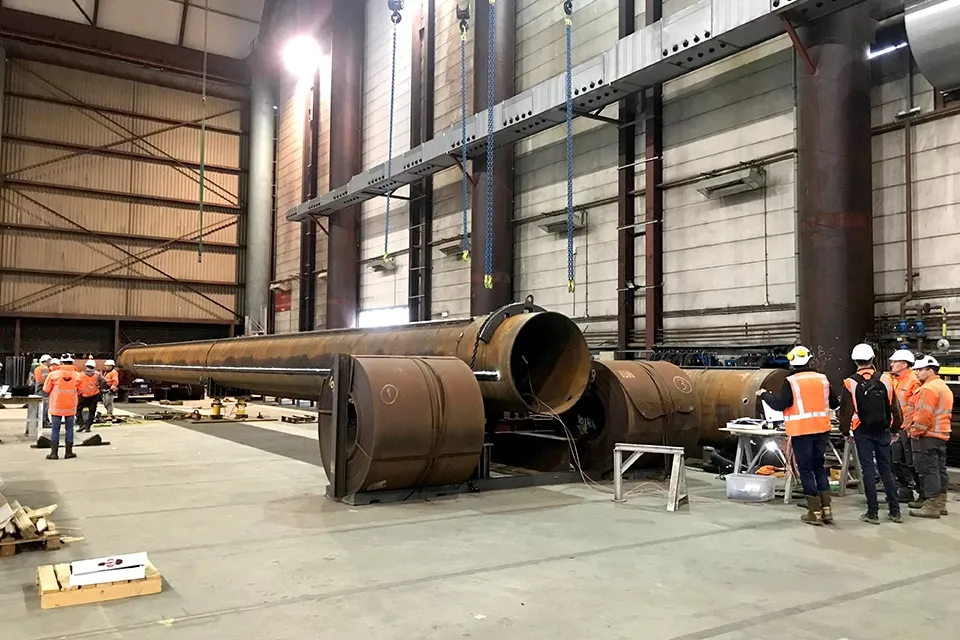
ArcelorMittal is a familiar name in the port area. “In the past, we worked with the Port of Rotterdam Authority to assess the master specification for feasibility, drawing on our many years of experience. It sets out the quality requirements that the steel for the combined walls must meet,” says Patrick Mulders of ArcelorMittal. “We are therefore familiar with all the requirements and have prepared standard quality documents, such as ITPs (Inspection and Test Plans), a quality plan and measurement reports. Additional requirements apply to, among other things, the straightness of the pipes, and there is an additional testing regime that allows stock pipes to be used. Interlock detection systems are used to verify, on a sample basis, whether the sheet piles have indeed remained in the interlock.”
20,000 tonnes of steel
The new deep-sea and inland waterway quays have been designed as a combined wall, comprising pipes with interlocks and sheet piles. “Given the 2.4-kilometre length of the new quay wall, the quantities involved are enormous,” says Mulders. ArcelorMittal is supplying 15,000 tonnes of pipe material and 5,000 tonnes of sheet piles. “As ArcelorMittal Projects, we were able to meet the project’s very challenging schedule by combining stock pipes with newly manufactured pipes. All the steel was transported by ship from the production sites to a dedicated unloading quay at Prinses Amaliahaven.”
Monitoring pipe piles
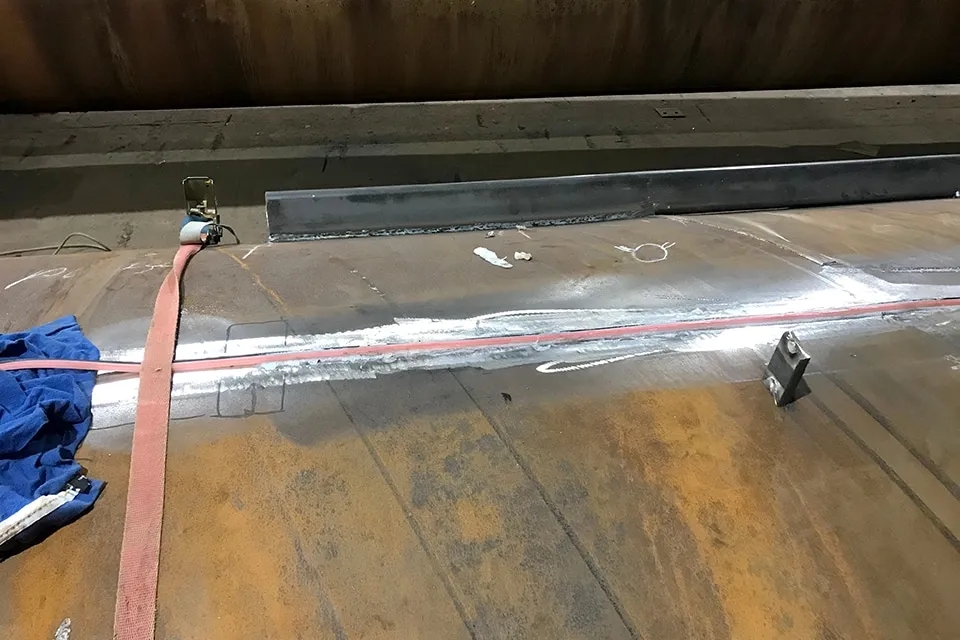
Aside from its scale, the project has another notable feature. Five pipe piles have been fitted with a monitoring system. “The system consists of a fibre-optic cable bonded to both sides along the full length of the pipe pile. A reference cable for temperature measurements has also been installed,” Mulders explains. “A steel protective casing has been fitted over it to prevent damage to the system during transport and installation on site. The system enables the Port Authority to monitor strain in the pipe pile while filtering out the effects of temperature. It provides insight into the load on the pile and whether any deformation is occurring. It can be used to validate the design model and to track the condition of the structure over time. Increased loading on the structure, whether physically observable or caused by corrosion, is reflected in the fibre-optic data.”
Testing the monitoring system
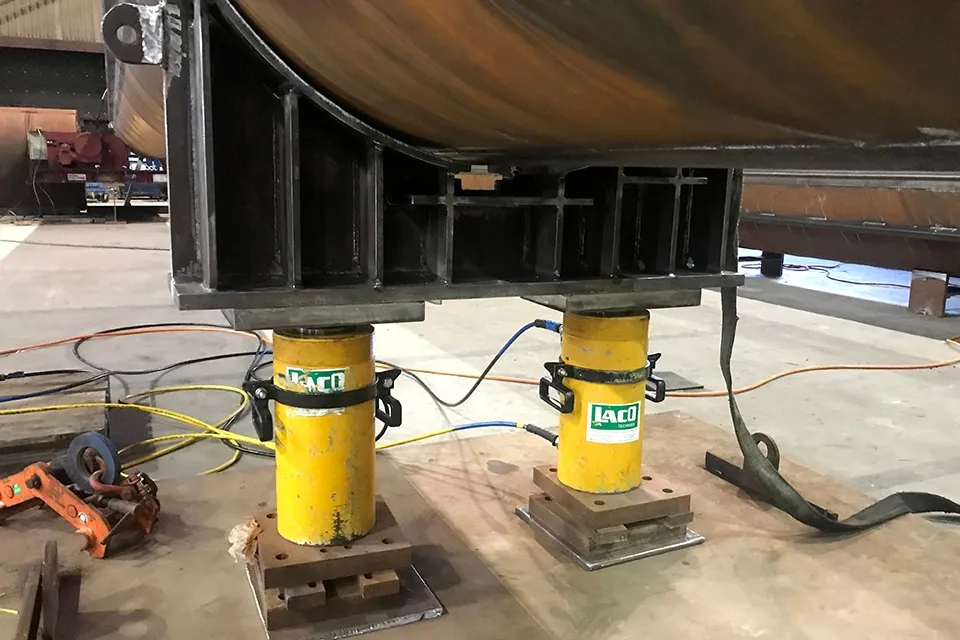
The monitoring system was extensively tested at ArcelorMittal’s site. Mulders: “All five pipe piles were tested to check that they worked and to compare the results with the predictions. First, baseline measurements were taken with the pipe piles placed on H-beams to provide an unloaded support. They were then tested further by gradually increasing the load on the pipe in several stages using a hydraulic jack. This enabled us to measure the deflection and the load in the pipe.” As a backup, the five pipe piles have been fitted with two additional protective casings. If anything goes wrong during installation, new fibre-optic cables can subsequently be installed by means of grout injection. The entire combined wall has now been successfully installed, including the five pipe piles fitted with the monitoring system, distributed along the 2.4-kilometre quay.
SmartSheetPile
The smart combined wall concept at Prinses Amaliahaven fits seamlessly with ArcelorMittal’s recently launched SmartSheetPile concept. “We can tailor the concept to the specific project, depending on the client’s requirements,” says Mulders. “Sensors can be used to monitor a range of parameters, both during installation and throughout the sheet pile wall’s operational life. These include strain and deformation measurements, as well as corrosion monitoring over the structure’s service life. Impact loads and inclination can also be detected. Data are monitored in real time and sent to an online dashboard. The aim is to gain an even better understanding of the behaviour and performance of steel structures. This could lead to the development of new models and calculation methods, and ultimately to optimised steel use.”
Een zakelijke vraag aan ArcelorMittal Projects Europe B.V.? Get in touch
Companies in this story

Keep following this
Get an email when a new story is published. No account needed.
- SubjectNews
- CompanyArcelorMittal Projects Europe B.V.







