









Raising the standard for PE welding through collaboration
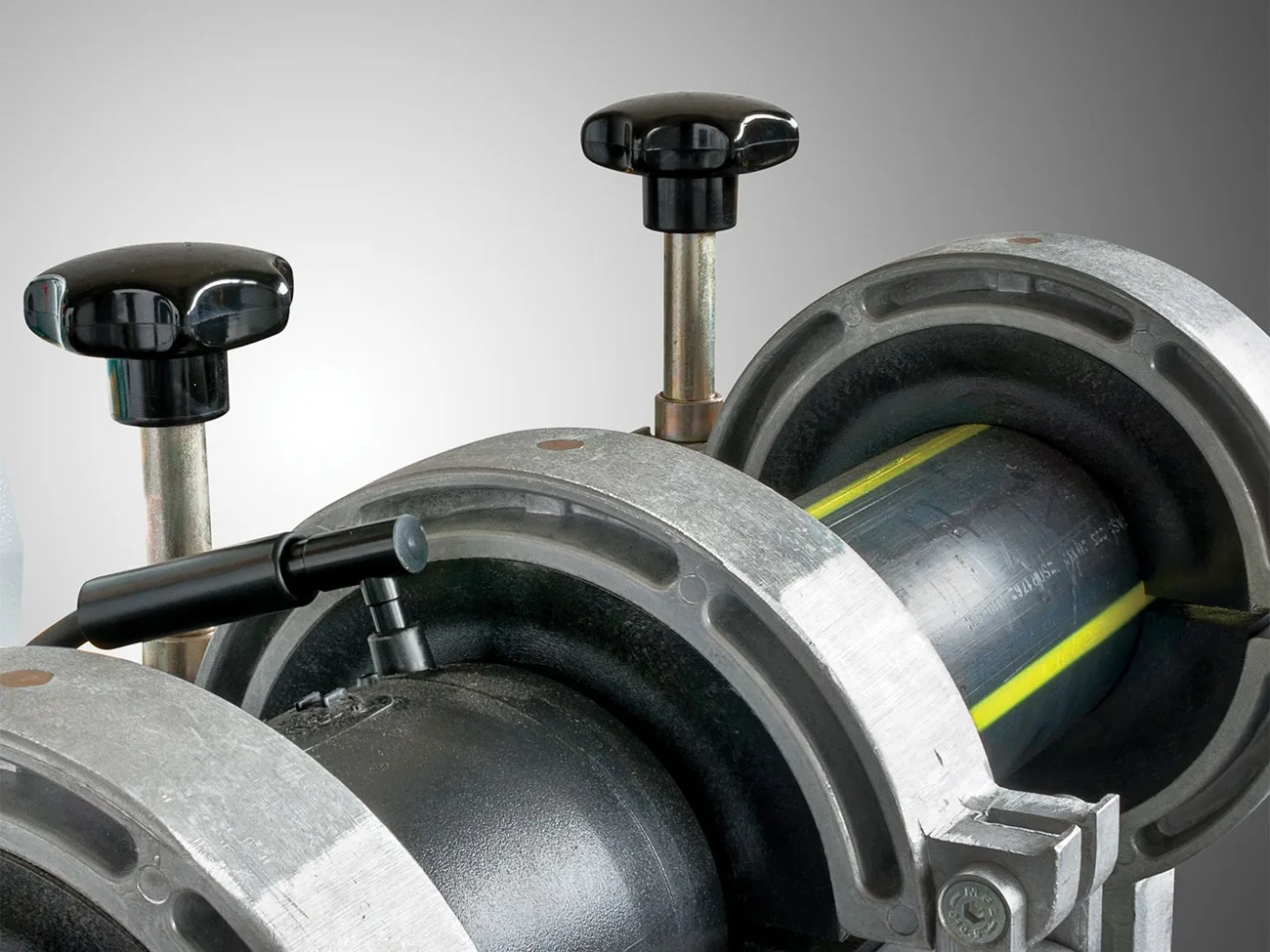
Come up with a way to prevent the high number of rejected PE welds, or the method may soon no longer be allowed. That was the task assigned to Netbeheer Nederland several years ago by the regulator, State Supervision of Mines. Two of those involved explain how everyone joined forces to produce an NTA and two certification schemes.
Roger Janssen works at Enexis, one of the Dutch network operators, and is a member of the committee of experts responsible for the certification schemes for PE electrofusion welding. He was previously involved in developing NTA 8828. So was Jorn Bronsvoort of certification body QS, who has also been part of the process from the outset. They are therefore well placed to explain how it all came about.
Network operators are responsible for thousands of kilometres of gas pipelines buried beneath the Netherlands. These days, the pipes are made from a plastic material that is joined by fusion using a technique known as polyethylene electrofusion welding. The more precisely the work is carried out, the safer the joint and the longer its service life.
The problem
State Supervision of Mines (SodM) is the independent regulator responsible for the safety of the gas network. Inspections several years ago found that many electrofusion welds were being rejected. SodM considered the number too high and said quality had to improve. Otherwise, a ban on the method could be on the cards.
Everyone with an interest in the sector decided to join forces to solve the problem. The causes soon became clear. ‘People were taking the welding technique a little too lightly. There was no specific training, and it was just something they did on the side,’ says Jorn. In addition, everyone followed their own instructions, which also had a negative impact on quality. The first conclusion, therefore, was that common agreements were needed. If you are looking for an organisation to guide that process, NEN is an obvious choice.
The solution
NTA 8828 was developed in collaboration with trade associations representing network operators and contractors, as well as material suppliers and training providers. It sets out detailed guidelines for making safe, high-quality PE joints. Those involved then drew up two certification schemes specifying the requirements for properly qualified welders and welding supervisors. The NTA and certification schemes were developed for gas pipelines, but can also be applied to water pipelines, for example.
Training
A thorough training course was developed, culminating in theory and practical examinations. This was badly needed, as the requirements set out in the NTA and certification schemes are demanding. ‘We deliberately set the bar very high, because quality of work is becoming increasingly important,’ says Roger.
The training departments of the certification bodies provide the courses. ‘We have the technical knowledge and understand the rules for training and practical examinations,’ says Jorn. The theory exam questions were devised by a small group from the committee of experts. Its members represent the sector and are involved in developing, validating and maintaining a certification scheme. To ensure independence, examination specialist Cito was asked to oversee the development of the exam questions and administer the theory exams. This keeps the examiner’s role separate from that of the trainer.
The impact
At first, those involved were not entirely convinced that SodM’s request to agree common rules for PE welding was necessary. Although many welds were rejected, there had never been a major incident. The benefits are now becoming increasingly clear. Roger and Jorn can name several. One new role is that of welding supervisor, which is essential. ‘Without strict supervision, there’s a high risk that the quality of the work will deteriorate,’ says Roger. ‘A poor-quality weld may not leak straight away, but it won’t last nearly as long. A good weld can have a service life of as much as 50 years,’ says Jorn.
Everyone now works to the same guidelines, and far fewer welds are rejected than before. The acceptance rate has risen from 80% to almost 100% in recent years. One result is that work is no longer delayed, which is reflected in the costs.
Another benefit is that the process can be closely monitored. Roger explains: ‘The welding supervisors see what’s happening in the field and can report any problems. We, as the committee of experts, can then investigate whether the certification scheme or the NTA needs to be amended, for example. Training courses sometimes bring up issues that could lead to improvements to the NTA too.’
The consequences
The NTA and certification schemes have had significant consequences for welders. PE welding is now a specialised profession. ‘Only about a third of the welders remain,’ says Jorn. Certification also gives welders an incentive to do their work properly. Inspections are still carried out regularly, and if the quality is not good enough, a warning follows. After several warnings, a welder loses their certificate and is no longer allowed to do the work. Naturally, nobody wants that.
These are all strong arguments for developing the NTA and certification schemes, which not only apply to PE welding but also demonstrate the value of the entire standardisation and certification process. Working to standards means everyone works in the same way, with a strong focus on reliability and safety. Certification helps produce better-skilled professionals: properly trained and committed to their work.
Collaboration
When asked what was most important about the whole process, Roger has an immediate answer: collaboration between everyone involved. ‘If you have taken part in developing the NTA and certification scheme, you support it and promote it to the rest of the sector.’
Jorn adds: ‘Everyone had an interest in restoring confidence and improving quality. That made it easy to bring all the parties together.’ This applied to network operators and members of Bouwend Nederland, but also to material suppliers, for example. They have an interest in being able to continue supplying their materials.
Taking part also makes it possible to ensure that the guidelines and rules are workable in practice. Roger did so as a network operator’s representative, Jorn on behalf of a certification body, while other participants had the interests of contractors, for example, in mind. Roger says: ‘This regularly led to heated discussions, but always resulted in a joint decision.’
Reaching consensus is not always easy. ‘Fortunately, NEN’s consultants are very skilled at guiding discussions constructively,’ says Roger.
NEN’s role
NEN plays an important role in the process. Its consultants provide the secretariat for drafting and, where necessary, revising the NTA and certification schemes. NEN also manages the certification scheme and the register. The NEN website lists all certified PE welders and welding supervisors, as well as the NTA and certification schemes.
Question about this story? Ask your question
Keep following this
Get an email when a new story is published. No account needed.
- SubjectNews







