









Prysmian supplies cable system for connection between Tilburg-Noord and new 380 kV substation
Text Susan Peek Beeld Prysmian Nederland
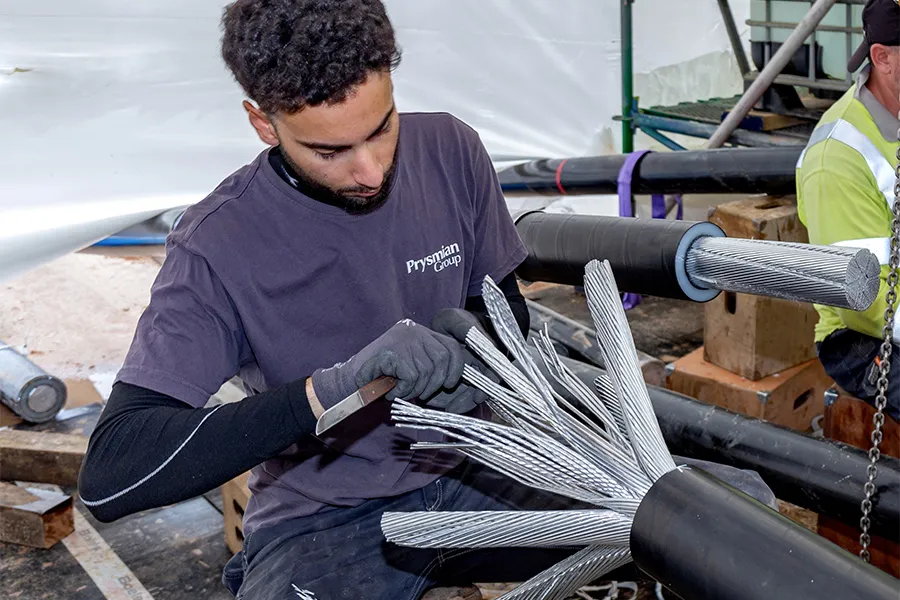
For the new Tilburg 380 high-voltage substation, major work was needed not only above ground, but also underground. Prysmian Nederland designed, supplied and tested the cable connection linking the new 380 kV substation to the existing Tilburg-Noord substation. “Our contribution is less visible, but essential to the reliability of the entire system,” says Jos van Rossum, HV Engineering Manager at Prysmian.
Design and innovation
Prysmian is responsible for the complete cable system, from the basic design and manufacture of the cable and accessories through to installation, testing and handover to TenneT. “We always look at the system as a whole,” explains Van Rossum. “We design and build the system accordingly. TenneT originally asked for a 2,500 mm2 copper conductor. We proposed an equivalent 4,000 mm2 aluminium version: lighter, more cost-effective and building on existing technologies.” The 4,000 mm2 aluminium conductor is a world first: this is the first commercial application of a conductor of this size. “An innovative achievement by TenneT and Prysmian in a sector that is generally conservative,” says Van Rossum.
Testing and quality
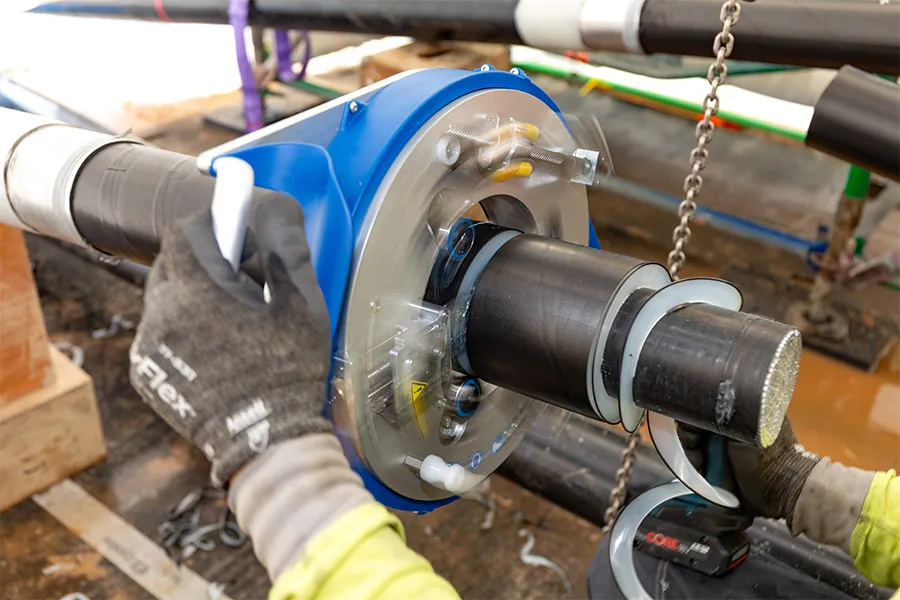
Before installation, Prysmian carried out an extensive test programme at its factory, assembling the cable, joint and termination as a complete system and testing them electrically in accordance with TenneT specifications and the Dutch standard NEN-HD632. “This process takes months, but it is essential,” says Van Rossum. Once installation is complete, field tests follow, including high-voltage testing with a mobile resonant transformer, impedance measurements (the resistance of connections) and checks of the earthing concept. “Two tests are still under way and will continue until the end of next year; TenneT will formally accept the system afterwards. Everything has to be right, because these cables will remain underground for fifty years or more.”
Underground cables
The connection is a 2.8-kilometre double circuit, installed through three horizontal directional drilling (HDD) bores, 550 to 800 metres long, beneath roads and farmland. “Each HDD consists of four plastic ducts: three for the individual 150 kV cables and one for communication and earthing equipotential bonding cables. Joint connections have been installed between the bores to link the cables.” For these connections, Prysmian uses Click-Fit accessories, prefabricated components that make installation simpler and more reliable. “The cables are larger and thicker than usual, but installation builds on existing technologies that have been proven over more than thirty years,” says Van Rossum.
Collaboration and reliability
Collaboration with TenneT and the civil engineering contractor is open and constructive. “We are always transparent about our work, and TenneT is present during the tests,” says Van Rossum. “Ultimately, reliability is what matters to us: cable systems that last for decades. In Tilburg, we are showing that proven technologies can be combined with innovation. The result is a connection that is reliable today and fit for the future.”
Question about this story? Ask your question
Keep following this
Get an email when a new story is published. No account needed.
- SubjectNews







