









PODCAST: Modular construction without limits: flexibility, comfort and sustainability in one solution
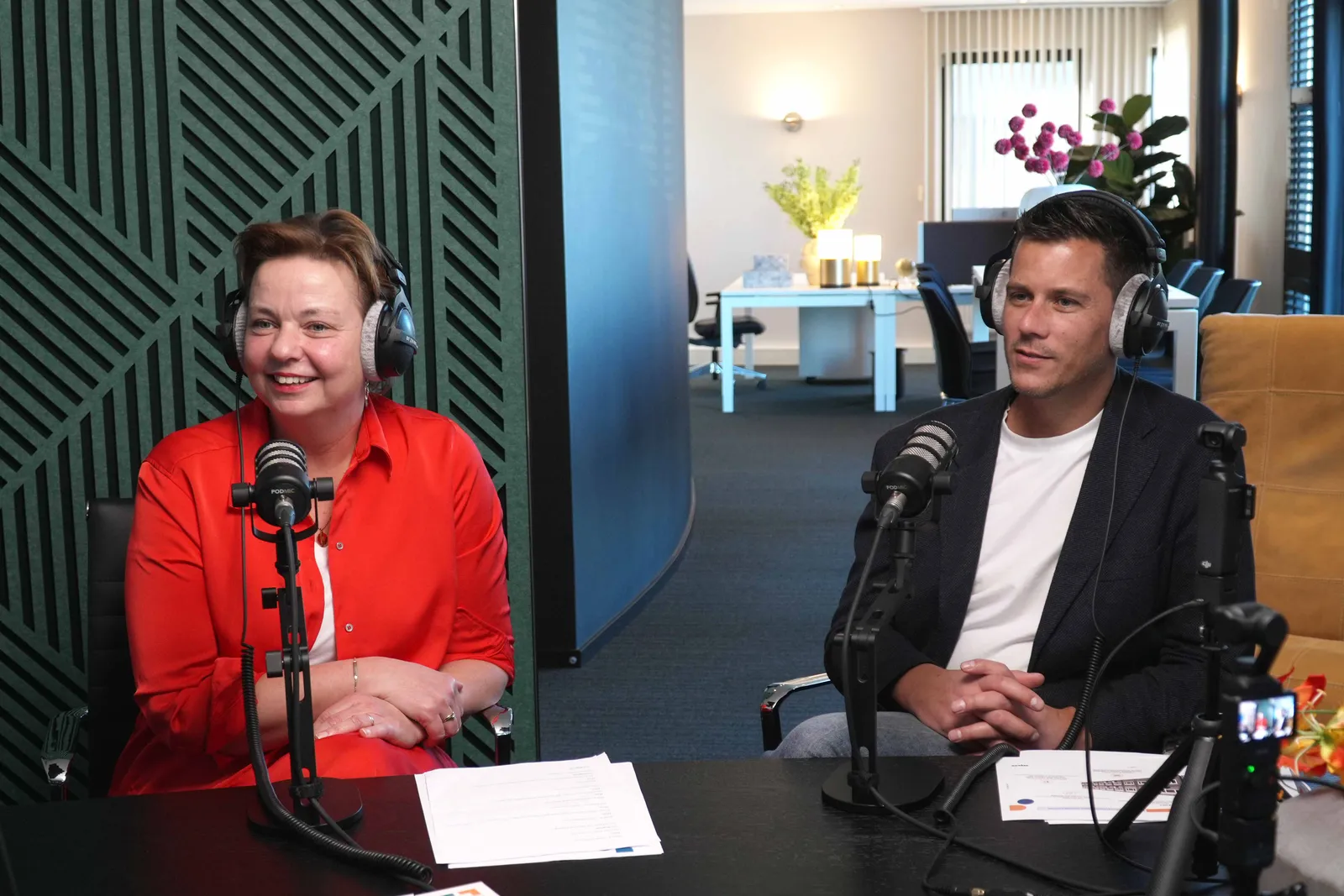
A conversation with Annemiek Glorie and Joris Billen of Algeco
Modular construction is no longer just an emergency solution. What was once seen as a temporary arrangement of containers has now become a fully fledged, high-quality alternative to permanent construction. With state-of-the-art insulation, fire-resistant solutions such as Fire-X, solar panels, ventilation systems and even positive-pressure systems to keep out fine particulate matter, modular construction is increasingly moving towards comfort, sustainability and innovation.
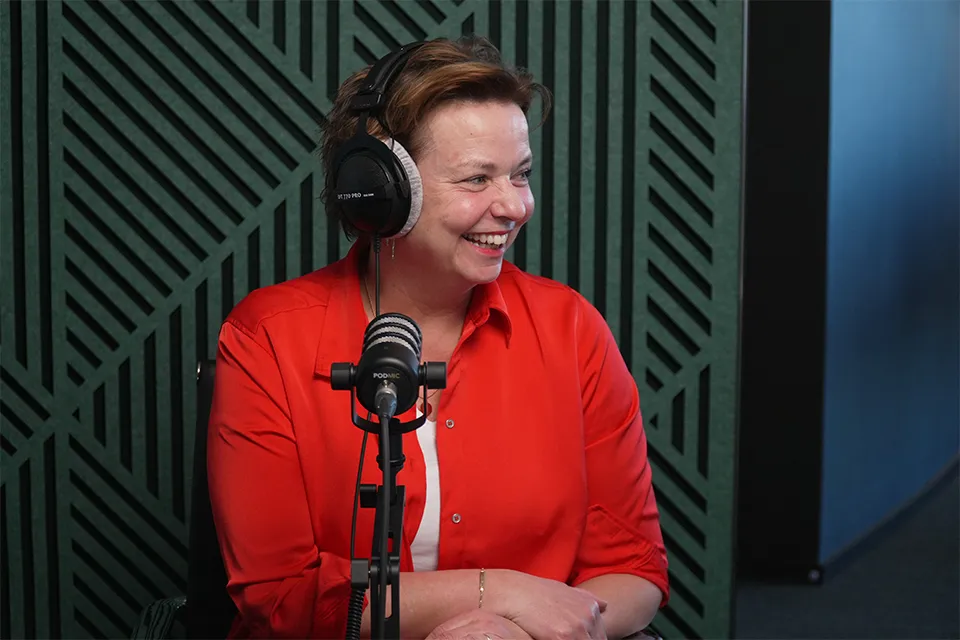
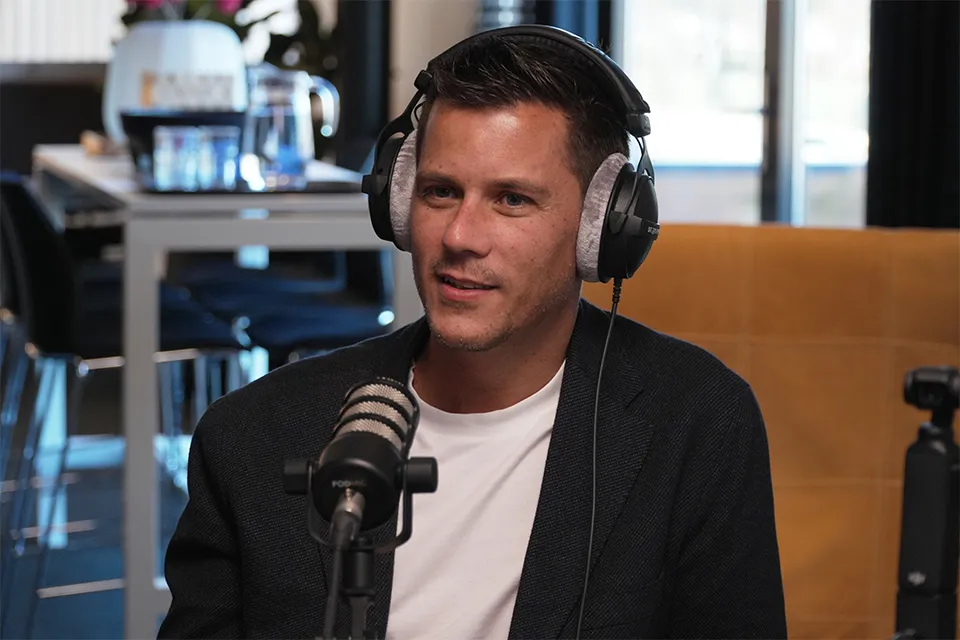
In this episode of Louwers Mediagroep’s GWW podcast, host Roel Van Gils talks to Annemiek Glorie, Regional Brands Manager North at Algeco, and Joris Billen, Lead Technical Office Benelux. Together, they discuss the evolution of modular solutions in the Netherlands and Belgium, the impact of stricter energy regulations, the difference between renting and buying, and how Algeco is focused on reuse, standardisation and European innovation.
One thing quickly becomes clear: the possibilities for modular construction are virtually endless. And the future is set to be even more ambitious.
Have a business enquiry for Algeco B.V.? Get in touch
Full transcript
All chapters (21)
- Introduction and guest introductions
- Role and responsibilities at Algeco
- What are modular solutions?
- Is modular construction an emergency solution?
- Why is modular construction more relevant than ever?
- Misconceptions about modular construction
- Preconceptions about containers and comfort
- Options for rental and purchase units
- When do customers choose to buy or rent?
- Customisation and comfort
- Differences between the Netherlands and Belgium
- Technical differences and legislation
- Showcase projects and Fire-X development
- Sustainability and standardisation in Europe
- Options and tenders
- Production and service centres
- Sectional cabins and sheds
- A look to the future
- European regulations
- What should listeners take away?
- One Benelux
Introduction and guest introductions
Roel Van Gils Welcome to the Louwers Mediagroep studio in Weert. Today we’re taking a closer look at the world of modular solutions, with the future of flexible construction at the heart of the discussion. Just how flexible is modular construction? What are the differences between the Netherlands and Belgium? And why are more and more businesses, schools, healthcare institutions and public authorities choosing this construction method? I’m joined by two special guests who know all about modular construction. Welcome, Annemiek and Joris. Perhaps you could start by introducing yourselves.
Annemiek Glorie Yes, thanks, Roel. My name is Annemiek Glorie. I’ve worked at Algeco for ten years as Regional Brands Manager North. That means I’m responsible for the three branches, both commercially and operationally. I work with Joris in that role.
Joris Billen Yes, good afternoon. I’m Joris Billen. I’ve been working at Algeco for four years now. I’m responsible for the technical side of the organisation, which means I lead the technical office across the Benelux.
Role and responsibilities at Algeco
Roel Van Gils Could you give us an example, or explain exactly what that involves?
Joris Billen What exactly does it involve? We play an active part in developing new units, and wherever possible we also provide the commercial team with full support by producing drawings and budgets. We also try to develop ad hoc solutions when we encounter problems at customer sites. And we’re not just doing that for the commercial team, we’re trying to extend it across the whole organisation, particularly in the area of safety. If safety issues arise, we always try to step in and propose the most appropriate solution we can, so that we can eliminate the risks. But it also extends to operations and other departments.
Roel Van Gils I see. Very good, and welcome again.
Joris Billen Thank you.
Roel Van Gils But let’s go back to the beginning. If you had to explain at a birthday party what modular solutions and modular units are, what would you say?
Read the full transcriptCollapse transcript19 more chapters
What are modular solutions?
Annemiek Glorie I always start by explaining that a modular solution is something temporary and flexible. Algeco supplies not only units, but also fencing and warehouses. I also explain that we’re a global market leader. We operate in 25 countries and have 180 service centres, which means we can provide flexible accommodation to people in all those countries.
Joris Billen I tend to explain it using Lego. I always say that we play with big blocks. They’re ready-made offices or classrooms, or units for a healthcare institution, delivered from the factory. We can use them to create buildings ranging from two units to 200 units. So we can provide whatever solutions the customer needs in terms of size, layout and finish. In other words, we can offer all kinds of solutions to serve the customer as well as possible.
Is modular construction an emergency solution?
Roel Van Gils So could you see it as an emergency solution?
Joris Billen It can certainly be used as an emergency solution. We’ve seen that recently during several crises, including the COVID and coronavirus crisis in Belgium and the Netherlands, when there was a great need for temporary hospitals, as well as waiting areas for people who needed to be tested. Those were genuine emergency solutions. But I’d also like to point out that we’re seeing a growing shift towards industrial customers and schools that genuinely need space. For schools, it can still be an emergency solution. But we’re also increasingly seeing permanent buildings constructed using modular units. Industrial customers realise they may grow in the coming years, but still want the flexibility to create more or less space depending on how many people they employ.
Why is modular construction more relevant than ever?
Roel Van Gils Joris, you said it’s more relevant than ever. Why exactly is modular construction more relevant than ever now?
Annemiek Glorie Because in both countries, Belgium and the Netherlands, we’re seeing growing demand for flexibility and temporary solutions. Investment is lagging behind in most of the sectors we operate in. We’re not just talking about construction, but also industry and the education sector. And we’re seeing demand in particular because people don’t always invest in permanent premises or accommodation. So we now use the term emergency solution only in connection with crisis situations, such as a fire or COVID. It’s much more a flexible solution, and one that’s becoming increasingly relevant.
Roel Van Gils But it is temporary, isn’t it?
Annemiek Glorie It is temporary, yes. Definitely temporary.
Roel Van Gils Is there a maximum duration?
Annemiek Glorie We define temporary as anything from one week to five or ten years. If it’s longer than ten years, we generally call it semi-permanent. Other solutions often come into play then, rather than just the solutions we offer. But our solutions can certainly be used for longer than ten years.
Misconceptions about modular construction
Roel Van Gils But you see other players entering the market once a project becomes semi-permanent. What are the biggest misconceptions about modular solutions?
Joris Billen One of the biggest misconceptions about modular solutions is that people think they’re cheap. They’re not a cheap solution, but there are other advantages that more than make up for that drawback. For example, it takes much less time to install a modular building than a permanent one. We can also guarantee better quality because the modules are built in a factory environment, where quality can be controlled much more effectively. Costs are easier to predict too. The waste produced when units are manufactured in factories is generally far lower than the waste generated by a permanent building. So there are much greater advantages than the main drawback, which is that it can be quite an expensive option.
Annemiek Glorie Another drawback may arise if you initially put up an emergency building or temporary modular solution and plan for two years, but it later turns out to be needed for four or five years. In that case, we might have offered you a different solution.
Roel Van Gils For example, buying instead of renting?
Annemiek Glorie Yes. So that can be another drawback.
Preconceptions about containers and comfort
Joris Billen One of the biggest misconceptions we encounter among customers is that they think we just deal in containers. They aren’t containers. Never call a unit a container. The level of comfort we can currently provide with the solutions we supply to customers is often equivalent to, or certainly higher than, that of permanent buildings being constructed as an alternative in various places.
Roel Van Gils That sounds good. Take us inside a modular unit. We’re doing a podcast, of course, but what can people expect? What are the possibilities?
Options for rental and purchase units
Joris Billen The possibilities are endless. There are two main distinctions: rental units and units for sale. With rental units, we’re naturally bound by a number of standards that we’ve set in advance. For example, there’s a fixed number of toilet units in relation to the number of offices and so on. But when it comes to a building for sale, we always say: the sky is the limit. We can supply pretty much anything the customer wants. We always use very good insulation and the latest materials, with a strong focus on making materials recyclable at the end of their life cycle. You name it, we can provide it in our units. But that’s for units for sale.
Roel Van Gils Or can you do that with rental units too?
Joris Billen With both rental units and units for sale. I think one of the most recent projects we developed was for a customer who wanted a lift in the middle of the building, with a glass staircase leading upstairs.
Roel Van Gils In a modular unit?
Joris Billen In a modular unit. So those things aren’t a problem. Of course, they’re solutions that cost a lot of money and aren’t within everyone’s reach. They’re not standard products that we can offer for every project. So if a customer asks for them, we can provide them. But they’re not standard, and it doesn’t happen every day.
Roel Van Gils And was that a purchase or rental solution?
Joris Billen That was a purchase, yes.
When do customers choose to buy or rent?
Roel Van Gils So when do you decide to buy?
Joris Billen It mainly becomes worthwhile depending on several factors. One of the biggest is what we call capex. That’s the same for a lot of customers. If there’s plenty of capex available, if there’s a lot of cash or budget at the start of the project, they’ll often opt to buy. If there’s no capex available, as many industrial customers depend on parent companies and are in the same situation, receiving capex and budgets only in small amounts, as Annemiek just explained, then they’re more likely to opt for rental. Why? Because that allows them to spread the investment over a longer period. The term of the agreement is one of the factors that comes into play.
Annemiek Glorie So, if a rental customer knows that the project will last longer than two and a half years, they could also ask for a purchase building or request a purchase quote.
Roel Van Gils Is it also possible to start with a rental and then eventually switch to a purchase?
Annemiek Glorie That is possible. In that sense, it is not something we actively offer, but it is certainly one of the options within the financing structure.
Joris Billen And in terms of financing, capex and so on, it is also possible to offer a leasing arrangement or something similar. That means the customer pays a monthly amount and, at the end of the term, after four, five or six years, the customer does indeed have the option of paying a residual amount, which means they become the owner of the building.
Customisation and comfort
Roel Van Gils You just gave an example of a luxuriously fitted-out unit. So customisation is definitely possible?
Joris Billen Customisation is possible. And unfortunately, this is a podcast, otherwise we could show you some photos or videos. What is possible in modular construction at the moment is quite extraordinary. We very often hear from customers that they are amazed by the quality and comfort they get with modular solutions. This is also very important to me. I have a background in the construction sector, so I have spent a lot of time in modular units in my life. It is also important that we provide customers with this level of comfort. Why? Because people who work in modular units are often in one for eight, nine or sometimes ten hours a day. In fact, you spend more time in these modular units than you do at home. That is why this is definitely a priority for us: we try to offer customers solutions that are as comfortable as possible.
Differences between the Netherlands and Belgium
Roel Van Gils What are the main differences between the Dutch and Belgian markets?
Annemiek Glorie I think we have the same types of customers. In both Belgium and the Netherlands, we are a major events country, with both music and sporting events. We have those in both countries, as well as industry, education and construction. I think the differences lie mainly in how we operate here. Our cultural differences are positive, but they affect how we approach each other and how we deal with customers. Looking at the enquiries we receive, we see that in Belgium’s industrial sector there is currently demand for high-specification buildings of a certain type. In the Netherlands, by contrast, demand in the industrial sector is still at a lower level, and we mainly supply the high-end segment to schools, nurseries and hospitals. I think that is one difference at the moment. We also see a difference in the pharmaceutical industry, which is much larger in Belgium than in the Netherlands.
Roel Van Gils But higher-specification, meaning more comfortable?
Annemiek Glorie Yes, more luxurious. Much more luxurious.
Technical differences and legislation
Joris Billen Exactly. But that is more my area. There are, of course, also technical differences and differences in legislation between Belgium and the Netherlands. For example, in Belgium we have EPB compliance. This means that buildings have to meet certain regulations regarding insulation, renewable energy and so on. The legislation differs between Belgium and the Netherlands. The rules in the Netherlands are a little more lenient than in Belgium. In Belgium, a building has to comply with EPB requirements if it is rented or on site for two years or more.
Roel Van Gils So it is the same as for a permanent building?
Joris Billen The regulations are the same as for a permanent building. In the Netherlands, they only apply after fifteen years.
Roel Van Gils Fifteen?
Annemiek Glorie Yes. In the Netherlands, we build and install everything in accordance with the Building Decree, so we have to comply with that. And in addition, for industry, we follow the rules set by organisations such as Deltalinqs. So yes, legislation is a major difference between the Netherlands and Belgium, and sometimes a challenge for us as a company.
Roel Van Gils Does that also make a difference to the fit-out or the insulation standard?
Joris Billen We try to use the same standard units as much as possible throughout the Benelux and across the whole region. The only major difference when transporting units from Belgium to the Netherlands is something very small but annoying: the sockets. In the Netherlands, we have sockets with earth contacts, while in Belgium they have earth pins. So the Netherlands is more aligned with Germany, while Belgium follows the regulations in France.
Roel Van Gils So you cannot simply swap them around?
Joris Billen No, it is a small job, really. It does not take long to change the sockets. I think we have about six or seven sockets per unit, so I reckon the whole lot can be changed in about an hour.
Annemiek Glorie But they do have to be changed, and it is crucial. You would not want to end up with the wrong ones. So electricity is an important consideration.
Showcase projects and Fire-X development
Roel Van Gils Could you perhaps tell us about a project you are proud of, or one that you would call a real flagship project?
Annemiek Glorie Yes, I would like to talk about a project we completed in the Netherlands. It is a school in Soest, which we installed using a new Fire-X unit. In the Netherlands, and also in Belgium, demand for this is growing, and requirements are driving it too. I am talking about fire resistance, fire safety and fire protection. We built a two-storey secondary school, with a learning area and classrooms, and a high standard of insulation and ventilation. Ventilation has, of course, become a very hot topic since the COVID period.
Roel Van Gils Especially in schools, of course.
Annemiek Glorie Especially in schools, with lots of children in a classroom. And we are talking about something temporary, for two or two and a half years, but it still needs to be comfortable. After all, you have to go there every day. It is really nice to have a good learning environment. This is one of our flagship projects at the moment, and we are very proud of it in the Netherlands.
Roel Van Gils But you must have something like that in Belgium too, Joris.
Joris Billen I do not really have one favourite project in Belgium. I think I am particularly proud of our latest unit, the one you mentioned earlier: the Fire-X. Why? Because it gives us a real tool to meet the challenges of the future. It is a unit in which we have invested heavily in insulation, but also, and now I am getting technical, in thermal breaks in the various building envelope components. We have also focused on acoustics, which is very important, and on modular solutions within our units for ventilation, emergency lighting and so on. In that respect, I think we have had very positive feedback from customers on all the projects we have delivered so far. They see it as a solution they would also like to invest in further in the future. We have also added a modular solar panel package. We can deliver it by lorry and install it on the customer’s unit. It is essentially a plug-and-play system, so we can also add renewable energy to these units. That is what I am most proud of from the past few years.
Sustainability and standardisation in Europe
Roel Van Gils That is a good segue into sustainability and the future. So this really is your state-of-the-art latest development, the unit you just mentioned, that solution.
Annemiek Glorie Yes, and this is the unit that will be rolled out worldwide, or at least across Europe. That is also a very good thing when you consider sustainability. If we use the same type of unit in all those countries, you can imagine that, setting electricity aside, we will be able to exchange units much more easily and operate much more cost-effectively. That also makes us much more sustainable. We are also seeing a lot of enquiries from the market about things such as rainwater harvesting and greywater, so that we can move away from the solution we often use now, with clean-water and wastewater tanks. If you consider that these have to be filled, topped up and replaced each time, when you could use a collection system instead, the possibilities are endless. Anything you can think of for your home, we can eventually put in a unit too. We already use heat pumps in certain situations. And at the moment, for example, we have several projects at Schiphol where particulate matter is an issue. We use pressurised systems in the units to be absolutely sure that particulate matter stays outside. These are very much developments for the future.
Options and tenders
Roel Van Gils But as a customer, do you essentially get a menu of options: I want this, this, this and this, and it can all be fitted in the unit?
Joris Billen Yes, that is right. But I should say that customers usually come to us with their requirements. They say: we need offices for seventy people. We need changing rooms for x number of people. And they have to meet these requirements. Then we try to find the right fit among the standard solutions we have available. We look at which of our products are the best fit technically and economically. Then we work with the customer to see what is feasible and what is not, and try to offer them the best possible solution. But we are certainly seeing this trend in the specifications issued by various contracting authorities: sustainability is being given much greater emphasis. In many cases, contracting authorities have different criteria for awarding projects. We are increasingly seeing sustainability, or the green credentials of modular units, becoming a deciding factor in the process. So I expect this to become even more important in the future.
Roel Van Gils The green aspect also includes reuse, of course, doesn't it? Are units reused when they come back from a project? Can they be reused as they are?
Annemiek Glorie Well, when we’ve completed a project and collect the units, they come back to one of our service centres. There’s a team of people there ready to inspect them. They check what needs replacing and what can be reused. And what we’ve done very well in both countries is make our units, as Joris said at the start, a kind of Lego building block. That means we can also mix and match the walls, doors and windows. They can be clicked in and out. We also have what we call a refurbishment line at our service centres. We say: right, a wall in a unit is no longer in good condition. Which parts of it can we reuse? Can we put them back into service in that way? Units have an average service life of thirty years. So in principle, we carry out a great deal of maintenance on our products.
Production and service centres
Joris Billen We should bear in mind that after those thirty years, around ninety per cent of all the materials in the unit are actually recycled. That’s important to know too.
Roel Van Gils Where are they manufactured?
Joris Billen We manufacture them in the Czech Republic, France and Spain.
Annemiek Glorie Those are our own factories. They serve the whole of Europe. But as I said, we’re in 25 countries. We also operate in other countries, but that’s for Europe. Benelux units are also made at those three different factories. The factory with available capacity is chosen, so it works on a time-slot basis.
Roel Van Gils They get to supply them?
Annemiek Glorie They get to supply them, yes. That’s where we place our orders.
Roel Van Gils And do you have service centres in every country, so in the Netherlands and Belgium?
Annemiek Glorie Yes. There are 180 worldwide, as I said. We have two service centres in Belgium and three in the Netherlands. In Belgium, there are Beringen and Perwez. In the Netherlands, there’s Den Bosch, where the sectional cabins and sheds are made and prepared, as well as Beverwijk and Moerdijk, which are also unit locations, just like in Belgium.
Sectional cabins and sheds
Roel Van Gils You just mentioned sectional cabins and sheds. We’ve mainly talked about modular units. Could you tell us a little more about those as well?
Annemiek Glorie Yes. In the Netherlands and Belgium, we can offer two other solutions for modular construction and temporary accommodation. They’re essentially wooden buildings that can be built from six to twenty-five metres long, with two or three storeys.
Roel Van Gils The traditional site hut, essentially.
Annemiek Glorie The traditional site hut as people know it. They’re widely used on joint-venture construction projects and infrastructure projects. We also have sheds. These are sheds, yes, Romney sheds, although that’s a brand name. They’re curved sheds, you could say, of the kind you often see in industry. In the Netherlands, we often say they’re the kind of shed where Freddy Heineken was held during his kidnapping.
Roel Van Gils Do they know that in Belgium too?
Annemiek Glorie I think so. No? That was before Joris’s time, I think, Roel. But we also offer those sheds as a solution.
A look to the future
Roel Van Gils And just briefly, let’s look to the future. Where will we be in five or ten years?
Joris Billen In five to ten years, I expect regulations on modular construction, and not just modular construction but permanent construction too, to become even stricter. We’re now talking about certain U-values for insulation. Those will become much more stringent. The amount of renewable energy we need per square metre of building floor area will increase. So regulations on sustainability and energy will only get stricter. On the other hand, as part of a large group, we have the advantage that innovation and the development of new units never stand still. We’re now in the final stages of preparing to launch the new Fire-X across Europe. But that doesn’t mean we’re not already continuing our work behind the scenes and starting to think: right, we’ve launched this, what’s the next step? So we’re looking at whether to add further improvements to an existing unit or start from scratch and develop a new unit, with a longer service life in mind or with a focus on what the standards will be in ten years’ time. A working group will soon be set up, bringing together specialists from different countries to discuss and debate what the standards will be in five to ten years. We’ll then work on that with a view to bringing a completely new product to market in two or three years.
Annemiek Glorie And I think there’s another side to this too. As Joris describes from Algeco’s perspective, what I see on the commercial and customer side is that customers invite us in and that we actively seek to work with major construction clients in the Netherlands, for example. We look to the future together, because they also have all kinds of requirements to meet. And we give a lot of thought to the workplaces of the future. People leaving school now and wanting to work for large companies, we all want the very best staff, but of course you also want to work in a really pleasant environment yourself. So at the moment we’re working closely with customers to hear from them what they want and how they see the future, and then respond to that together.
European regulations
Roel Van Gils Do you also expect laws and regulations to be harmonised at some point?
Joris Billen I do, because we’re seeing more and more coming from Europe. In time, probably within the next few years, there’ll be European regulations governing this. What we also learned when we introduced our previous new unit is that energy, energy efficiency and renewable energy are currently subject to different regulations in every country in Europe.
What should listeners take away?
Roel Van Gils If listeners should remember one thing about modular solutions, what would it be?
Annemiek Glorie I think the one thing to remember is that the possibilities are endless. Anything you want can essentially be provided in a modular solution, whether it’s a unit, a sectional cabin or a shed.
Roel Van Gils Even in the sectional cabins?
Annemiek Glorie We can do that in the sectional cabins too, and even in sheds. So anything is possible. That’s what listeners should remember.
Joris Billen What I’d like people to take away is that modular construction is certainly not the same as the containers we used to talk about. It offers a very high level of comfort and energy efficiency. And as Annemiek says, we can provide pretty much anything the customer wants. Another advantage of Algeco is that we see ourselves as a one-stop shop. So if there are things we don’t have in our range, we’ll go out into the market ourselves and try to offer those solutions to the customer too. So it’s a very good alternative to permanent construction for customers who don’t have the budget to buy outright. But it really is nothing like the site containers of the past.
Roel Van Gils And you mean things like ventilation systems and solar panels, for example?
Joris Billen Yes, tables, chairs, televisions, plants.
Annemiek Glorie Acoustic panels, a podcast studio. Honestly, you name it.
Roel Van Gils And why should people choose Algeco?
Annemiek Glorie I think because we’re the global market leader, which means we have expertise across the board.
Joris Billen And I think we’re simply the best.
Roel Van Gils I couldn’t agree more.
One Benelux
Roel Van Gils And finally, I understand that the Netherlands and Belgium are also joining forces. Is that still in the pipeline?
Annemiek Glorie Since 1 January, we’ve been building towards one Benelux. We see a lot of advantages in that, and ultimately it will enable us to serve customers better. That includes having a technical department and access to a much broader customer base, as well as learning from each other. So yes, we’ve been one Benelux since 1 January.
Roel Van Gils Well, that’s great. Congratulations.
Annemiek Glorie Thank you.
Roel Van Gils And thank you for your input.
Joris Billen Thank you very much too.
Annemiek Glorie My pleasure.
Companies in this story
Keep following this
Get an email when a new story is published. No account needed.
- SubjectNews
- CompanyAlgeco B.V.







