









Plastics technology for closed-containment aquaculture at sea
Text Agru Beeld FishGlobe
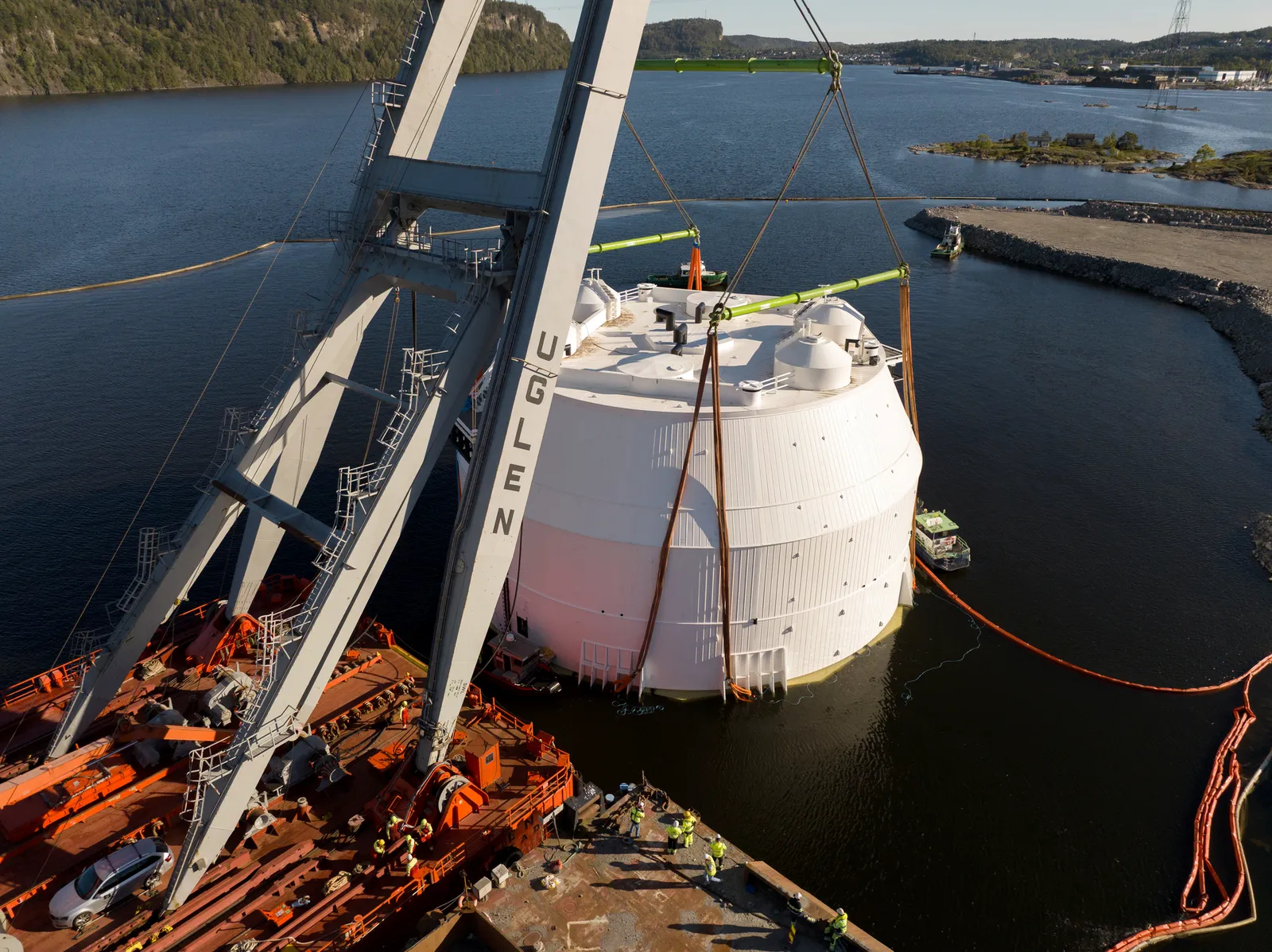
In Norway, Bluegreen built several fully closed polyethylene aquaculture systems for FishGlobe. AGRU supplied structural semi-finished plastic products and piping systems. The installations enable controlled fish production in marine operating conditions.
Material requirements for offshore use
Continuous operation in a marine environment places high demands on both materials and design. Salt water, high UV exposure, marked day-to-night temperature fluctuations and constant mechanical stress from wave action all place a sustained load on the structure. For large welded structures, material selection is therefore a key factor in the installation’s service life.
PE 100-RC was selected for use in Norway. This material is designed to offer high resistance to slow crack growth and provides significantly greater robustness under notch loading than conventional HDPE. For large-scale aquaculture structures in the 30,000 m³ class, this provides an important safety margin.
Polyethylene is also resistant to corrosion by seawater. Additional protective measures such as coatings, sacrificial anodes or cathodic protection are therefore unnecessary. For use in the climatic conditions of the Red Sea, the material was also stabilised with UV stabilisers and antioxidants to slow photo-oxidation and thermal ageing.
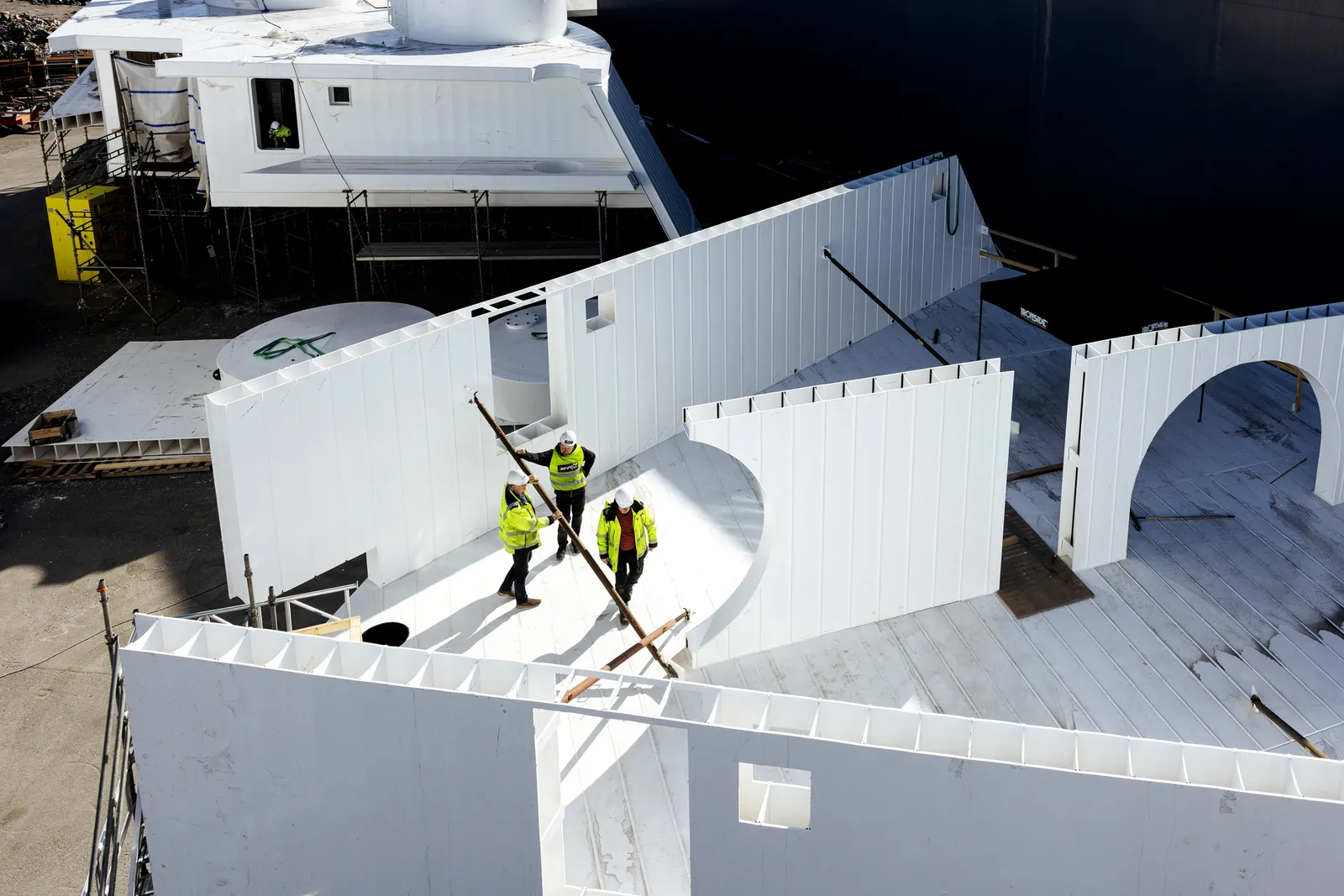
Construction from welded PE sheets
The installations’ outer walls consist of a double-walled welded polyethylene sandwich structure. The large-format sheets were bent into segments on site and then joined using butt fusion (mirror welding), with heated tools, and extrusion welding.
Large-format semi-finished products reduce the total length of weld seams and, in turn, the number of joints. The reproducible quality of the large-scale welded joints ensures connection zones that meet the mechanical requirements for offshore use.
For this project, AGRU supplied approximately 600 tonnes of white, highly UV-stabilised PE 100-RC sheets in a size of 5 × 2 metres and with thicknesses of up to 50 mm. The delivery also included welding wire and more than 200 linear metres of PE 100-RC pressure pipe, DN 1200, for seawater intake and discharge.
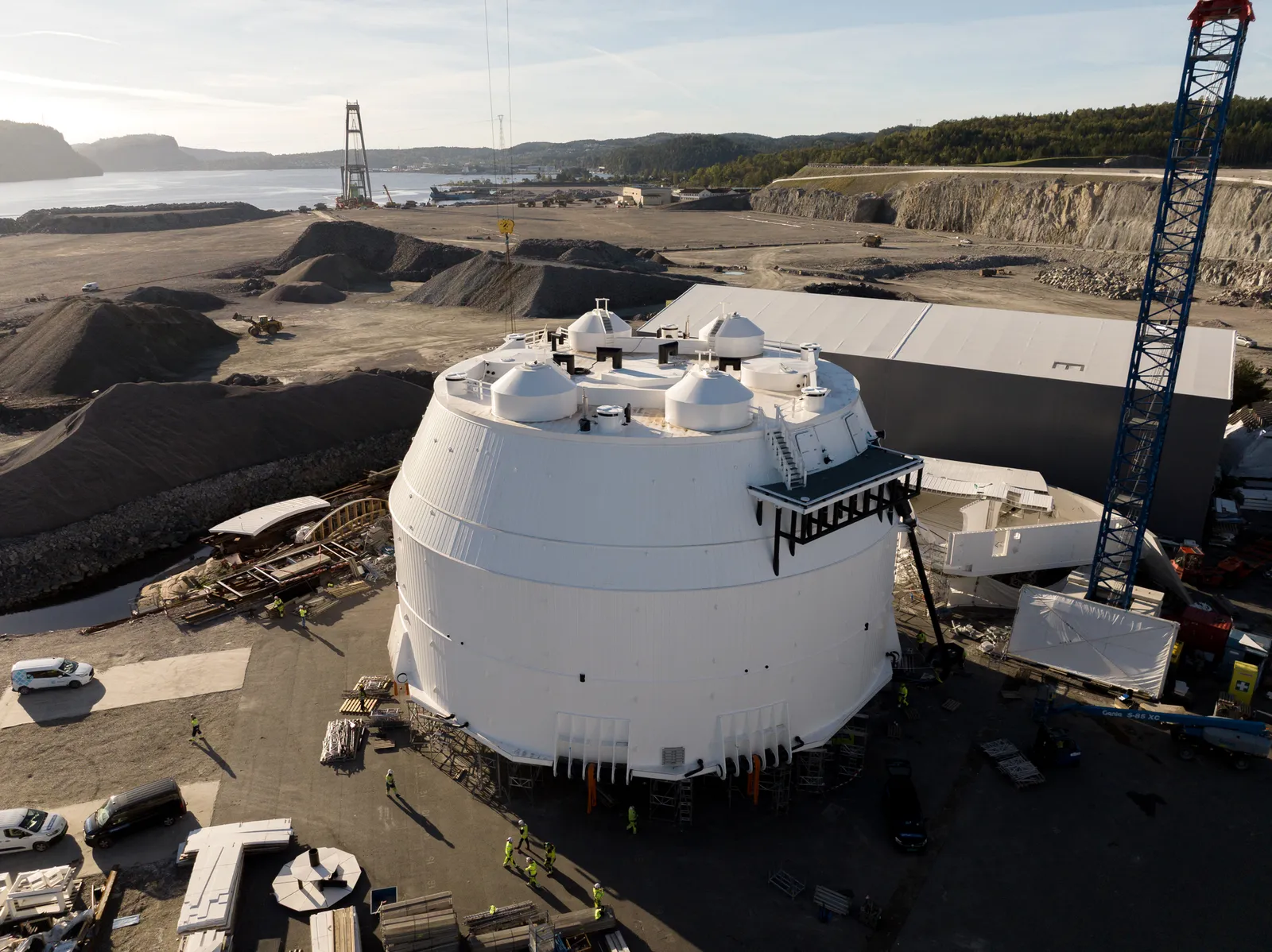
Closed system for controlled aquaculture
The installations’ operating concept is closed from both a technical and biological perspective. Seawater is drawn in under controlled conditions from a depth of between 45 and 50 metres and then filtered. This limits surface contaminants and the ingress of parasites, while also making use of more stable temperature conditions.
Solids from uneaten feed and faeces are collected within the installation and discharged under controlled conditions. The smooth PE surfaces make cleaning and hygiene management easier, as marine growth and micro-organisms are less likely to adhere to them. An integrated flow channel ensures even water circulation within the installation.
Project delivery
The closed-containment aquaculture concept was developed by FishGlobe. The aquaculture units, featuring integrated flow channels, were manufactured to project-specific requirements by industrial partner Bluegreen.
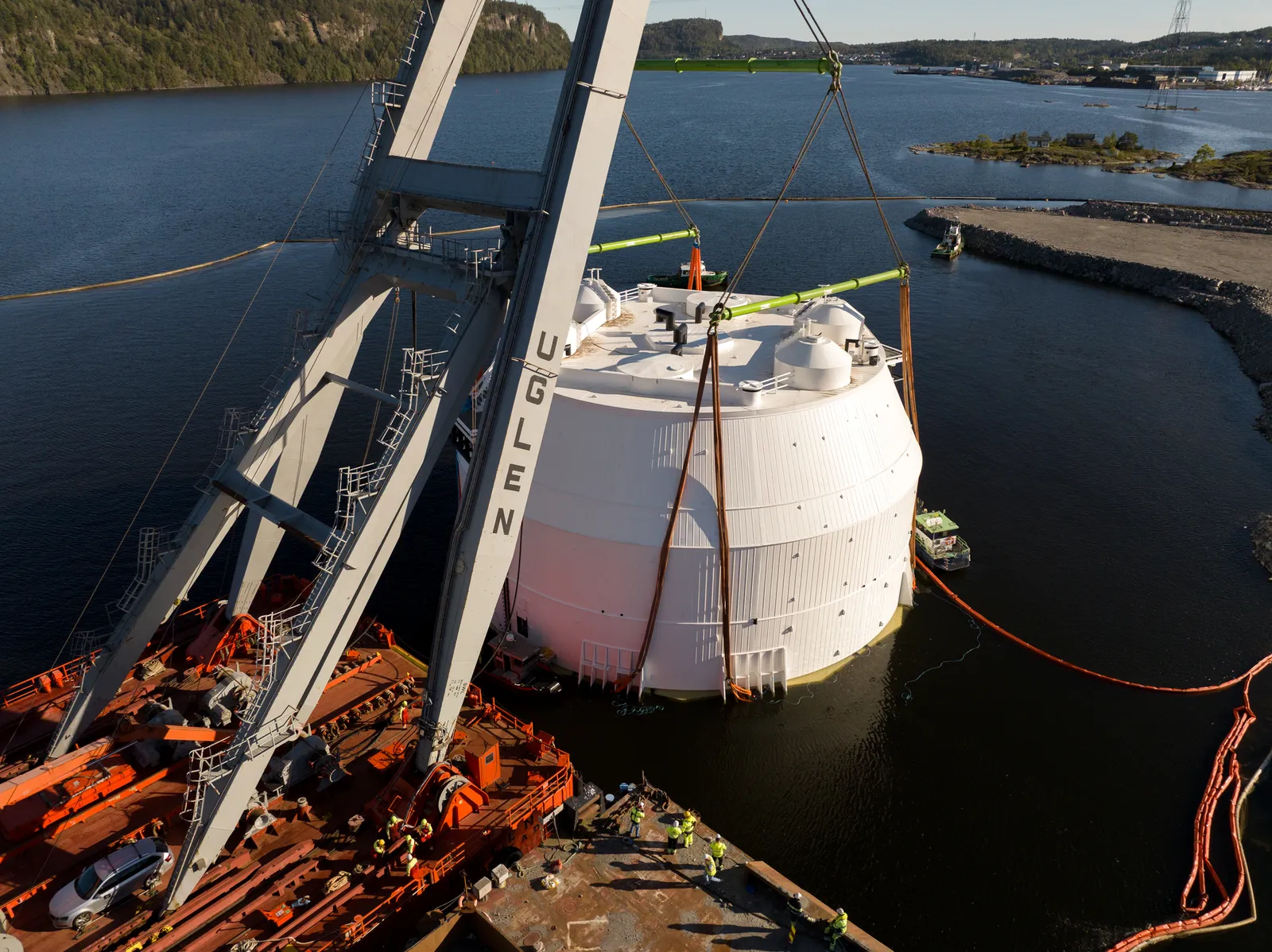
At the end of September 2025, Bluegreen launched the FishGlobe 3.5K (3,500 m³) and FishGlobe 10K (10,000 m³) units at Frier Vest as part of a heavy-lift operation. The installations measure 14 metres in height and 23 metres in diameter, and 17 metres in height and 33 metres in diameter, respectively.
Following completion of inspections and tests, the aquaculture units were handed over to an international customer in Saudi Arabia, where they are now operational.
AGRU as materials and systems partner
AGRU supported the project’s development as a materials and systems partner. Its scope of services included suitable materials for semi-finished plastic products and pipe components, as well as application engineering advice, welding technology, special dimensions and coordinated delivery logistics.
This close integration of services proved particularly important in yard conditions involving crane operations, welding work and limited time windows. AGRU contributed its materials expertise from the planning and design stages and supported the project with targeted technical recommendations.
Preparations are also under way for the largest version of the system to date: the FishGlobe 30K, with a volume of 30,000 m³.
“AGRU’s close cooperation and in-depth understanding of the challenges associated with using plastic products in marine environments have made a significant contribution to the successful delivery of the project,” said Albert Lueghamer, Head of Technical Department at AGRU.
Question about this story? Ask your question
Keep following this
Get an email when a new story is published. No account needed.
- ThemeMaterials and techniques for infrastructure
- SubjectNews







