









‘Life cycle assessment for construction projects a better alternative to a standardised climate label’
Dit is een expertquote van Leo Zwang, Fugro.
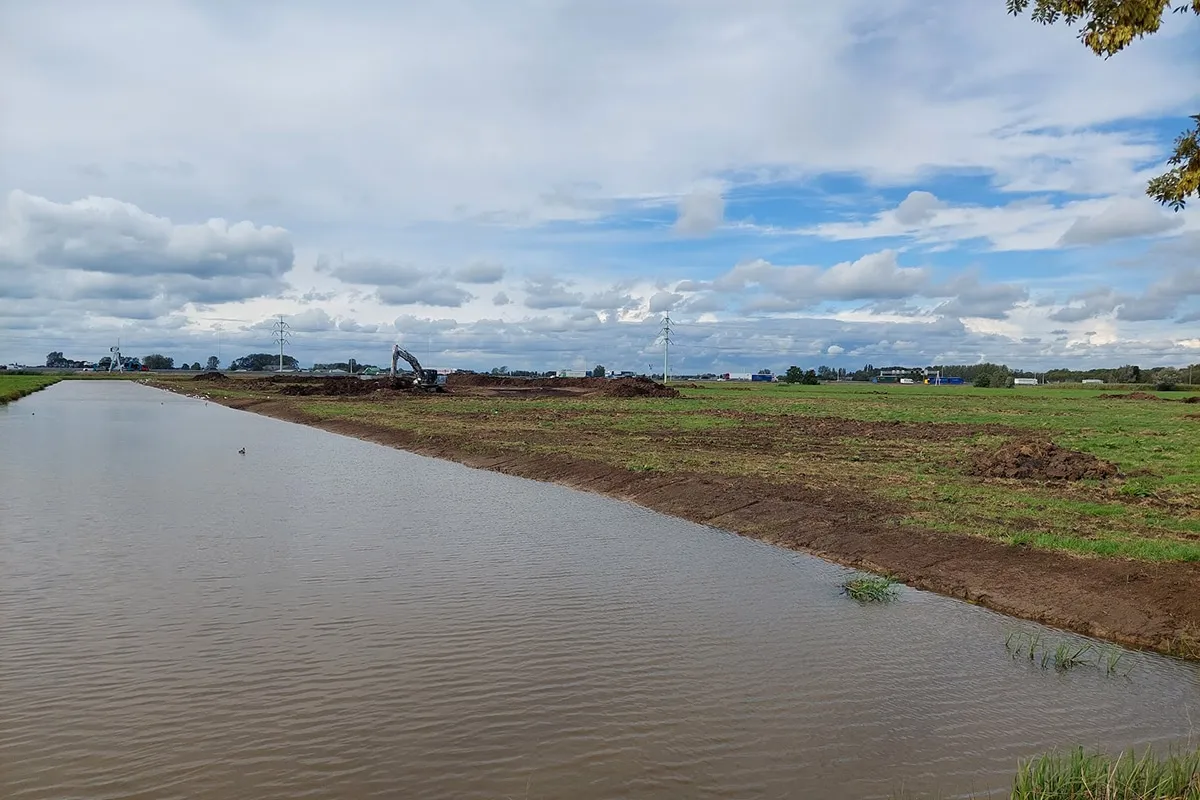
Background: Ballast Nedam: climate risks are making construction project financiers hesitate
Building new homes in the Netherlands is becoming increasingly complex. Banks and investors are imposing climate-related requirements on construction projects more often. They are concerned about climate risks such as extreme rainfall and flooding. Developers are calling for a universal climate label, similar to the energy label. This is not a good solution. A comprehensive ‘life cycle assessment’ during the design process offers a better alternative.
Every municipality in the Netherlands has its own rules and requirements for construction projects. The impact of climate change also varies greatly from one area and location to another. What applies in Limburg, with its hilly landscape, may be very different from what applies in, for example, a deep polder in South Holland. This makes it virtually impossible to create a single standardised climate label that can be applied everywhere. It would be like comparing apples and oranges.
Rather than using a general label, it makes sense to carry out a life cycle assessment. This means thoroughly investigating in advance how a building or project will perform or develop over the next 50 years under defined climate scenarios. This gives developers insight into the investments needed to make the project climate-resilient. In some areas, a large quantity of sand may be needed to raise the site, while elsewhere this may not be necessary.
By having market players such as geo-data specialist Fugro carry out this analysis in advance, you can make better decisions and prevent future unforeseen events such as subsidence or flooding. This allows you to decide whether to invest upfront or make adjustments during the operational phase. Given the total costs over the asset’s lifetime, this requires only limited additional upfront investment, while homeowners and managers (municipalities) benefit over the years.
For projects such as flood defences, including dikes, the asset manager is involved in the construction from the outset. As a result, dike reinforcement projects also focus on future management, and life cycle assessments are already widely used. This is often not the case with municipal construction projects. Problems can therefore arise after construction, leaving the municipality to resolve them. Carrying out a life cycle assessment can help prevent this and ensure the project continues to function well in the long term.
If we continue as we are, construction projects could be delayed or even brought to a standstill. Municipalities also risk facing high maintenance costs in the future because of unforeseen problems. It is therefore essential to carry out thorough analyses in advance rather than rely on general labels.
A business enquiry for Fugro? Get in touch
Companies in this story
Keep following this
Get an email when a new story is published. No account needed.
- SubjectNews
- CompanyFugro







