









Innovative settlement marker sensor
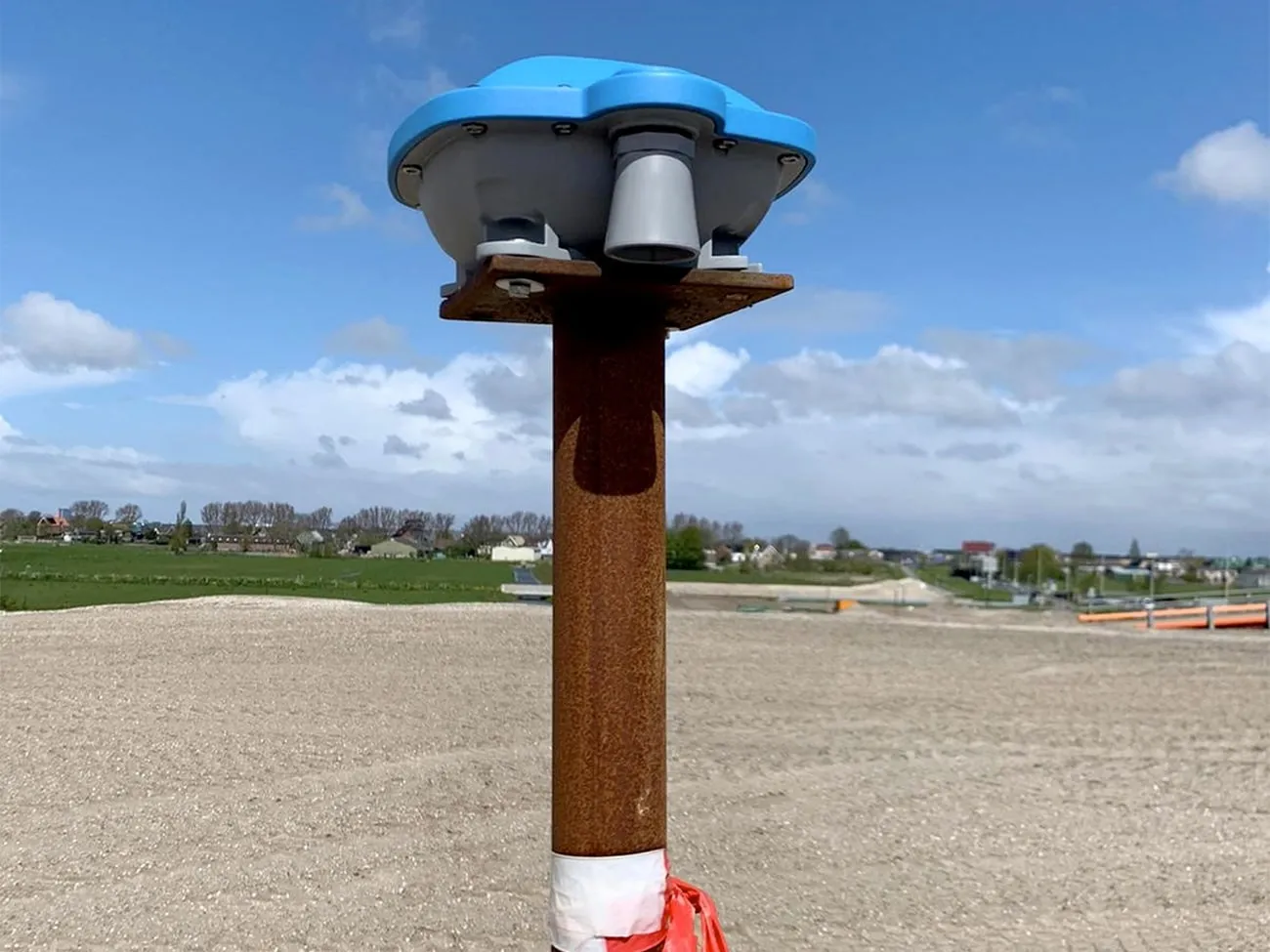
Periodically surveying settlement markers on an infrastructure project is usually time-consuming. The IoT Geo PointR® puts an end to that. This innovative settlement marker sensor was developed by The IoT Company and measures precise movement and deformation along the X, Y and Z axes. Following an extensive pilot on a project around the A16 near Rotterdam, the versatile device is now ready for launch on the market.
The IoT Company specialises in developing and bringing to market IoT sensors that operate autonomously. “Their range of applications is very broad,” says Junior Kooyman, director of The IoT Company. “For example, we have developed various sensors for use in industry, agriculture, and the road and water engineering sector. A good example is our sensor for cathodic protection of underground pipelines. Metal buried in the ground must be protected against corrosion. By checking the measured voltage, current and coupon values, it is possible to establish whether the cathodic protection is still working and the pipelines are not being damaged by corrosion. Another example is a sensor that measures external conditions when growing crops in agriculture. This data is used to predict diseases that may affect crops. So we supply sensors for a wide range of applications.”
Accurate positioning
Geonius Groep is always looking to automate processes and integrate new techniques into existing working methods. “In 2019, we began actively exploring the use of IoT sensors to improve efficiency in work that was then carried out traditionally using ‘standard’ sensors on, for example, monitoring wells and vibration meters,” says director Mark Rurup. “At the time, no supplier had a settlement marker sensor available. We were put in touch with The IoT Company through our network.” The IoT Company was then responding to a request from the Port of Rotterdam Authority to enable tractors and trailers to drive and couple autonomously using accurate positioning. Kooyman says: “By combining sensor technology with GPS, we can determine position to an accuracy of as little as 8 millimetres. This technique is ideally suited to measuring movement and deformation along the X, Y and Z axes on a settlement marker, for example. That is how the idea for the IoT Geo PointR® was born.”
Exact displacement
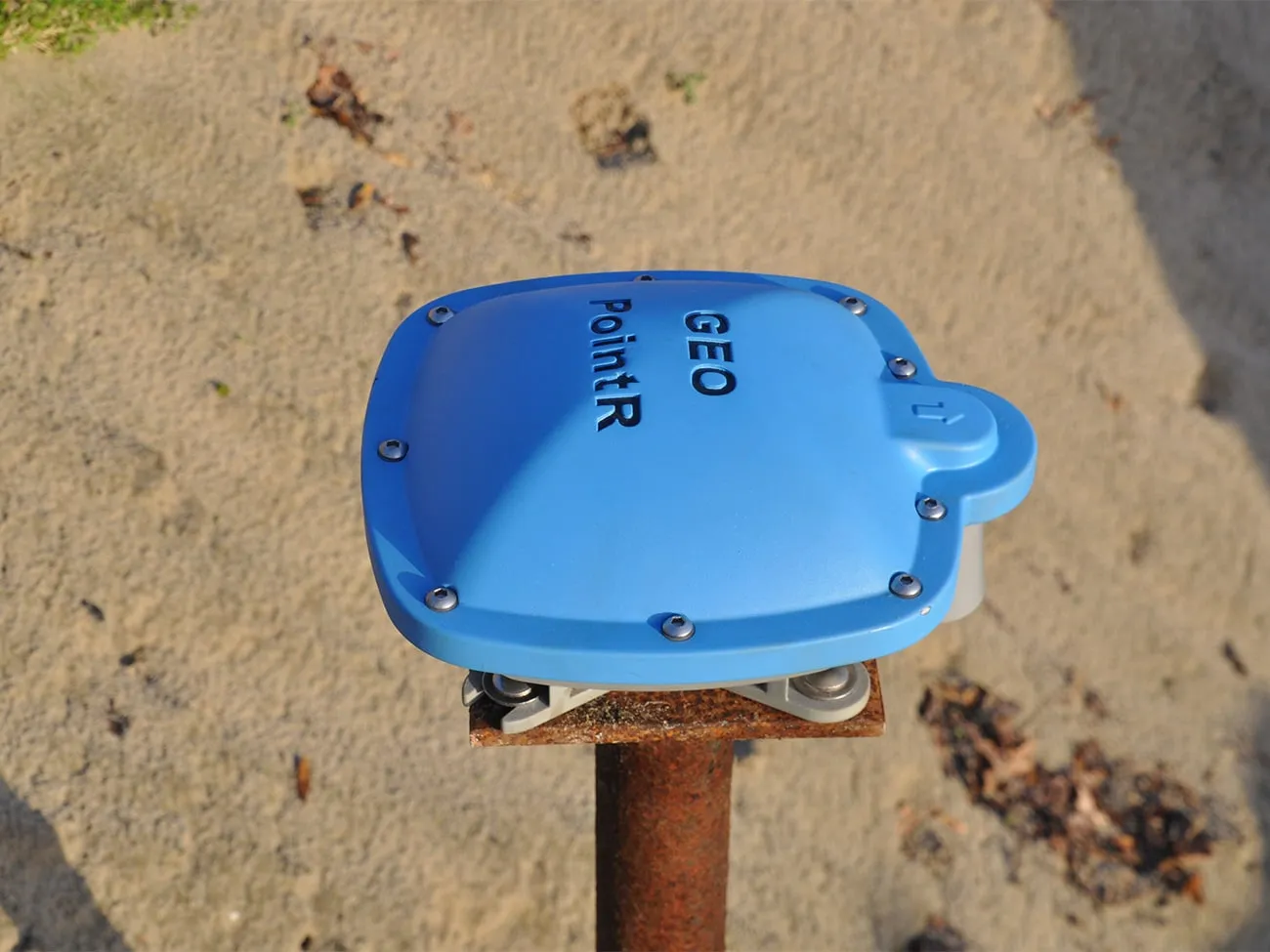
The IoT Geo PointR® is attached to the top of the settlement marker, transmits data over a dedicated network and is powered by a battery. “We deliberately did not opt for a solar cell because of the risk of theft and because, after a few months in the field, they become covered in bird droppings. This reduces their capacity. The battery lasts five years when one measurement is taken per day,” Kooyman explains. “That is much longer than the period for which a settlement marker typically needs to do its job on a project. Because a settlement marker never sinks straight down, movement is measured in three directions so that the exact displacement can be calculated. A sensor also measures the distance to the top of the sand layer. The IoT Geo PointR® has been thoroughly and successfully tested, including for six months at laboratory scale and for eight months outdoors in the field on a project around the A16 near Rotterdam. All data collected are analysed, processed and displayed on a clear platform, giving a good picture of forecast and actual settlement.”
Rurup sees nothing but advantages in using the IoT Geo PointR®. “Measuring settlement markers is often a stop-start job for surveyors. This technology enables us to make a definite improvement in quality and keep our people available to tackle more complex issues. It is also a great spin-off that allows us to take further steps towards sustainability. After all, there is no longer any need to travel physically to settlement markers, which on major infrastructure projects are often located in remote or hard-to-reach places. A win-win.”
Question about this story? Ask your question
Keep following this
Get an email when a new story is published. No account needed.
- SubjectNews







