









Innovation, knowledge-sharing and a strong focus on water engineering
Registration opens for InfraTech 2023
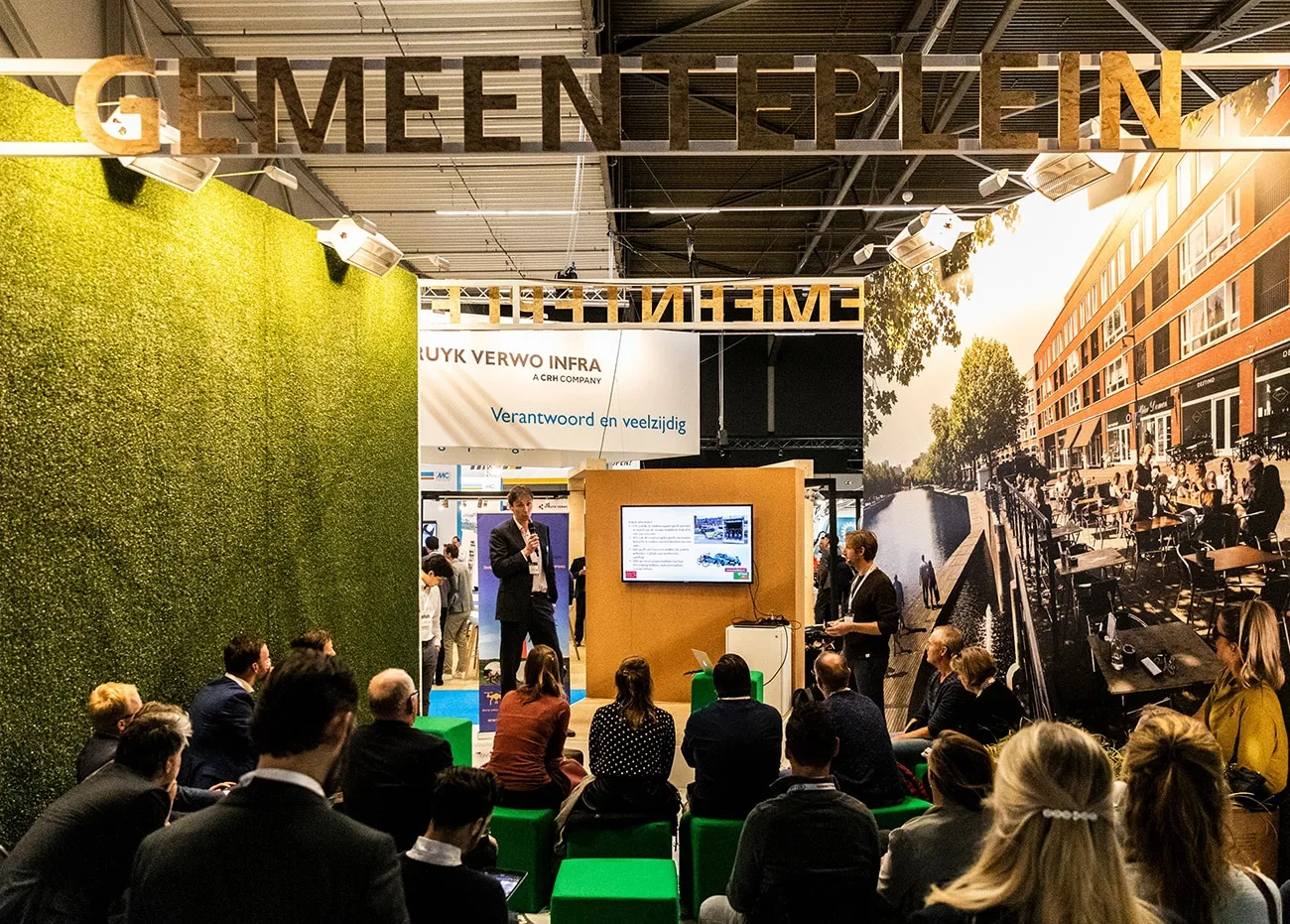
Infrastructure professionals can once again register for the sector’s largest platform: InfraTech. After being forced to go online in 2021, Rotterdam Ahoy will throw open its doors from 17 to 20 January 2023 for the 15th edition of the trade fair, along with its knowledge sessions and conferences. These pages offer a preview of the InfraTech Innovation Awards and a special focus on water engineering.
The InfraTech Innovation Awards have long been an important barometer of the latest developments in the infrastructure sector. Entries for the next edition have now closed, and the expert jury is currently deciding who will be invited to take part in the pitch round in December. It is a good time to see how the 2021 winners are getting on.
Extending the life of timber piles
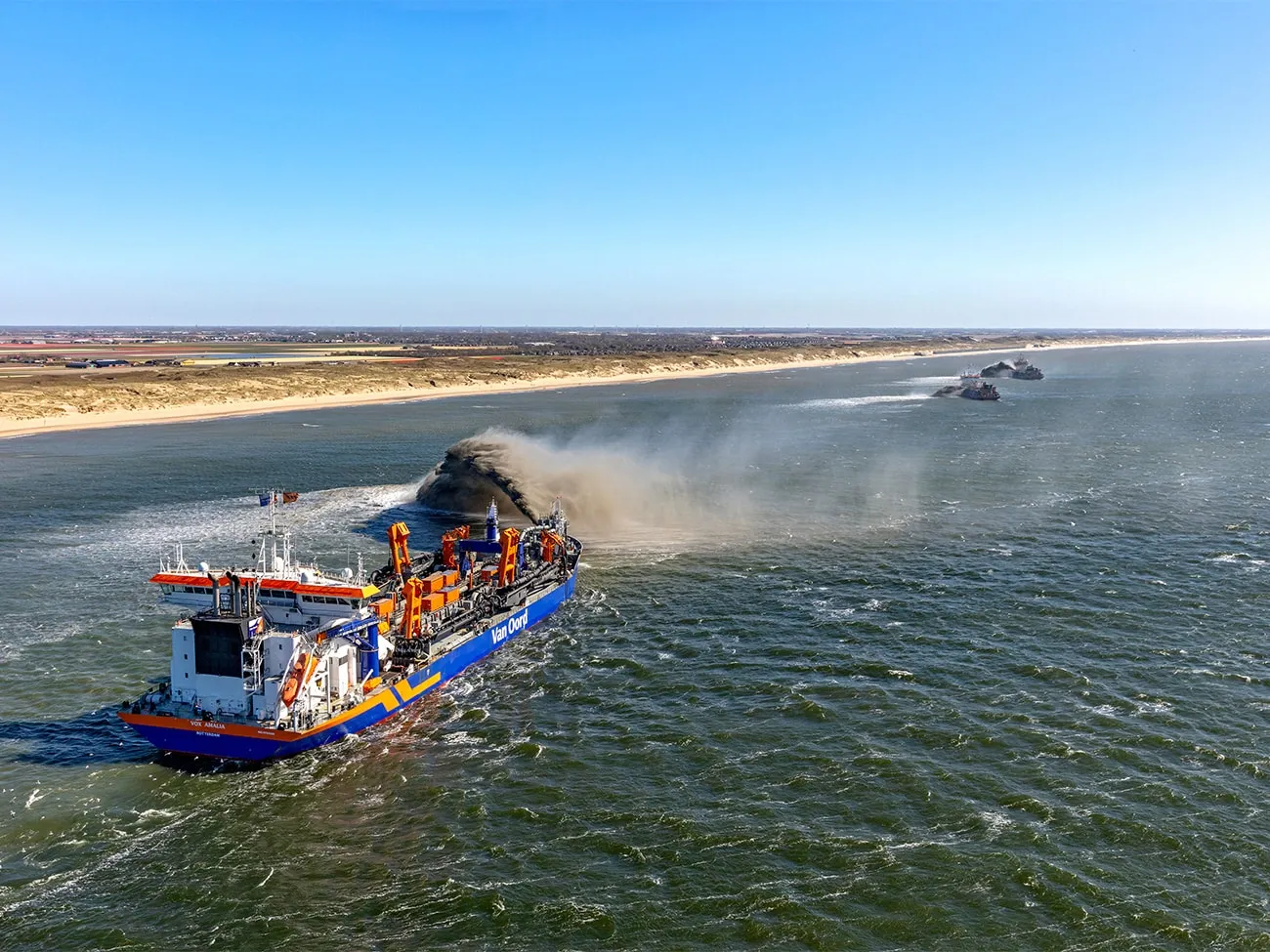
Protekta won the 2021 InfraTech Innovation Award in the product innovation category. The company, based in Gemert in North Brabant, devised a method for joining timber piles together. Using glass-fibre reinforcement and a specially developed resin suitable for use above and below water, piles used for applications including mooring dolphins, bridges, fendering structures, jetties and lock gates can be lengthened. This saves a significant amount of new timber and also extends the service life of many bridges and fendering structures. Protekta calls its product ‘Vergeten Hout’. There are thousands of old piles in the water in the Netherlands that can be reused.
Almost two years on, Protekta has saved a considerable amount of new timber and reduced CO2 emissions, says Lucie Roep of Protekta. “For a single fendering structure with 12 mooring dolphins, you save around 15 cubic metres of timber and approximately 912.87 kg of CO2. And that is just one project. This shows how important it is, and will become, to think carefully about using materials sustainably and to choose to extend the service life of timber instead.”
Roep stresses that Protekta does more than patch up old piles. “That is not what we are about. Our method, which we have mainly used in the Port of Rotterdam, can extend the life of timber piles by up to 30 years. It is no coincidence that we offer a 20-year guarantee on our repairs and extensions.” As well as extending the life of timber piles sustainably, Protekta has specialised in repairing timber in water since 2009. Roep says: “We mainly do this for clients such as local authorities, water boards and provinces. We are also increasingly being included in tenders for bridge maintenance. More and more clients recognise that sustainable repair is better, cheaper and more sustainable than completely replacing water structures.”

Practical training for the sector, delivered by the sector
Two years ago, ASTRIN won the Innovation Award for the most innovative partnership for its Smart Infra Academy. Since then, it has continued to make progress. ASTRIN has since merged with Techniek Nederland, and the Smart Infra Academy has been established as an independent foundation. Since winning the InfraTech Innovation Award, the Academy has launched three new training courses, backed and supported by a range of companies in the sector.
These include the level 3 vocational course ‘Basis Smart Infra installatie, service en onderhoud’, the level 4 vocational course ‘Specialisatie Smart Infra installatie, service en onderhoud’ and the post-HBO course ‘Smart Infra Engineer’. Gertjan Eg, who founded the Smart Infra Academy, says: “We have secured recognition for the professions in the smart infrastructure sector and put them on the map. The courses have been developed primarily as further training for people already working in the sector. The vocational courses are also available as optional modules at various vocational colleges for new entrants and people joining from other sectors. The post-HBO course is specifically aimed at higher-education graduates working for companies, as well as people involved in Smart City and infrastructure projects at client organisations and engineering consultancies.”
Eg is also proud of the Smart Infra Training and Innovation Lab. “It is a unique location in the Netherlands where companies can offer state-of-the-art Smart Infra equipment for sewer engineering, urban water management, public lighting and traffic engineering.
Since the award was won, an accreditation scheme has also been developed for companies that commit to improving quality in the smart infrastructure sector and training their employees in this area. The scheme will be rolled out over the coming years.
According to Eg, the ASTRIN ACADEMY project is now in its final phase. “The project is formally due to end in late 2022. So by the time InfraTech 2023 takes place, the project will have been completed and the Smart Infra Academy will be an organisation continuing its results. For now, our priority is to recruit new participants. We will also be focusing on this at the trade fair, together with Techniek Nederland.”
Demand
According to Eg, the Smart Infra Academy meets a major need. “We still see smart city and infrastructure projects struggling to get off the ground. It is also becoming increasingly clear that both clients and businesses lack the knowledge and skills needed to complete projects successfully. Scaling up requires investment in sharing knowledge and skills. We believe we have developed a strong offering to meet this need, and we will continue to invest in and develop it.”
The huge shortage of staff is a challenge, Eg acknowledges. “This makes it difficult for companies to free up people for training and therefore to invest in their employees’ future. That is quite a contradiction. It is precisely for this reason that you should be working to ensure your employees remain sustainably employable. An ageing workforce will lead to even greater staffing problems in the coming years. Attracting new entrants and people joining from other sectors is also becoming a priority for our Academy.”
The coronavirus pandemic has also been a challenge in recent years. Eg says: “It affected the delivery of the pilot courses. We would have liked to have had more participants in them. Fortunately, we have also been able to draw on the enthusiasm and expertise of many people. Despite those setbacks, we are pleased to see that participants remain very enthusiastic and that many recognise the value of the developments we have set in motion for the future of the sector. We will be underlining this throughout at the Techniek Nederland stand during InfraTech 2023!”
New at InfraTech 2023: the Waterbouwplein and Bouwen in Water symposium
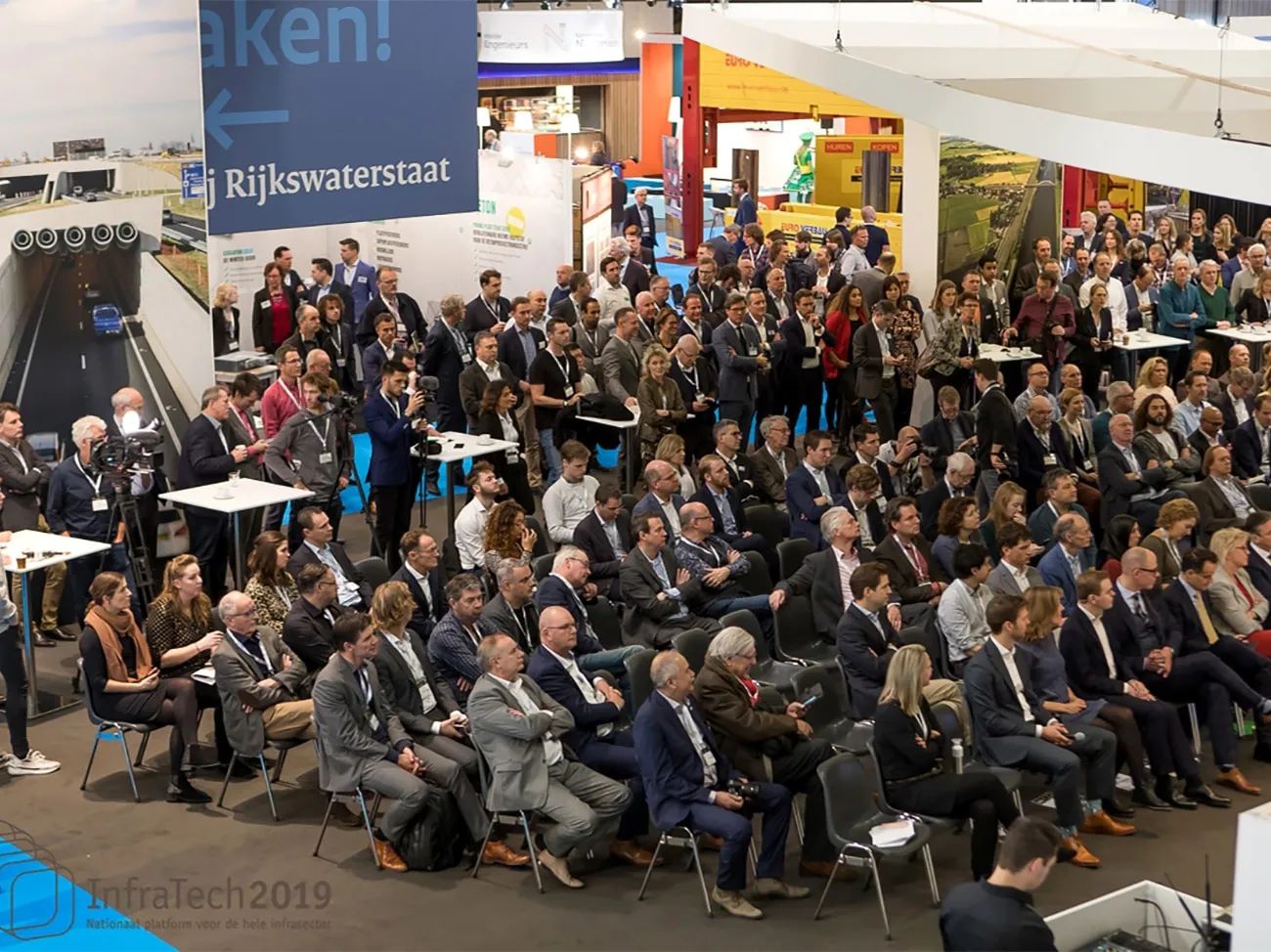
InfraTech 2023 will feature a new area on the exhibition floor dedicated to water engineering. The new Waterbouwplein is a meeting place for water engineering companies of all sizes, working in fields including civil structures, land reclamation, dredging, flood protection, structural water engineering, port development and area planning. The public sector will also be represented at InfraTech with its own areas, making the event a great opportunity for water engineering companies to meet directly with public-sector organisations.
The Waterbouwplein is in a prominent location in Hall 1, the hall dedicated to infrastructure. It has space for 10 organisations, each with its own information desk, as well as a shared bar.
For the first time, InfraTech 2023 will also host the ‘Bouwen in Water’ symposium on 19 January 2023. It follows on from the earlier World Water Works conference, held in Antwerp on 23 and 24 March 2016. The symposium will discuss the construction and development of a proposed industrial energy island in or near the mouth of the Westerschelde. The island would incorporate a flood defence in the mouth of the Westerschelde to protect the hinterland, while maintaining access to the ports of the Westerschelde and providing a second north-south connection. There would also be space on the seaward side for a new seaport container terminal, with an offshore service harbour and the potential to accommodate nuclear power stations, an LNG terminal, renewable energy facilities using solar, wind and tidal power, and new industrial sites. The central question at the symposium is whether the cost-benefit ratio of large-scale interventions is favourable. Is there a need for new seaports on an island, with handling and transhipment capacity for all types of cargo, serving the ports of Antwerp, Ghent and Vlissingen? Northern France will also become part of the hinterland of these ports via the Seine-Nord Canal.
The key question is whether a flood defence in the Westerschelde will eventually be unavoidable in view of safety, sea-level rise and further economic development. Or would the resulting damage to nature make it untenable? Addressing this trade-off could provide a sustainable answer to all the questions facing the residents and industries of the Scheldt basin in relation to the Westerschelde.
A business enquiry for InfraTech? Get in touch
Companies in this story
Keep following this
Get an email when a new story is published. No account needed.
- SubjectNews
- CompanyInfraTech







