









Geotechnical investigation reveals what lies beneath
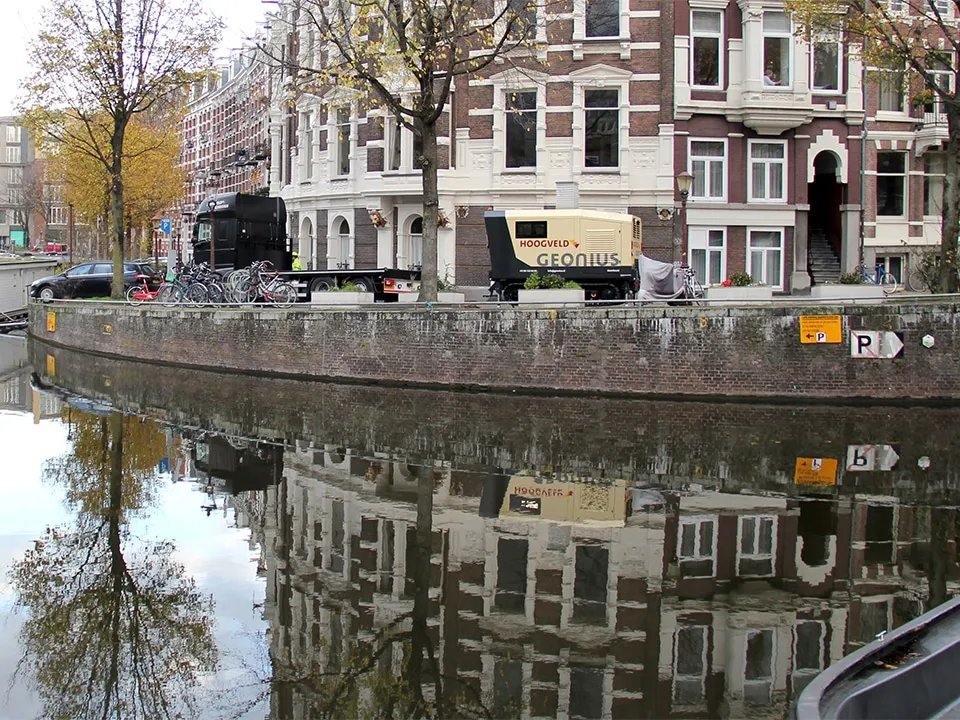
What is the true condition of Amsterdam’s quay walls?
Amsterdam’s quay walls are a delight to the eye. They are steeped in history, add character and create beautiful spots by the water. But if we want to preserve them, they must now be repaired or replaced.
The repair of Amsterdam’s quay walls has been an issue for years. Many require major maintenance. Over a stretch of around 10 kilometres, the situation is even a cause for concern. To take a structured approach, Amsterdam City Council has now set up a project office to inspect bridges and quay walls at a high level, then enter into framework agreements with engineering firms and contractors for investigations and renovation. One of these agreements is with Geonius, which is carrying out geotechnical investigations at 27 locations along the quay walls.
A major challenge
The investigation is wide-ranging and requires intensive preparation. “We have only a limited picture of the quays,” says Mark Rurup, director of Geonius Groep. “They are partly built of timber and partly of masonry, and we have little insight into the sections below ground. The quays are also narrow and packed with cables and pipes. Another challenge is ensuring that city life can continue during the investigations with minimal disruption.”
Geonius’s role
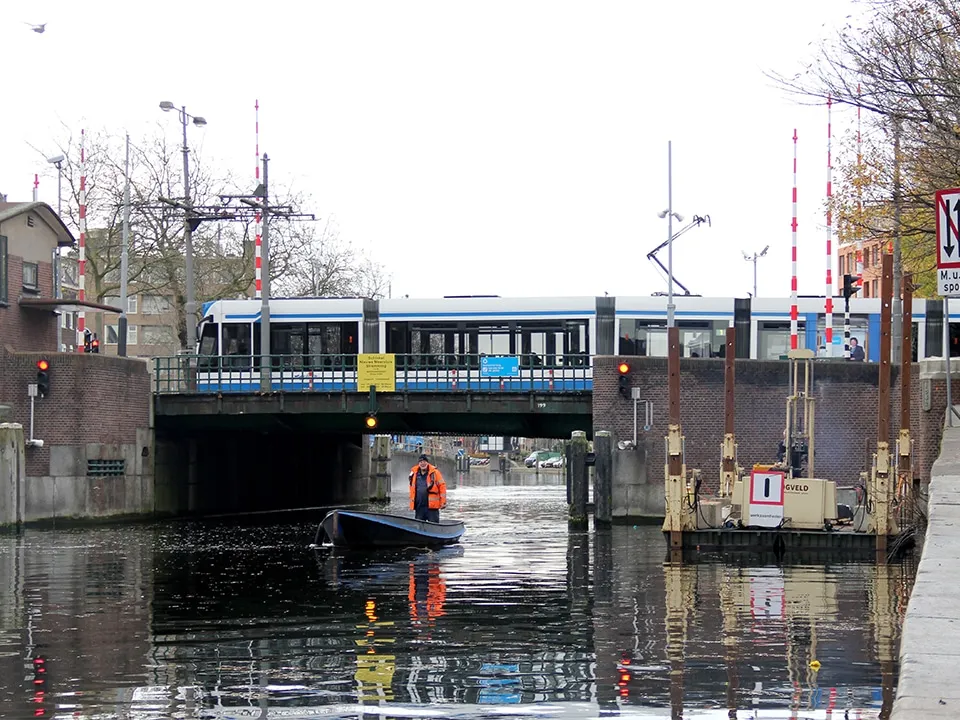
“We determine the best approach for each location,” adds Jos Verbeek, Geotechnics Manager. “What equipment can we use, and what safety measures are needed? Cone penetration tests, boreholes and laboratory tests give us insight into the ground conditions beneath the existing quay walls. We are carrying out this work in the Centrum and Nieuw-West districts. The cone penetration tests and boreholes are carried out partly from the quay and partly from a pontoon on the water. Naturally, we do everything we can to minimise disruption to shipping.”
Ready for the job
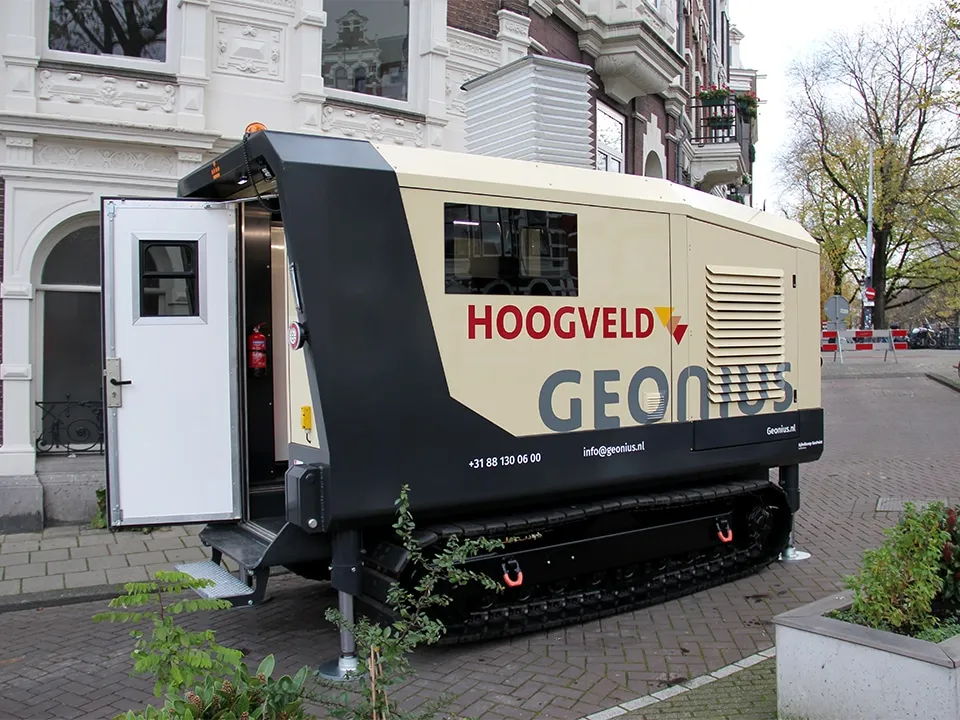
The major contract has come at just the right time for Geonius. “Since acquiring Hoogveld Geo last summer, we now have more than ten cone penetration testing units and our own pontoon,” says Verbeek. “Our latest addition is the boxed crawler, a cone penetration testing unit with a very small footprint. It is ideal for Amsterdam’s narrow streets. The machine has plastic tracks, so it causes no damage and can operate in a space just two metres wide.”
Geonius began preparatory work in mid-July and has been carrying out the investigations since October. It is already clear that manoeuvring will be a challenge. “Some locations are difficult to reach even by car, let alone with a cone penetration testing unit.”
Question about this story? Ask your question
Keep following this
Get an email when a new story is published. No account needed.
- SubjectNews







