









Fugro investigates ground subsidence near Emmen
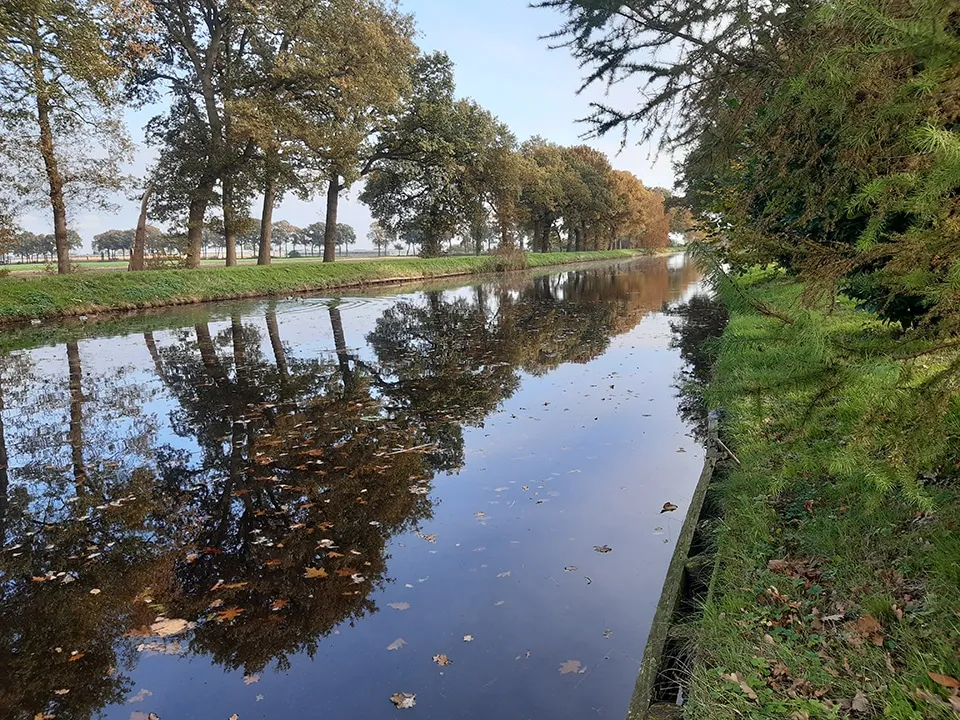
At the end of 2019, Emmen Municipality, the Province of Drenthe and Vechtstromen Water Authority commissioned Fugro to investigate the causes of ground subsidence and its possible link to damage to homes in and around Nieuw-Amsterdam. At the end of 2019, Emmen Municipality received dozens of reports of ground subsidence and damage to houses, sheds and paving in Nieuw-Amsterdam and Erica. Residents were extremely concerned about the condition of their homes and the safety of infrastructure such as gas pipelines. Following a tender, geodata specialist Fugro carried out ground investigations.
Fugro gathered a wealth of relevant information, including historical canal levels, groundwater levels, building foundation types, ground conditions, and data from the TNO DINO-Loket and InSar satellite. The area’s history, as a former peat colony, was also studied, and hand auger drilling and cone penetration tests were carried out at 10 homes. Monitoring wells were installed to monitor groundwater levels, and possible effects from oil and gas extraction and vehicle-induced vibrations were also investigated.
Lomulder: ‘We identified three soil types, each with a different susceptibility to settlement, resulting in varying levels of ground subsidence. The presence or absence of peat layers at the surface and deeper peat and clay layers plays a major role. This explains the variation in damage. The damage is caused by ground subsidence resulting from the soil profile and falling groundwater levels. The subsidence occurs naturally as the upper peat layer oxidises, in other words, dries out during dry periods. Local groundwater abstraction can also contribute to the compression of deeper peat layers. The water authority is investigating this further.’
Oxidation of the upper peat layer mainly affects gardens, road surfaces and extensions or sheds. Homes are founded on deeper layers, and depending on the foundation method, damage to them is mainly caused by the compression of deeper peat and clay layers as groundwater levels or piezometric head fall. Damage is exacerbated where homes have different foundation types and/or have been subjected to additional loads, for example from a dormer window. Oil and gas extraction, earthquakes and water-level management could not explain the substantial variations in ground subsidence. Surface water level management did not contribute to the subsidence. Vehicle-induced vibrations are not in themselves a cause of damage, but can be the final trigger in homes and foundations already under stress from peat oxidation or the compression of deeper peat layers.
Fugro advises residents to consult a structural engineer and commission ground investigations when planning new-build or renovation work. The findings are also highly relevant to other peat colonies, as the ground conditions identified in Nieuw-Amsterdam are found in many other locations.
Robin Lomulder, senior consultant at Fugro: ‘As the geodata specialist, we have all the essential disciplines at our disposal to build a complete picture and carry out a sound analysis. This unique combination of expertise enables us to work efficiently and draw on the extensive experience and knowledge within our organisation.’
A business enquiry for Fugro? Get in touch
Companies in this story

Keep following this
Get an email when a new story is published. No account needed.
- SubjectNews
- CompanyFugro







