









‘From aquarium pumps to pumping 4.5 cubic metres per second’
“It’s a good illustration of where our expertise lies: we hire out everything from aquarium pumps to pumps that move 4.5 cubic metres per second.” That’s Rick van der Kamp, owner of Vanderkamp Pompen in Zwolle. Rick and his colleague Johan Rooijakkers, technical sales adviser, talk about how innovation has driven the evolution of their company.
Vanderkamp Pompen hires out solutions for every flow rate
In today’s world, every second counts
“We’ve been working in ‘cubic metres per second’ for some time now, rather than cubic metres per minute, as many water authorities do. Climate change and changing water-related challenges can create situations where every second counts. Our pump development is geared towards addressing those needs,” says Rick.
The largest pumping capacity supplied by Vanderkamp Pompen is at the IJmuiden pumping station. Rick explains: “The installation was designed to move 72 cubic metres per second. It’s Europe’s largest pumping station and has six pumps. Two had failed and needed replacing, a job that took a year and a half. Rijkswaterstaat had complete confidence in our ability to provide sufficient pumping capacity. In the end, we went with a mix of very large and large pumps, 34 in total. I don’t think I need to explain what a logistical challenge that involved. Given the emergency, we had to hit the ground running from the very start.”
‘Providing expertise is our core business’
Rick continues: “Of course, hiring out pumps is how we make our living, but our core business is providing expertise. There’s no point hiring out pumps if you’re not offering the best possible solution for the situation. We want to be the best at analysing the problem, considering possible solutions and then providing the best pumps for the job. And if that means modifying existing pumps, that’s what we do.”
The company has been in business for 30 years for good reason. As a family business, Vanderkamp Pompen benefits from continuity and the freedom to invest. “Money in a family business can be patient. We take the time to get things right, so we can guarantee quality and make sure our customers get more than they asked for. That’s why they come back. As a family business, you’re constantly aware that your name is attached to everything you do. And when we look at what drives us as a family business, the conclusion is that this isn’t about quick profits, but about generations. That creates a completely different business atmosphere. Father Eef is now 83 and has an advisory role in the company. “We essentially started this together, so I’m both the first and second generation,” explains Rick. “My mother, Leida, died two years ago and was a rock for both my father and me, just as my own wife Rianne is for me. I’m immensely proud of my parents, and now that I’m a father myself, I realise just how proud they must have been of me. My father was 53 when he went into business with me. I’m now 57, and a few years ago two of my three children joined the company. My daughter Linda and son Erik work here, while my daughter Marieke has just finished her studies. I’m incredibly proud of them. Of course, it’s reassuring to know that the business could be passed on within the family. We’ll see!”
Renovation of the Stamriool in Oss
We ask them to tell us about a standout reference project. Johan doesn’t have to think for long: “A sewer renovation project for Waterschap Aa en Maas. The Stamriool in Oss, a concrete culvert 2.45 metres wide and 1.65 metres high, was given a treatment to extend its service life.
The work had to be carried out in sections, with us providing the bypass each time so that the section being treated could be drained. Waterschap Aa en Maas has been carrying out the renovation in phases since 2013. We were involved early on, advising on how best to divide the trunk sewer into sections.”
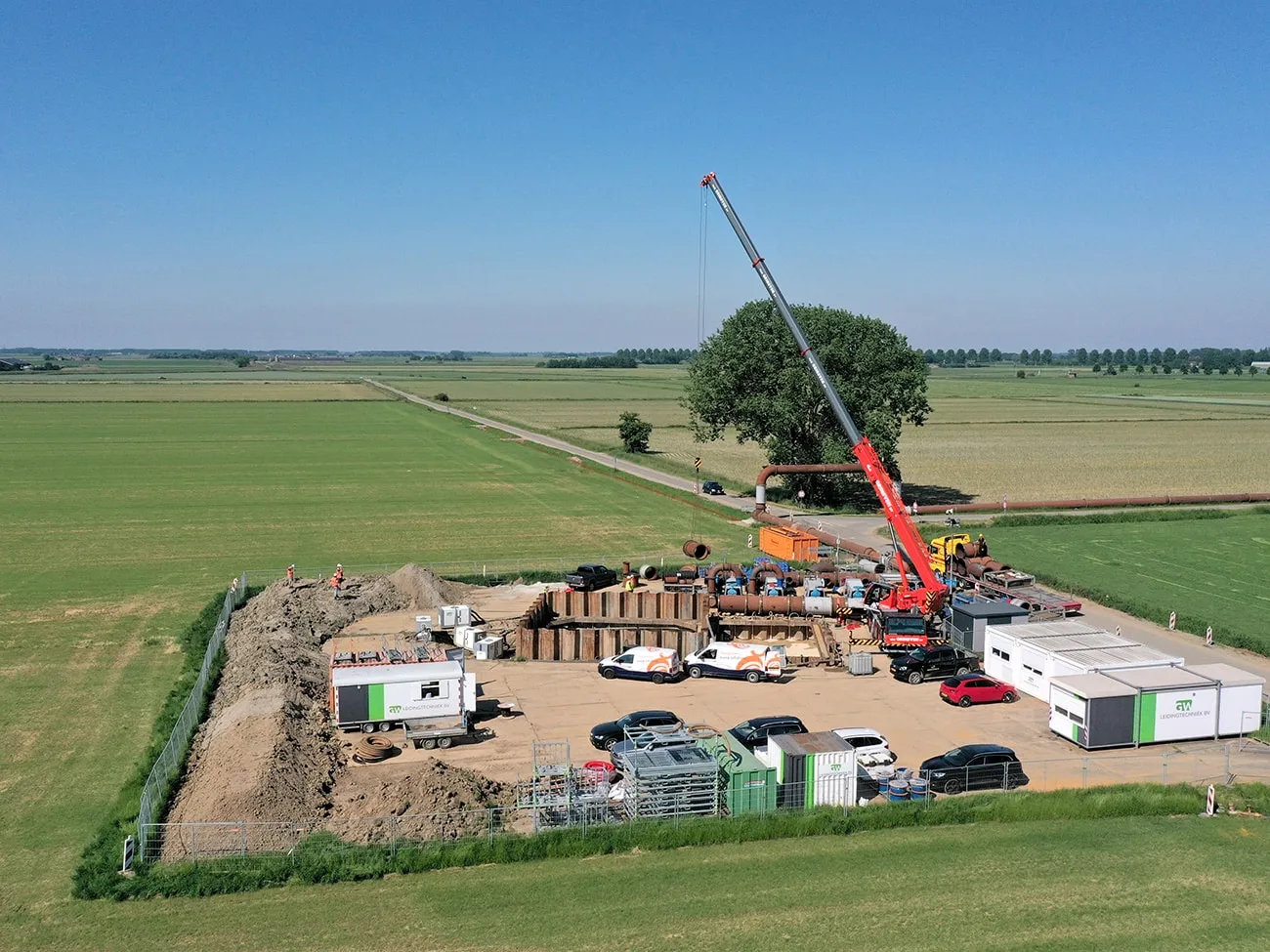
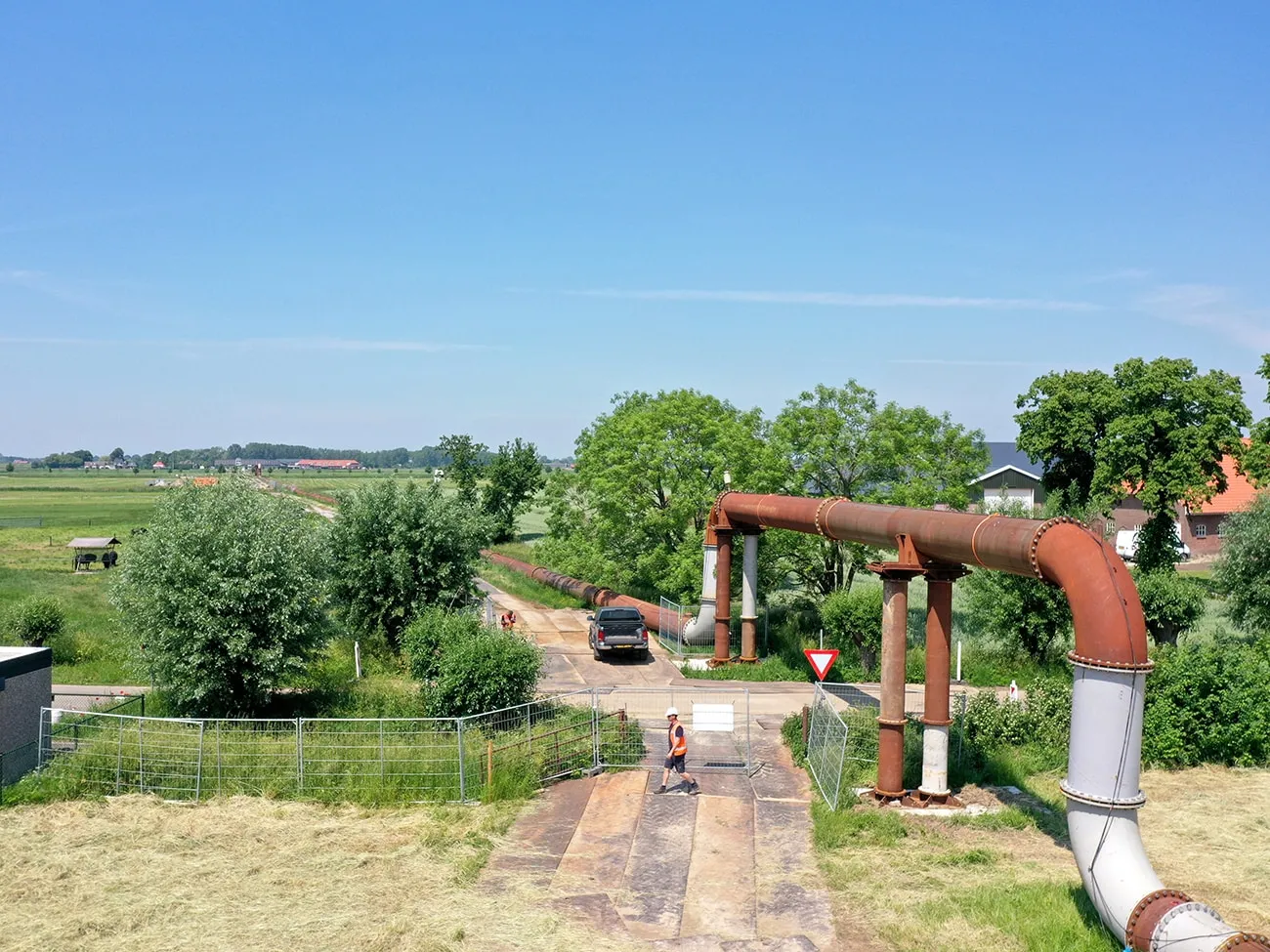
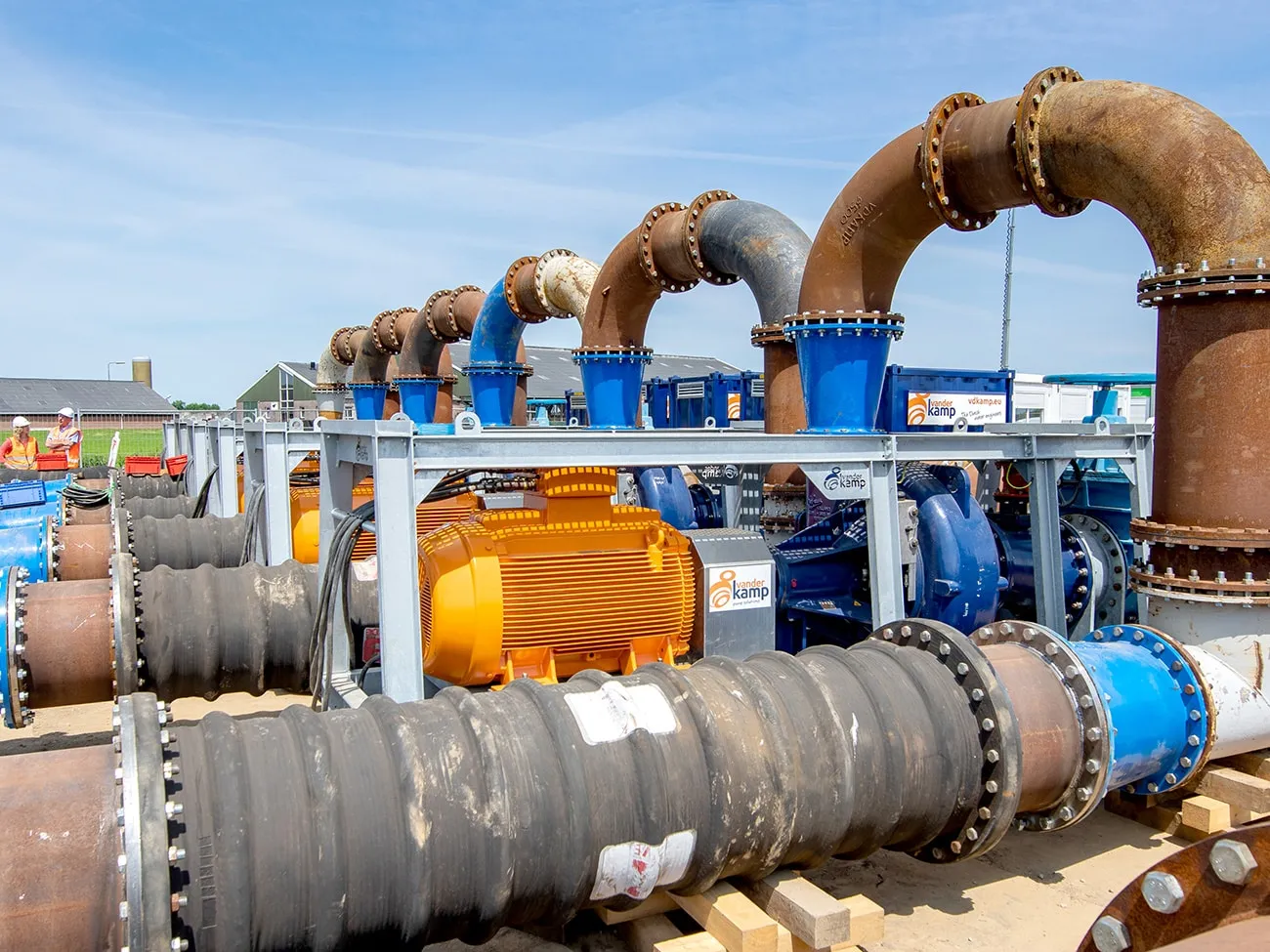
Rick adds: “We’re now in phase 3. The section of the trunk sewer being renovated in this phase is 1,650 metres long. To create the bypass, taking into account several cadastral constraints, we used 1,850 metres of our own steel pipe with a diameter of 1,000 mm.” By carefully calculating how to divide the work into phases, they were able to significantly reduce the CO2 footprint. Johan explains: “Because the phases were long, we had time to arrange a permanent electricity supply from Enexis and use electric pumps throughout. This meant we avoided using polluting diesel generators.” Rick says this approach is a good example of Vanderkamp Pompen as a ‘knowledge factory’. “We consider sustainability and can add value early in the chain. Our team includes mechanical, civil and electrical engineers, and we worked very well with main contractor GW Leidingtechniek BV and the water authority during the research phase.”
In-house PLCs and software
Vanderkamp Pompen controls its custom-designed installations using PLC controls manufactured in-house and control and monitoring software developed by the company itself. Johan explains: “We control the pumps remotely and monitor their operation remotely. For example, we installed a level sensor at the water treatment plant and linked it to the pumping installation. This means we can always regulate the inflow to match the plant’s receiving capacity.” Rick adds: “Our client can view our systems in real time. We’re transparent about everything and extend that trust to the client because they do the same for us.”
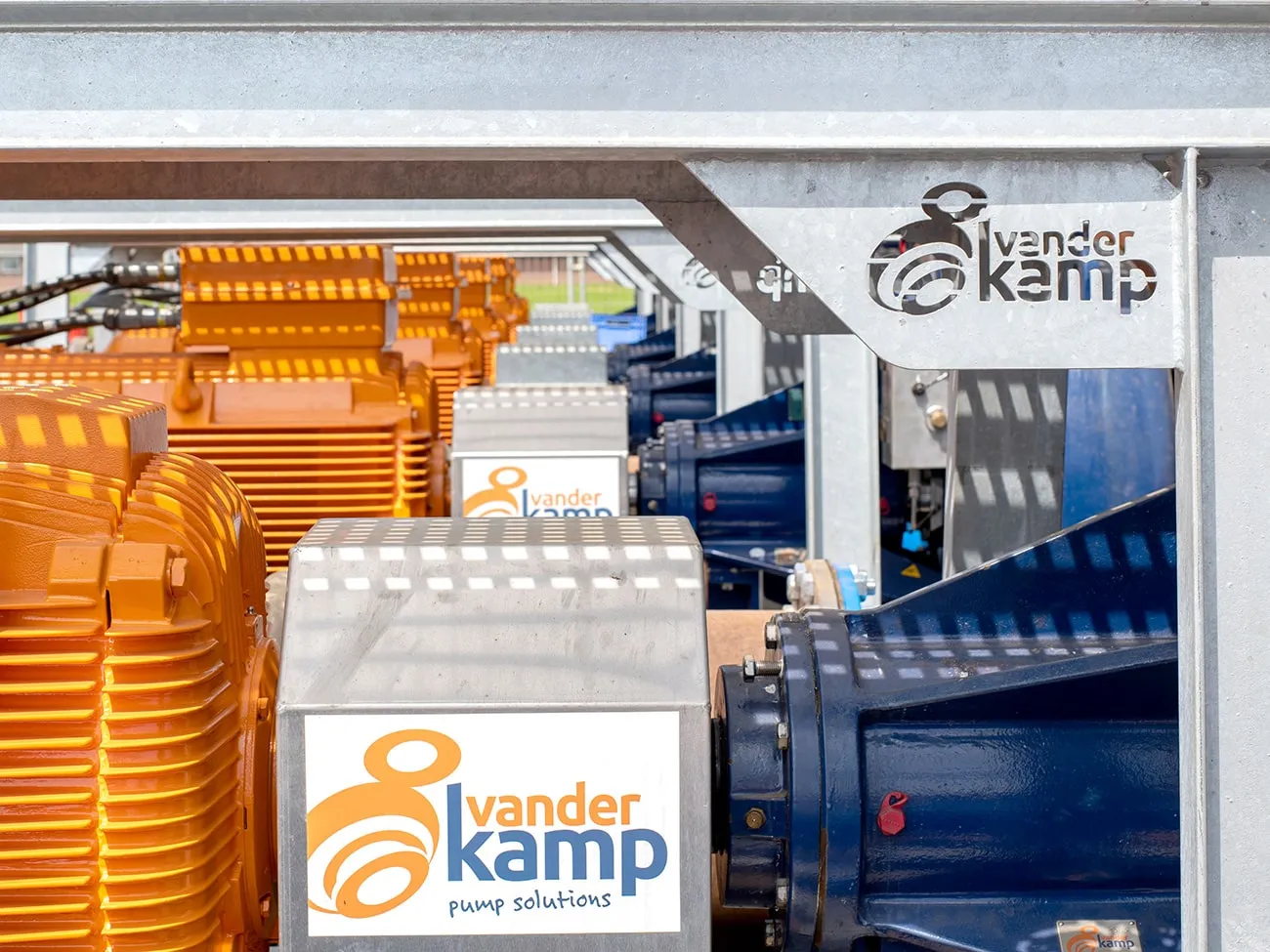
On the design of the installation for the pumping route in Oss, Rick says: “You have to minimise the risk of blockages. Sometimes you’re pumping really ‘tough stuff’. That’s why we chose Pentair pumps with screw centrifugal impellers and a large solids passage.” Johan describes what happens during heavy rainfall: “When it rains, up to 10,000 cubic metres per hour may have to pass through the pipe. In dry weather, it’s only about 800 cubic metres per hour. We divided the installation into large and small pumps to keep the level in the culvert as low as possible at all times.”
Developing and building our own pump
Many pump manufacturers focus on making production as efficient and inexpensive as possible. “That makes sense as a business model,” says Rick. “But it can mean compromises in situations that call for something better. What we’re becoming unique in is developing and manufacturing our own pumps. Last year, we designed and built our first one. Our focus was on a long service life and easy repairs. This pump was designed specifically for sewer applications, as a submersible pump. It was tested on clean water early this year. The real test will come in two pilot projects: in the culvert of the Stamriool in Oss, where it will have to pump a high solids load, and at the Westerholte wastewater treatment plant, 500 metres from our premises in Zwolle. The first trial was highly successful and gave us every reason to continue developing the pump.”
Een zakelijke vraag aan Vanderkamp – The Dutch Water Engineers? Get in touch
Companies in this story

Keep following this
Get an email when a new story is published. No account needed.
- SubjectNews
- CompanyVanderkamp – The Dutch Water Engineers
- CompanyGW Leidingtechniek BV







