









Early medieval settlement excavated near A44/Leiden Zuidwest junction
“Every find tells its own story”
Archol carried out archaeological investigations at the A44/Leiden Zuid-West junction on the RijnlandRoute, commissioned by the province of South Holland. Ivo van Wijk, head of field operations at Archol, talks enthusiastically about the finds and the stories behind them.
“This archaeological work was carried out under the principle of ‘preservation through excavation’. This means we conducted it in such a way that future researchers can use the data in ways we cannot yet foresee. During this investigation, we excavated part of the early medieval settlement at Oegstgeest.”
Settlement oriented towards the water
“We knew that a settlement dating from 500 AD had been found to the west of this site. It lies along the Oude Rijn. After the Roman period, the river’s flow slowed, making it ideal for a settlement oriented towards the water. This settlement provided a link between the Frankish Empire and England. The finds suggest that trade flourished,” Ivo explains. “The discovery of this site led us to suspect that another remnant of the settlement might lie in the peripheral zone of the A44. And we were right: we found four more houses, belonging to two farmsteads. That brings the total to 40 houses from that period. The main question was how far we could add to the existing picture of the settlement, and whether any special activities had taken place. We can determine a house’s function from the waste found in rubbish pits and wells around it. Was it a dwelling, was it used for farming, slaughtering or ironworking?”
Some objects point to interactions between ancient peoples
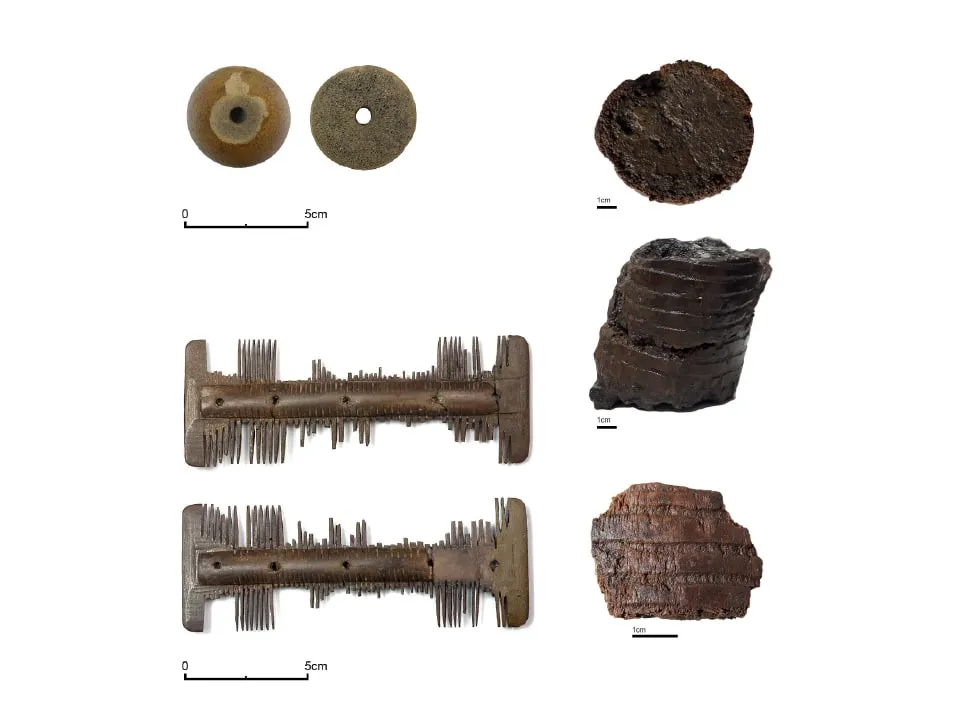
Ivo: “A silver bowl had previously been found, with decorations that pointed to the Mediterranean region, although it had been worked in the Rhineland. The shape of the bowl, however, looked distinctly English. The conclusion: east and west must have met. We found a bone comb and a wooden cup made of ash, decorated with rings. The fact that the cup was not only functional but also aesthetically pleasing tells us that it was used by the elite. That is the beauty of our work: sometimes we are standing deep in the mud, bringing up objects that look dirty at first glance, but after careful cleaning, every object tells its story. These little stories that emerge from the finds really capture the public’s imagination. Our work is now complete, and we were pleased to deliver the report this year in accordance with the agreements,” Ivo concludes.
Question about this story? Ask your question
Keep following this
Get an email when a new story is published. No account needed.
- SubjectNews







