









E-invoicing is for everyone, so get started now!
Although the civil engineering and construction industries are not at the forefront of automation, they are calling for integrated information management. But first, the sector needs to overcome its reluctance. One encouraging factor is that public authorities are increasingly making things such as e-invoicing mandatory. A digital invoice is already a requirement for the Dutch central government. “So you have to do it,” says Arnold Ruisch of Van Meijel Automatisering. “But what we really want is for contractors and suppliers, together with the Dutch construction industry, to look at how they can do away with the entire process of handling receipts, because they can see the benefits for themselves.”
Marcel van Wensem of eConnect (a company working to modernise one of the most important and time-consuming business processes: making the entire administrative process electronic, or machine-to-machine) agrees that there is still plenty to gain in terms of administration. “Every organisation processes invoices. Our mission is therefore automated administration for everyone, including e-invoicing.” And by everyone, he means not just the large construction companies or users of VanMeijel software, but also the small self-employed contractor who occasionally sends an invoice as a PDF attachment to an email.


What exactly is e-invoicing?
Ruisch first wants to clarify what is meant by e-invoicing. “We mean that you mark an invoice as final in the administrative system and that it is delivered to the recipient’s system, as a posting or via an approval system, without any further human intervention. Only then are you really making progress in terms of cost savings, efficiency and error reduction.” But how can we help the sector overcome its reluctance?
Lack of awareness
Van Wensem finds that the first hurdle, ‘what do we need to do to set it all up?’, is easy to overcome. “That fear is often based on a lack of awareness. Many software and accounting packages already have a way to deliver invoices electronically via a secure network. It just takes a small action by the user to switch it on and start using it. Realising that they can easily automate something in the software they are used to working with helps them actually use it.”
Standardisation
Standardisation is another way to make a positive contribution to the automation drive that companies need to undertake. Invoicing in different ways can hold up progress. Van Wensem: “We put an end to discussions about different standards, formats and invoice types by normalising them to a standard that the receiving software can handle, such as Peppol and DICO.” Ruisch says that around 50 to 60% of the sector now uses DICO. “The standard has been accepted and embraced by the construction industry.” Van Wensem believes the same should apply to the network, regardless of the file format. “You need to remove complexity and uncertainty for the user so they are no longer a barrier.”
Accuracy, timeliness and completeness
“It’s about accuracy, timeliness and completeness,” says Van Wensem. “And e-invoicing immediately meets all three of these requirements.” Ruisch explains: “If an e-invoice comes through a reliable e-invoicing network, you know that all the information on it, such as the supplier and invoice contents, has been verified. All the line-item details and order information are already on the invoice, which means invoice matching with the ordering process could also be automated. The significant gains to be made go beyond invoicing alone.” VanMeijel’s Metacom platform is one such all-in-one system, substantially reducing the administrative burden for contractors, among others.
Integrating e-invoicing into software
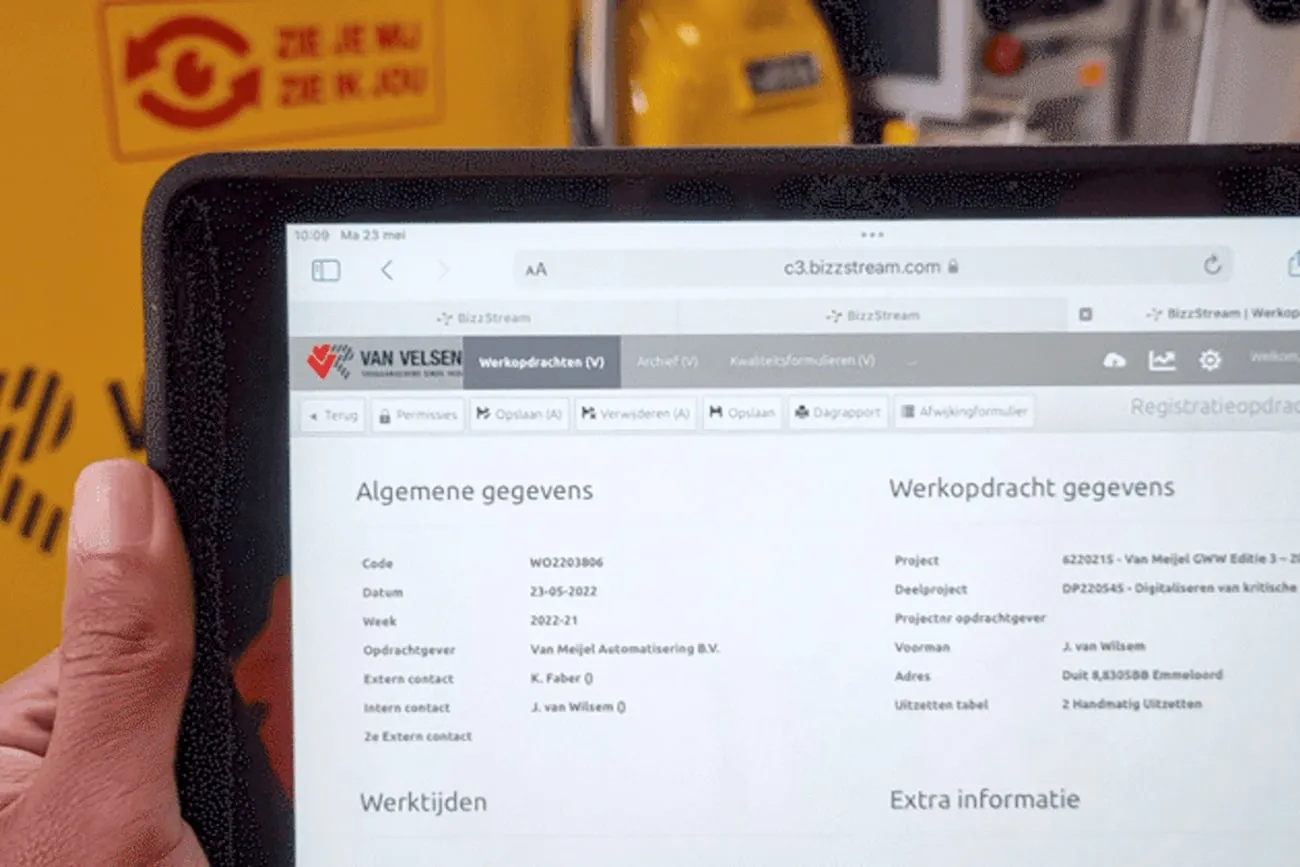
eConnect’s e-invoicing solution is integrated into Metacom behind the scenes. “The user doesn’t notice a thing,” says Van Wensem. “I always compare it to making a call on your mobile: whatever the type of phone or the network you’re using, you can simply speak to each other. That’s essentially how we work too: eConnect is the software that handles the invoice being processed, whether incoming or outgoing, in the ERP system.” This exceptionally easy-to-use approach to e-invoicing contributes to its success and acceptance. “So it really is for everyone!” concludes Ruisch.
Een zakelijke vraag aan Van Meijel Automatisering BV? Get in touch
Companies in this story
Keep following this
Get an email when a new story is published. No account needed.
- SubjectNews
- CompanyVan Meijel Automatisering BV







