









Digital innovation
Text and images VanMeijel
What does it mean to be future-proof? How can you sharpen your competitive edge with automation tailored to each customer? VanMeijel does this by putting the customer first and providing innovative solutions tailored to their needs. By becoming a niche player in meeting specific needs, it can respond to them straight away. This is how we make our customers future-proof. How does VanMeijel do it? Read on to find out.
How does VanMeijel stand out in the market?
The range of products and services on the market continues to grow, along with the wide range of functionality on offer. It is impossible to provide everything. That is why VanMeijel continues to offer commodity functionality such as BI and document management systems, while working with partners to deliver it. Our partners are experts in their fields, as are we in ours. This enables us to offer an ERP system with a wide range of functionality, while also building close working relationships with our customers.
We position ourselves as a specialist in a changing construction sector, which is increasingly shifting from traditional infrastructure towards work involving cables, pipelines and maintenance. This shift in activities calls for specialist automation solutions that can adapt to changing needs.
Turning requirements into functionality through studios
But how do we turn the changing needs of infrastructure companies into new functionality? To do so, we have introduced a new way of working: studios. This is how we co-create new applications with industry leaders. Examples include sustainability reporting and reducing the administrative workload of site managers. But what exactly are studios, and how do they work?
What is a studio?
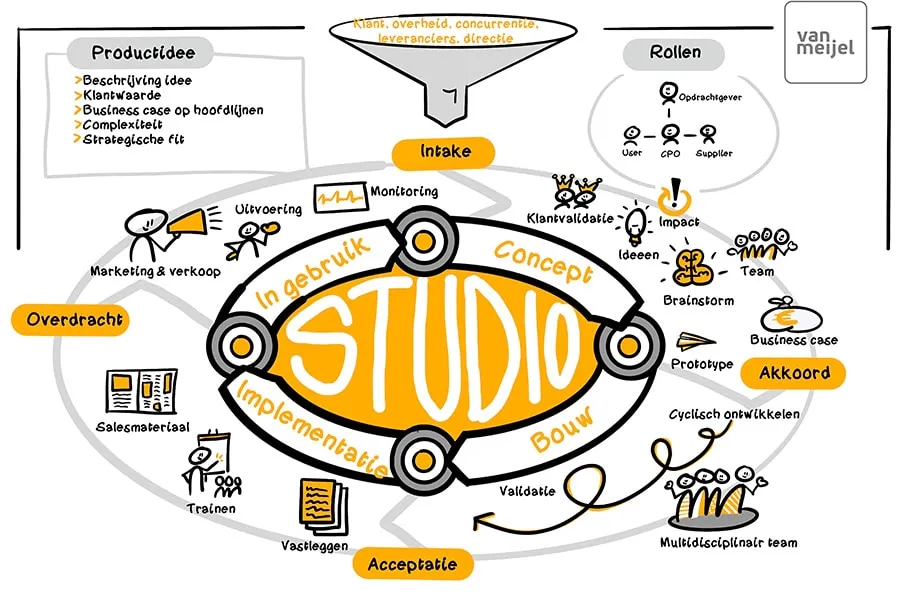
A studio is a kind of ‘catalyst’ where we develop solutions for very specific use cases, with the ultimate aim of creating a solution that turns a requirement into functionality. What makes our approach unique is that we involve our customers in our studios. This ensures the solution is perfectly suited to the customer’s challenge.
Several topics have already been addressed in a studio or are currently in development. One example is an innovation that enables sustainability reporting, making it easier and clearer to calculate nitrogen emissions and CO2. This gives you immediate insight into emissions and helps speed up the process of obtaining permits. Another example is plant management, which we explore in more detail in this article.
Studio: improving plant management practices
In a studio, we work through four distinct phases: 1) Concept, 2) Build, 3) Implementation and 4) Use. What can
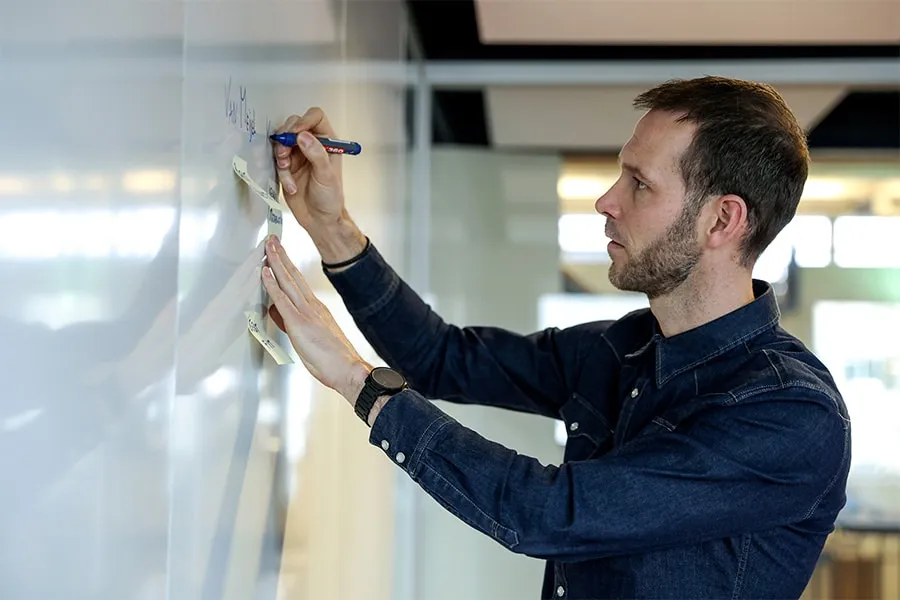
be improved or changed in current practices, and what evidence is there to support this? We hold in-depth brainstorming sessions with end users from different customers, exploring together which ideas best address the challenge at hand. Once we have an idea that fits the brief, we move on to developing a business case and, of course, building a prototype.
Why improve plant management?
We recently launched a studio to analyse the real-world requirements, challenges and needs relating to plant management. Plant management covers all activities involving the hire, rental, purchase, maintenance and certification management
of plant items.
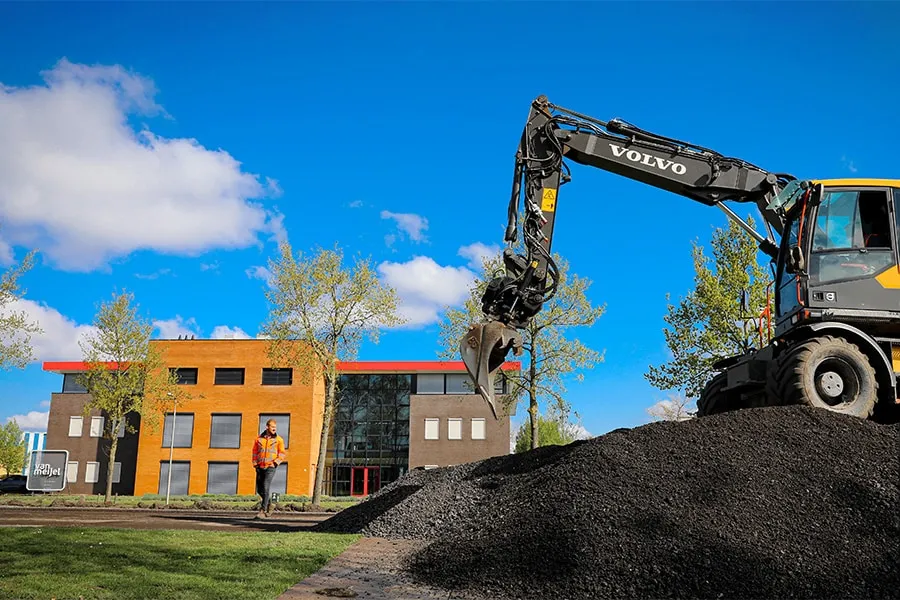
Plant is one of the most valuable assets in an organisation. Effective plant management requires control and visibility of available plant, enabling you to maintain a tight schedule and carry out inspections and maintenance on time. This can significantly optimise plant utilisation. To do so, you need software that works effectively and gives you a clear overview of your plant. There is still plenty of scope for improvement in current working practices and the solutions available, which is why we launched the studio with several contractors.
What innovation was needed?
In practice, plant management was being carried out across multiple systems, spreadsheets and/or apps. These systems are generally not well integrated, leading to a lot of duplicate data entry, with information that is also incomplete. In addition, existing solutions are not particularly user-friendly.
Now that we know what needs to change, we can move on to the next step: building the ‘new functionality’. By developing incrementally, we focus on what will deliver the greatest value in response to market needs. During this phase, we stay in close contact with the end users who manage plant every day, so that what we build genuinely meets their needs.
This multidisciplinary approach gives us a wide range of insights and expertise, enabling us to perfect the digitalisation of plant management.
What can we expect from the revamped plant management solution?
Plant has an impact on many other processes: planning, procurement, maintenance, time recording and financial administration. It is therefore important to integrate plant management functionality with these related processes. We have improved this by making all modules work together, so users can see everything relating to plant management in one place, from rental to maintenance. With all the information available in one system, it is always up to date and the risk of errors caused by incomplete information is reduced.
Implementation
Once the build phase is complete, it is time for implementation. This is the final testing phase for the customer. During implementation, we carry out extensive testing to ensure the functionality works as intended. The result is a comprehensive plant management solution that supports users in their day-to-day work. The working day of those who manage plant every day has become smarter, more enjoyable and more efficient.
What happens after the studio phase?
The product, in this case for plant management, has been developed and is ready for the customer to use. The studio has, in principle, been a success! However, new challenges can arise once it is in use. It is only when you use something intensively that you discover what works well, what is missing or what could be improved. That is why we have an active feedback loop with our development team, enabling us to continuously improve our solutions. This may take the form of updates and minor adjustments, or even ideas that lead to a new studio.
Our new way of working with studios has already led to solutions that are directly suited to real-world needs. We and many contractors are enthusiastic about innovating together in this way. So we will continue, ensuring that not only we, but above all contractors, keep innovating. Together, we are ready for a digital future!
Question about this story? Ask your question
Keep following this
Get an email when a new story is published. No account needed.
- SubjectNews







