









Construction of HOV in ’t Gooi: technically challenging
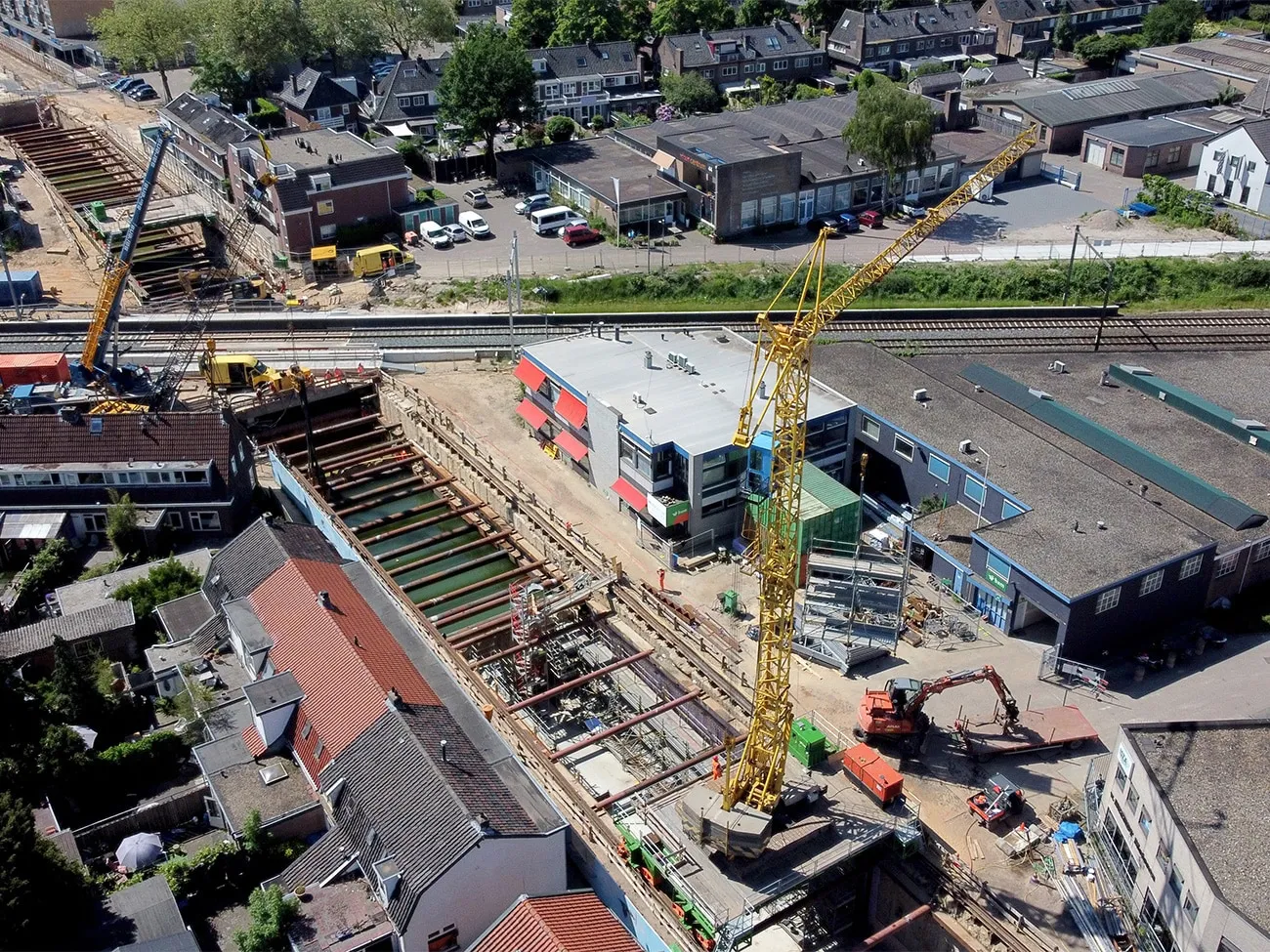
According to the province of North Holland, everyone who lives or works in ’t Gooi should be able to travel quickly and without congestion between Huizen and Hilversum. However, Huizen does not have an NS railway station. This is a major shortcoming, particularly given the growing need for suitable public transport. That is why investment is being made in a high-quality public transport bus connection between the two towns in ’t Gooi, which will also benefit Blaricum, Laren and Eemnes.
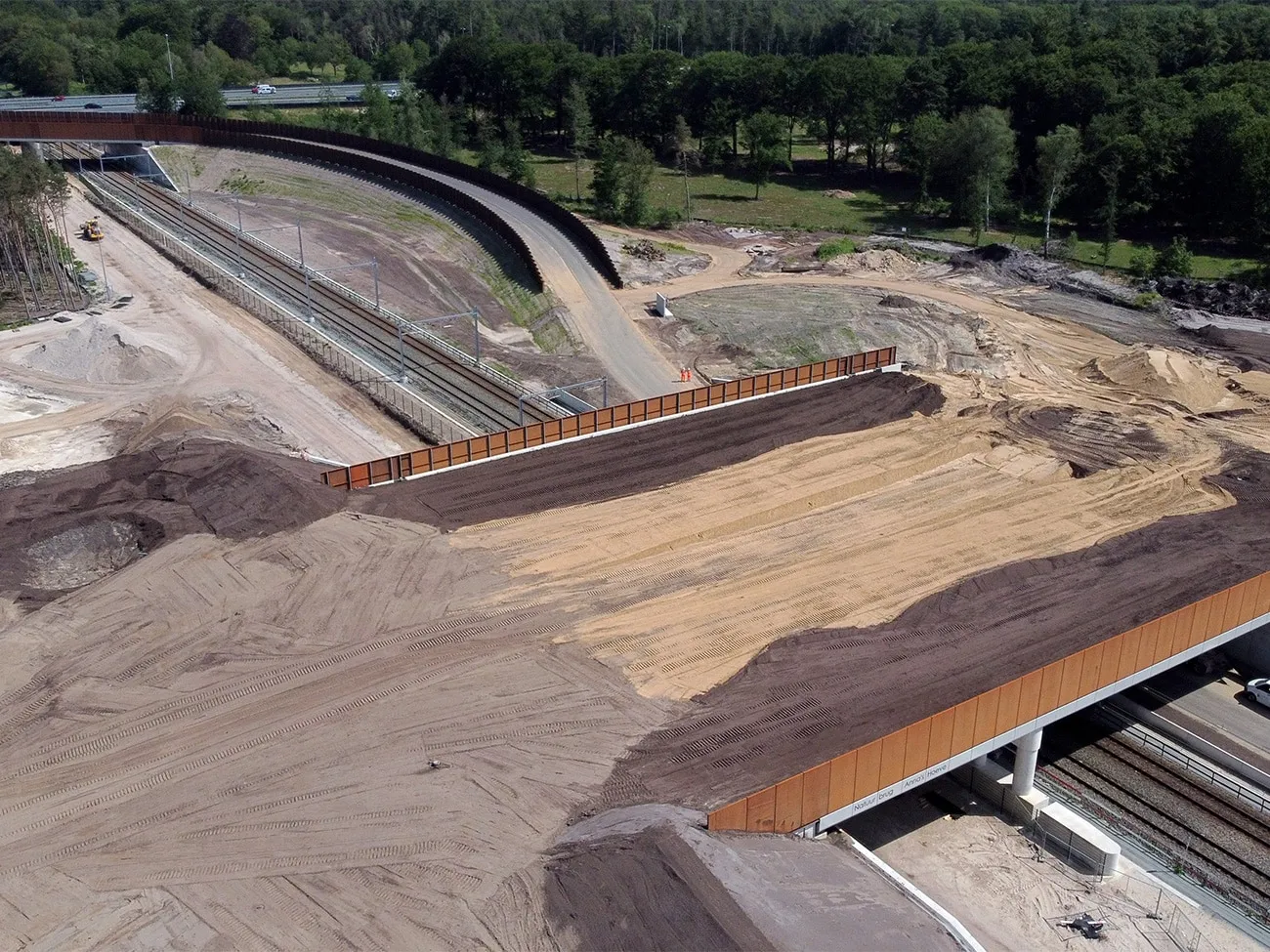
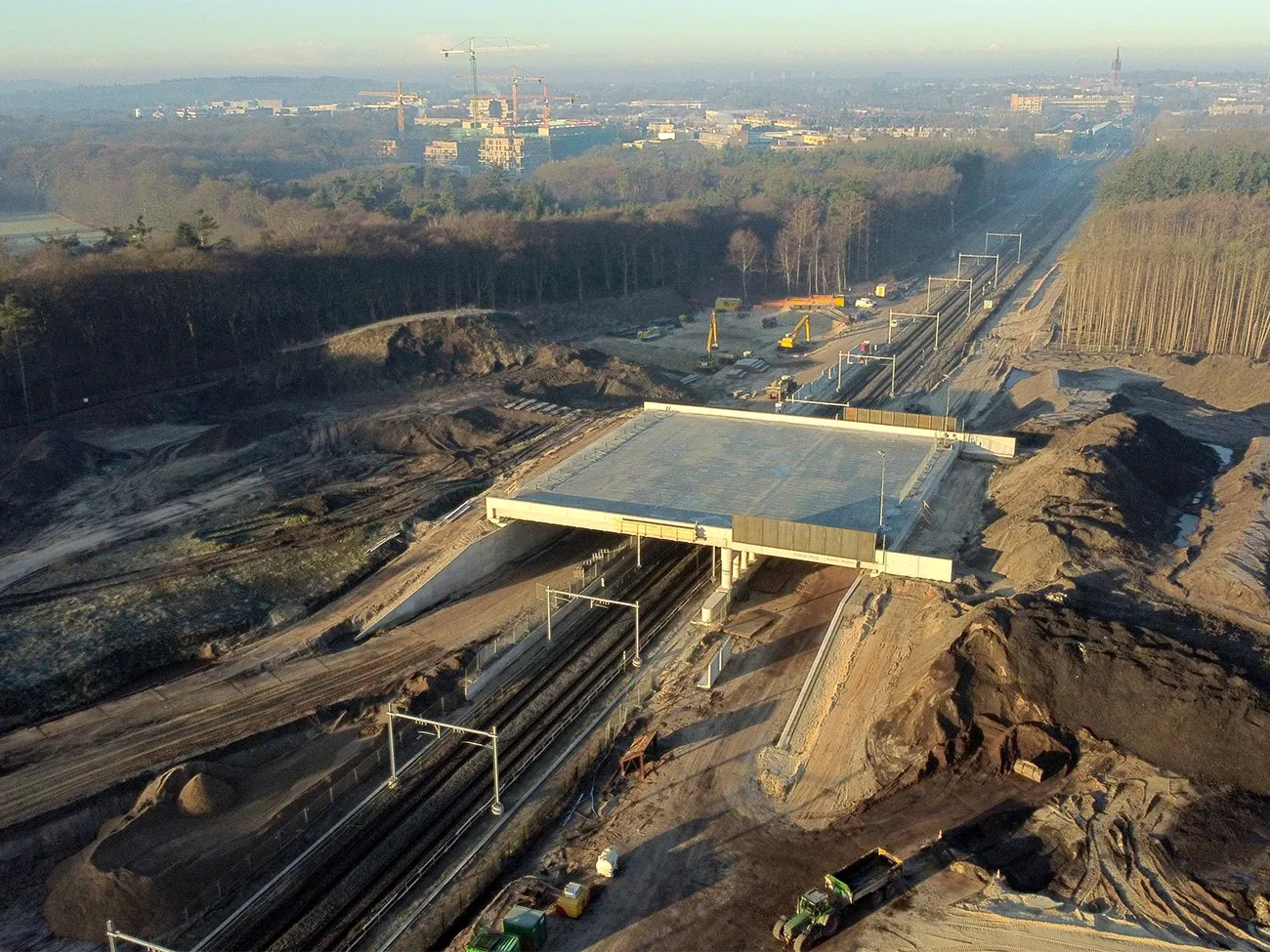
Construction of the HOV bus connection has been divided into several sections. BAM Infra Nederland is responsible for the Hilversum section, the Laren, Hilversum section. “It is also the most challenging section,” says project manager Ruben Favié. “The route starts with its own exit from the A27, then crosses the railway via a new flyover, passes beneath a new nature bridge near Anna’s Hoeve, and then runs through Hilversum parallel to the railway, over a two-level underpass, as far as the NS railway station. It is a route of around 3.5 kilometres in total, with several challenging structures. The two-level railway underpass on Oosterengweg in Hilversum is particularly unique and unprecedented in the Netherlands.”
Nature reserve
BAM got off to a flying start in March 2020 with construction of the Hilversum section. Favié: “This project is one of extremes for us. The nature bridge and flyover were built in a nature reserve, while we are building the underpass in the middle of a residential area, literally in the front gardens of local residents. That naturally creates a very different dynamic.” The two structures in the nature reserve have already been built. “The location, and the fact that we were dealing with a geological monument below ground, more or less determined the construction method. Excavation had to be kept shallow because of layers of historical significance. We even had to make some changes to the design. Both structures rest at the abutments on a reinforced earth structure, on which precast concrete beams have been installed. Construction of the structures therefore progressed very quickly and smoothly.”
Deep excavation
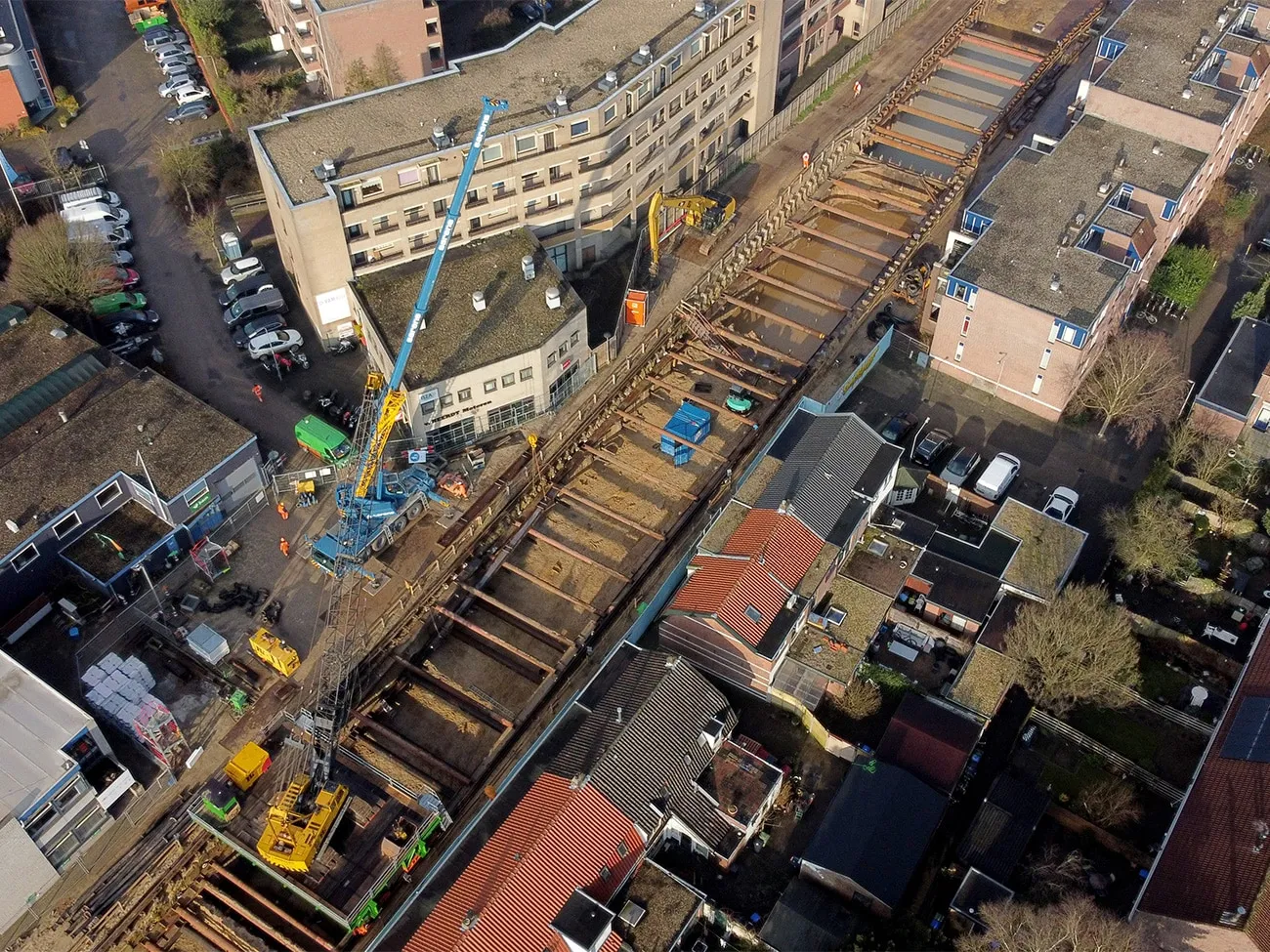
The railway underpass is still under construction. “This is a two-level underpass, because the ‘plot’ is narrow and there are houses on both sides founded on shallow foundations. The underpass is replacing a level crossing with barriers and will significantly improve traffic flow in the centre of Hilversum. The lower level is for cars, and the upper level for cyclists and pedestrians. The bus will run over the underpass, parallel to the railway. Excavating such a deep construction pit right next to buildings on shallow foundations is quite nerve-racking,” Favié admits. “It calls for the utmost care. That is also why we are using CSM walls, a vibration-free technique that minimises the risk of movement in adjacent buildings. The results speak for themselves: after excavating and dewatering the construction pits, there was hardly any visible movement.”
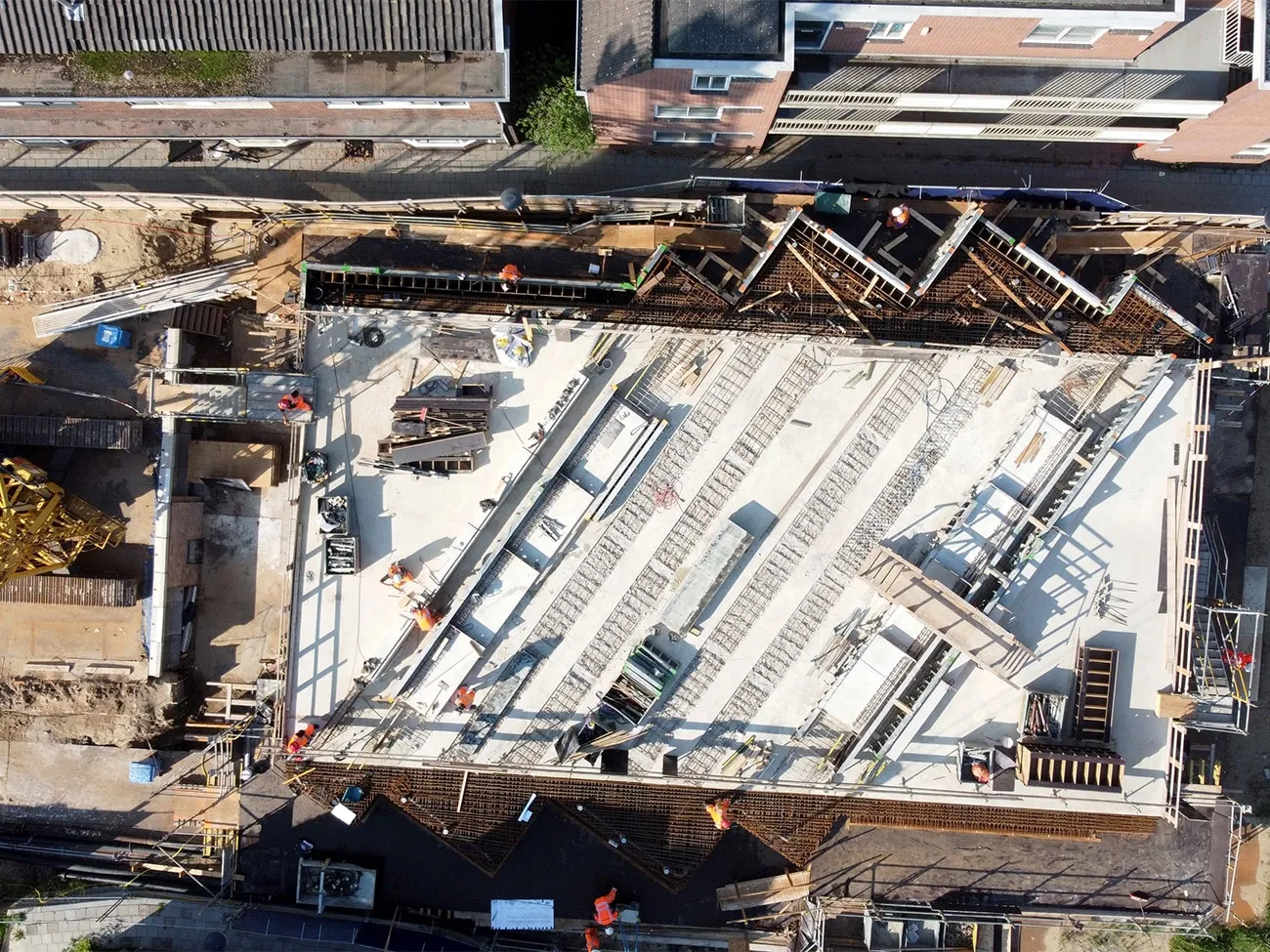
The underpass is 400 metres long in total, of which 250 metres is enclosed. It is 10 metres wide and 10 metres deep at its deepest point. Oosterengweg has been closed over a length of 700 metres to allow construction of the structure. A diversion route has been put in place for motor traffic, while pedestrians can cross the construction pit using a safe crossing point. Emergency services and cyclists are using a temporary level crossing 200 metres further along. The railway underpass is scheduled to open to traffic in August 2022.”
Question about this story? Ask your question
Keep following this
Get an email when a new story is published. No account needed.
- SubjectNews







