









Concrete, steel and a whole lot of sand at the New Lock
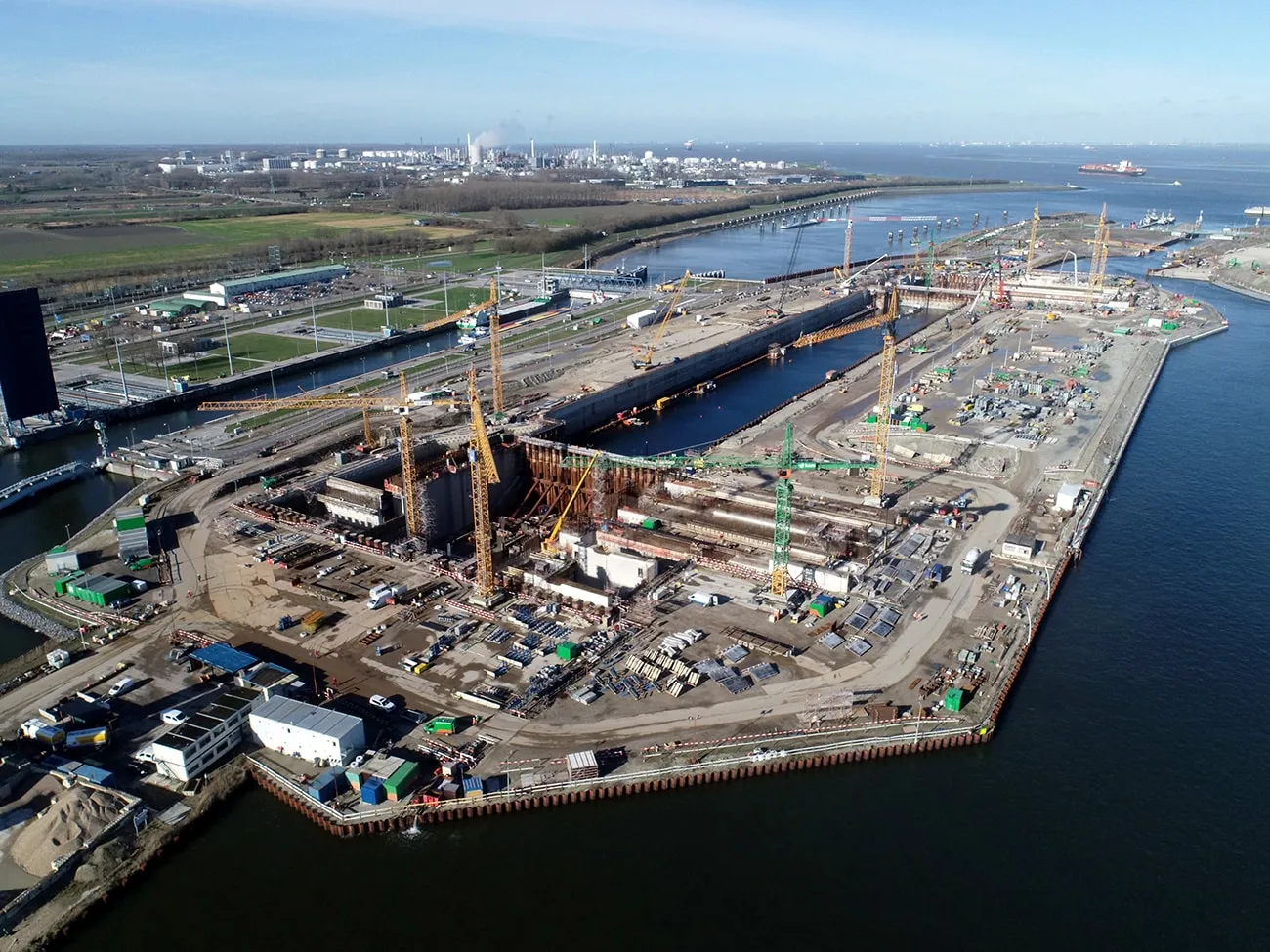
It has been some time since we last reported on work on the New Lock in Terneuzen. Joris de Maat, soil, environment and permits adviser at the Flemish-Dutch Scheldt Commission (VNSC), and Peter Van den bossche, permits and soil flows specialist at the Sassevaart contractor consortium, bring us up to date on progress and focus together on one specific aspect: soil flows.
An update on the situation in Terneuzen
Demolition of the Middle Lock and arrival of the service jetty
“Demolition of the southern section of the Middle Lock began on 1 October 2021,” Joris begins. The bridges and lock gates have since been removed, and a great deal of soil has been excavated. Demolition has been progressing well and will soon continue with the thick quay walls.” At the end of November 2021, the service jetty was delivered to the service harbour. Joris: “The floating jetty is 101.5 metres long and 12 metres wide. It was therefore towed to Terneuzen via the Western Scheldt, with the help of two tugboats, and then installed on site.”
Raising the lock platform and primary flood defence
At the end of last year, the trailing suction hopper dredger TSHD Middelburg deposited around 5,000 cubic metres of sand on the sheet-pile cofferdam in the service harbour. Peter: “We started work with the delivered sand in January. Since mid-January, we have been transporting sand from the service harbour to the New Lock platform and the primary flood defence, outside peak hours. We have now used the first loads. We sweep the road regularly to prevent sand from becoming a nuisance. We will bring in additional sand over the coming years.”
Soil flows
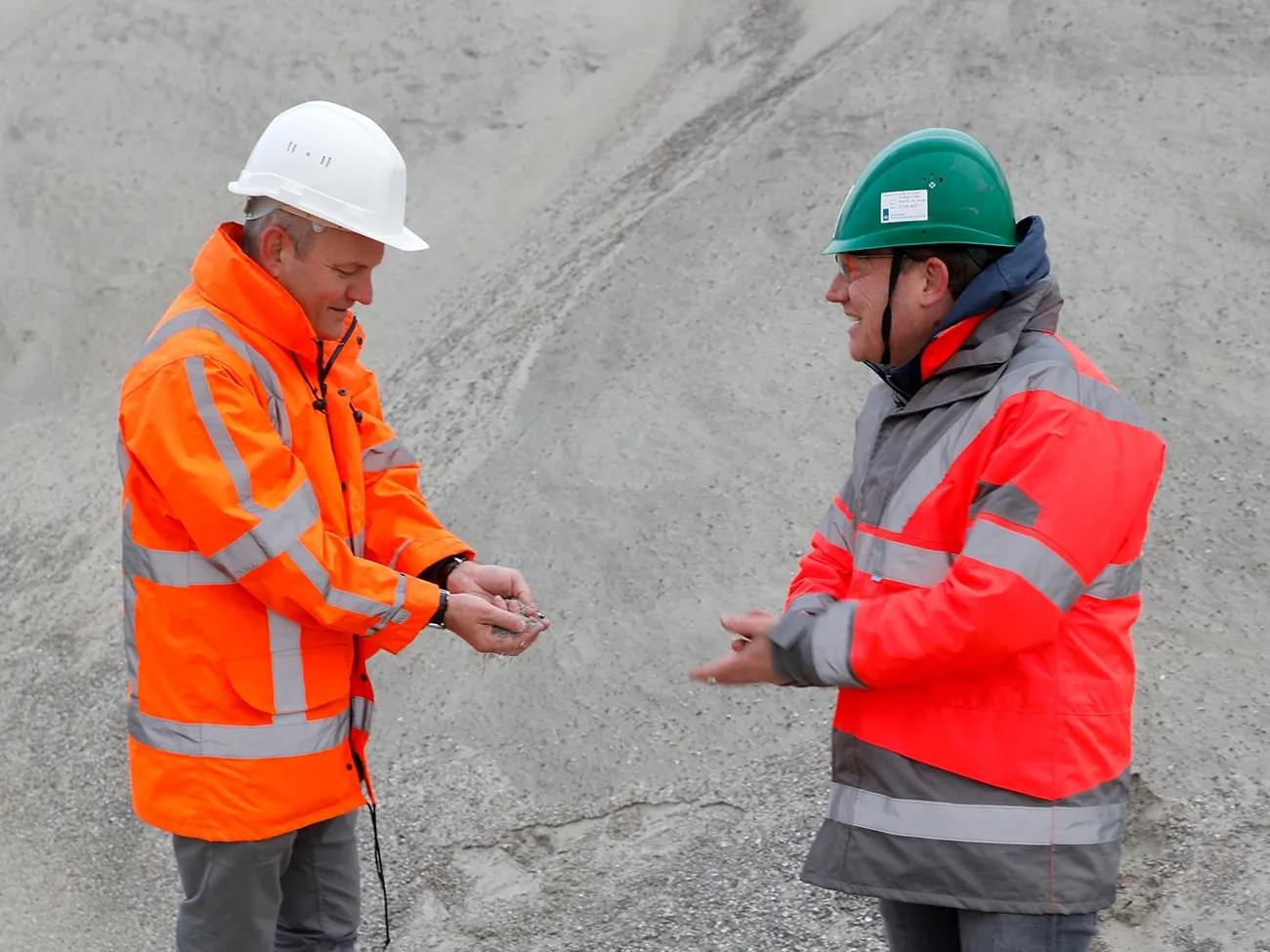
Peter continues: “A range of stakeholders need to be taken into account when managing soil flows.” Joris adds: “The sand delivered to the service harbour is extracted from the North Sea and is intended to raise the lock platforms next to the lock. We need to raise them by around six metres. A layer of topsoil and the new road will then be added.” Peter: “It all needs to be properly compacted for its future uses.” Joris and Peter put the total volume of earthworks at 12.5 million cubic metres. “Some of the soil will be reused,” Joris explains. “A large quantity of soil that is less suitable for civil engineering purposes is being removed. For example, 4.2 million cubic metres of soil will be placed in the Western Scheldt as part of the flood protection plan. Ultimately, 2.5 million cubic metres of sand will go to Knokke for foreshore nourishment.”
The spits of land extending beyond the New Lock still need to be excavated. “We carefully assess the soil and sand that is excavated, because the final destination has specific requirements,” Peter explains. “For example, Knokke does not want clayey soil or fine sand. The beneficial use of soil in the Western Scheldt also has to meet various conditions. Of course, some sand will be excavated that cannot be reused directly within the project. A dedicated worksite has been set up to store this sand while we investigate where it could be used at a later date. Maintenance dredgings are also generated through our annual dredging programme, with a maximum volume of one million cubic metres per year. This is clean material that is suitable for dispersal in the Western Scheldt.”
Soil flows plan
The contract required the Sassevaart contractor consortium to produce a soil flows plan. Peter: “We are given requirements and conditions that the soil must meet. The soil flows plan covers everything: soil type, soil quality, the permits required, the schedule and the volumes involved.”
As for the current situation with soil flows, Sassevaart is now halfway through placing 4.2 million cubic metres of soil in the Western Scheldt.
Question about this story? Ask your question
Keep following this
Get an email when a new story is published. No account needed.
- ThemeMaterials and techniques for infrastructure
- SubjectNews







