









Concrete screws: an excellent solution for concrete construction and civil engineering
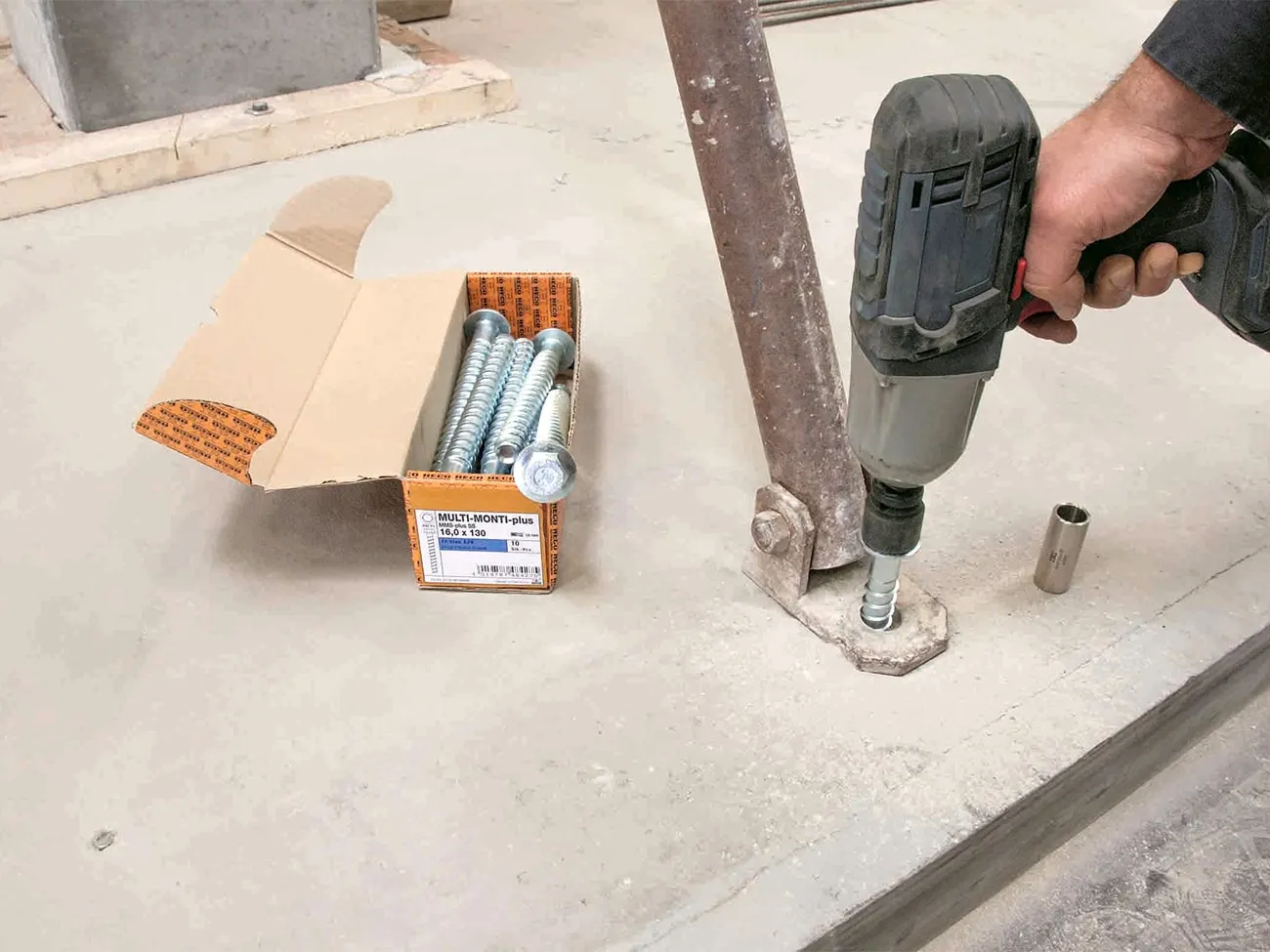
Anchors are generally used to fix structural elements to concrete. There are broadly three types of anchor: chemical anchors, mechanical anchors and concrete screws. None is inherently better than the others, but some applications offer clear advantages for a particular type of anchor. Chemical anchors, for example, are suitable for fixings in soft materials, while mechanical anchors and concrete screws are mainly used in concrete. Concrete screws are being used increasingly often because they are cheaper and easier to install. Thanks to innovations and new approvals, they are also suitable for an ever wider range of civil engineering applications.
Concrete screws have a thread that cuts into the concrete. The connection is therefore made solely by the thread. During installation, concrete screws exert far less force on the substrate than mechanical anchors and are even easier to install. The hole can be cleaned simply by moving the drill in and out a few times, after which the screw can be driven in with an impact driver and loaded immediately. Concrete screws can withstand very high loads and are suitable for hard stone types and cracked or non-cracked concrete.
Applications
HECO-Schrauben is one of the pioneers in the development of concrete screws and has introduced numerous innovations in recent years. As a result, concrete screws are now also approved for fixings in various types of sand-lime brick, aerated concrete, brickwork and hollow-core slabs, even where they may be exposed to fire or seismic loads.
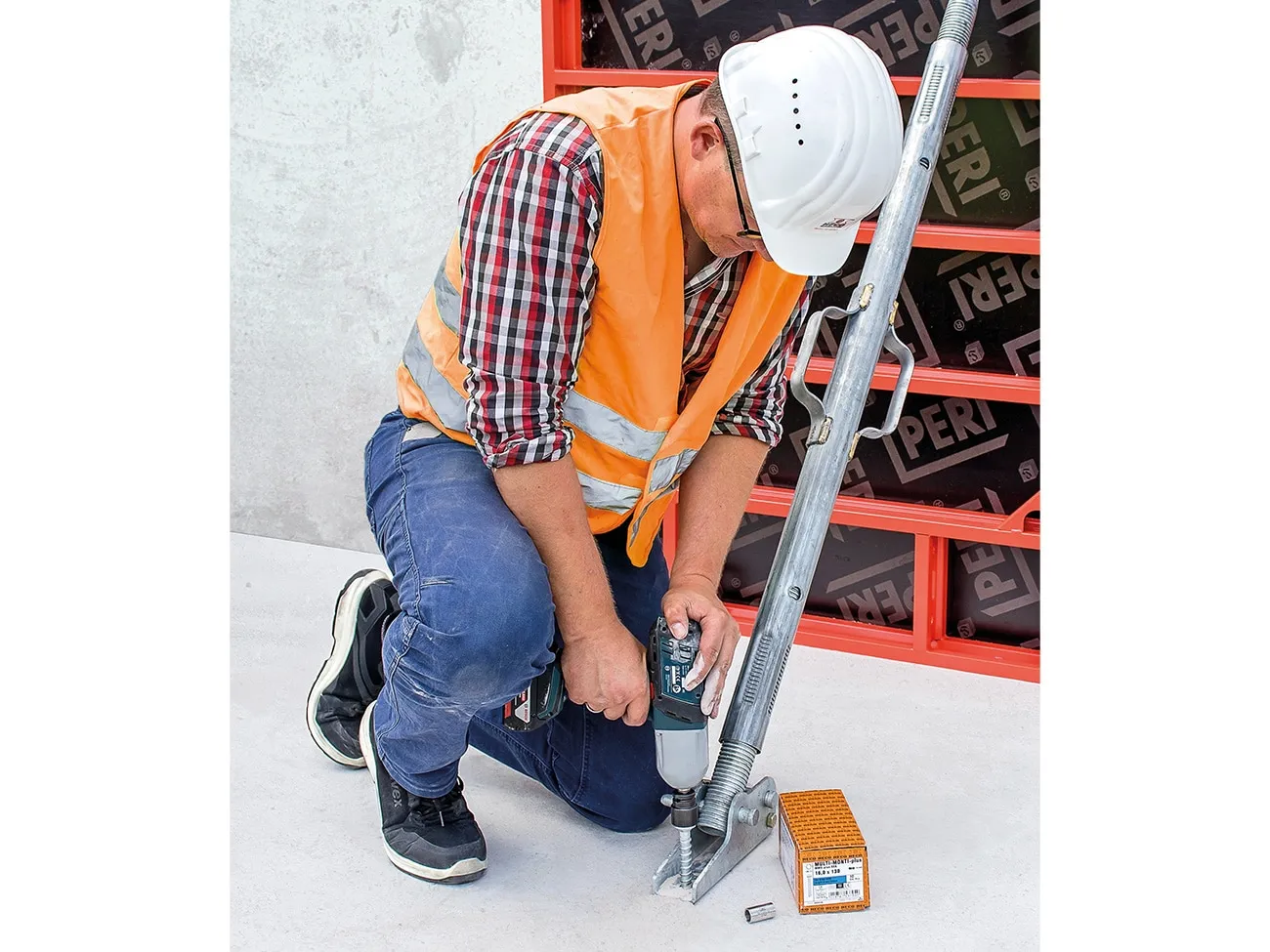
Concrete screws have a wide range of applications in civil engineering and concrete construction. They can be used, for example, to fix cable trays, light fittings, pipework systems, railings, safety barriers and noise barriers to concrete. As concrete screws can also be unscrewed, they are suitable for temporary structures such as bracing, formwork, scaffolding, façade panels and even solar panels. Other applications include fixing fall protection systems or temporarily installing supply lines on construction sites. Concrete screws with diameters of 10, 12 and 16 mm are approved for multiple use in various types of concrete. Their quick installation, stability in fire conditions and therefore at very high temperatures, corrosion resistance and ease of removal for inspections also make them a good solution for fixing fire protection boards in tunnels.
HECO concrete screws
HECO-Schrauben now offers a wide range of concrete screws. A large number of official ETA approvals make them suitable for many applications. Alongside ‘standard’ concrete screws, the MMS-plus V push-through anchor is available for installing fences and railings. The MMS-plus S has been developed for temporary fixing of construction props, bracing and scaffolding on site. For fixing timber elements to concrete, customers can choose between the MMS-plus S and the MMS-TC. The different head types, including round head, flat round head and internal or external thread anchors, make it possible to fix installation rails and pipes.
HECO’s MMS-plus is approved for exposure to fire in accordance with fire resistance class R120 and has passed the RWS 180 fire test. The anchors are also approved for use in seismic areas (categories C1 and C2) and have ETA approval for multiple use. In addition, they meet the requirements of VdS guideline CEA 4001 for the installation of sprinkler systems.
Design and calculation
HECO-Schrauben’s HCS 4.0 calculation software enables customers to calculate the loads and dimensions of HECO concrete screws. Once all the project data has been entered, the user receives a recommendation for the best screw connection, including screw type, dimensions and quantity required, as well as advice on which option is the most cost-effective for the project. The results, including 3D images, provide a verifiable basis for structural design and calculations. The software not only allows substrates and materials to be defined precisely, but can also take special environmental conditions, such as corrosion or fire protection, into account in the calculations.
Question about this story? Ask your question
Keep following this
Get an email when a new story is published. No account needed.
- ThemeMaterials and techniques for infrastructure
- SubjectNews







