









Composite ground protection mats: a stable, sustainable choice
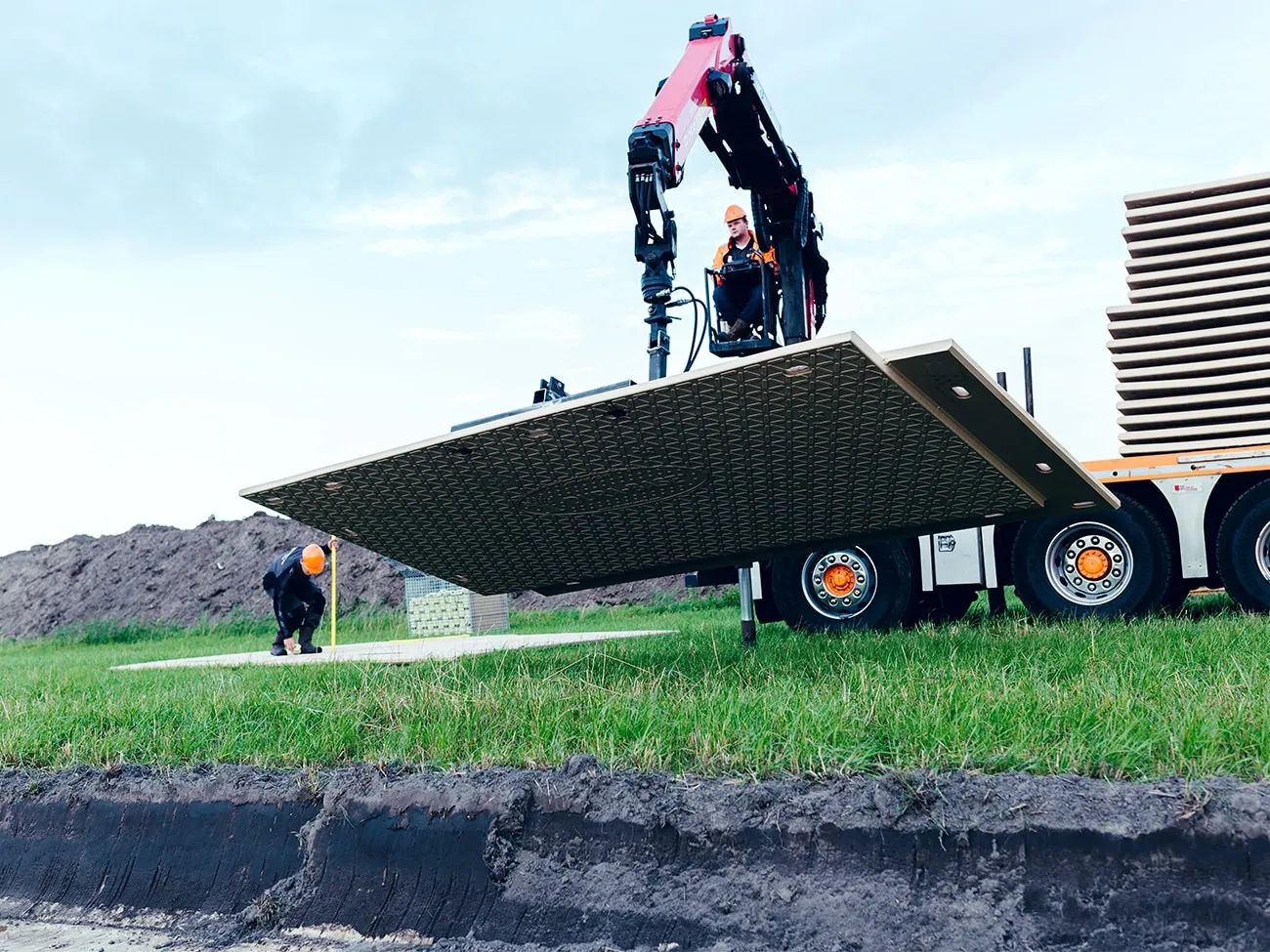
Creating a temporary diversion route, cycle path or crane standing area using steel ground protection mats or timber crane mats requires serious preparation.
Ferex offers a sustainable, safe alternative with composite ground protection mats that leave the ground intact. We wanted to find out more.
“Our composite ground protection mats are widely used in road construction,” says Sanne Buitenhuis of Ferex. “Their high strength combined with low weight makes them ideal for creating temporary diversion routes for both motorised traffic and cyclists, for example. The large size, 4 by 2 metres, means that large areas can be covered in a short time. The mats are easy to handle and, thanks to their ‘flexible’ nature, follow the contours of the ground.”
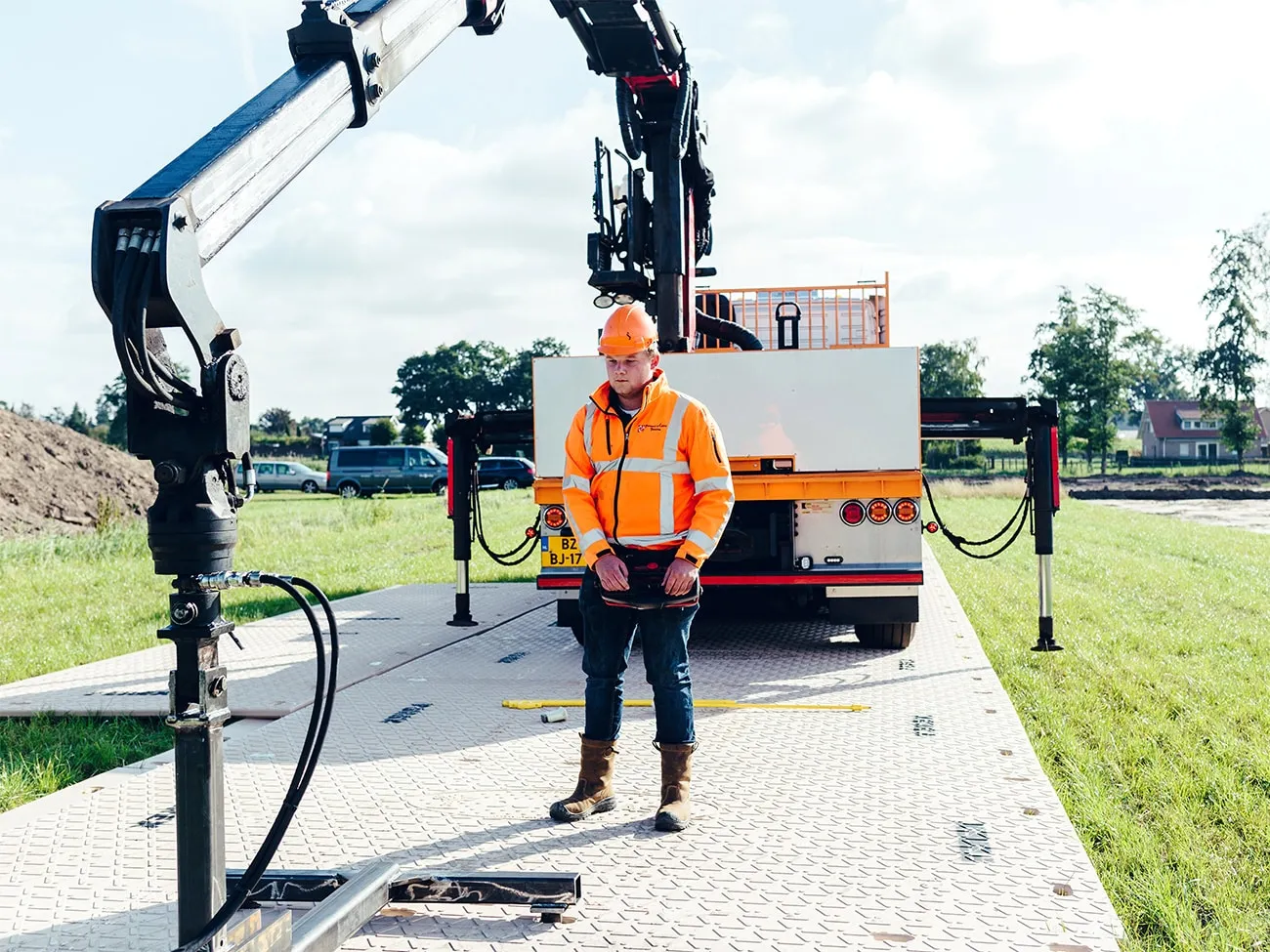
No ground preparation
Speaking of the ground, unlike steel ground protection mats or timber crane mats, composite mats require no ground preparation before installation. “We can lay the mats directly on any type of ground, without first excavating it and laying a crushed stone base,” explains Jordi Rodijk of Ferex. “This saves a great deal of time and CO2 emissions from unnecessary truck movements, while also protecting local flora and fauna. By avoiding excavation, we also prevent peat oxidation in peatland areas. This is a relatively little-known phenomenon, but it results in enormous CO2 emissions. Our composite ground protection mats can withstand loads of up to 400 tonnes per square metre, giving them a very wide range of applications.”
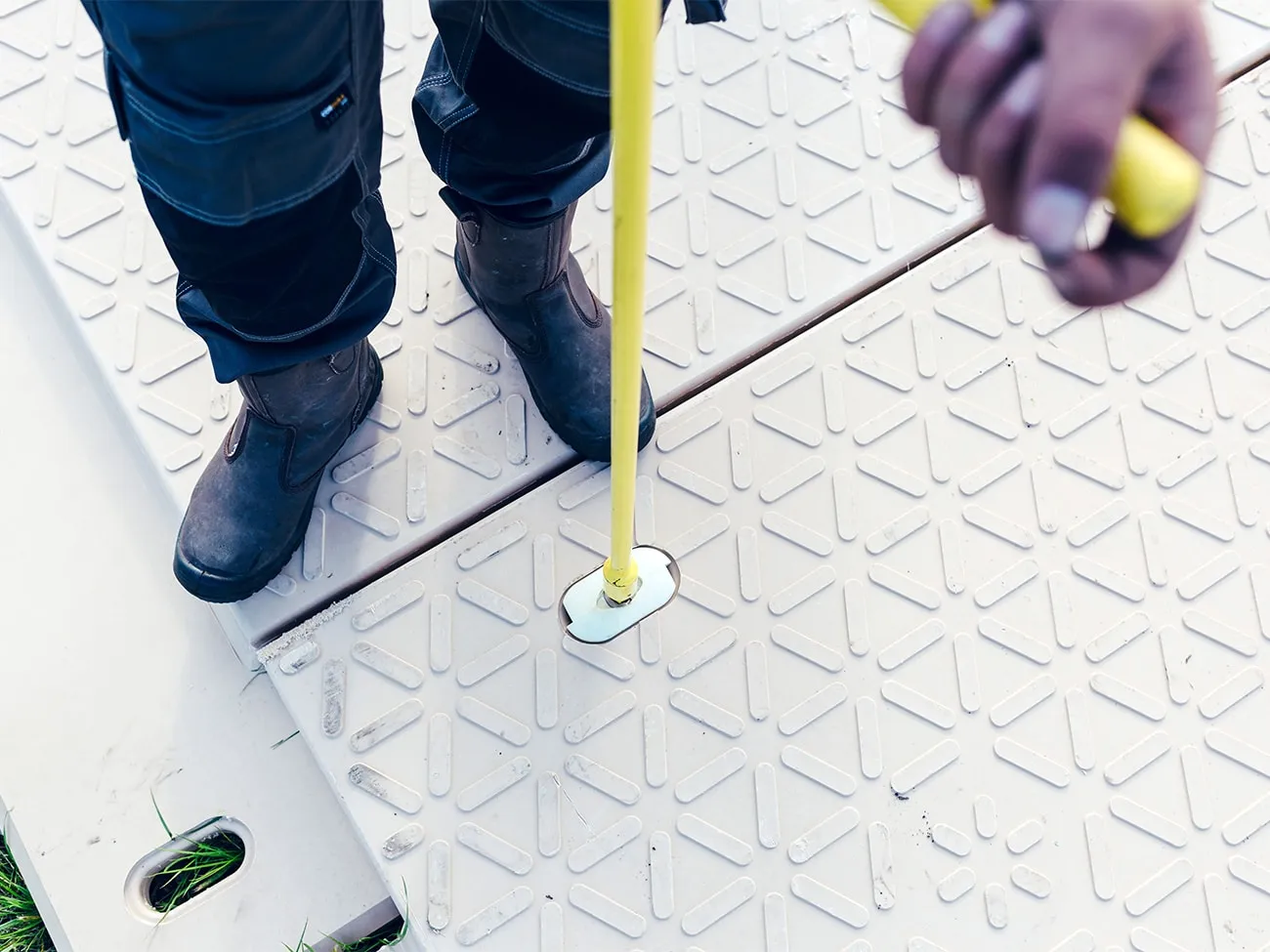
Lip-joint system
The composite mats are so light that they do not sink into even the softest ground, but float instead. “The mats are connected on all four sides using a lip-joint system, creating a fully enclosed roadway or platform,” Rodijk continues. “A range of accessories completes the system, including curved sections, ramps and adapters that can, for example, turn an overhanging lip into a flush lip.
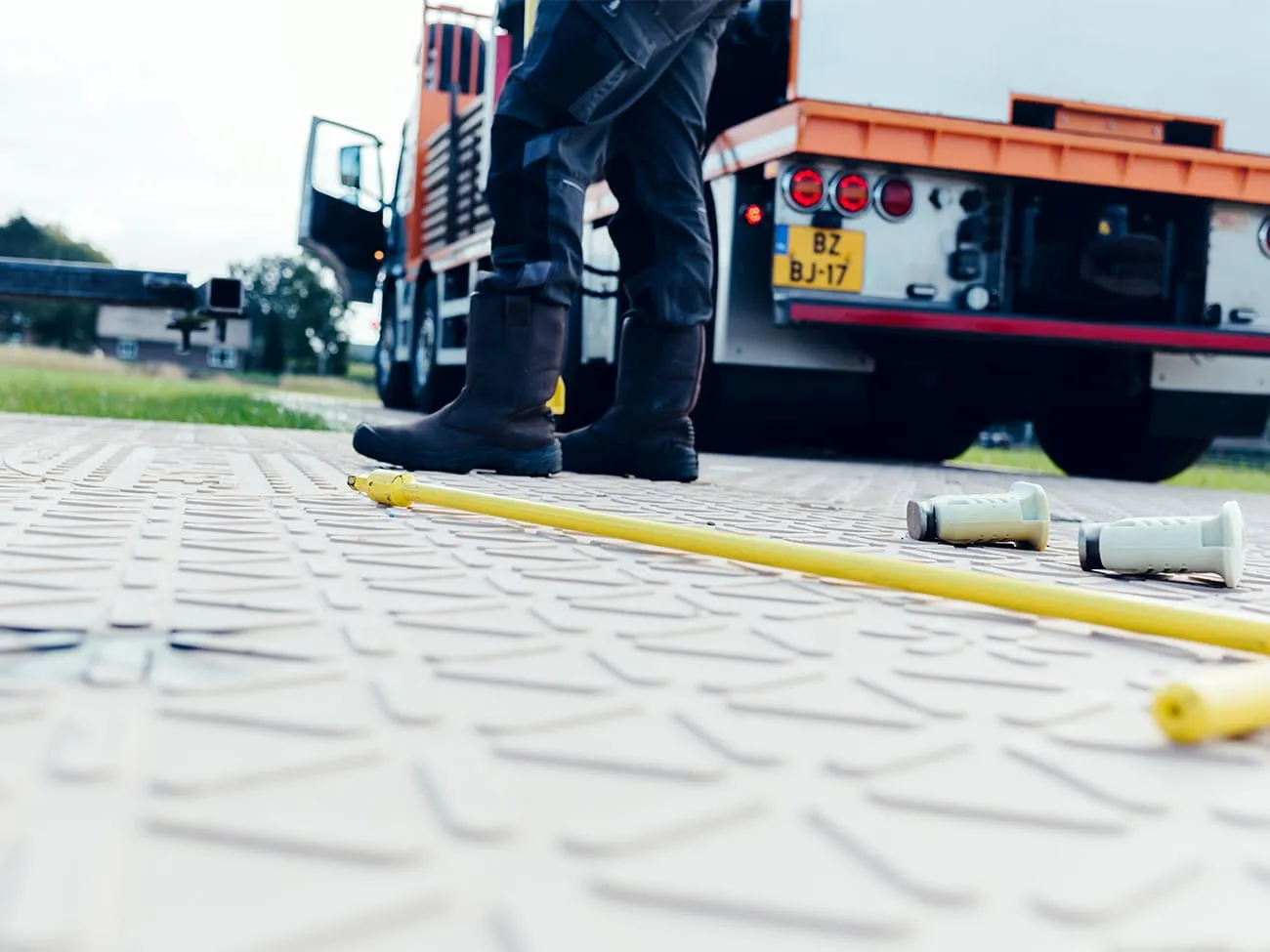
Our mats come as standard with an anti-slip profile to maximise safety for cyclists, for example, even in rainy weather.”
Crane standing areas
Ferex has recently carried out extensive research into the use of composite mats for crane standing areas. Rodijk explains: “Timber crane mats are currently used to support crane outriggers on ground with a low bearing capacity, but their size is limited. Our mats can be connected, so in theory the surface area is unlimited. A crane could push a timber crane mat down into the ground. Our mats create a complete floor, including a safe ‘safety net’ beneath the crane. The findings of this research will be published after the summer.”
In short, composite ground protection mats offer many advantages over steel ground protection mats or timber crane mats. “We offer a suitable solution for every application in civil engineering.”
Question about this story? Ask your question
Keep following this
Get an email when a new story is published. No account needed.
- SubjectNews







