









Comparative product testing of solar cycle paths
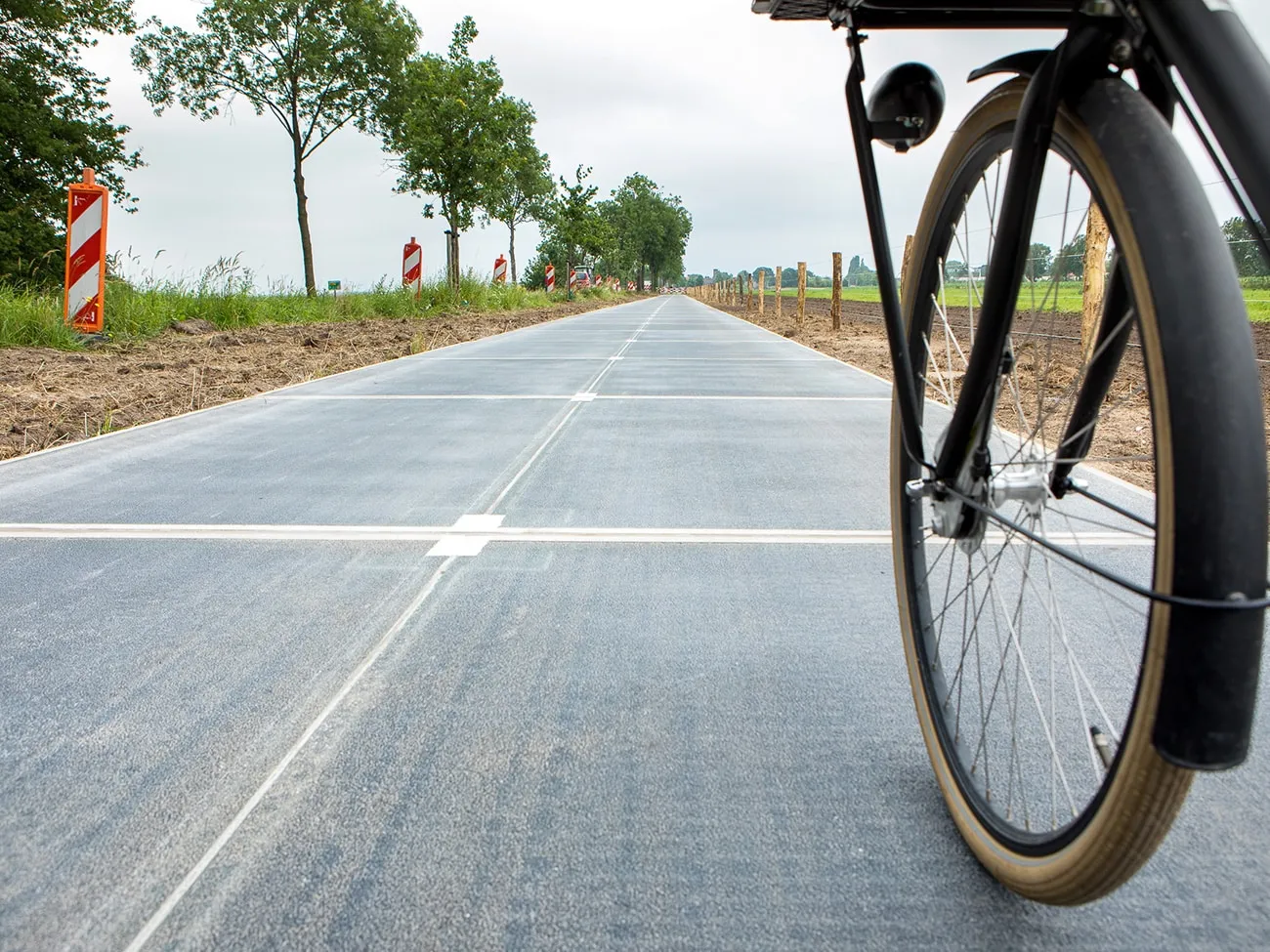
At the initiative of the Province of North Brabant, a trial is under way on the N395 featuring three types of solar cycle path. One of them is SolaRoad, a concept that has already been proven on a large scale and generates enough electricity for around 45 households near the Utrecht town of Maartensdijk, among other locations.
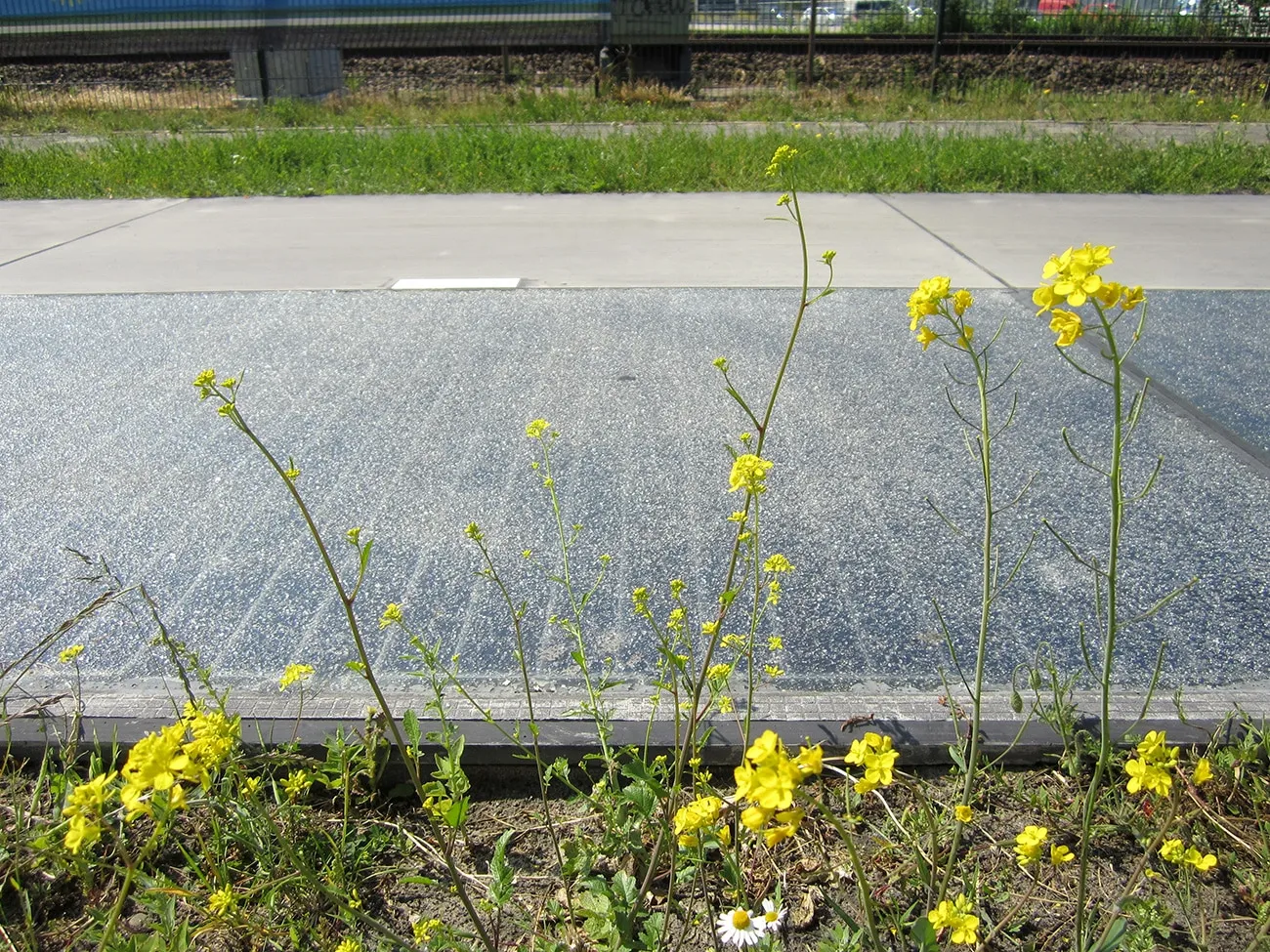
SolaRoad is certainly no new concept. “The first trial section dates back to 2014, and in the years before that the concept was extensively tested in the laboratory,” says director Arian de Bondt. “It is therefore a proven technology. The trial section we installed on the N395 at the province’s initiative is already the fifth generation of our product. We have made significant advances and resolved many teething problems. It is now a fully fledged product for cycle paths.”
Transparent glass beads
At the province’s initiative, three types of panel from three different suppliers have been installed in the cycle path. This will allow the panels’ service life to be tested, as well as how easy they are to maintain and the effects of use and different weather conditions on them. “We are naturally pleased to take part in this pilot,” says De Bondt. “The three trial sections are laid end to end and are exposed to the same thermal loads. Just before Christmas 2021, we completed the trial section, consisting of two slabs that feed the electricity generated back into the grid. The SolaRoad elements comprise a concrete slab topped with a PV panel and a surface layer of transparent glass beads combined with epoxy to provide the required skid resistance. Each element is 3.52 metres wide, the standard width for a cycle path, and measures 2.80 metres in the direction of travel. As mentioned, our solution has already been extensively proven in the Netherlands and abroad, and can withstand all external conditions, including water, hail, frost and de-icing salts.”
Easy installation
According to De Bondt, the SolaRoad elements are very easy to install, in much the same way as an industrial paving slab. “Connecting the elements electrically is also very straightforward and can be done by a paving contractor or a local authority’s maintenance contractor. Connecting the system to the grid does, of course, require an electrical installer. The cable is housed inside the element, so it cannot be damaged by, for example, a lawnmower working on the verge.” De Bondt now estimates an annual yield of around 130 kWh per m2. He sees solar cycle paths as one of many ways to generate energy, alongside panels on roofs, façades and other structures. “We will need all of them as part of the energy transition.”
SolaRoad has ambitious plans. “The infrastructure sector is not used to industrial, serial production. As a result, products are unnecessarily expensive. Our aim is to manufacture the elements in a truly factory-based process in due course, which would significantly reduce the price. Our solution also does not take up any natural land, unlike solar farms. The cycle path is already there, after all. A win-win.”
Question about this story? Ask your question
Keep following this
Get an email when a new story is published. No account needed.
- SubjectNews







