









Clearing a suspected area
The Waaldijk and its surroundings have been designated a suspected area. The soil may contain unexploded ordnance (UXO) from the Second World War. To ensure that the De Betuwse Waard consortium can carry out its work safely on the Wolferen-Sprok dike reinforcement project, Explosive Clearance Group B.V. of Wijchen (ECG) is conducting extensive investigations into unexploded ordnance. In a short time, this has already yielded a varied collection of historic munitions, as well as a number of surprising objects.
Explosive Clearance Group has been carrying out explosive ordnance clearance for the members of De Betuwse Waard for many years. “Years ago, for example, we were closely involved in the Ruimte voor de Rivier project in Nijmegen,” says Frank Lefering of Explosive Clearance Group. “Since then, we have been a regular partner on tenders for dike reinforcement, reconstruction and other major infrastructure projects. In that capacity, we were also asked to contribute our expertise to the Wolferen-Sprok dike reinforcement project, so that the consortium can carry out its work safely.”
GIS system
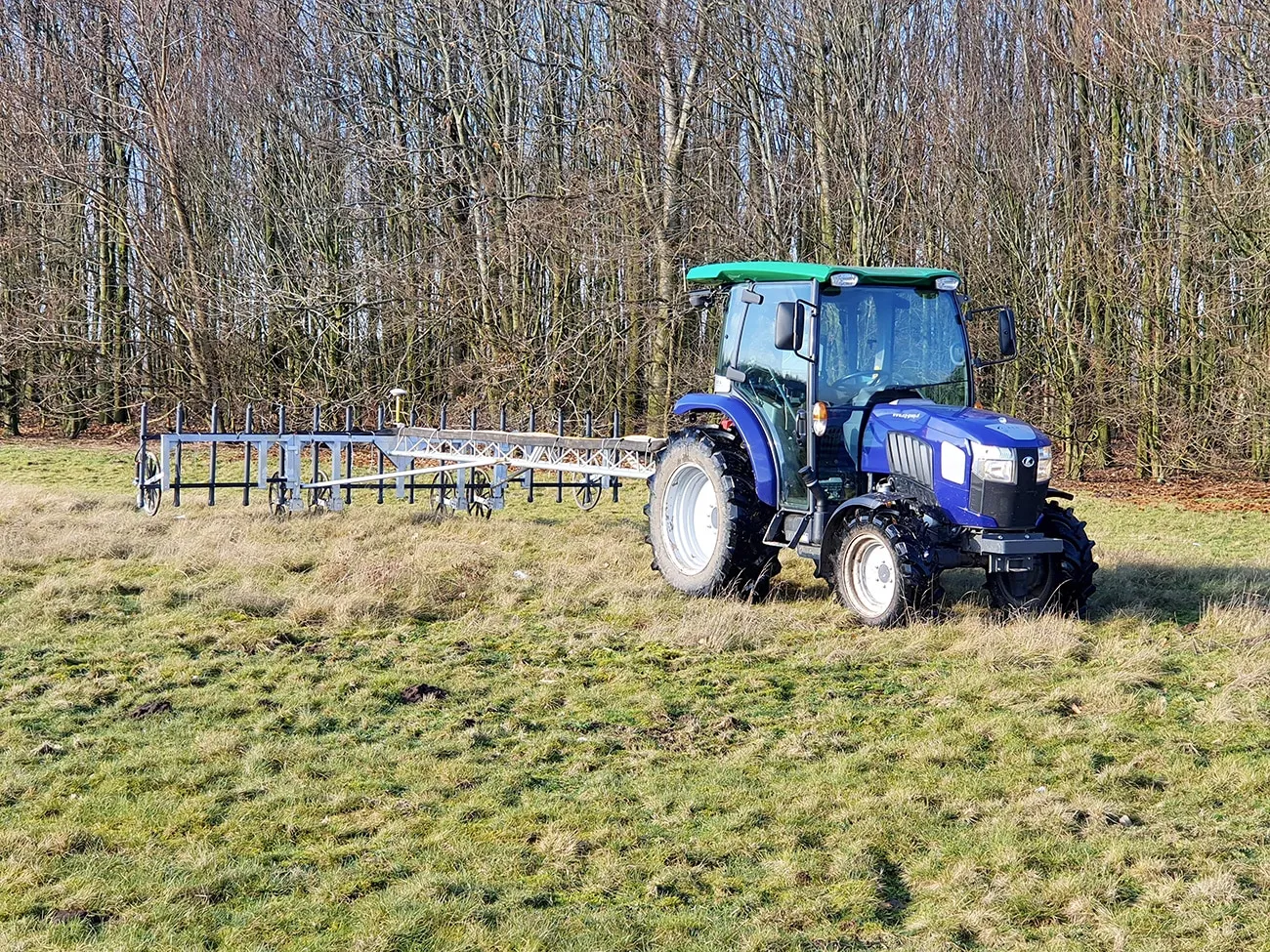
Explosive Clearance Group began by carrying out historical research and gathering existing information from the archives of the Municipality of Overbetuwe and the Municipality of Nijmegen. “All that information was brought together in our GIS system,” Lefering explains. “Our conclusion was that the entire project area in the Municipality of Overbetuwe, as well as parts of the Municipality of Nijmegen, had to be considered a suspected area. The areas where ground works are planned were then subject to the necessary detection work.” Coen Cornelissen of Explosive Clearance Group adds: “We systematically survey the mapped search areas using a magnetometer. Depending on the size of the area, we use either a small cart fitted with five search probes or a tractor with up to sixteen survey probes. This allows us to detect anomalies mechanically across large areas very quickly, down to a depth of around 4 metres.
Our experts read out all the data and turn it into valuable information. Because we interpret objects with such precision, not every anomaly needs to be excavated. It could just as easily be a nail, a piece of wire or a drawing pin. This makes the technique extremely cost-effective.”
From a milk churn to artillery ammunition
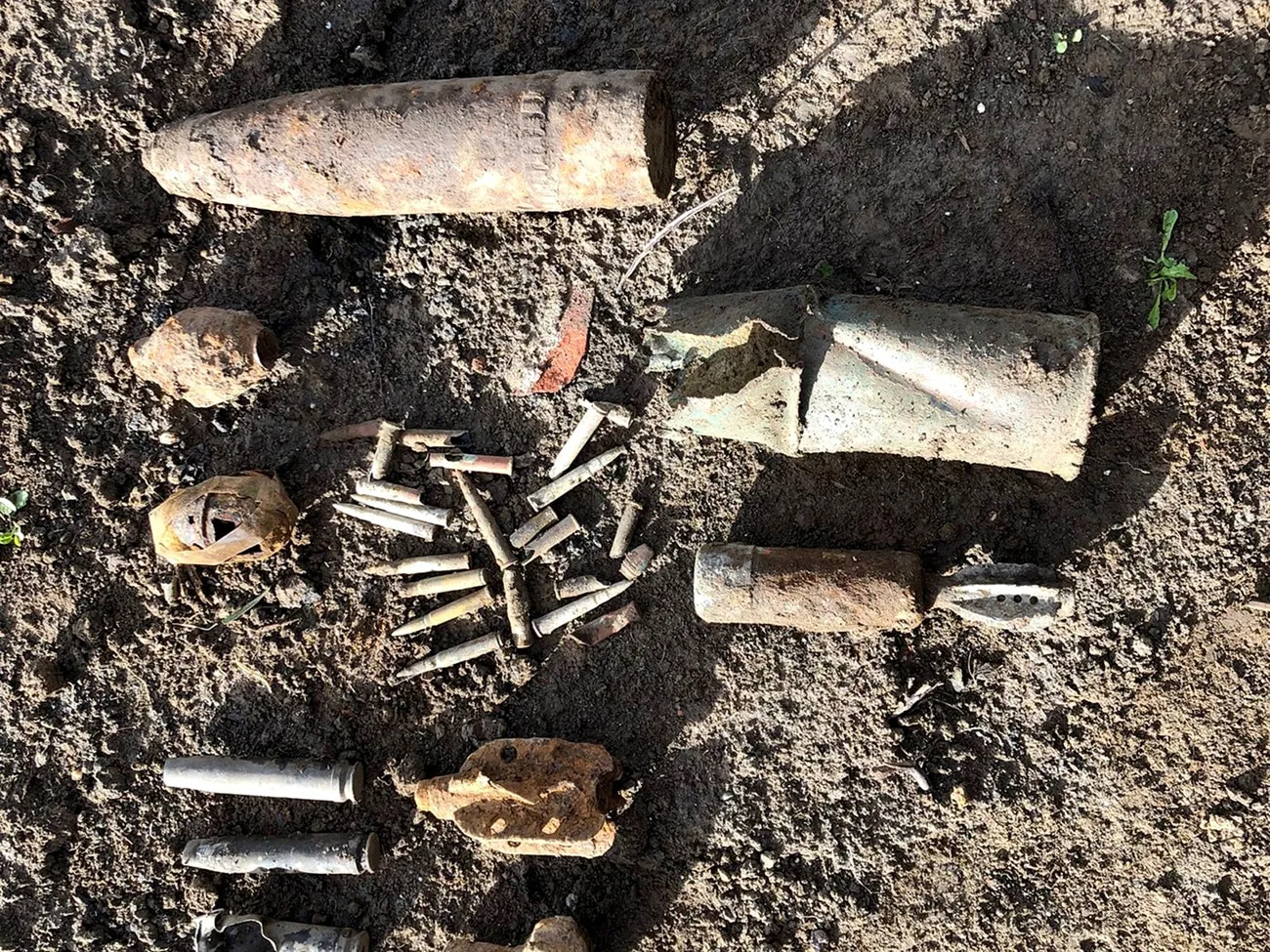
Cornelissen says that virtually every discipline the company specialises in has come into play at Wolferen-Sprok. “From preliminary research and field detection to interpretation, excavation and making objects safe. Depth detection is the only exception here, given the shallow depth at which explosive remnants of war may be found in the soil. If a suspicious object is detected, it is carefully excavated. In our terminology, we call this ‘approaching’ the object. The first layer of soil cover is removed mechanically, after which we scrape away the remaining layers centimetre by centimetre. If it turns out to be a milk churn, there is no cause for concern. If it is an explosive remnant of war, we follow a different protocol, of course. The object is identified and made safe. The UXO found are handed over to the EODD for disposal by the EODD. In this way, we have located and made safe a large number of explosive remnants of war in the area around the Waaldijk, ranging from various types of hand grenade, including old Dutch and German grenades, to all kinds of artillery ammunition, high-explosive shells and British smoke grenades. The area was quite rightly designated as suspected,” Cornelissen laughs.
Explosive Clearance Group is still very much at work on the project. “We are working ahead of De Betuwse Waard’s construction crews,” says Lefering. “We expect a lot more to come to light. In many cases, we work closely with archaeologists, for example when we detect numerous anomalies that are not significant. On this project, together with the archaeologists from RAAP, we have come across not only munitions but also an old Roman road and a skeleton from the early Middle Ages. In short, we can certainly say that this is an area with a rich history. In many respects.”
Question about this story? Ask your question
Keep following this
Get an email when a new story is published. No account needed.
- SubjectNews







