









A solution that clicks into every gully? It’s here!
Drainage operatives all know the problem when they have to clean or unblock a gully: the odour trap can sometimes fall out of its fixing. It is awkward and time-consuming to put it back in place.
Nering Bögel has developed a new flap that stays firmly in place. The ‘clickklep’ is innovative not only in how it is used. During the design process, Nering Bögel discovered that municipalities’ needs now extend beyond having an effective odour seal.
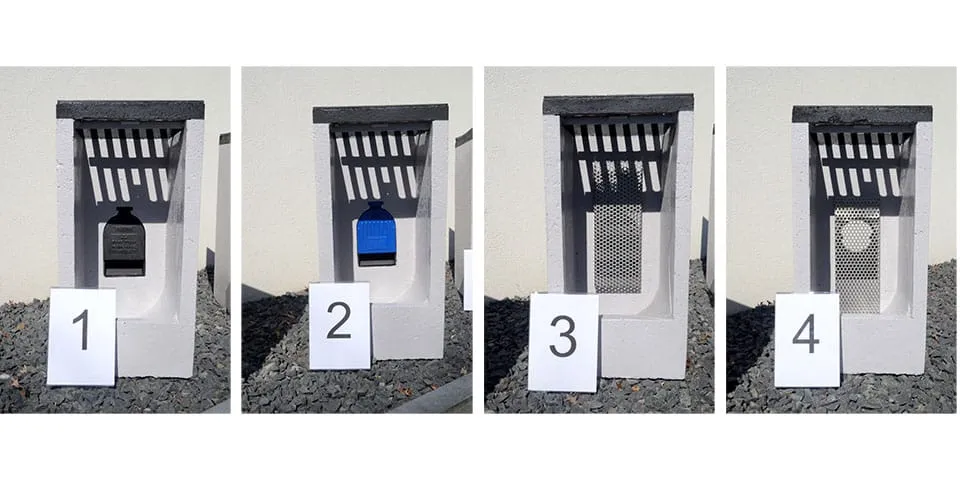
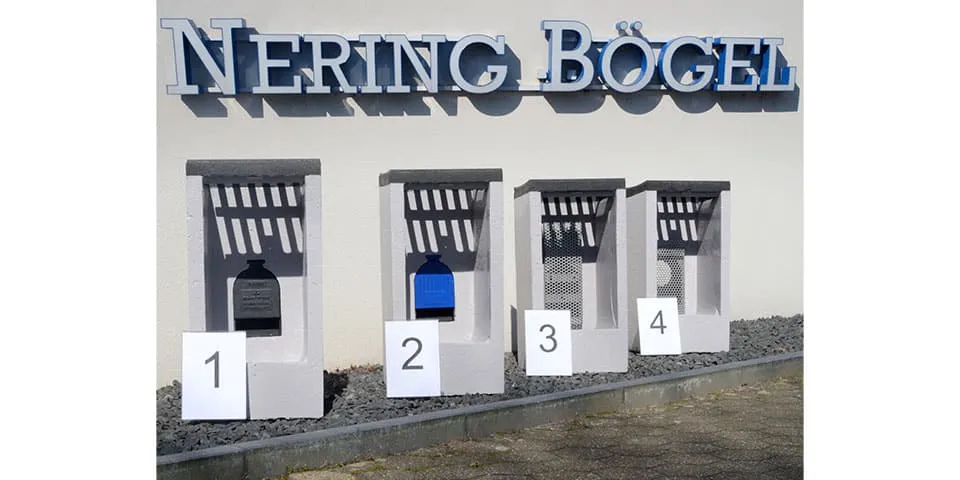
1: A gully with a cast-iron odour trap, the traditional design.
2: A gully with the new clickklep, a new design suitable for the foul water system.
3: The traditional gully with a cast-iron odour trap, combined with the debris catcher.
4: A gully with a debris catcher and no odour trap, providing optimum water discharge while preventing debris from entering the downstream system.
Odour traps are not wanted everywhere
We speak to Toin Bongers, Operations Director, and Henrie van Geneijgen, field service technician at Nering Bögel. “Naturally, the starting point for the clickklep design was that it must not fall out of the gully,” Van Geneijgen begins. “Some municipalities told us, however, that they only want an odour seal in places where it is actually relevant, for example in gullies that discharge foul or combined water. In other locations, where there is no connection to a combined or foul water sewer, they would rather have no flap at all. They prefer maximum water flow.”
Bongers adds: “Especially when you move up to a 160 mm connection diameter, you get maximum discharge capacity, which is needed to cope with increasing surface water flooding. An odour trap is then a limiting factor in the discharge capacity.” According to Bongers and Van Geneijgen, gullies need to be better prepared for peak loads. “But a lot of debris ends up in a gully, including leaves, twigs and street litter. You don’t want that debris in the downstream system, particularly if the gully drains into a vulnerable infiltration system,” Van Geneijgen explains. “The aim, then, is to have a device in the gully that holds the debris back. Nering Bögel already had such a device, but it was always combined with an odour trap. We have now solved that by developing a debris catcher that can be fitted in the odour trap chamber.”
The age-old gully is suddenly multifunctional
“By listening to what municipalities want, we have not only been able to develop a solution that keeps the odour trap neatly in place, but have also met the need to keep all debris in the gully,” Bongers continues. “And the great thing is that the age-old gully has suddenly become multifunctional, thanks to all the options now available. We have created something simple, effective and unique. The options are now: a gully with a cast-iron odour trap, the traditional design; a gully with the new clickklep, a new design suitable for the foul water system; the traditional gully with a cast-iron odour trap combined with the debris catcher; and a gully with a debris catcher and no odour trap, providing optimum water discharge while preventing debris from entering the downstream system.”
Anyone who thinks the new solutions can only be used in Nering Bögel gullies is mistaken. Van Geneijgen says: “We wanted the new solutions to contribute to sustainability and circularity. That is why gullies made by other brands can also be retrofitted with our products. Any old gully can be upgraded in this way!” Other benefits of the debris catcher include keeping pests out. Bongers explains: “The debris catcher can prevent pests such as rats from appearing in the street, for example by travelling from wadis through the sewer. Keeping these pests out makes a real contribution to public health.”
Robust design with ingenious features
The debris catcher has been carefully designed. To begin with, it is made of stainless steel, making it highly durable. Van Geneijgen points out another clever feature: “We designed it to ensure that water continues to drain at varying water levels, even when the gully is largely full of debris. The debris catcher is also designed to stay firmly in place if it is not cleaned or emptied with due care.” Old gullies are inherently sustainable because they are made of concrete and cast iron, with no plastic. The fact that the new variants developed by Nering Bögel extend the service life of any gully makes the overall solution even more sustainable.
A business enquiry for Sterk BV? Get in touch
Companies in this story
Keep following this
Get an email when a new story is published. No account needed.
- SubjectNews
- CompanySterk BV







