









A complex project brings out the best in people’s skills
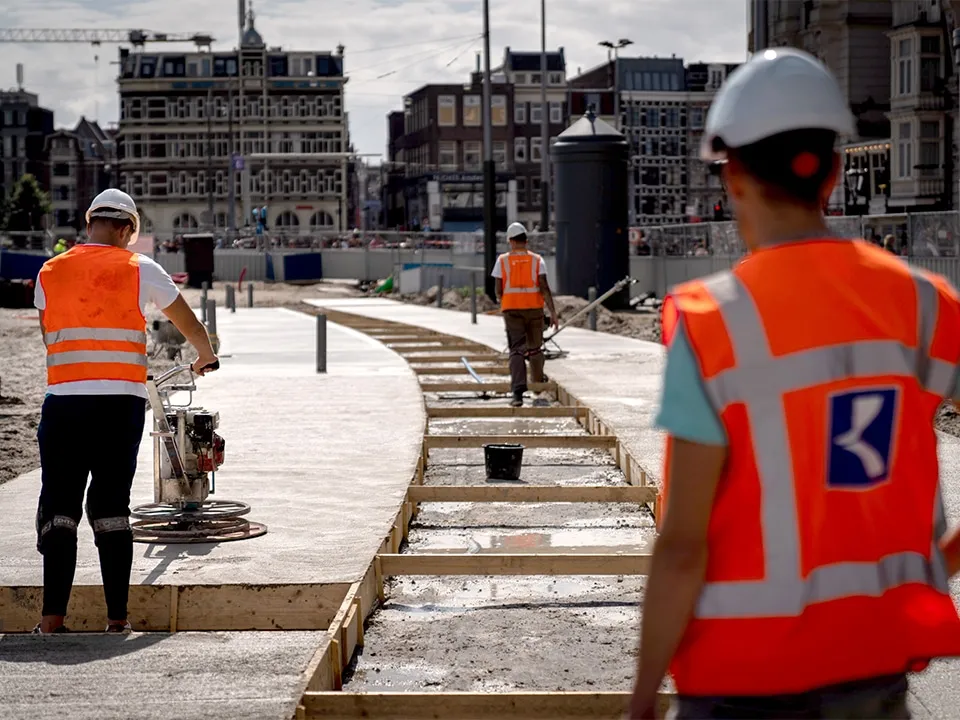
The work currently taking place at Amsterdam Centraal station is remarkable for its scale and complexity. On behalf of the municipality of Amsterdam, Max Bögl & Partners is redeveloping the entire area on the city-centre side of the station. Knipscheer Infrastructuur BV from Almere has been involved since the tender stage. Its work includes assessing and pricing the road infrastructure, preparing the construction design, delivering the infrastructure and carrying out the concrete work for the relocated tram tracks. We speak to René Knipscheer, director and owner of Knipscheer Infrastructuur, and project leaders Piet van Voorst and Maarten Laurant about a complex project where no two days are the same.
Westertoegang redesigned
Project De Entree began in early 2018 with the lowering of the road beneath the railway at the western end of the station: the Westertoegang. “In 6 months, we completely redesigned the Westertoegang and increased the clearance beneath the viaduct by 50 cm. It now measures 4 metres,” René begins. Maarten adds: “The work is being delivered under a Design & Construct contract and is highly complex. Not so much because of the work itself, but mainly because of the location and the many changes to the work. There are plenty of challenges, requiring great flexibility and resilience. That applies to all the partners, of course, but collaboration is excellent and communication is top-notch.”
Every company has its own specialism
“We are working on this project with 12 partners and several subcontractors, each with their own specialism. Max Bögl had already brought us on board for the infrastructure work during the tender stage, and we spent 9 months pricing it. When Max Bögl & Partners won the tender in 2017, we were able to get started. So we were involved very early on,” says René. Maarten adds: “The surrounding area is the biggest challenge. The work on Prins Hendrikkade, between Damrak and Kamperbrug, is divided into 11 work zones. The stakeholder team coordinates all the accessibility, liveability, safety and communication measures. Working on this project means pushing boundaries and making compromises, with the UAV-GC contract in the background. The client wants to give up as little public space as possible, while the contractor wants as much worksite space as possible.”
Unexpected issues call for flexibility
Maarten continues: “We face changes every week. One example is Prins Hendrikplantsoen, where archaeological features, old quay walls, led to changes. We come across unexpected foundations, unknown obstacles that do not appear in the asset records, and incorrectly documented or undocumented cables and pipes. We log around 5 of these reports a week. That calls for a great deal of flexibility from us and the other partners. But collaboration is so good that we manage these issues together.”
Piet stresses the importance of having genuine skilled workers on projects like this. “You need to know what you’re dealing with. Some ‘surprises’ can be dangerous. For instance, we find medium- and low-voltage cables in places where we don’t expect them, close beneath the road surface. You always need to take extra care when working in a city. On this project, we have to stay highly alert at all times.” René says that receiving change requests at the last minute also creates challenges. “For example, changes to traffic flows in the city centre.” Maarten adds: “As regards the changes mentioned above, we have now passed the 321st VTW (request for change) in the 3 years we’ve been working here.”
Good teamwork helps people grow
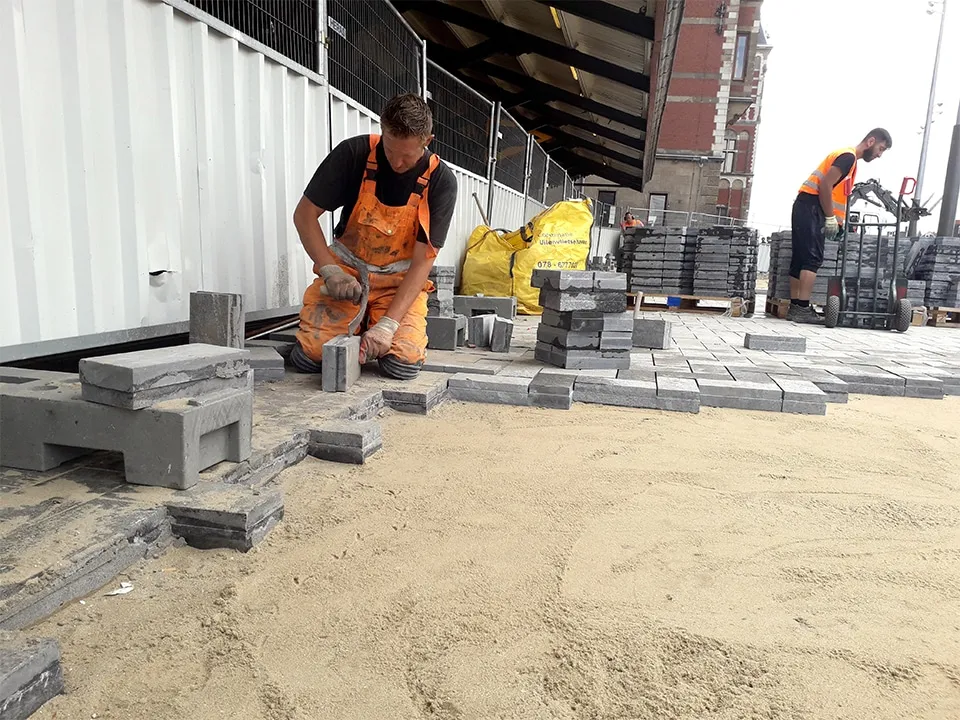
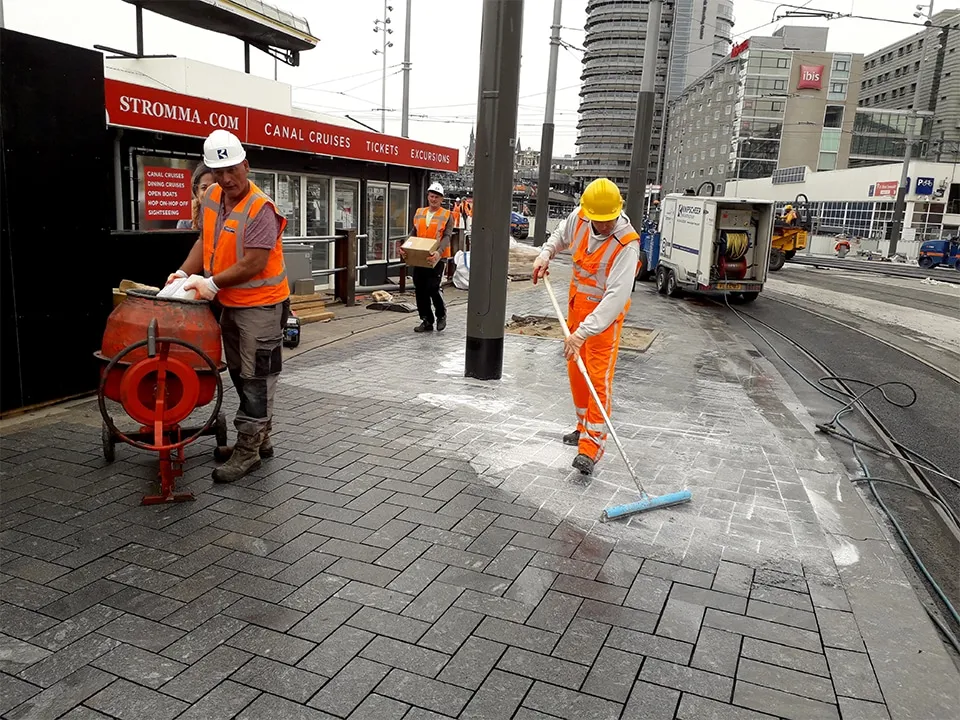
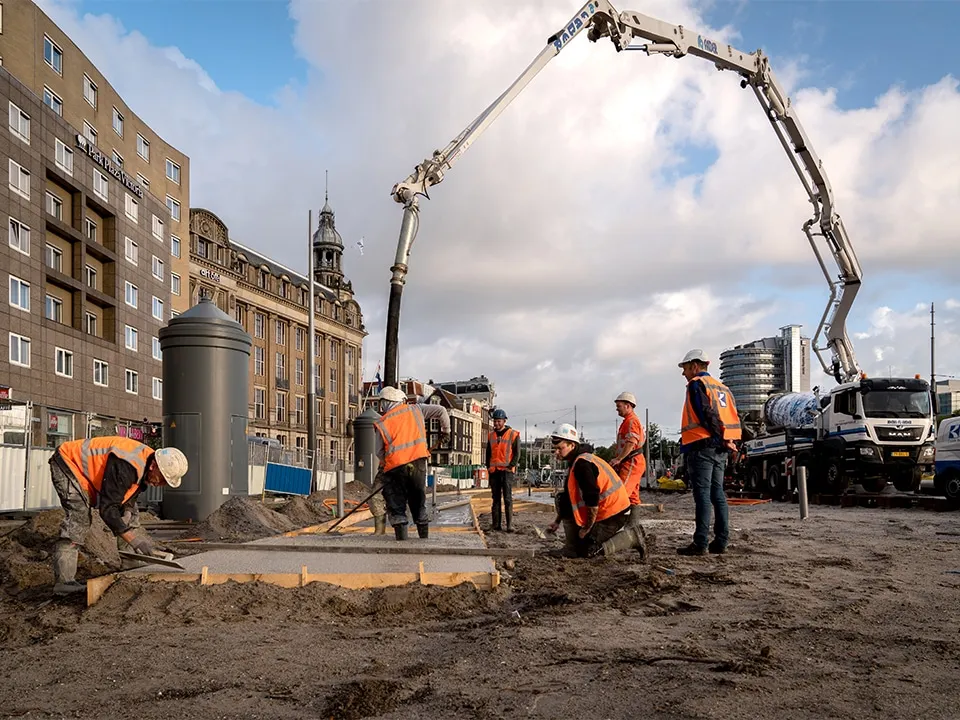
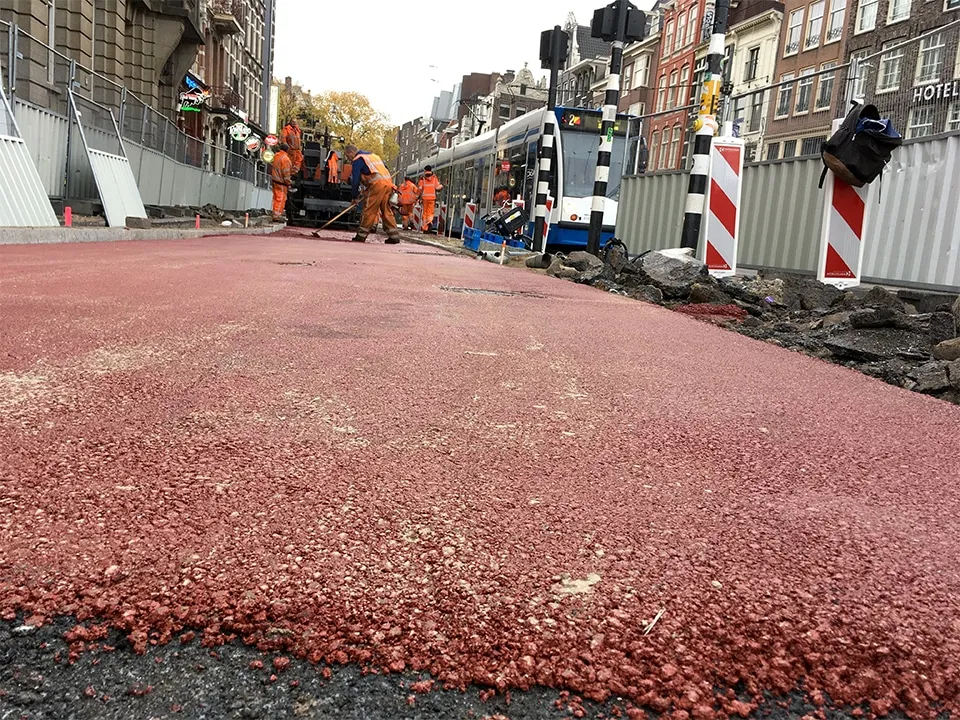
Knipscheer Infrastructuur’s scope includes all the road infrastructure, reconstruction work (everything from ground level down to 60 cm below ground is handled by Knipscheer Infrastructuur), all gully connections, rainwater drainage, concrete work on the tram tracks, the entire site layout, including paving and street furniture. It is a very substantial package of work. “We also coordinate the installation of the tram stops,” says René. “The public lighting and traffic signal installations are also within our scope. Maarten completed the entire design. The detailed design is the responsibility of Max Bögl & Partners, while the construction design is in the hands of Laurant Groep (Maarten). He translates the detailed design into a technical 3D model and prepares the working drawings.”
René is proud that a company the size of Knipscheer Infrastructuur has been trusted to take on such a complex project. “We were selected because of our good communication, our patience, our consistent demarcation of the work area, the fact that we are so multidisciplinary, with both a concrete division and an infrastructure division, our experience in natural stone and our short lines of communication. We have everything we need to deliver efficiently, quickly and reliably on a project this complex.” Maarten says: “We deliver quality with a proactive, positive approach, from the first stroke of the pen right through to the final administrative close-out. It’s teamwork between Knipscheer and Laurant. As a result, you can see the people on site growing in their roles. In this project, we are Max Bögl’s largest partner.”
Question about this story? Ask your question
Keep following this
Get an email when a new story is published. No account needed.
- SubjectNews







