









‘Dry’ fire-fighting system at OpenIJ: technically unique design
After a year full of uncertainties, there are thankfully some things we can always rely on. Such as the knowledge and expertise of the skilled team at Aannemingsbedrijf QUALM, specialists in fire-fighting systems, pipework and earthworks, when it comes to installing complete fire-fighting systems.
They were brought in by the OpenIJ contractors’ consortium to install the fire-fighting system at the world’s largest sea lock, in IJmuiden. After almost 100 years, the Noordersluis is in real need of replacement and is being fitted with a unique fire-fighting system.
Dry system
René Borgh, project manager at Aannemingsbedrijf QUALM, explains the unusual dry system used here. “A dry system means that the pipes are not permanently filled with water. The pumps are started and the pipes filled only when water is needed,” Borgh explains, before continuing: “This means the pipes must be drained when water is not needed, and the valves must be open while the pipes are being filled. The challenge is to close the valves once the air has been forced out of the system and the fire-fighting water has filled the entire system. It is a technically unique design, particularly because part of the 3.5-kilometre fire main runs beneath the lock. This has never been done on such a large scale before. But Rijkswaterstaat asked for it, and QUALM delivered.”
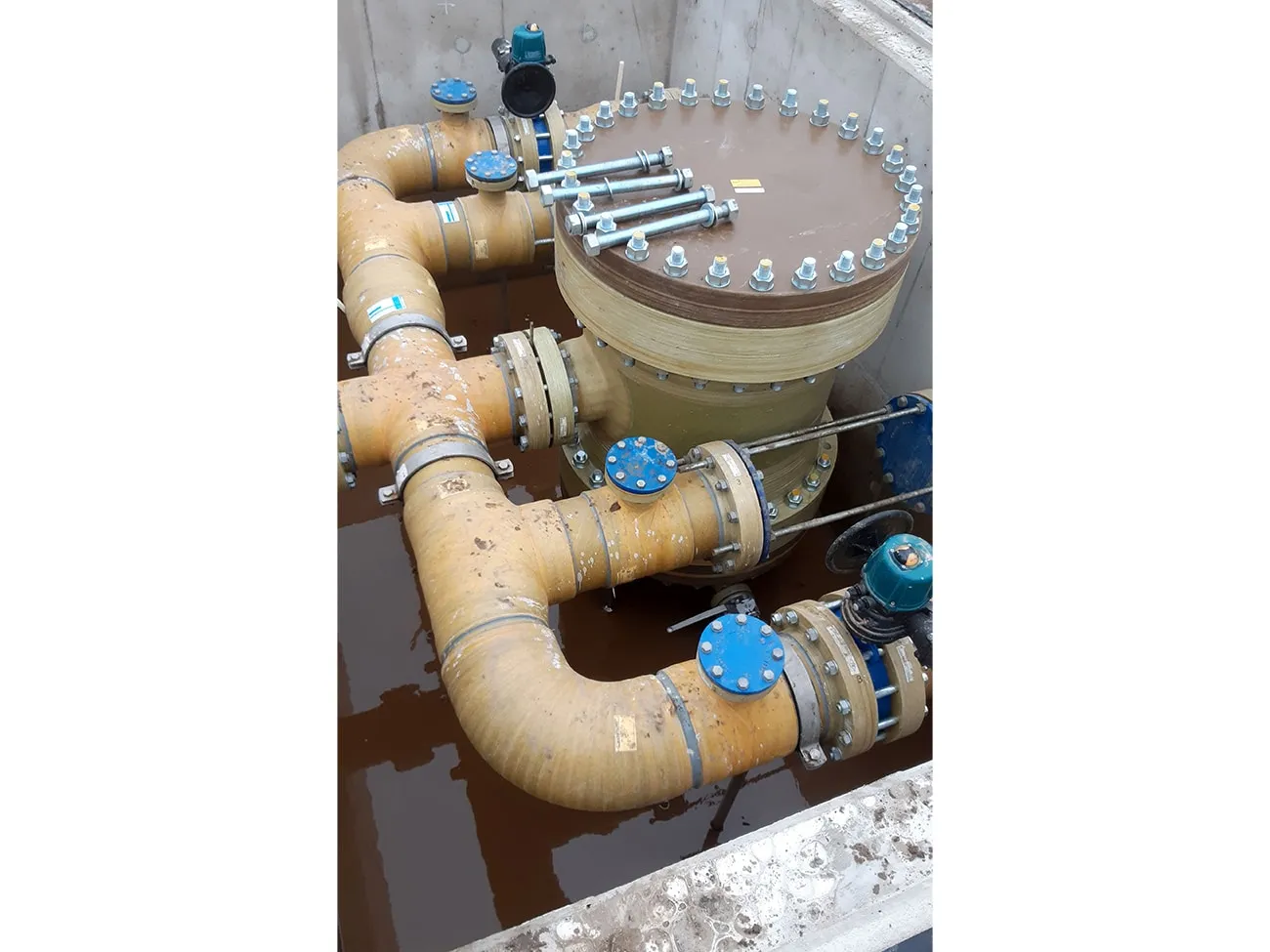
Unique GRE air vessel
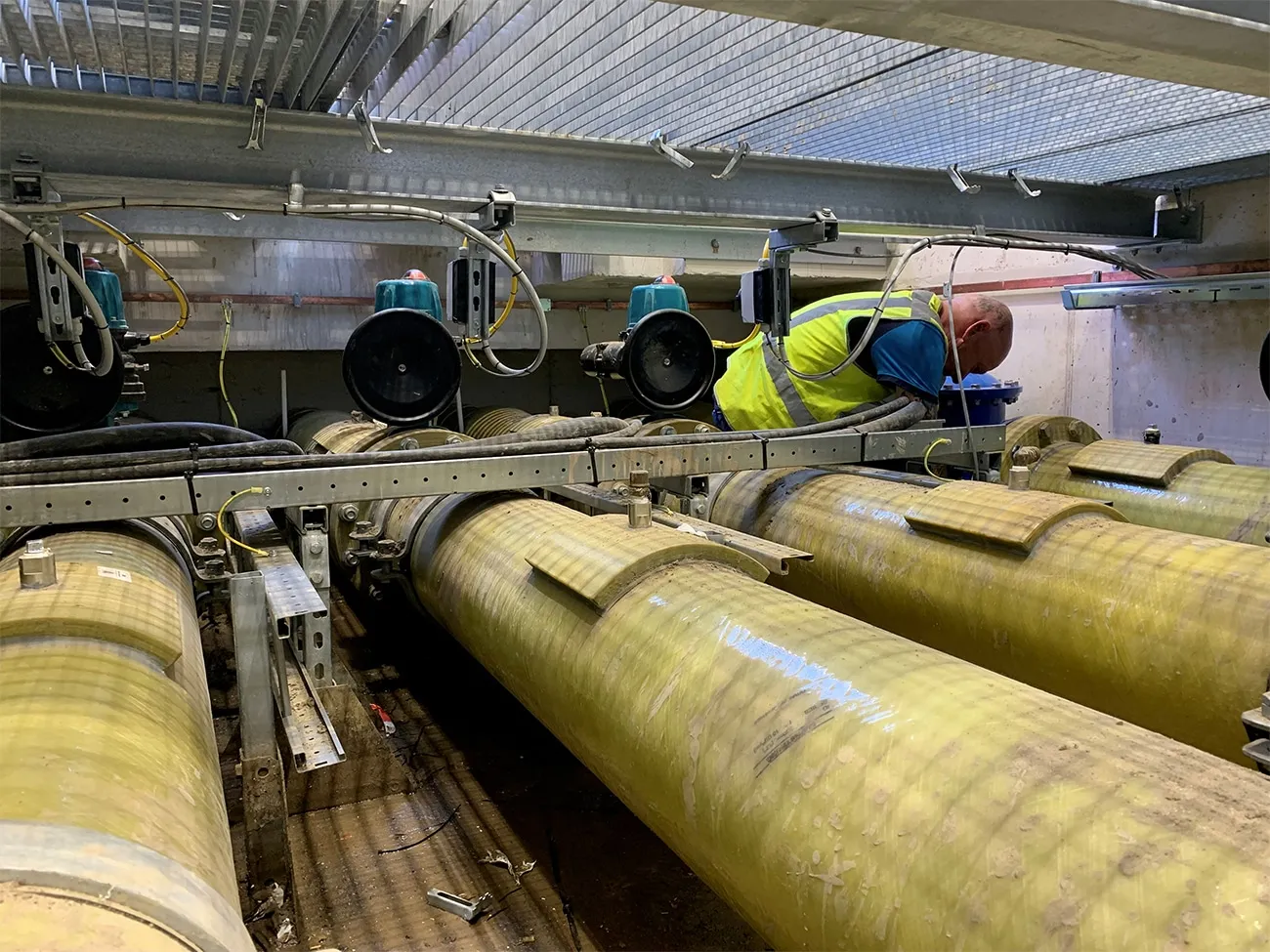
“Because the pipeline, which has two lines, one of them a standby, initially runs beneath the lock and is fully encased in concrete, we started work on the bed in 2017 and worked our way up in many, many stages as the concrete was poured, to just below ground level. This was done at both the landward and seaward heads of the lock. The whole structure was later lowered to the bed, bringing it back to the right position for connection to the horizontal section.” Borgh says the work continued until 2019: “That was when we were commissioned to install the horizontal section of the fire mains too. This included all the fittings, installation of the chambers made by OpenIJ, the fire hydrants, the pipework and the valves in the control building. So we supplied practically everything, apart from the pumps in chamber one.” PE pipes, plastic pipes rated at 16 bar, were used underground. “In the chambers, we used GRE pipes, including valves and GRE air vessels (to damp water hammer), a higher-grade and unique solution. The design called for stainless steel pipes, but because seawater flows through them due to the dry system and they are left empty, we naturally wanted to minimise the risk of corrosion.” That, too, is typical of QUALM: thinking beyond the brief and recommending a better solution.
Een zakelijke vraag aan QUALM? Get in touch
Who worked on it
Noordersluis in Velsen
- contractor
 QUALM
- contractors' consortiumOpenIJ
Keep following this
Get an email when a new story is published. No account needed.
- ProjectNoordersluis
- SubjectUnderground infrastructure
- CompanyQUALM
- CompanyOpenIJ







