









Optimising products and mixes
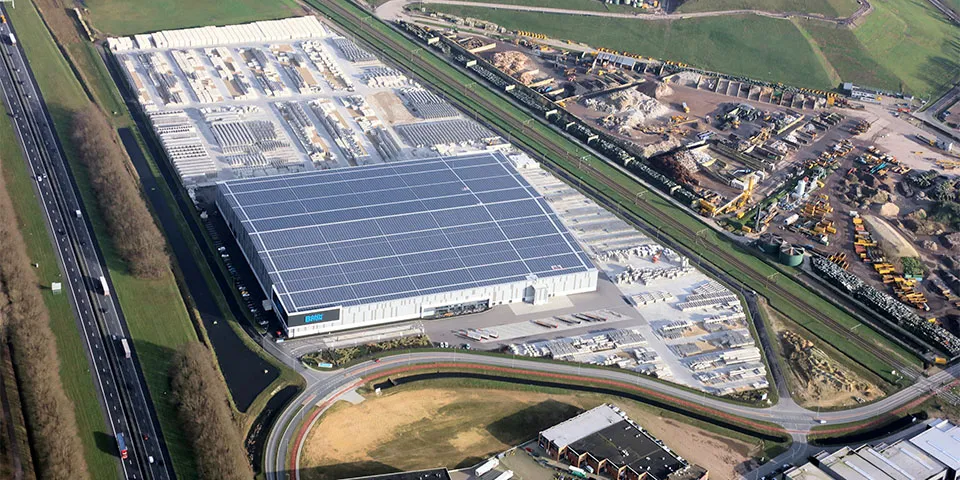
With its new plant, concrete company Bosch Beton is setting itself apart in terms of sustainability. The plant itself was designed to BREEAM Outstanding standards, making it one of the most sustainable concrete plants in the Netherlands. The aim is to produce concrete retaining walls that are 100% circular.
That means you can lower your environmental cost indicator (MKI) scores
“Close collaboration between all the partners in the supply chain is a very important factor in this process,” says Brechtje van den Beuken-van den Bosch.
A positive development
“The market is moving faster and faster, which is a welcome and, above all, positive development. I think the coronavirus crisis may also help bring about a more rapid realisation of the situation,” says Brechtje. “And we are moving with it.” Earlier than expected, Bosch Beton decided to further expand capacity at its concrete plant for storing and processing new raw materials. “The new plant has been operational for less than a year, and we are already expanding by 30%. This will enable us to respond to market developments.” Bosch Beton will once again work with UBO Engineering to deliver the expansion.
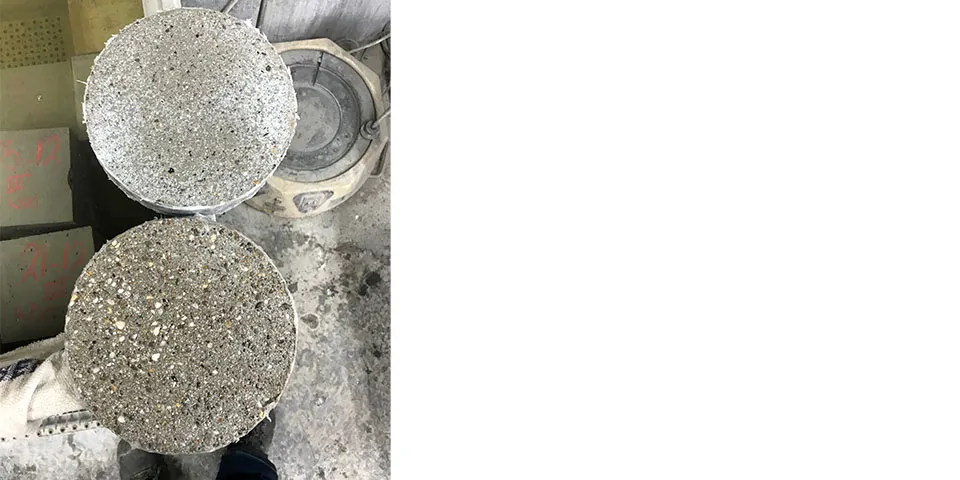
The difference of 2 between acid-tested concrete mixes, with acid attack making the difference in quality and durability literally visible.
New mix types
“The plant was already ready for this. We are now taking our innovation further, focusing on raw materials and our concrete mixes,” Brechtje continues. “Alongside the high expectations for geopolymer concrete, among other things, several tests have now been completed on new mix types, including mixes with new bio-based aggregates. Once testing is complete, the mixes must be certified before we can use them in our products, as quality must always be assured. Our new Ecomix cuts CO2 emissions by 17% and is 14% more resistant to acids.” The latter is particularly important for the service life of a retaining wall, especially when it is exposed to extreme conditions or used to store ‘acidic’ organic products, as is the case in the agricultural sector. Bosch Beton tailors its approach and products to the specific needs of different sectors. “Concrete products for the civil engineering sector have to meet very different requirements, and customers need increasingly specific solutions,” Brechtje adds. “That is why we are expanding our plant.”
Construction after coronavirus
“It will remain a major challenge to make quality, rather than the lowest price, the deciding factor. This is especially true if fewer projects come onto the market as a result of the coronavirus period and contractors have to replenish their order books more quickly. I can imagine that in such a situation, companies may be tempted to tender at the lowest possible price, at the expense of quality and sustainability.”
“However, you can also set yourself apart in a positive way by working together to make the case for sustainability to the client. For a procurement manager or contractor, that may seem complicated and time-consuming, especially when time or staff are in short supply. But it need not be, if you work with a supplier such as Bosch Beton. We already have everything in place, so any procurement manager or contractor, large or small, can easily outsource this to us. That offers real potential.” Brechtje concludes: “The solutions are already there, so it can be done. If you want to build sustainably, ask us about the options!”
Een zakelijke vraag aan Bosch Beton? Get in touch
Companies in this story
Keep following this
Get an email when a new story is published. No account needed.
- ThemeMaterials and techniques for infrastructure
- SubjectBouwMat
- CompanyBosch Beton







