









Climate adaptation solutions
When heavy rain hits, people in some areas hold their breath, because if things go slightly wrong, the streets are flooded and water reaches people’s homes. Sadly, this is an increasingly familiar phenomenon, in the Netherlands and Belgium too.
With exceptional technological expertise and an impressive fleet of machinery, Denys is keen to take on these challenges. “We like building what others can’t, won’t or dare not, preferably underground.
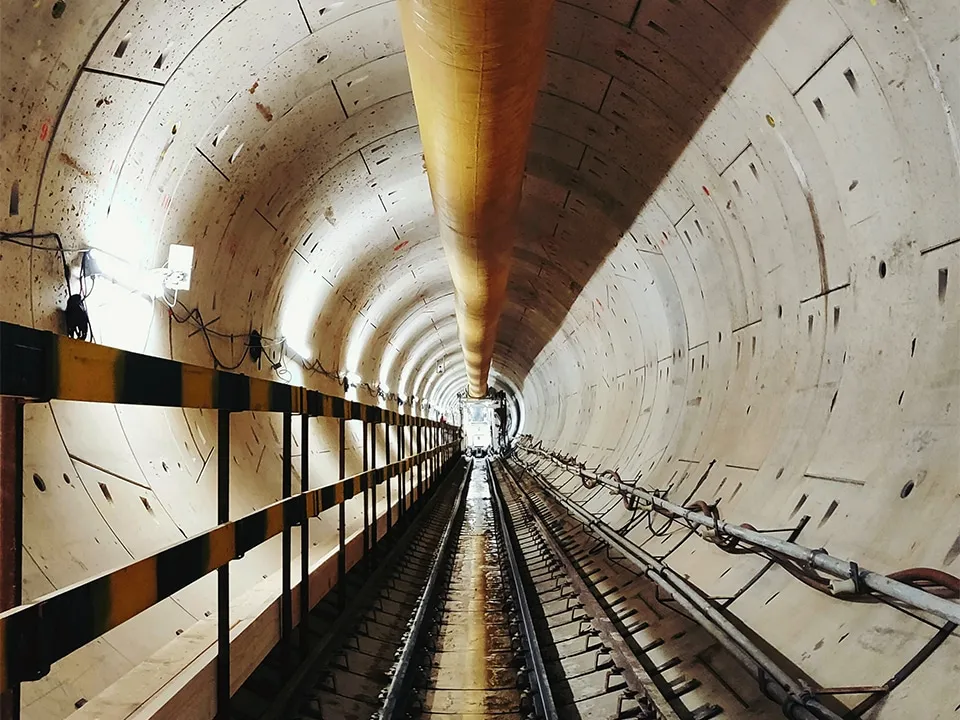
With more than 1,800 employees across offices on several continents, Denys is a major global player. The multidisciplinary group specialises in water, energy, mobility, construction, restoration and special techniques. “This diversification makes us a sought-after partner for complex construction and infrastructure projects, including those addressing climate adaptation. On behalf of client Vivaqua, we built an 8,000 m3 tubular stormwater storage basin beneath Grootveldlaan in Sint-Pieters-Woluwe as part of the THV Grootveldlaan joint venture (Bam Contractors, Wayss & Freytag and Denys),” says Dirk Derycke, Division Manager Tunnelling & Drilling at Denys.
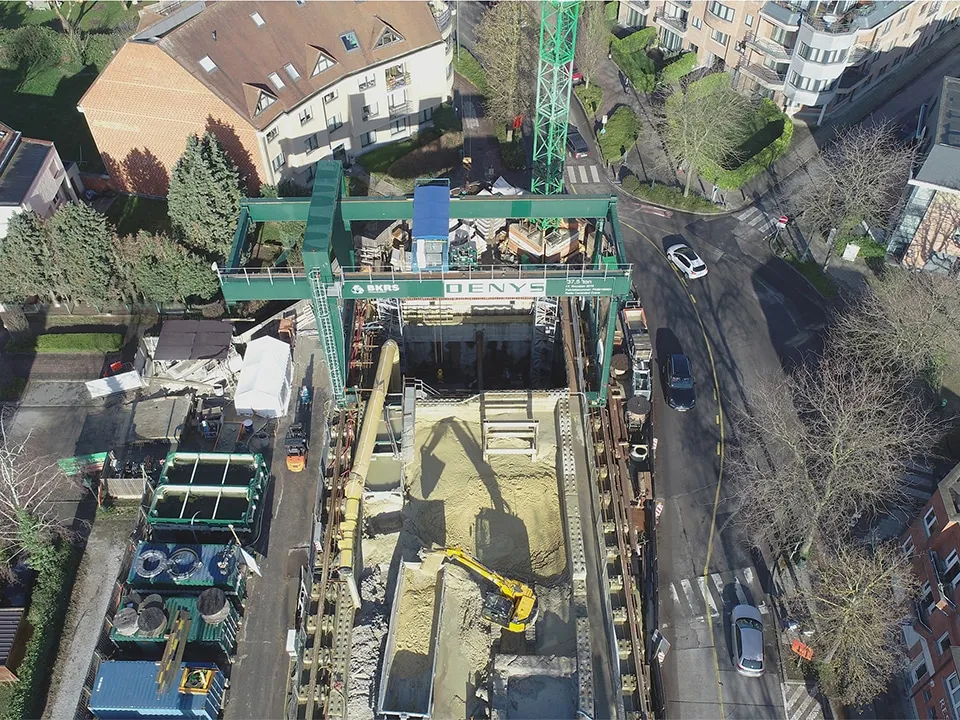
Stormwater storage basin
Climate change is bringing increasingly frequent bouts of sudden, heavy rainfall, making stormwater management a top priority in Belgium today. Derycke says: “The sewers in the Struybeeck valley were under severe strain when torrential rain fell in and around Sint-Pieters-Woluwe. Streets were flooded and basements filled with water. Even the above-ground stormwater basins built in the past, Grand Prix (7,000 m3), Herendal (7,000 m3) and Stockel (3,000 m3), could not cope with the sudden volumes. This prompted Vivaqua to build a new basin on Grootveldlaan. The dense urban development made it difficult to incorporate above-ground basins here. A large-diameter tunnel combined with a launch shaft, and no reception shaft, provided the solution. Choosing this technique kept the visible impact on the surrounding area to a minimum.”
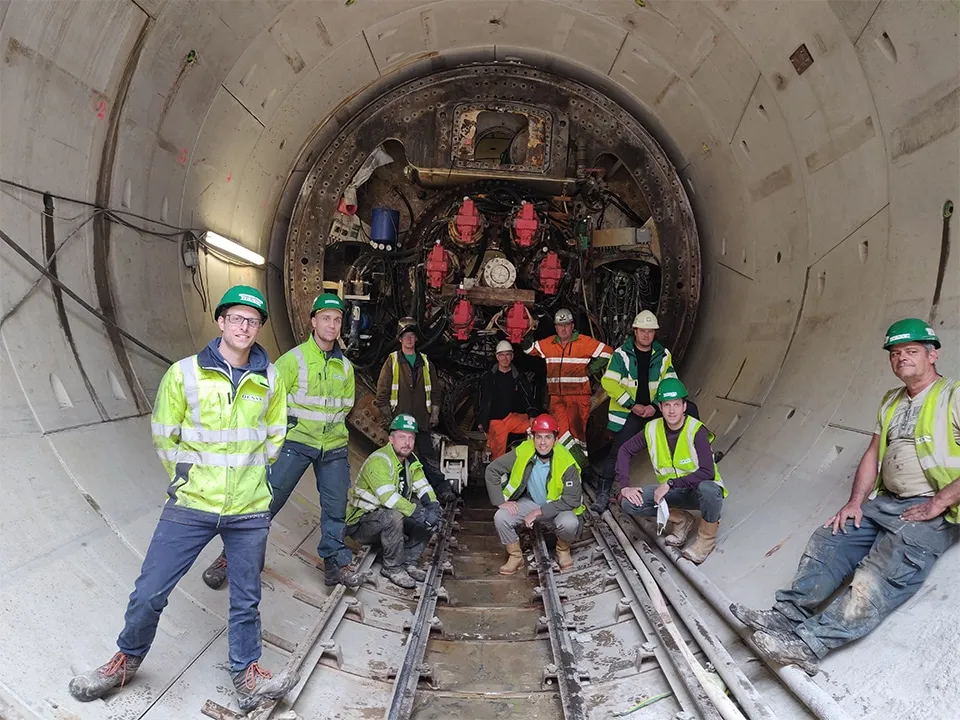
Petra tunnel boring machine
First, the launch shaft was built: a pumping shaft 17.40 metres long, 10.90 metres wide and 12.25 metres deep, fitted with 16-metre-long secant piles and a reinforced underwater concrete base slab. Derycke says: “We assembled our Petra tunnel boring machine here. It was first used on another project in Algeria and specially adapted for this tunnel. The tunnel has a diameter of 5.20 metres and is 470 metres long. Its lining consists of 310 precast segment rings manufactured at our subsidiary SOCEA in Oelegem. As mentioned, the tunnel was bored without a reception shaft. However, we built a small access shaft at the end for inspection and ventilation. Excess stormwater is collected by an overflow into the existing collector and channelled through two access shafts to the tunnel beneath Grootveldlaan. Once the downpour has passed, the water is pumped back into the sewer.”
The stormwater storage basin in Sint-Pieters-Woluwe is due to be completed early next year. “We are currently working on a project for SOWAER, also a stormwater drainage system, which will carry water from Liège Airport to the Meuse. We are keen to contribute to sustainable projects where our exceptional technological expertise makes a difference and where we can take great pleasure in finding solutions to a range of challenges,” Derycke concludes.
Question about this story? Ask your question
Who worked on it
Regenwaterbekken Vivaqua Sint-Pieters-Woluwe in Sint-Pieters-Woluwe
- THV GrootveldlaanDenys
- THV GrootveldlaanBam Contractors
- THV GrootveldlaanWayss & Freytag
- clientVivaqua
- prefab segmentenringenSOCEA
Keep following this
Get an email when a new story is published. No account needed.
- ProjectRegenwaterbekken Vivaqua Sint-Pieters-Woluwe
- SubjectNews
- CompanyDenys
- CompanyBam Contractors
- CompanyWayss & Freytag
- CompanyVivaqua
- CompanySOCEA







