Platform on civil engineering, underground infrastructure, energy, construction equipment & construction machinery
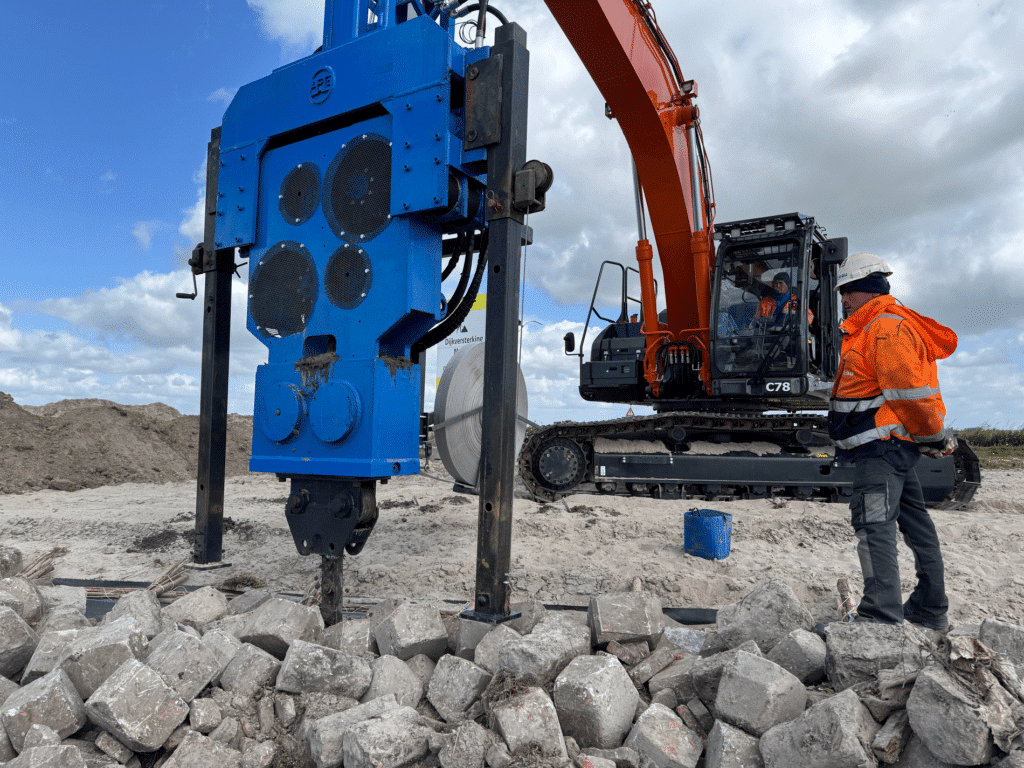
Vertical drainage is typically installed using heavy equipment that drives drains into the subsoil to be compacted in a controlled manner. It was precisely this standard approach that proved unfeasible for the Marken Dike Reinforcement project. The combination of construction phases carried out from both the water and land, restrictions on equipment use, and unexpected obstacles in the subsoil made this project considerably more challenging than usual. It was right up CeTeau BV’s alley—experts in soil improvement.
“It became clear as early as the preparatory phase that this was no ordinary project,” begins Gatze van der Meer, general manager of CeTeau BV. This prompted the Hof op Marken consortium to bring in the right expertise. CeTeau BV and DEME are partners who know each other well from international projects. “As a company, we operate worldwide, so having this project so close to our home base makes it extra special,” says Van der Meer. “Our scope included installing vertical drainage in two phases: from the water and within the existing dike body. Vertical drainage accelerates settlement, but also ensures controlled settlement.”
During the wet phase, carried out from a pontoon between May and November 2024, approximately 130 kilometers of drains were installed to a depth of approximately -6 meters NAP. “By using relatively light equipment and smart logistics, we were able to work close to the coast,” says Van der Meer. “Subsurface obstacles were hardly an issue here.” That changed drastically during the dry phase, which ran from April through October 2025. “Heavy machinery could not be used on the existing dike body, even though weight is essential for installing drains without disturbing the soil. Alternatives such as pre-drilling were ruled out due to the presence of contaminants, including asbestos. Furthermore, during various test phases, we encountered remnants of old embankment revetment and crushed stone, making parts of the subsoil difficult to penetrate.”
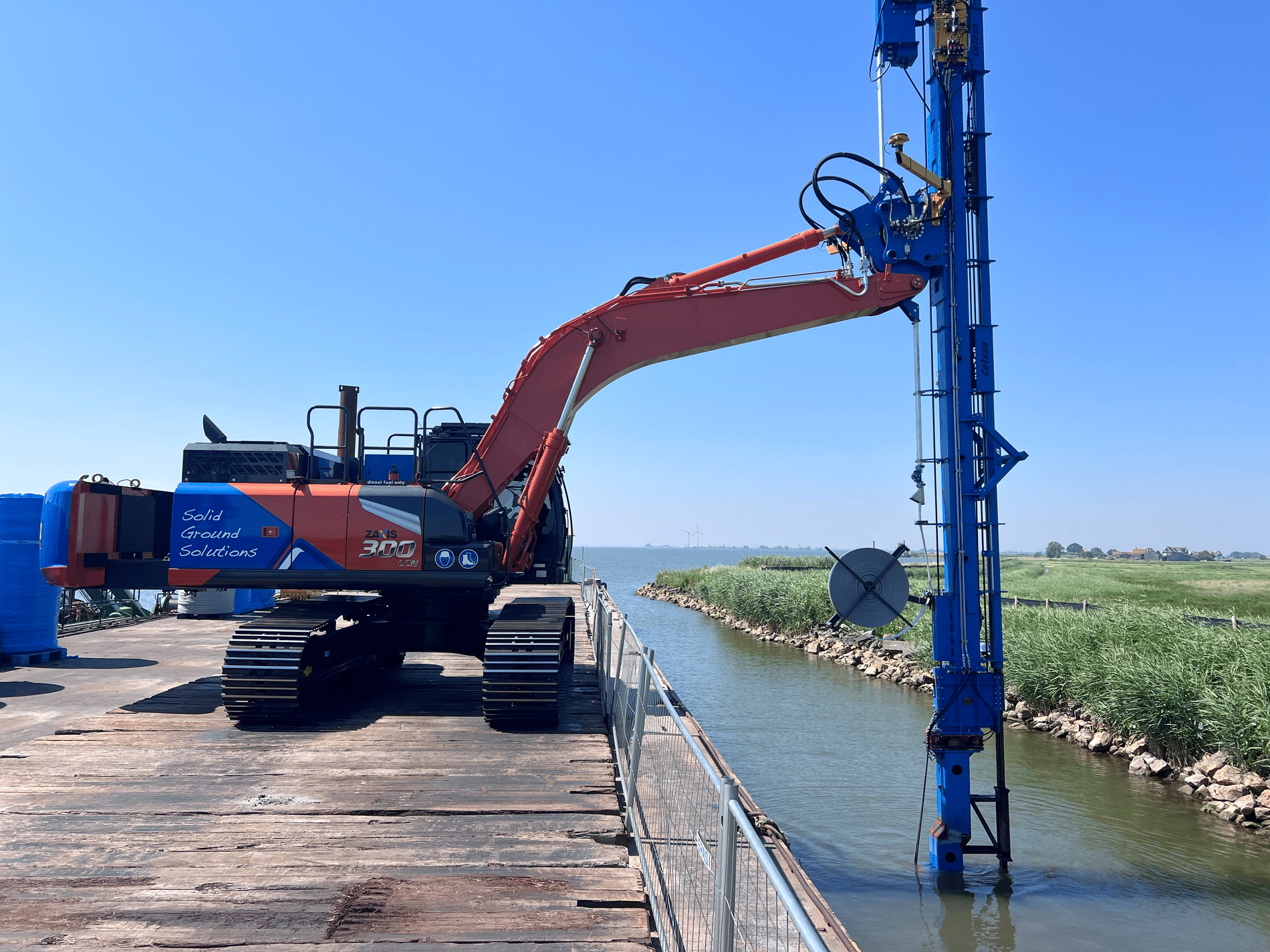
The solution was found in a specially developed, lightweight vibratory rig. “This technique uses vibrations to generate sufficient penetration force and work its way between the crushed stone, without adversely affecting the soil structure,” Van der Meer explains. “Because the subsoil was salty enough, unwanted ‘spreading’ of clay was prevented. This allowed us to strike a workable balance between technical feasibility and environmental constraints.” In total, CeTeau BV installed 115 kilometers of drains during the dry phase, in lengths ranging from 6 to 9 meters. “The CT-D 1013 drains used were specially developed for high tensile strength and are reliable, even under complex conditions such as bending loads that can occur when the preload is released.”
The combination of technical limitations and environmental factors made installing the vertical drainage exceptionally challenging, recalls Van der Meer, who adds that all drains are manufactured by CeTeau BV in the Netherlands from PP. “We have also developed a biodegradable drain that is 100 percent biodegradable under normal soil conditions and therefore poses no risk of seepage. Due to the specific soil conditions here, it was not used in this project.”