Platform on civil engineering, underground infrastructure, energy, construction equipment & construction machinery
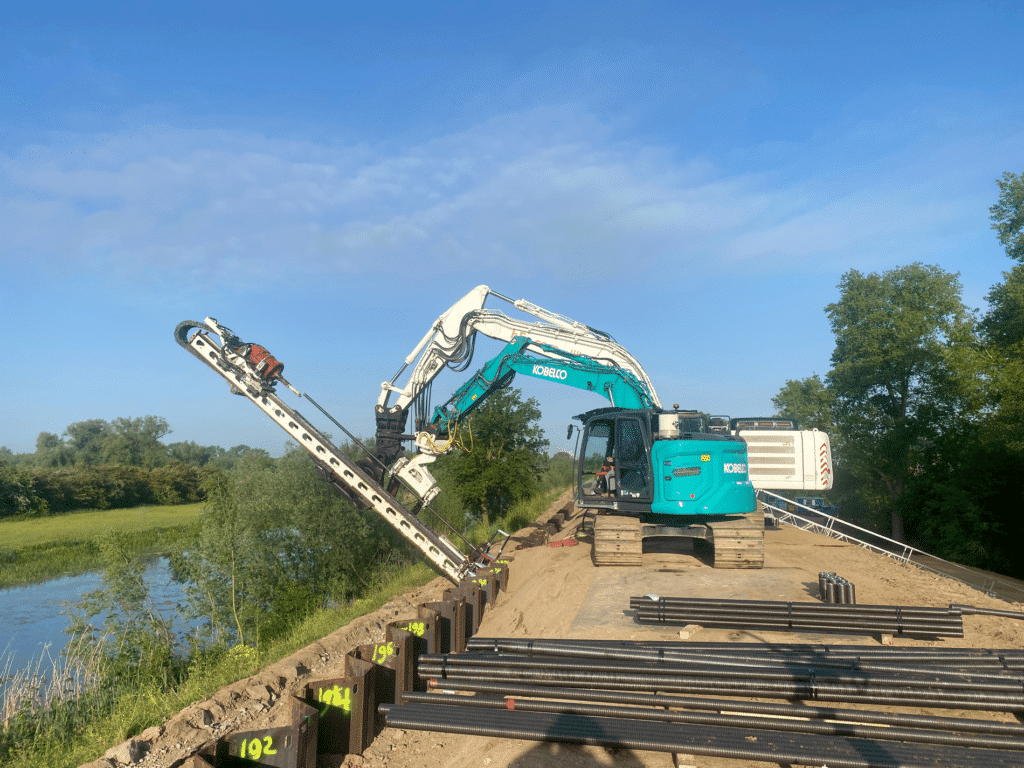
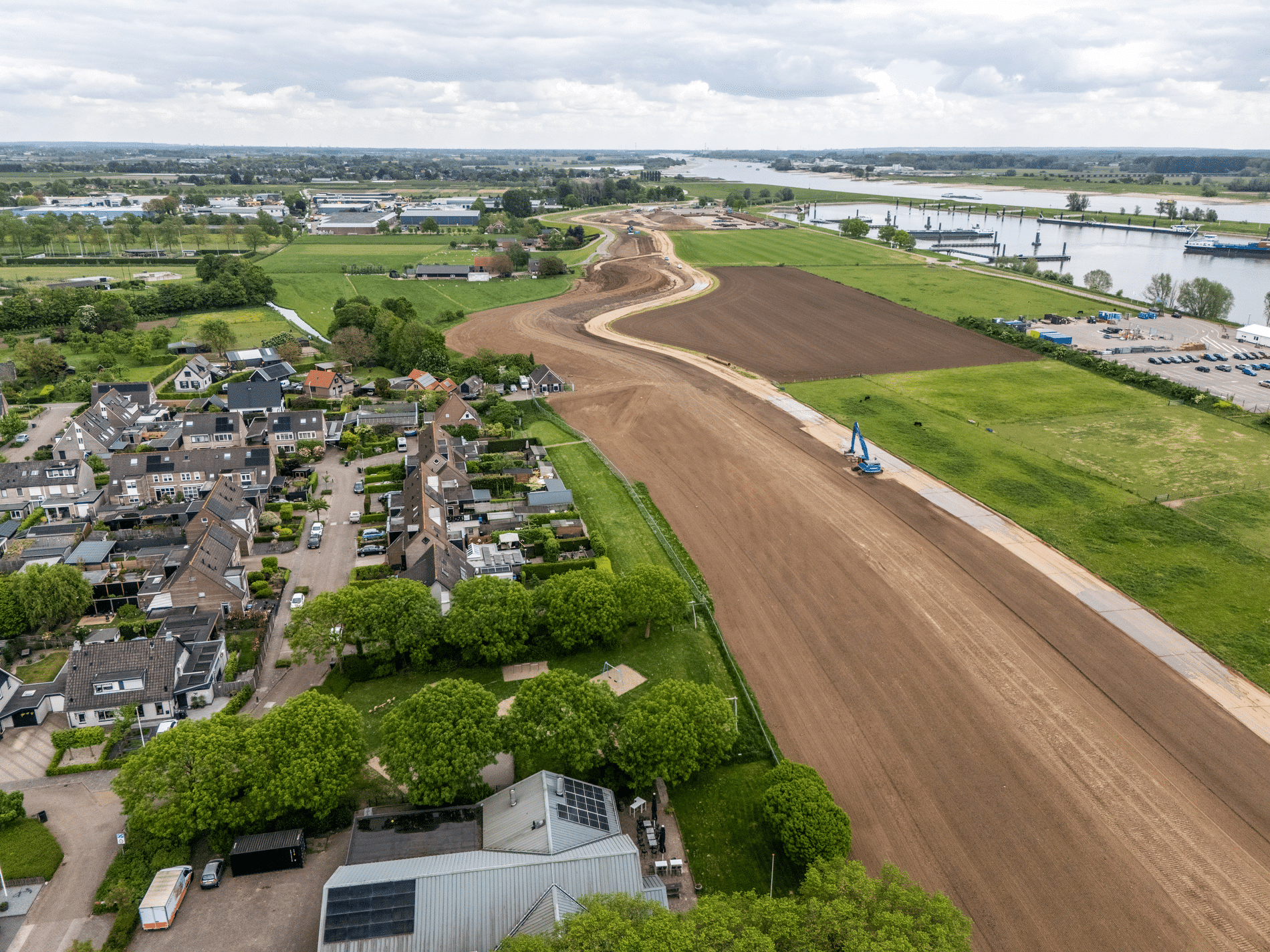
In large infrastructure projects, the most important decisions are often made during the planning phase. For the 20.2-kilometer-long Neder-Betuwe dike reinforcement project, TAB Anker was brought on board as a supplier by High 5 Solutions—a specialist in the installation of ‘self-drilling’ anchors—well before construction began on this unique project. TAB Anker manufactures a variety of anchoring materials used in various foundation solutions.
TAB Anker specializes in anchoring systems, but according to business manager Arnic Smits, the company explicitly does not see itself as a supplier that simply delivers a product. “Our roots lie in hydraulic engineering and foundation engineering, and we combine that background with in-depth technical knowledge. As a result, we’re often involved in the design phase, contributing ideas on structures, feasibility, and optimizations,” he says.
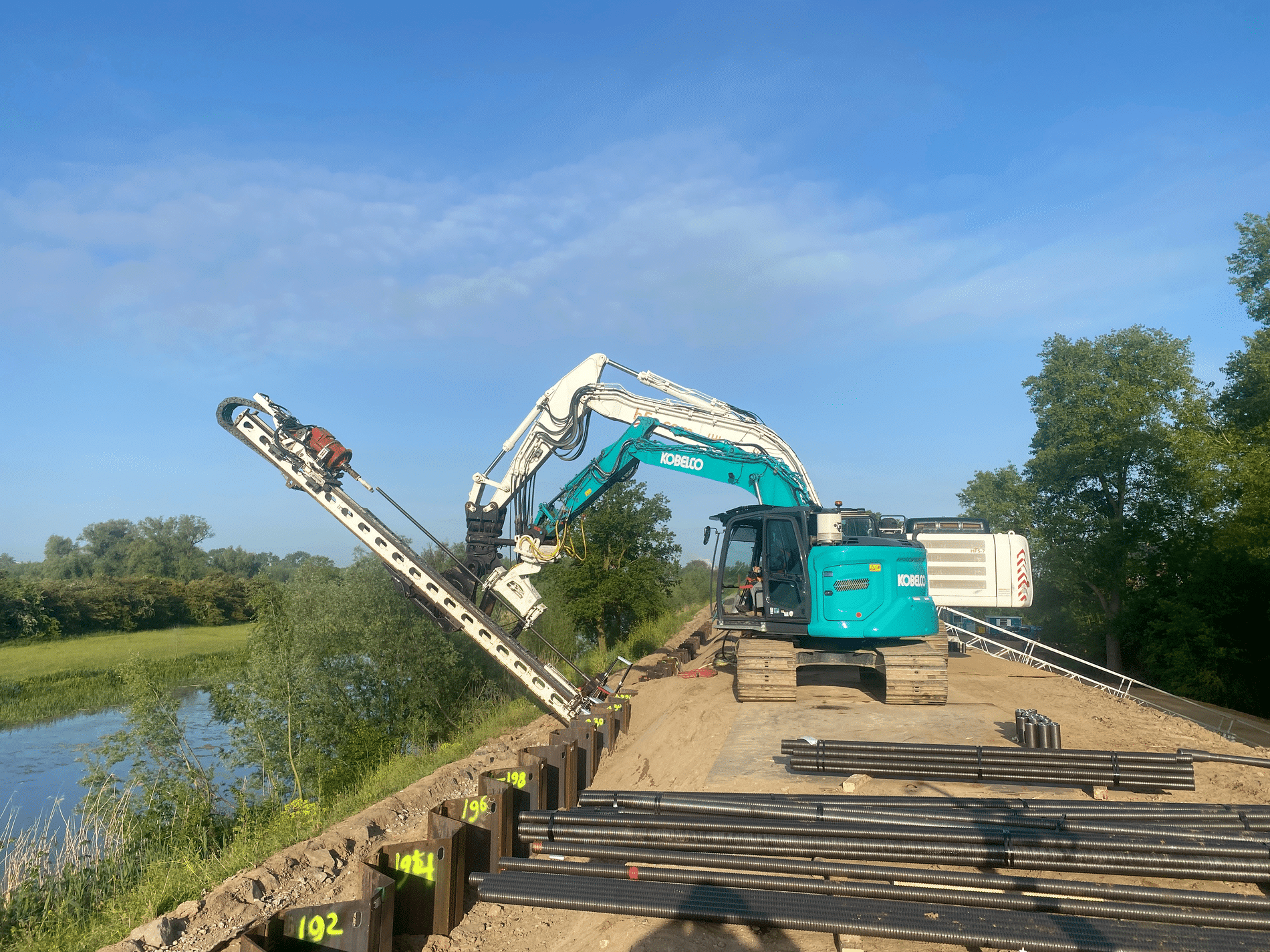
As mentioned, TAB Anker is working closely with High 5 Solutions on the Neder-Betuwe dike reinforcement project. “In close collaboration with High 5 Solutions, we explored how we could achieve a ‘best-for-project’ outcome for all parties in terms of both design and construction,” explains Arnic. The scale of the project is impressive. “A total of approximately 1,950 ‘self-drilling’ anchors will be installed, accounting for nearly 60 kilometers of anchor length in the ground. The anchors range from 24 to 36 meters in length and come in seven different types, with diameters ranging from 70 to over 100 millimeters. After production, the materials are stored in our facilities, and as soon as a new project phase begins, High 5 Solutions calls on us to supply the necessary materials for each levee section.”
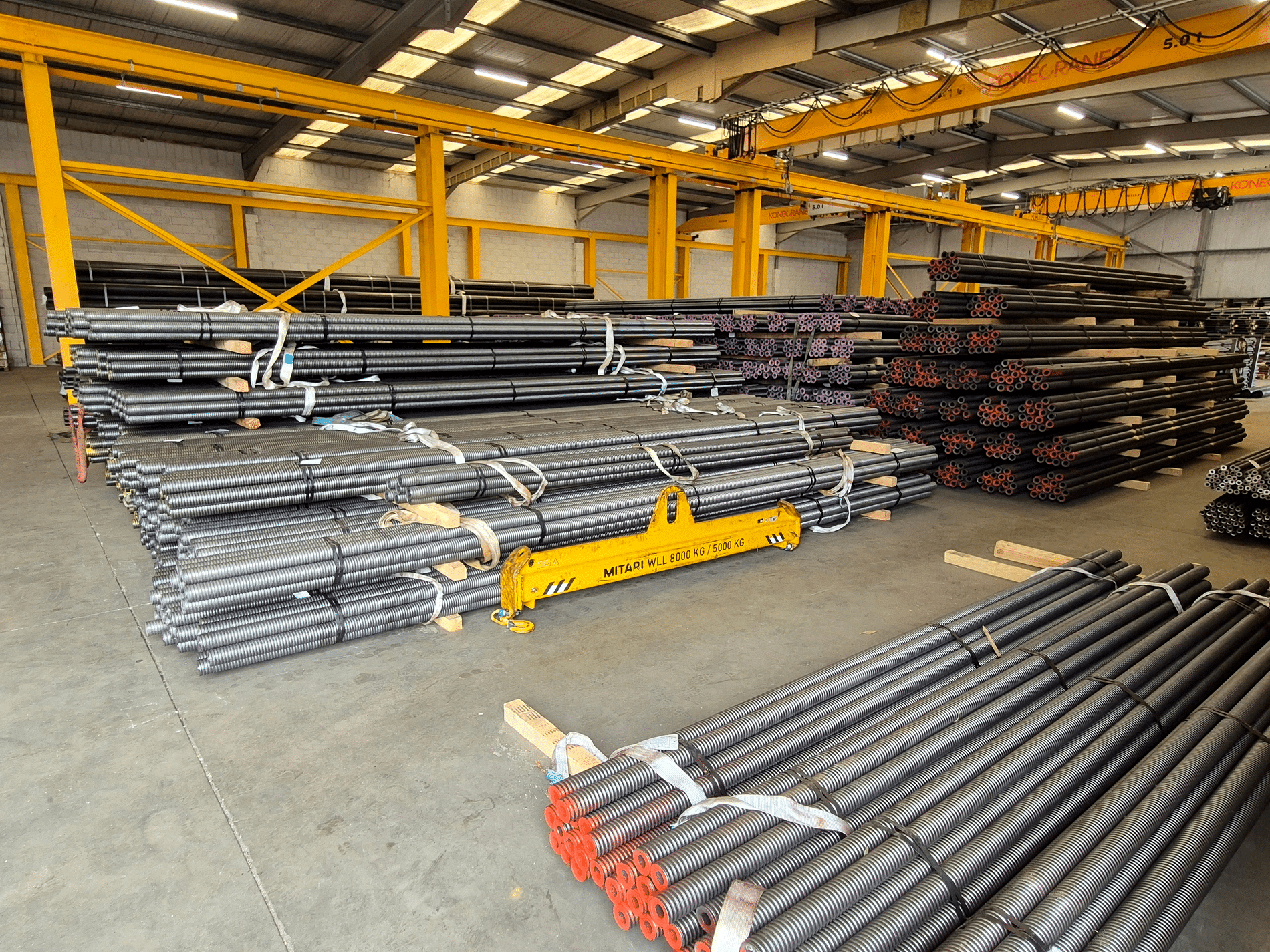
A ‘self-drilling’ anchor consists of seamless steel pipes with full-length rolled threads, Arnic explains. “During drilling, cement grout is injected into the soil at the location where the grout body is to be formed, where it mixes with the existing sand. The various segments are connected using special coupling sleeves, after which the anchor is ultimately connected to the sheet pile structure. We also manufacture the nuts required for force transmission.”
According to Arnic, TAB Anker’s greatest achievement these days is no longer limited to technology alone. “Due to geopolitical tensions, changing market conditions, and the introduction of the CBAM regulations, the steel market has become particularly unpredictable in recent months. To ensure our customers do not have to bear these risks, we are working very intensively on this issue, striving to coordinate with our customers and suppliers at an early stage, and maintaining a strategic inventory.”
TAB Anker also plays an active role in the area of sustainability. “All the raw materials we purchase are produced in Europe,” Smits assures us. “Thanks to a favorable Environmental Product Declaration (EPD) and the use of large quantities of recycled steel, the anchors also achieve a strong score within the MKI system: a 72 percent reduction compared to the standard NMD value.”
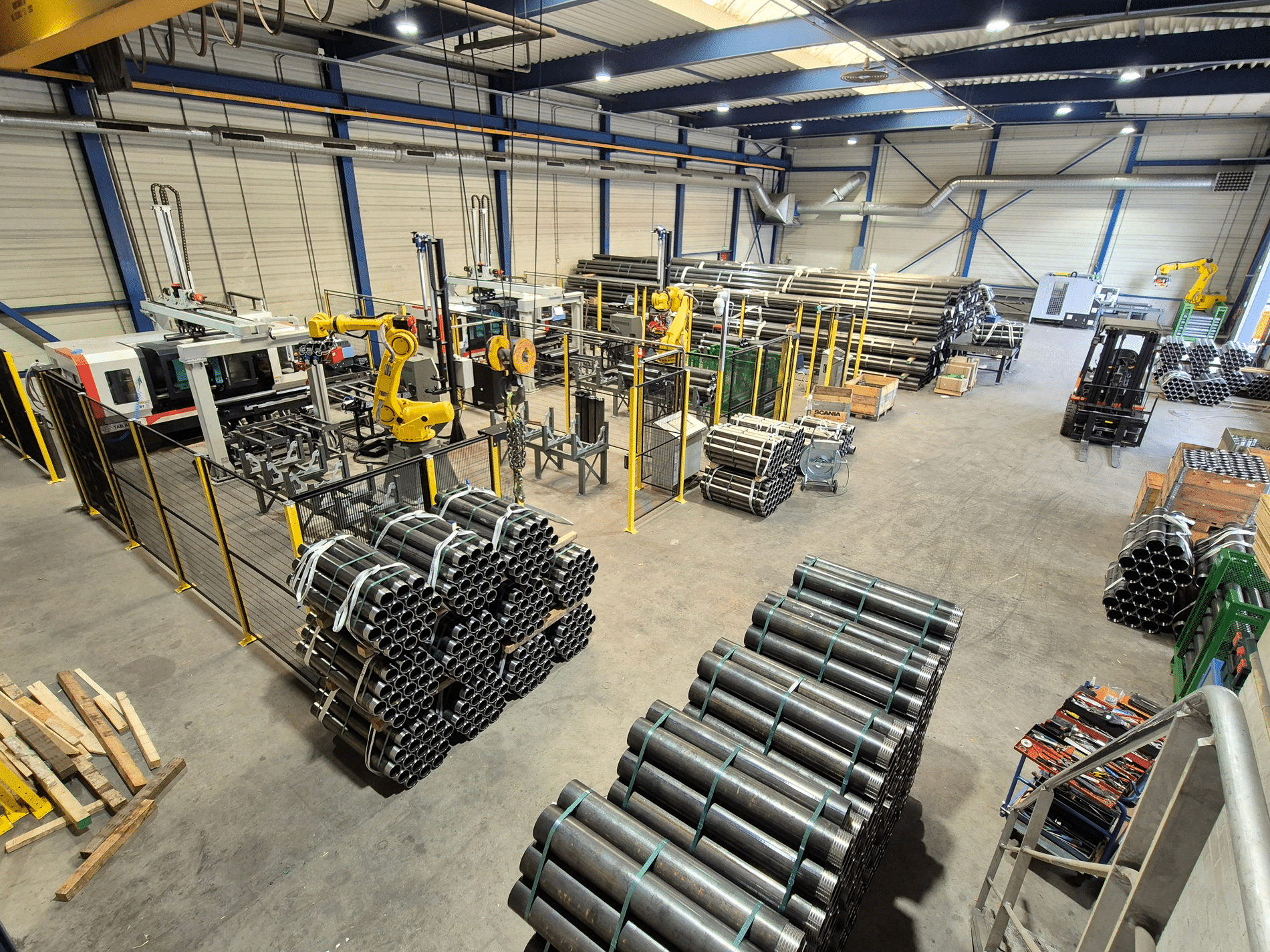
At TAB Anker, we are always on the lookout for innovative and sustainable technical solutions. This is how the idea for the recently launched, innovative, sustainable, and now patented ICSI® pile system for foundation repair came about. “The improved coupling mechanism is not only lighter—which is better for the environment—but also gives the pile system a higher load-bearing capacity. It’s a win-win,” says Arnic, who notes that TAB Anker recently began manufacturing it in its own fully robotized workshop. “The first projects have now been successfully completed.”
Whether it involves complex anchoring systems or innovative foundation solutions, at TAB Anker the focus is not on the product, but on the (technical) solution and customer interaction. This approach makes it possible to minimize risks and maximize opportunities even on the largest projects, such as this one in Neder-Betuwe.