Platform on civil engineering, underground infrastructure, energy, construction equipment & construction machinery
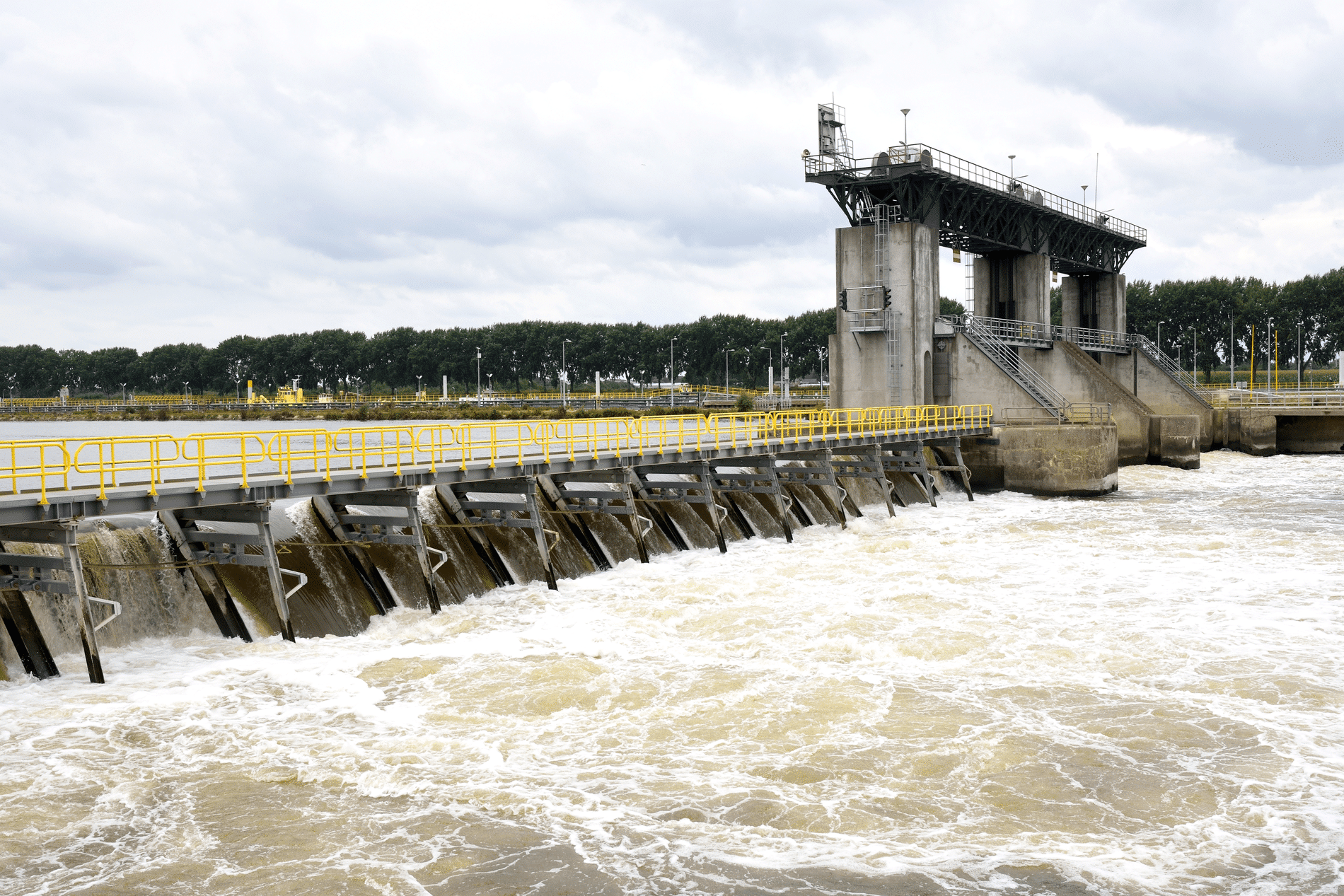
At first glance, replacing a lock gate seems like a simple matter of removing and reinstalling it. The reality is considerably more complex—especially at the Krammer Locks, where the gates weigh anywhere from 65 metric tons to as much as 400 metric tons. For De Klerk, these gate replacements represent the culmination of years of involvement with the complex, where the company has been active almost continuously since 2015, carrying out maintenance, renovation, and overhaul work.
That experience played an important role when the ZEEKR consortium began searching for specialized partners to renovate various parts of the complex. “De Klerk was already involved during the tender phase to help develop ideas regarding door replacements, floor protection work, construction methods, phasing, and risks,” says Edwin Sebregts, mechanical engineering discipline leader at De Klerk.
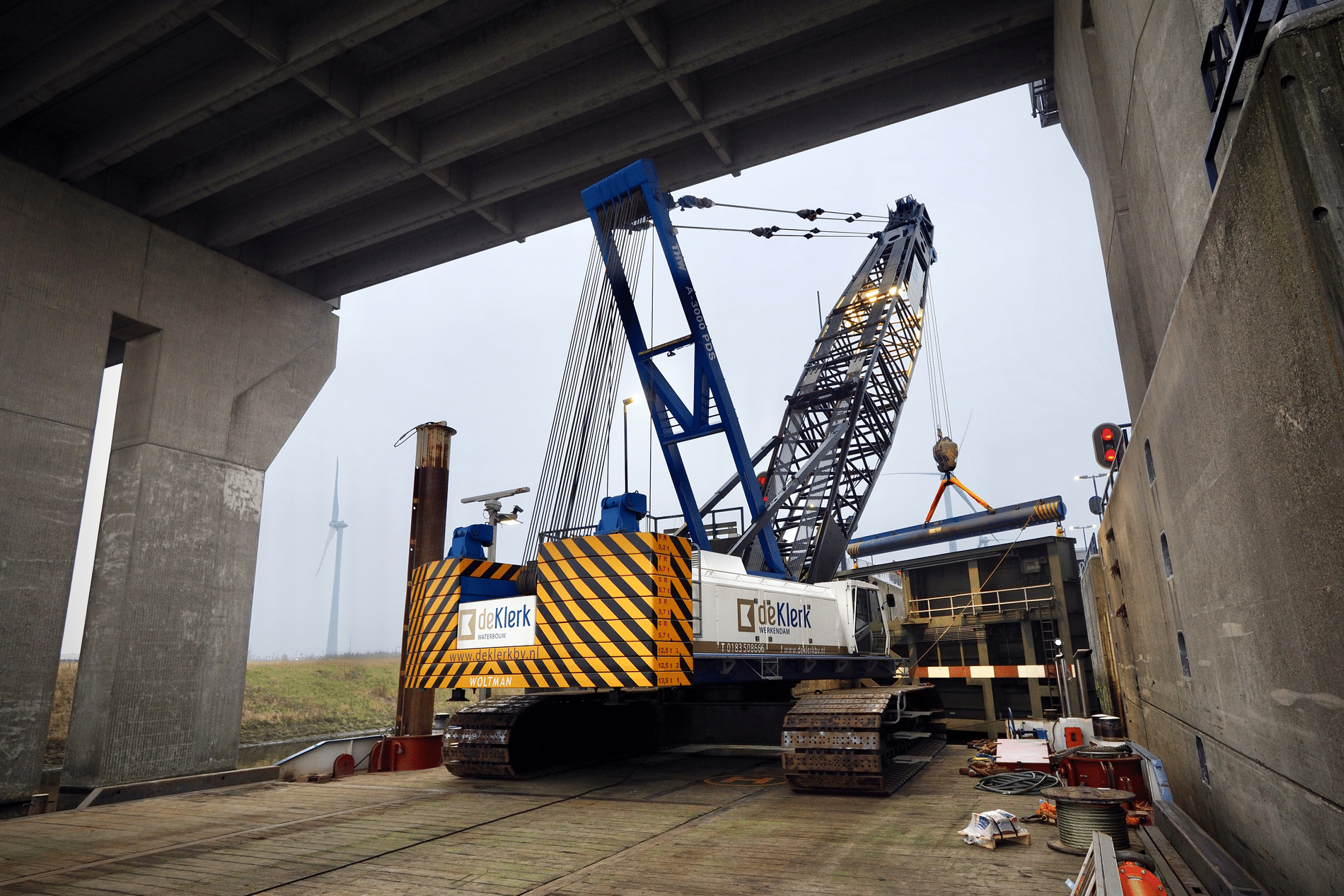
De Klerk’s involvement didn’t come out of the blue. “Between 2020 and 2024, we already overhauled all the steel fendering and all the waiting areas in the outer harbors of the Krammersluizen,” says Sebregts. “The steel structures were dismantled, refurbished, re-preserved, and reinstalled.” In addition, De Klerk has previously carried out several gate replacements at the complex, both in the yacht locks and the barge locks. “While hydraulic engineering is our largest discipline, we also have a steel fabrication division and, since 2019, a mechanical engineering division.” This combination has proven particularly valuable for gate replacements and the overhaul of the gates in the yacht locks.
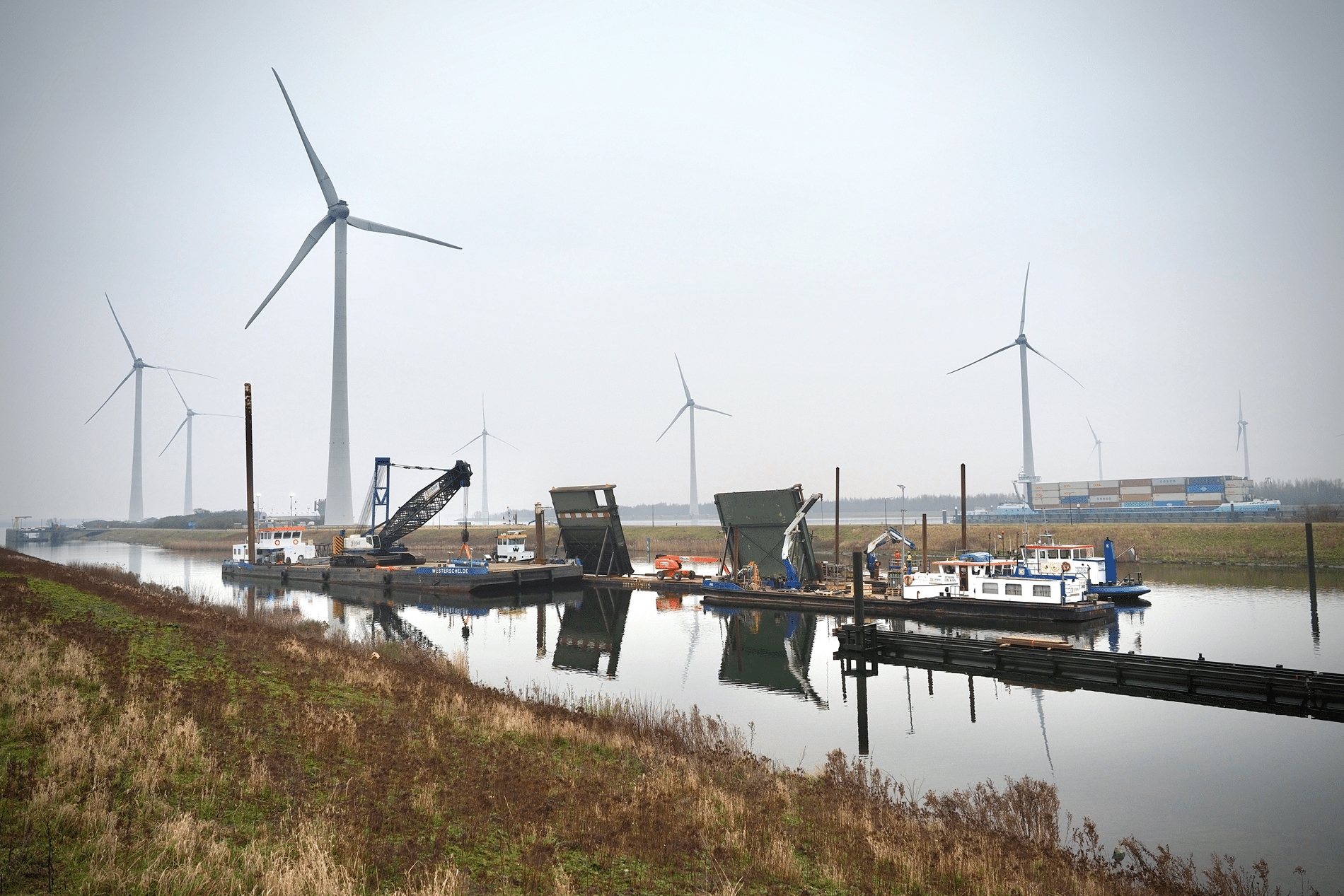
After the summer, one of the most visible parts of the renovation will begin: replacing the gates of the yacht lock. “From mid-September through early May, work will focus on one lock chamber at a time,” Sebregts explains. This timeframe was deliberately chosen to minimize disruption to recreational boating during the high season. “Each time, one lock gate will be removed and replaced with a temporary (static) emergency barrier. The gate will then be transported to our shipyard in Moerdijk, where it will be overhauled, reinforced where necessary, and re-preserved. About nine weeks later, the gate returns to the lock chamber, and the temporary barrier is moved to the second gate of the same chamber, after which we repeat the process.‘
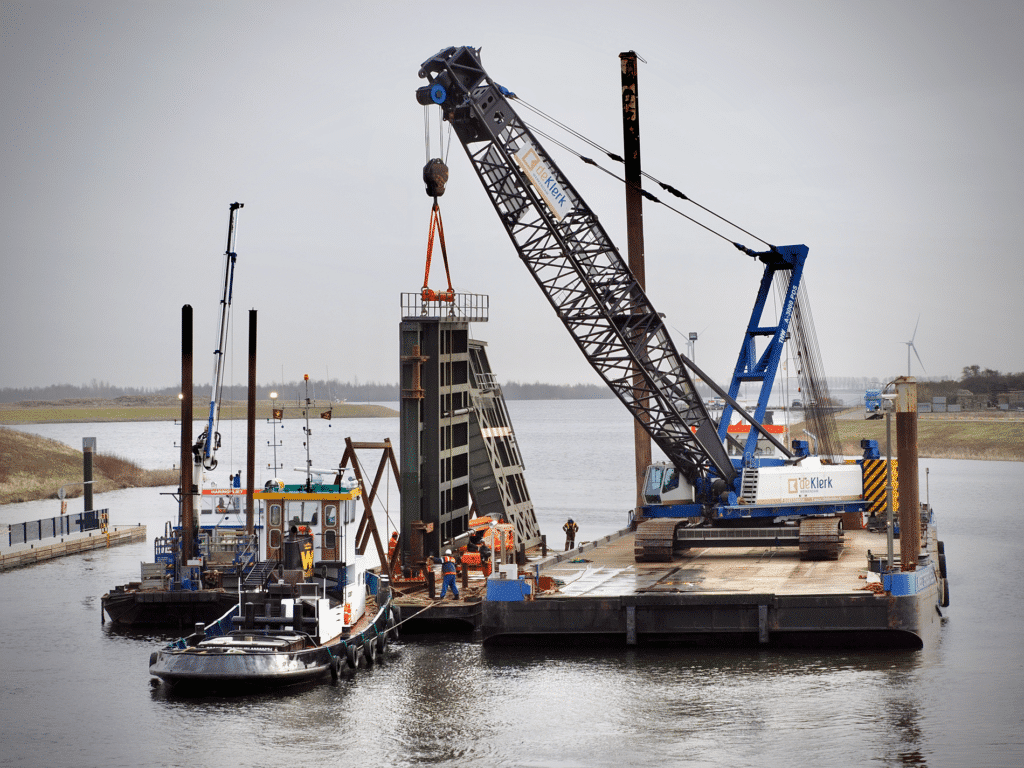
The lock gates of the yacht lock weigh approximately 65 metric tons, but according to Sebregts, that weight isn’t the biggest challenge. “Because of the fixed bridge over the lock chamber, the space available for hoisting operations on one side is limited.” To address this, De Klerk devised a specific work method in which the gate is first lifted, after which a pontoon with a special steel frame is maneuvered under the gate. This keeps the gate upright as it is maneuvered out of the lock chamber.
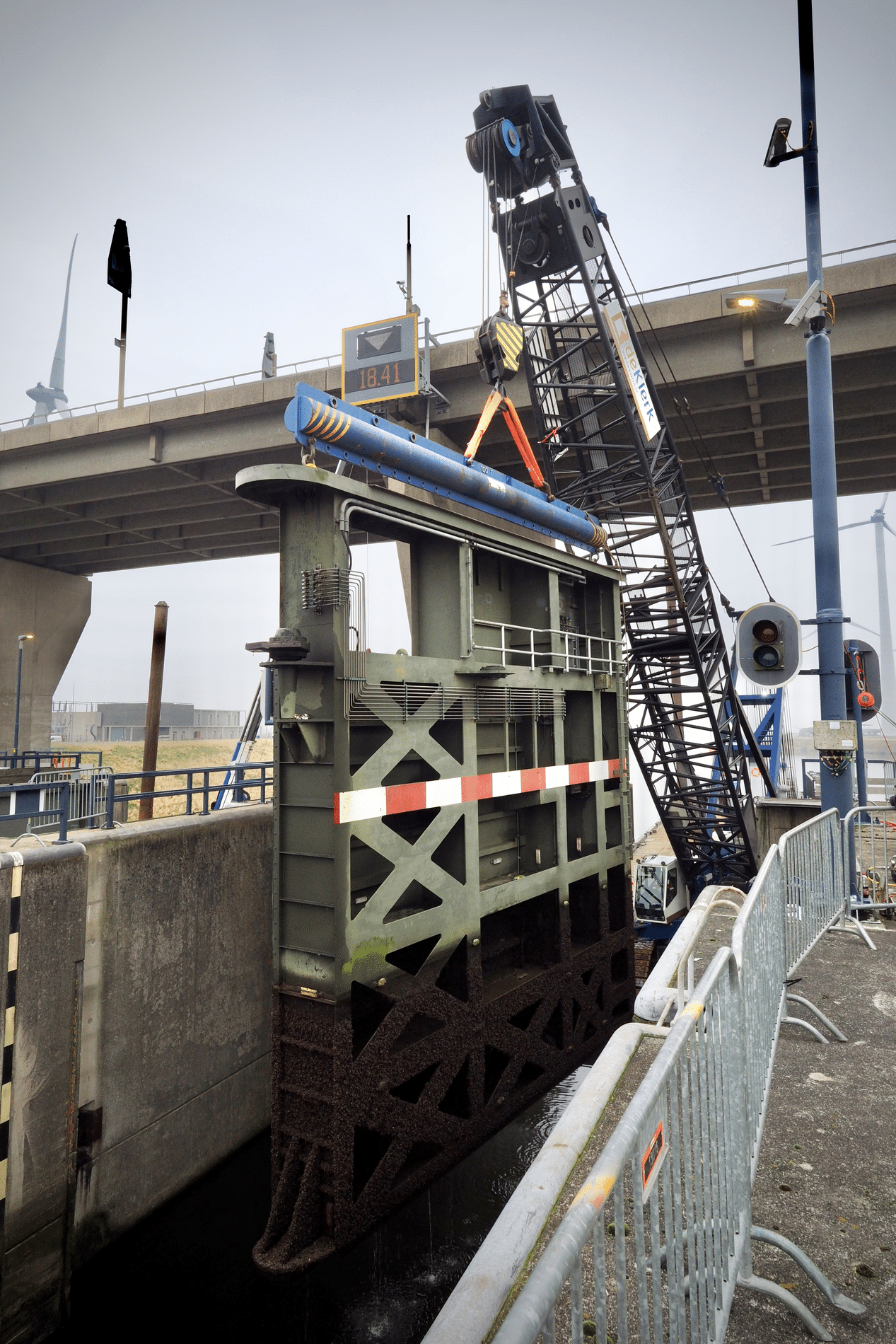
In parallel with this work, door replacements are also taking place at the Duwvaartsluizen. “This is on a completely different scale,” says Sebregts. “A rolling door weighs nearly 400 metric tons, including components.” For this operation, De Klerk is collaborating with specialist Bon & Mees from Rotterdam. “Using the Matador floating crane, the enormous doors are removed and replaced with a modified and refurbished roller door. On behalf of Smulders, De Klerk is handling, among other things, the logistics, mechanical engineering work, and support during these complex operations. The doors themselves are being refurbished by Smulders in Vlissingen. As soon as a door is ready, we pick it up and move on to the next door replacement.”
From dismantling drive systems and overhauling moving parts to steel repairs, preservation, and lifting operations from the water. For De Klerk, all these disciplines come together in this project.
Neem dan rechtstreeks contact op met De Klerk Werkendam.
 Contact opnemen
De Klerk Werkendam is active in Hydraulic Engineering & Steel Construction. We are working hard for the future. On responding innovatively to changing market demands. Transparency and sustainability are important keywords. De Klerk sets high quality standards for itself. De Klerk's strength lies in its drive to continually search for [...]
Bekijk Bedrijfsprofiel