Platform on civil engineering, underground infrastructure, energy, construction equipment & construction machinery
Balancing for Advanced Learners
One of the most important hubs of Dutch shipping is undergoing a major renovation. At the Krammersluizen, Rijkswaterstaat and the ZEEKR consortium will be working over the next few years on a renovation project designed to prepare the lock complex for the next fifty years. This work will take place while commercial shipping, recreational boating, nature conservation, and water safety operations continue uninterrupted. A major undertaking at a location where everything converges.
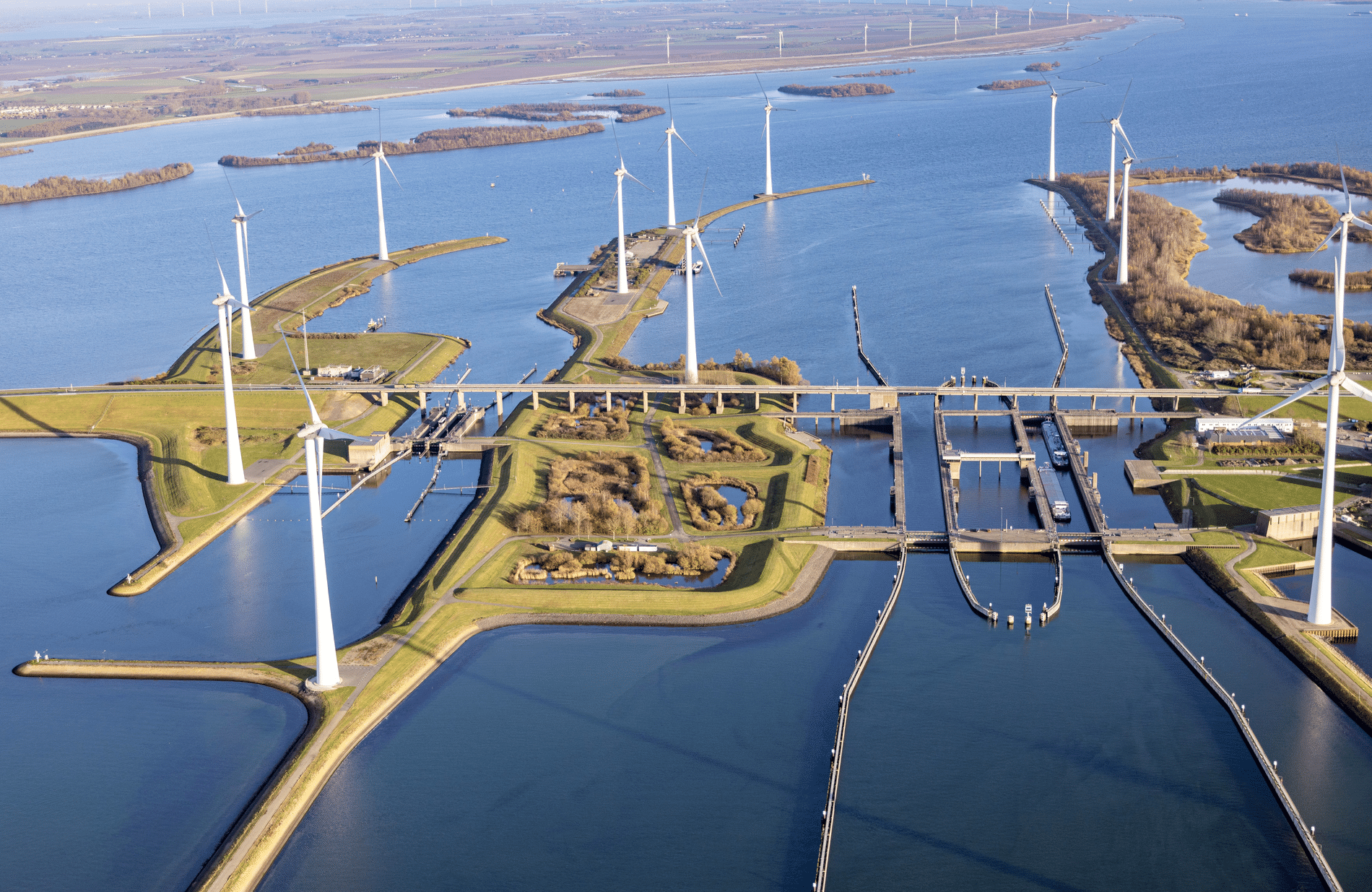
The Krammersluizen are part of the Philips Dam and, consequently, of the Delta Works, which were constructed following the 1953 North Sea Flood. The complex forms a crucial link in the shipping corridor between Rotterdam, Antwerp, Ghent, and the hinterland. Approximately 60,000 ships pass through the locks each year, of which about 40,000 are commercial vessels and 20,000 are recreational vessels. “For much of the shipping industry, this is an indispensable route,” says Olivier Elseman, environmental manager at Rijkswaterstaat. “For recreational boating alone, anyone traveling from the interior to Zeeland will almost always pass through the Krammer Locks.”
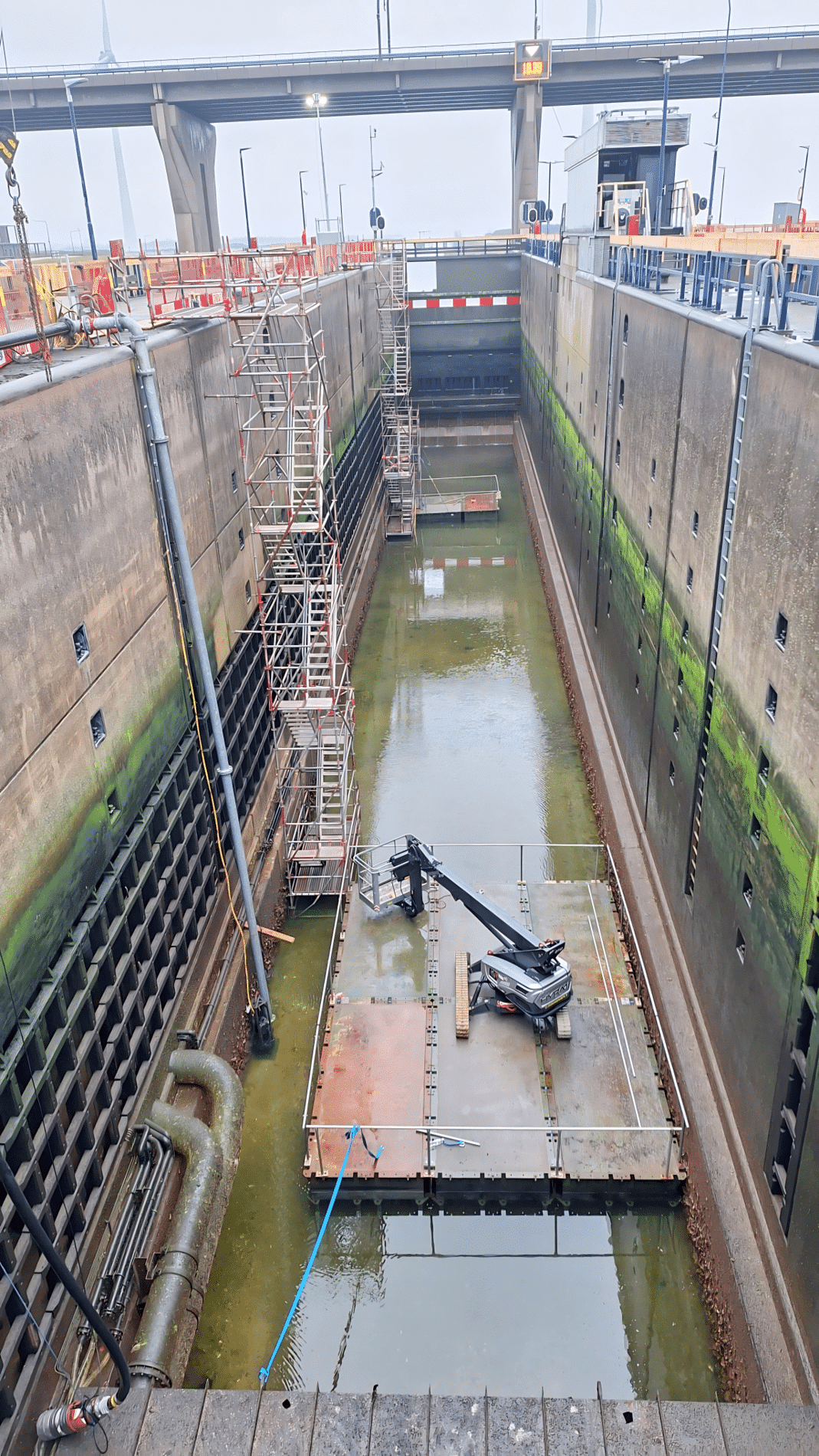
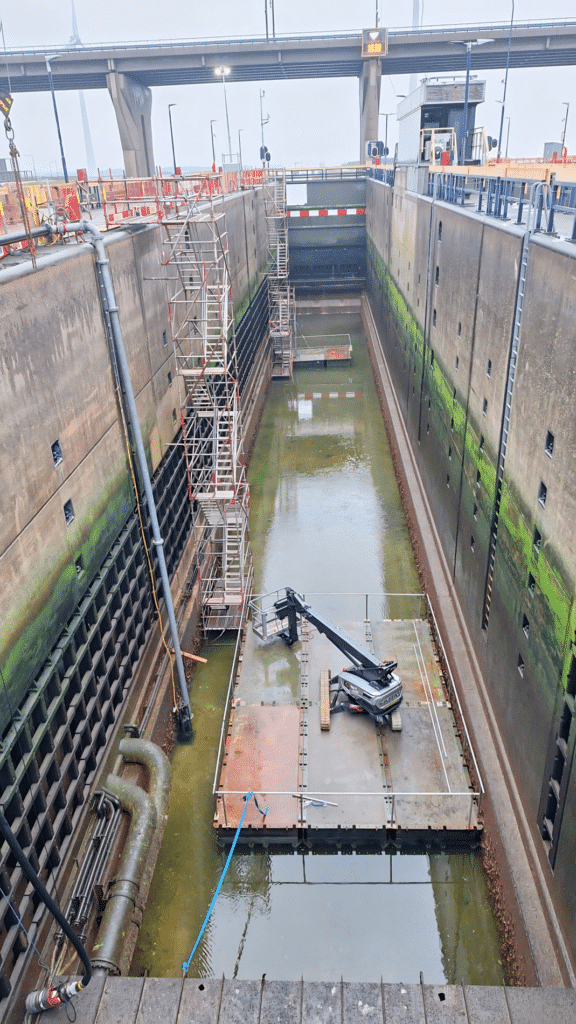
During the major overhaul of the Krammer lock complex, built between 1977 and 1987, virtually everything is being addressed: from civil engineering structures and mechanical systems to electrical engineering and industrial automation. “What few people know is that most of the complex is underground. Ninety percent of the structure is underwater or below ground level,” says Olivier. “You can literally walk from one lock to another through a vast network of concrete chambers. In fact, it’s a gigantic bunker-like structure. It’s actually the largest concrete structure in the Netherlands.”
The renovation is not just about replacing outdated components. Rijkswaterstaat is also using the project as an opportunity to fundamentally improve the complex’s operations. The existing system for separating fresh and salt water will be replaced by a new, more energy-efficient solution that will also speed up the lock operation process.
Apart from regulating the passage of ships, the Krammersluizen serve another purpose: they form the boundary between fresh and saltwater. This function is becoming increasingly important as fresh water becomes scarcer. The current system uses a perforated floor and various gates. In the upgraded system, the wall gates will be removed and replaced with a bubble screen and modified lock gates featuring openings that ensure a controlled water flow. “The new system makes lock operations about thirty percent faster and reduces energy consumption by approximately thirty percent,” explains Edwin Wiek, project manager at the ZEEKR consortium. “In addition, maintenance requirements will be significantly reduced because many moving parts will be eliminated.”
An important part of this renovation is the new air plant that supplies the bubble screen. This installation will also be built largely below ground level.
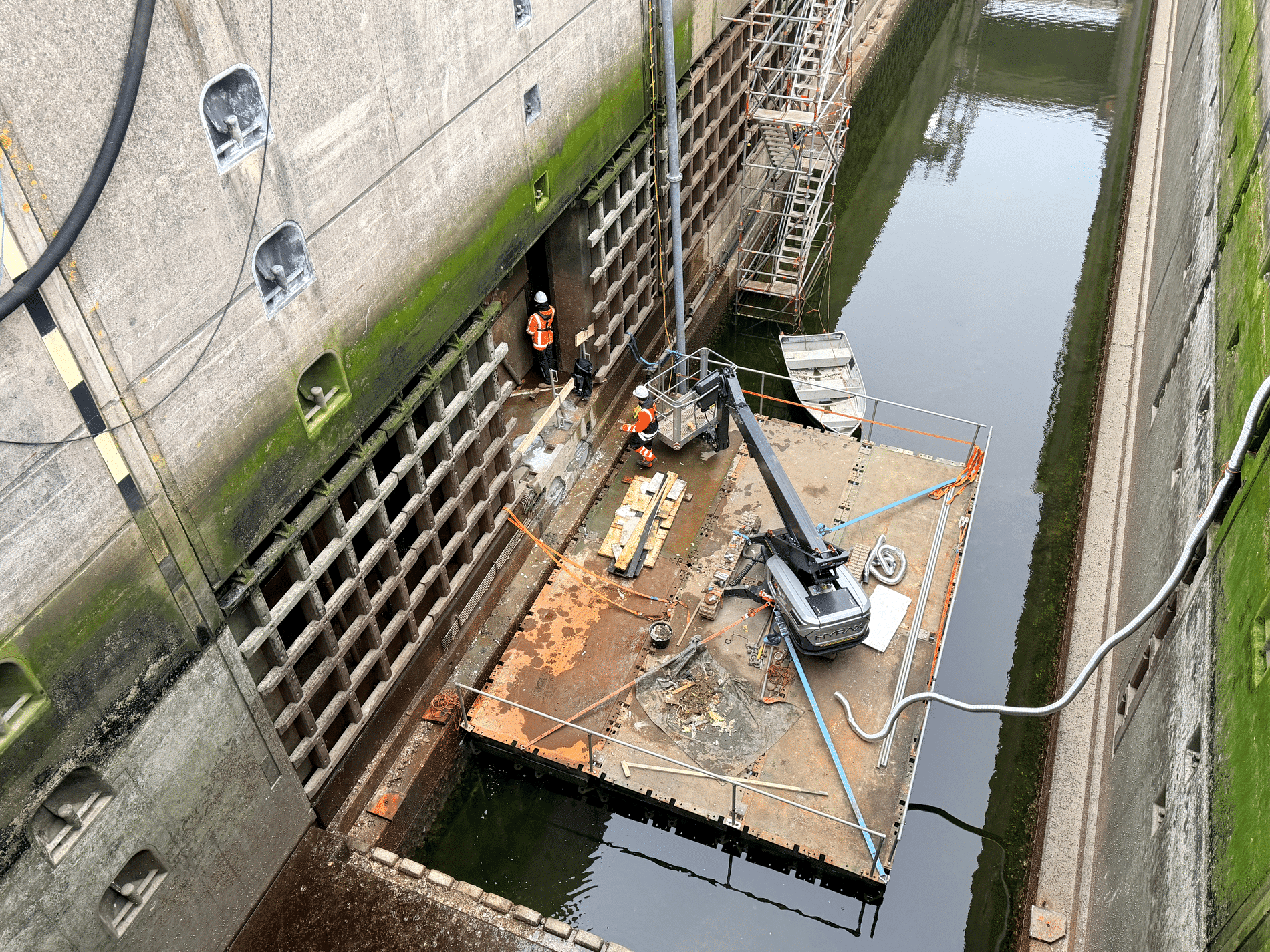
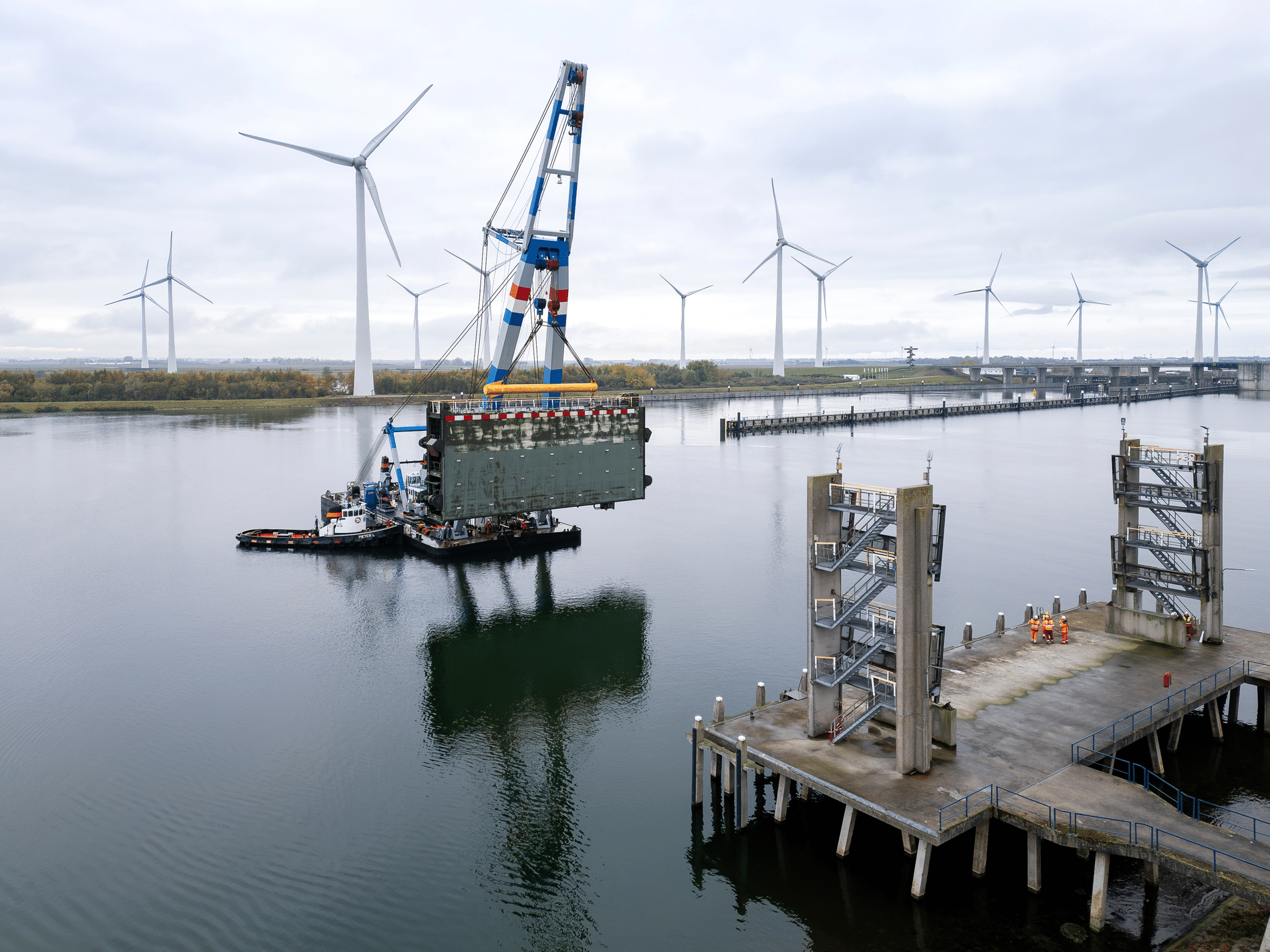
One of the most complex parts of the renovation is the conversion and modification of the enormous rolling gates of the push-boat locks. “The gates really are the heart of the project,” says Olivier. “Only once a door has been renovated can we move on to the corresponding lock chamber.” The first door was removed last year and transported to the Smulders shipyard in Vlissingen for renovation. There, the door is being fully adapted to the new system. In October, the first renovated door will return to the complex, and the first door replacement will take place.
According to Edwin, this type of work involves a great deal of uncertainty. “The actual condition of a door only becomes apparent once it has been removed from the water. Barnacle growth, hidden wear, or unexpected damage can lead to surprises.” This applies to the entire renovation project, by the way. For example, during inspections, cracks were discovered in hard-to-reach areas. “Although these kinds of setbacks are factored in beforehand, they do require flexibility in the schedule,” Olivier notes. “But that’s also part of the charm of these kinds of complex renovation projects, where you discover problems and can solve them together.”
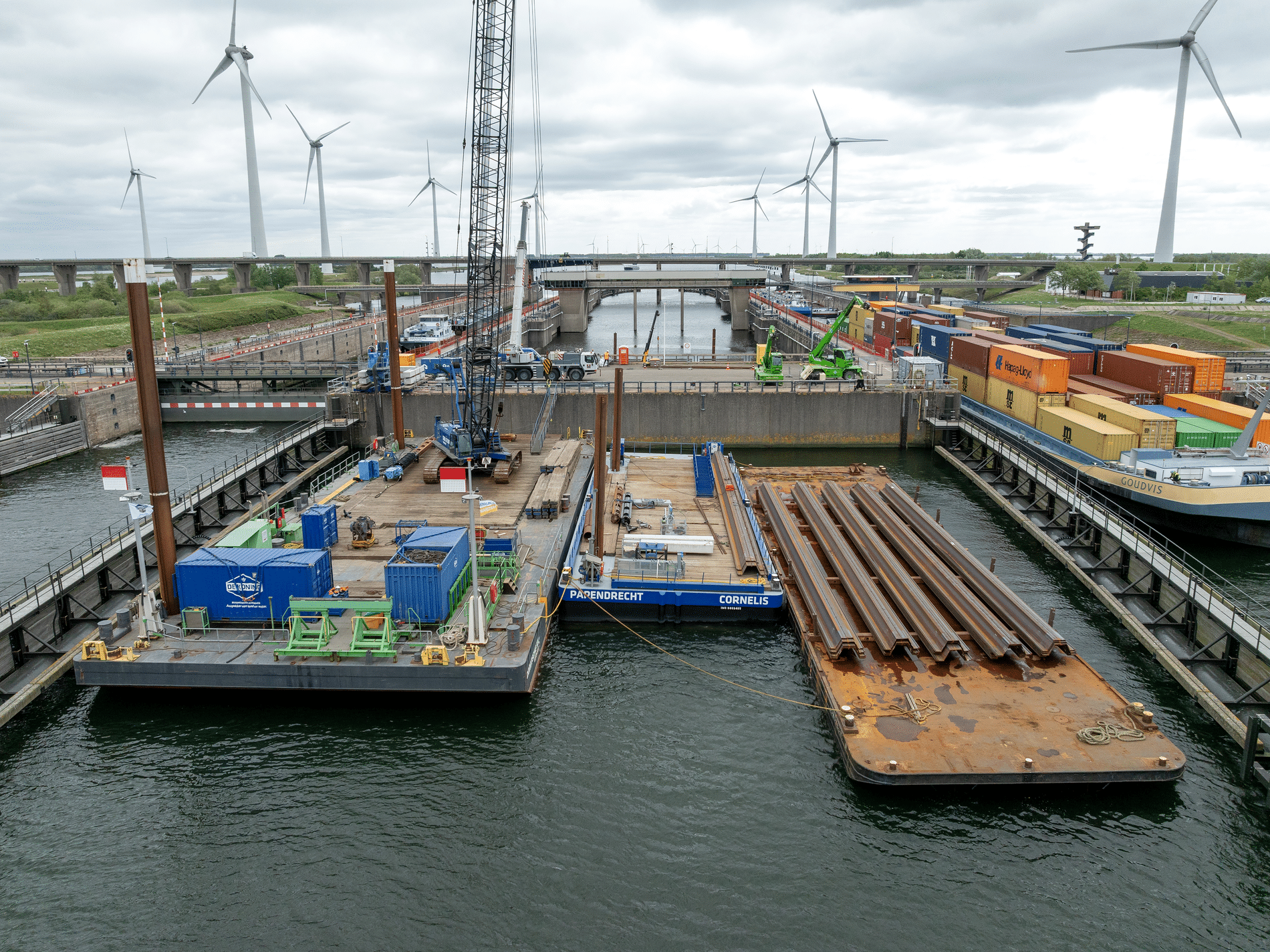
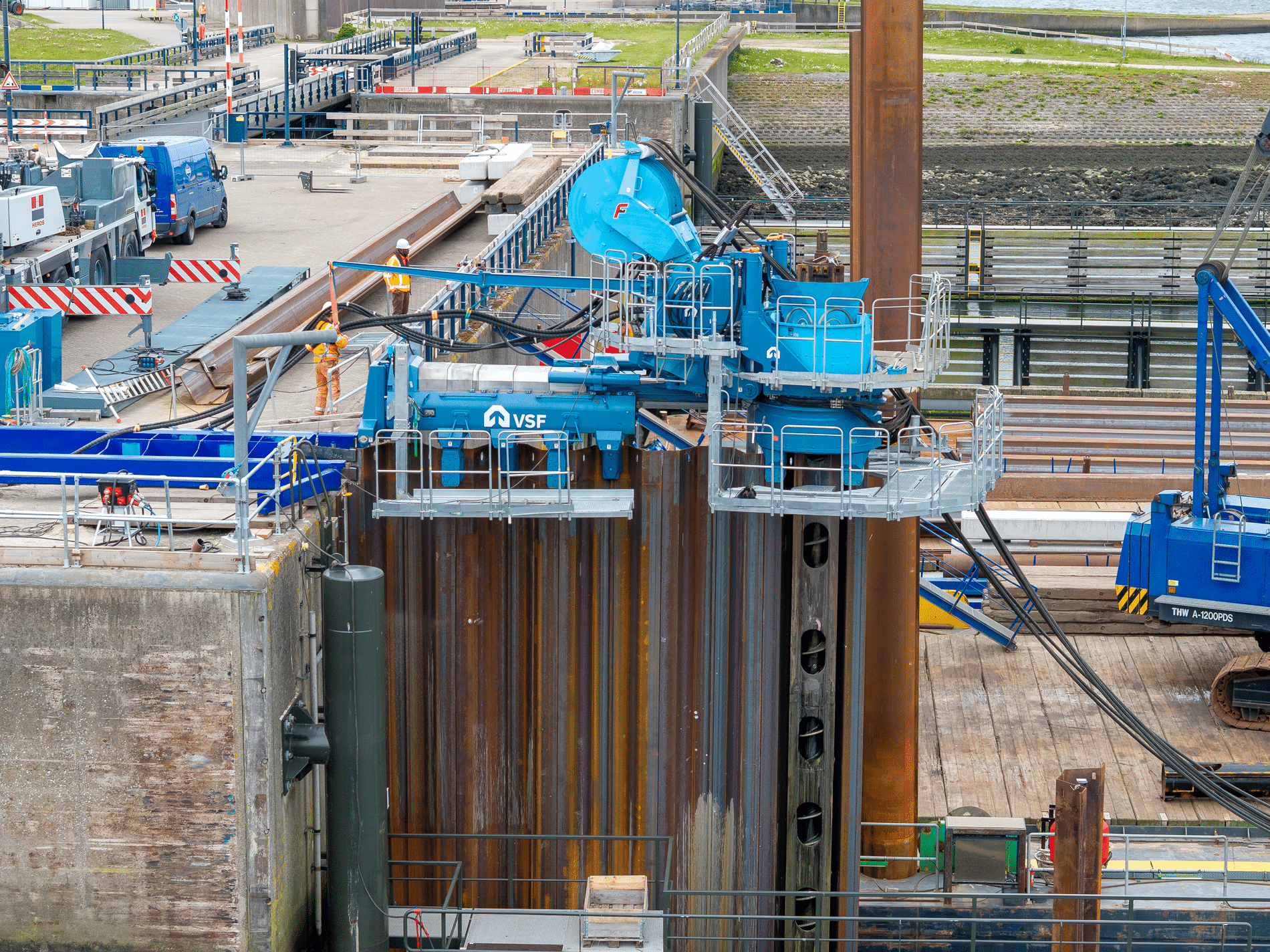
In parallel with the work on the lock gates, construction is underway on a new spillway-fish passage between the push-lock locks. This structure will allow excess water to be discharged and provide fish with a better migration route. A massive temporary cofferdam is being built for this work. It will temporarily take over the function of the primary flood barrier, allowing work to be carried out safely within existing concrete structures that were never originally designed for this purpose. “For shipping, this sometimes results in impressive scenes,” says Edwin. “Sheet piles, some as long as 27 meters, are being installed between passing ships, while lock operations continue as usual.”
As if the work on the push-boat locks and the fish passage weren’t enough, renovation of the first chamber of the yacht locks will also begin in October. This work will take about eight months. Among other things, large quantities of electrical cables will be replaced and systems will be upgraded. So, several projects are underway simultaneously at the Krammersluizen. “Everything comes together here,” says Olivier. “It’s a crossroads of construction work, users, interests, and technical disciplines. At the same time, commercial and recreational vessels continue to use the complex. That makes it a real balancing act for experts.”
The project was awarded in May 2024 to ZEEKR, a consortium comprising BESIX, BESIX Unitec, Croonwolter&dros, Iemants, Demako, and Bosch Rexroth. Work will continue until mid-2030, followed by a maintenance period. Edwin praises the close collaboration. “You can’t manage this project from an office. We meet daily with Rijkswaterstaat and all our partners to solve challenges. That connection is essential.” The ambition extends beyond just the Krammer Locks. Rijkswaterstaat views the project as a model for future renovations of aging locks in the Netherlands. Because although the world isn’t entirely predictable and surprises are inevitable, one goal remains central: a future-proof lock complex that will continue to contribute to the Dutch economy, water safety, nature, and recreation for at least another fifty years. Or as Olivier puts it: “We’re renovating, maintaining, and keeping shipping operations running. That’s what makes this project so special.”