Platform on civil engineering, underground infrastructure, energy, construction equipment & construction machinery
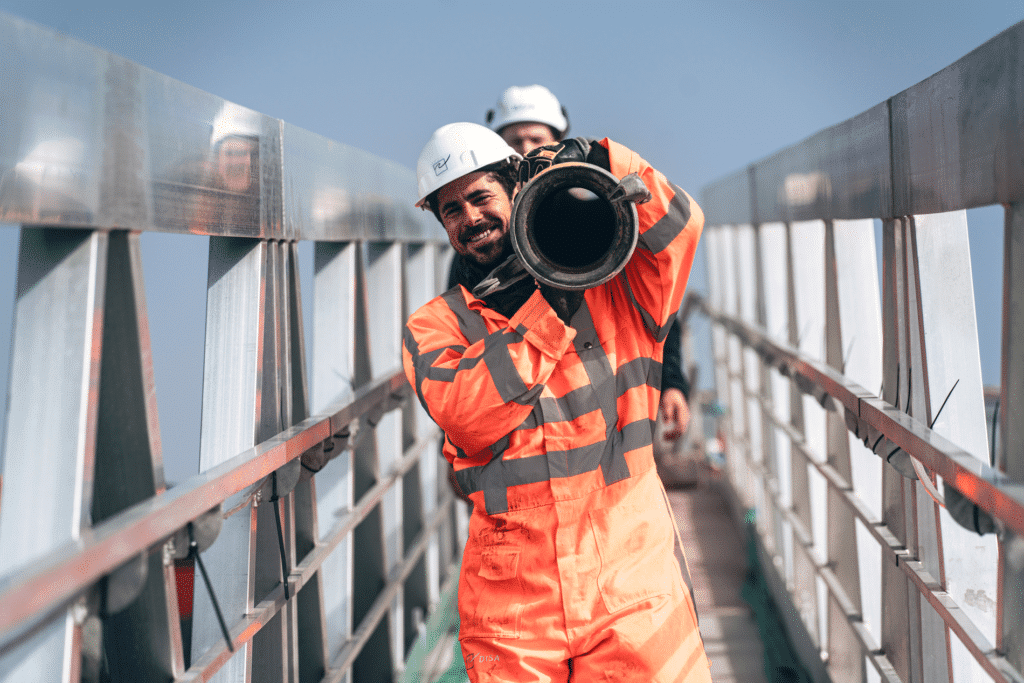
As part of the large-scale renovation of the Krammersluizen complex, work is currently underway to prepare for the construction of a new pump house between two existing lock chambers. Diving teams from DISA International have mapped the profile of both lock chamber walls with centimeter-level precision, while the locks remained fully operational.
The collaboration between DISA International and the ZEEKR consortium on this project stemmed from positive experiences on previous projects, says Marc Veldhuizen, project manager at DISA International. As early as the design phase, the parties sat down together to discuss smart work methods and potential risks. That early involvement has proven to be essential. “This allows us, as a subcontractor, to contribute our input on feasibility and safety early on. That way, you avoid surprises during construction.”
The renovation of the Krammersluizen complex is quite extensive. Part of the project involves the construction of a new pump house between the two existing chambers of the push-boat locks. An important part of the preparation involved accurately surveying the existing underwater conditions. Two diving teams mapped out the chamber walls and floor centimeter by centimeter. According to Michiel Collin, a work planner at DISA International, this is necessary to ensure that the new structures will fit exactly into the existing layout. “Due to possible shifts or subsidence over the years, the original drawings no longer match reality in every respect,” he says.
DISA developed special measuring equipment to measure the tilt of the channel walls. “For example, our teams used a custom-made aluminum measuring rod with extendable measuring points that made contact with the channel wall. In combination with a digital inclinometer and depth sensors, we were able to take and verify the X, Y, and Z measurements with great precision,” explains Michiel. “Those results form the basis for the design of the temporary cofferdam structures and the final construction pit.”
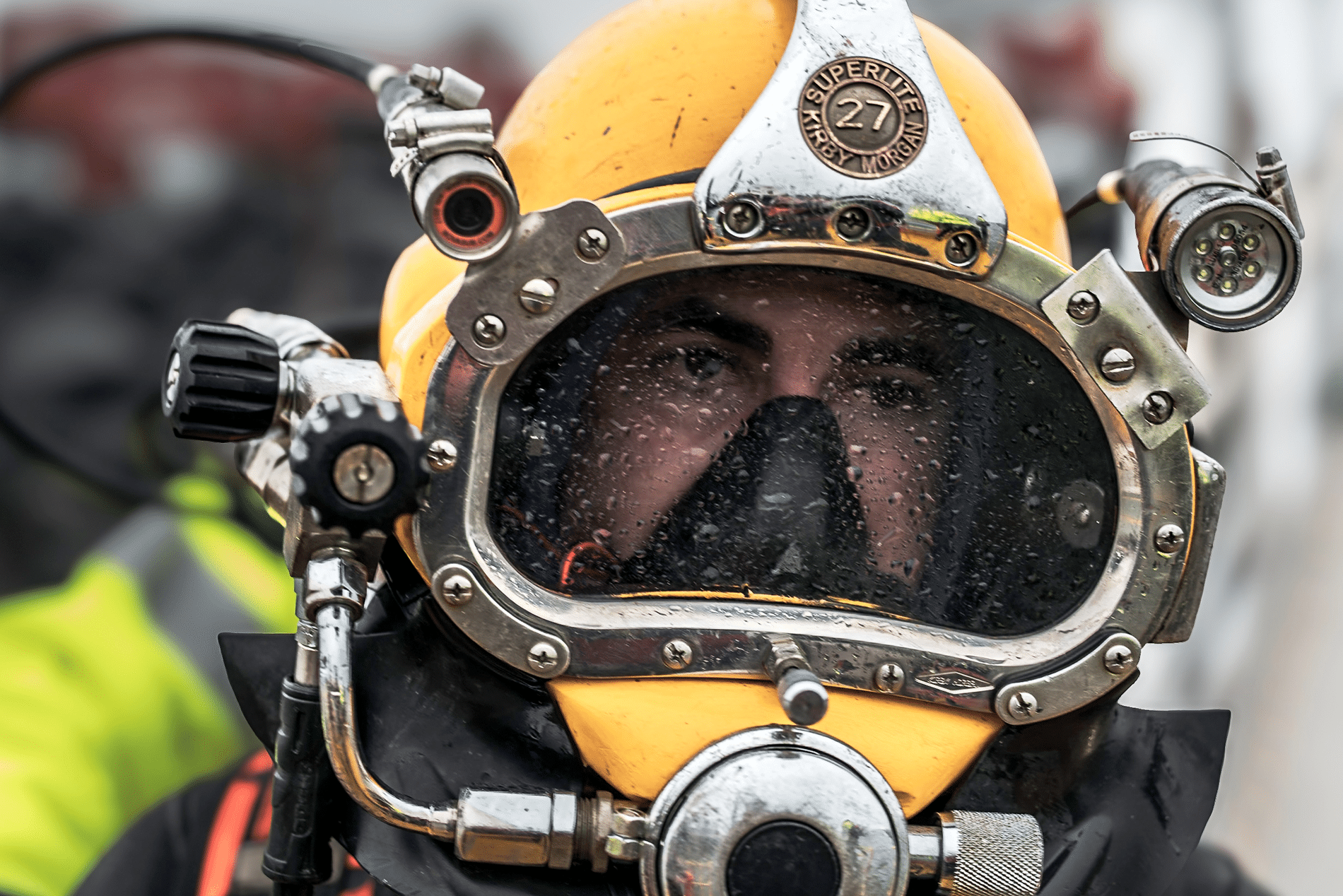
In mid-May 2026, DISA then made the necessary preparations to anchor the temporary cofferdam structure to the existing structure on the central island. “Underwater, 14-meter-long steel plates were installed on both the north and south sides of the island,” Michiel explains. ”For each plate, approximately seventy holes had to be drilled into the existing concrete without damaging the existing reinforcement.”
The drilling was a precision job, especially since it wasn’t possible to scan underwater for any reinforcing bars, explains Cecil de Groot, chief site manager at DISA International. “Our drilling crews marked the locations where they encountered reinforcing bars so that these areas could be filled in later. The steel plates installed feature prefabricated interlocking joints to which the sheet piles of the cofferdam will later be connected. This ultimately creates a watertight connection to the existing structure.”
Apart from the technical challenges, logistics also played a major role in DISA’s work. “The lock remained in regular use during our work,” says Cecil, adding that shipping always took priority. “As soon as a ship approached the lock, work was suspended during the lock passage. That required constant coordination with the lock master and tight scheduling of all activities.”
In the coming period, the focus will be primarily on the construction of the pump house and the continued development of the construction pit, including the pouring of approximately 3,000 m2 of underwater concrete. “We will, of course, be closely involved in this as well, just as we will be in all other phases over the coming years that require diving operations.”
Neem dan rechtstreeks contact op met DISA International.
 Contact opnemen
We provide safe, time efficient, cost-effective and comprehensive subsea solutions. YOUR SUBSEA SOLUTIONS SPECIALIST We are DISA International, your specialists in pioneering subsea solutions. Since 2003 we have been diving into different segments of the marine and underwater world where our inventive and comprehensive solutions are relied upon by our international client base. HOW WE [...]
Bekijk Bedrijfsprofiel