Platform on civil engineering, underground infrastructure, energy, construction equipment & construction machinery
Traditional Structures for Sustainable Flood Protection
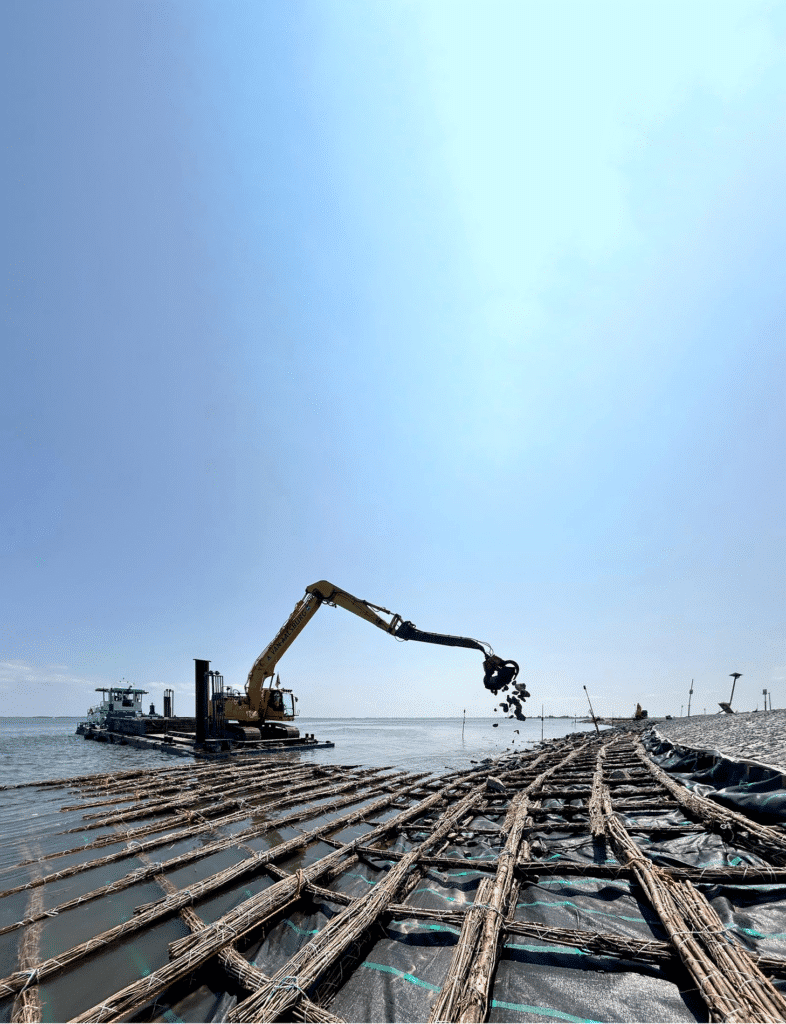
For centuries, wicker mats have been an indispensable part of protecting Dutch dikes. They hold the sand in place, protect the slope from erosion, and literally lay the foundation for a safe flood defense. For the family-owned company Van Aalsburg, these traditional yet highly effective structures have been at the heart of their work for generations. These robust mats made of willow twigs and geotextile also play a key role in the dike reinforcement project on Marken, but the work extends beyond just the water’s edge.
“Our history with zinc pieces goes way back,” Jennis van Aalsburg begins. “My grandfather started out growing willow branches, and now several generations of our family work together in the family business. We’ve been producing zinc pieces for projects by DEME—one of the partners in Hof op Marken—for over thirty years. It’s a long-standing partnership based on craftsmanship and reliability. They spray the dike, and we finish it off.”
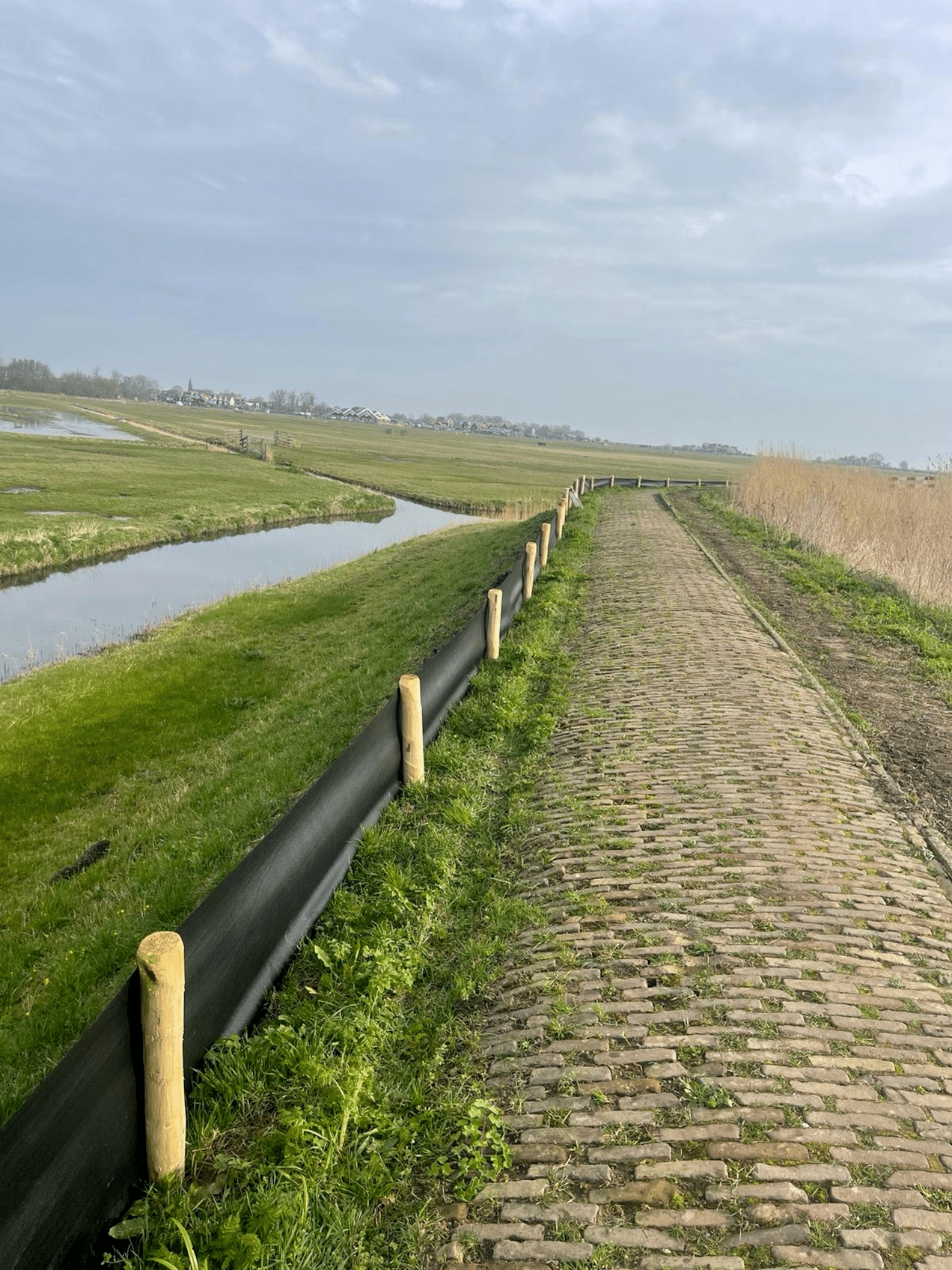
On Marken, Van Aalsburg’s contribution goes one step further. “Even before the first zinc sections were laid, we took smart measures to protect nature,” says Van Aalsburg. “For example, we installed a geotextile eco-grid on the dike to ensure that vulnerable animal species, such as grass snakes, stay safely out of the work zone. We then created two test sections using the final revetment material during the preliminary phase, so that the client and local residents could get an idea of the end result.” A key feature of the dike reinforcement project on Marken is that the dike is being reinforced in phases using sand. “During the preliminary phase, we therefore installed temporary sink pieces along the coastline—over a length of approximately 5 kilometers and a width of 10 meters—to protect the deposited sand during the preloading phase.”
The dredged dike is no longer settling. “After the summer break, we’ll start on the final construction,” Van Aalsburg explains. “Every day, about 40 meters of temporary sink pieces are removed, the slope is re-profiled, and a new sink piece is installed and finished with stone fill. We handle this entirely in-house. For this job, we are completely dependent on weather conditions. Wind can lift the large mats like kites, and waves make it difficult to profile the slope. Under favorable conditions, the pace can increase significantly. For example, as many as 5,000 m² were installed in a single day recently, though that is an exception.” Van Aalsburg expects the work on Marken to take about a year. “If necessary and weather permitting, we’re flexible enough to scale up.”
Neem dan rechtstreeks contact op met Van Aalsburg BV.
 Contact opnemen
Van Aalsburg BV is the brushwood trade, in which the craft of the brushworker has been passed on from father to son(s). By now it has grown into a family business with 6 brothers. Renowned in the Netherlands, but also abroad for its knowledge and experience in the field of zinc pieces, corbels and wattles in particular.In addition, Van Aalsburg BV provides braided willow [...]
Bekijk Bedrijfsprofiel