Platform on civil engineering, underground infrastructure, energy, construction equipment & construction machinery
Puzzling with Basalt Stone
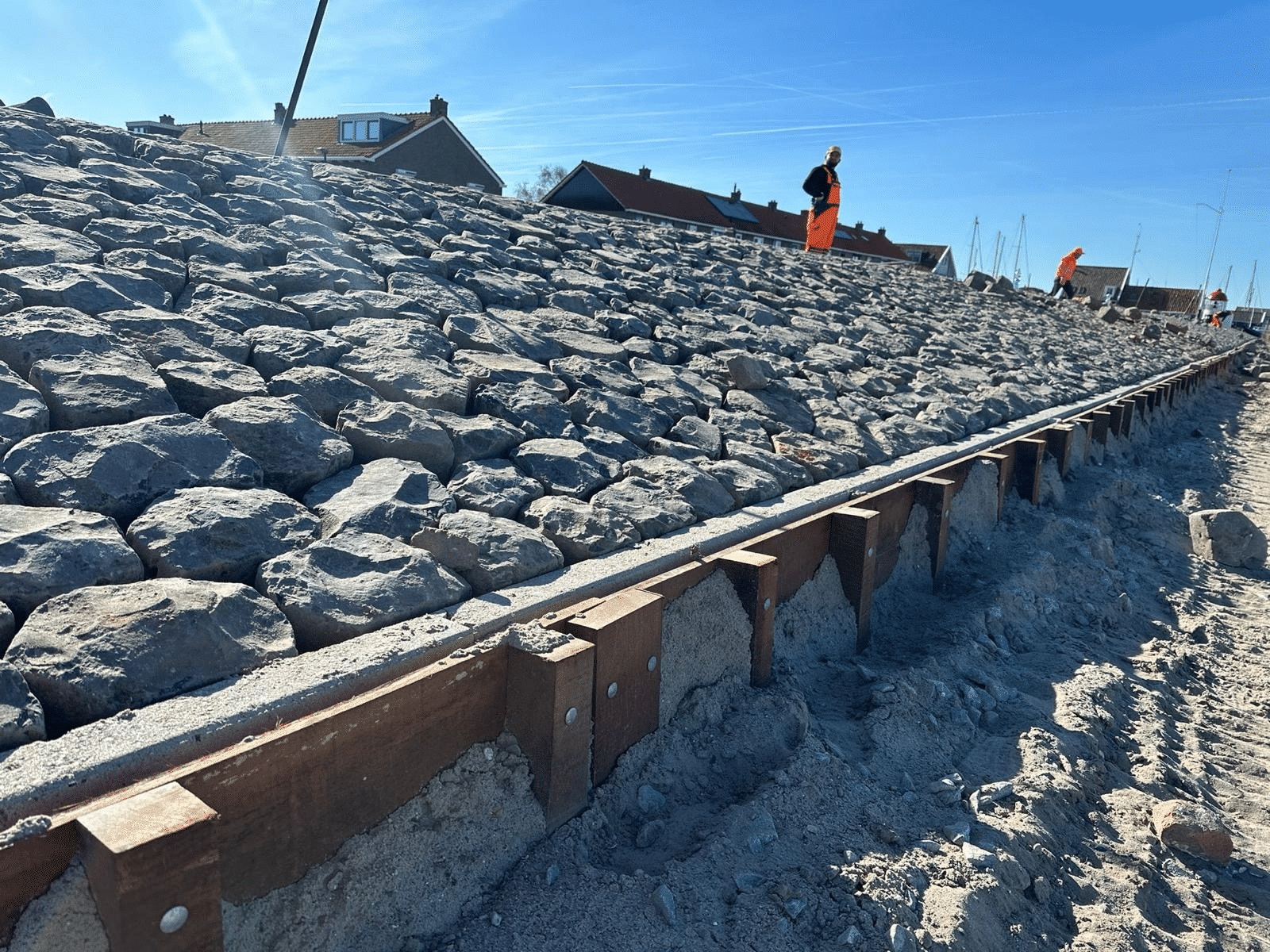
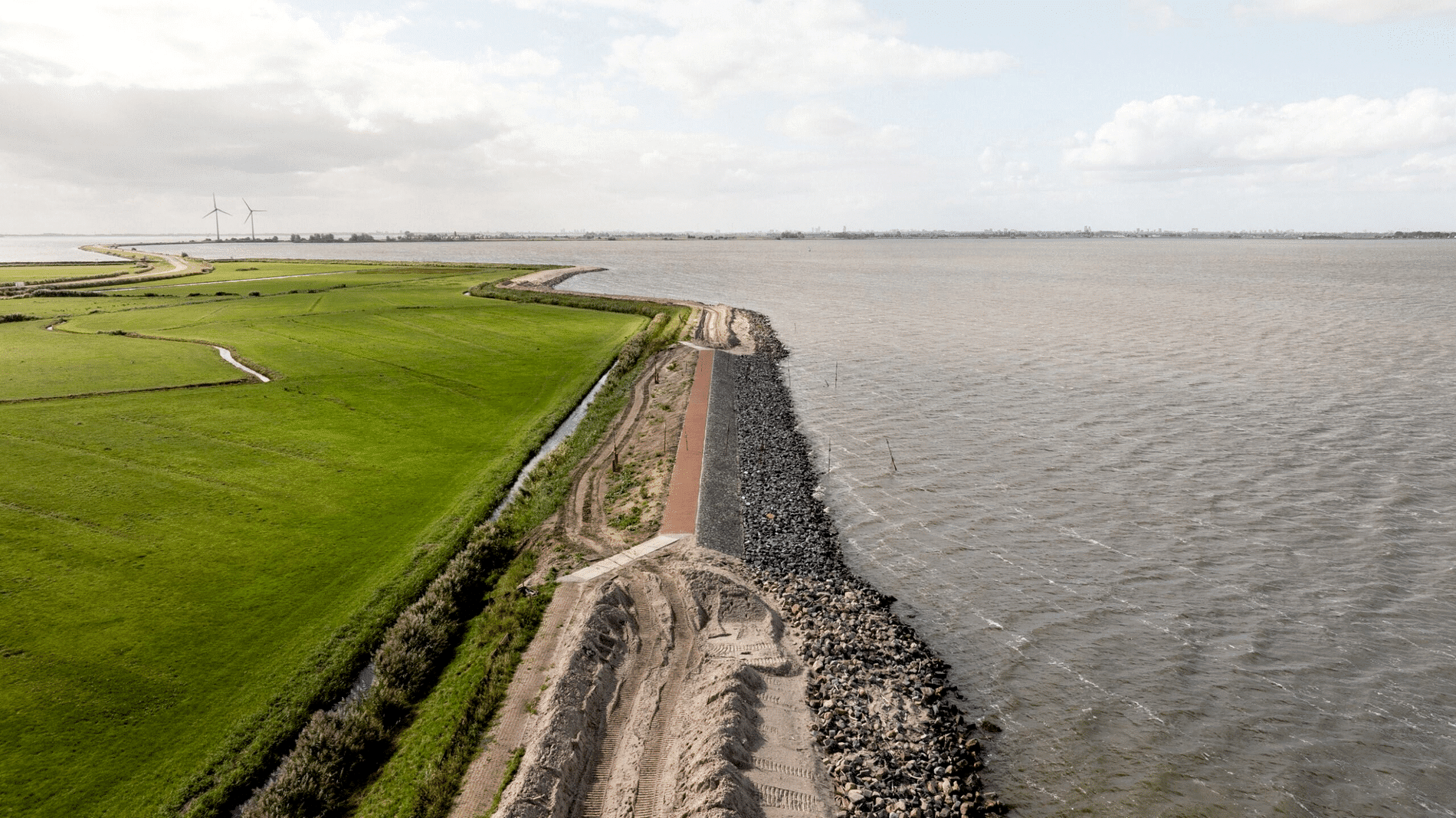
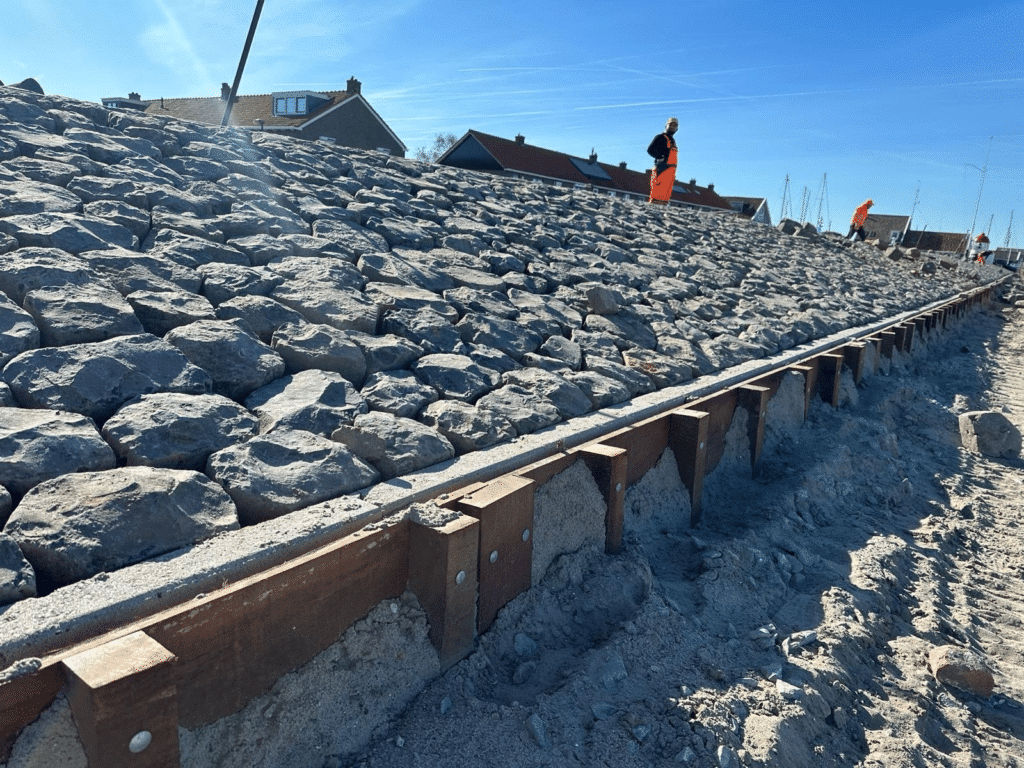
A unique craft has been practiced on Dutch dikes for centuries: laying basalt stone. This traditional stone cladding was also deliberately chosen for the reinforcement of the dike on Marken—not only because of its familiar, time-honored appearance, but above all because of its strong emphasis on sustainability. The existing basalt cladding is 100 percent reused by Steenzetterij Ligthart.
In dike construction, there are various options for stone revetment. “For the Marken Dike Reinforcement project, Rijkswaterstaat deliberately chose to reuse the old basalt revetment,” says Serge Ligthart, director of Steenzetterij Ligthart. “We were approached early in the planning phase to assess whether and how the basalt stones could be reused. We’re familiar with this type of large-scale project, thanks in part to our work on the Afsluitdijk, the Houtribdijk, and dike reinforcement projects near Nijmegen, Arnhem, and Tiel. Stone setting is truly a craft. There are only forty people left in the Netherlands who practice this profession.”
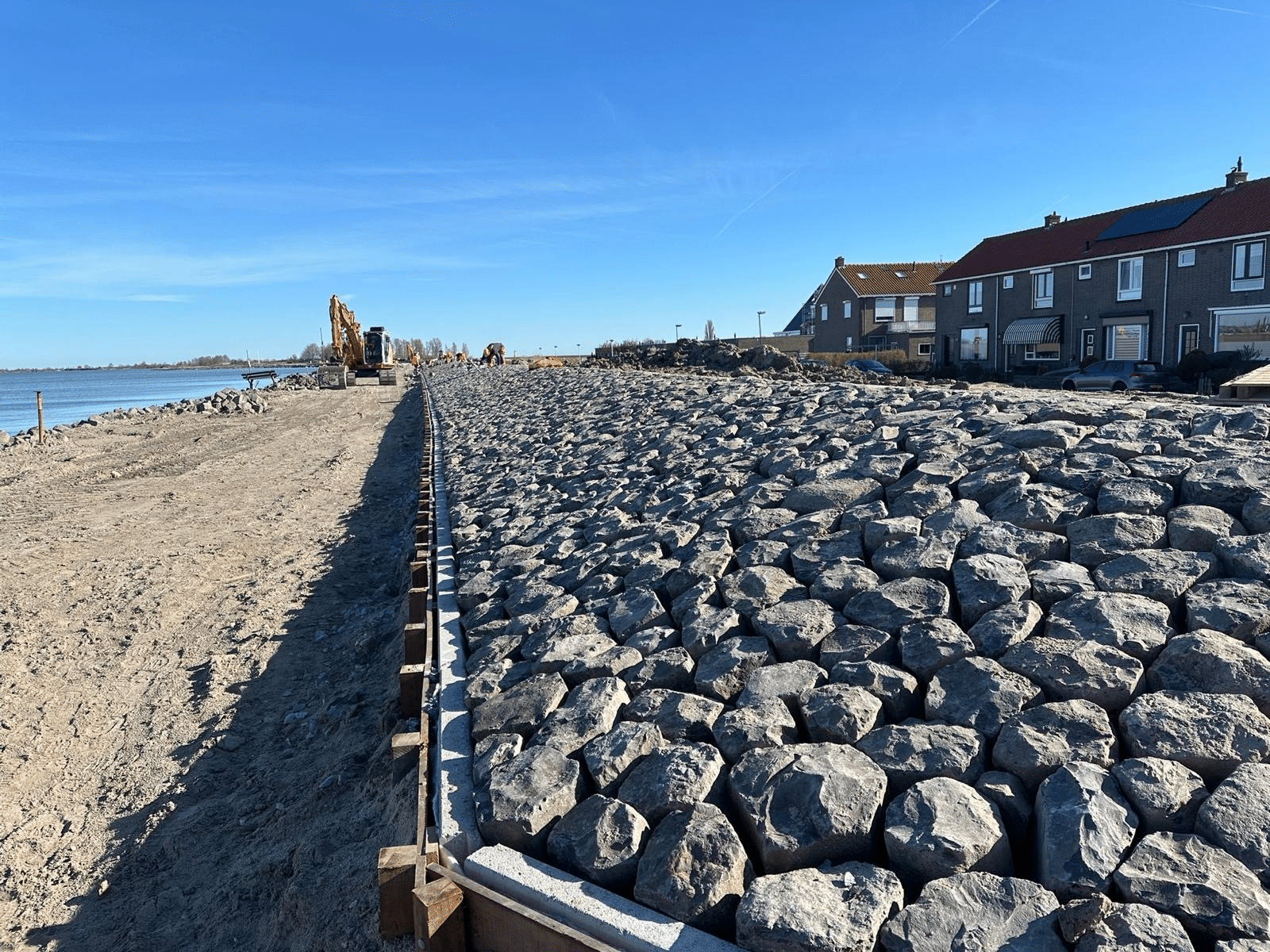
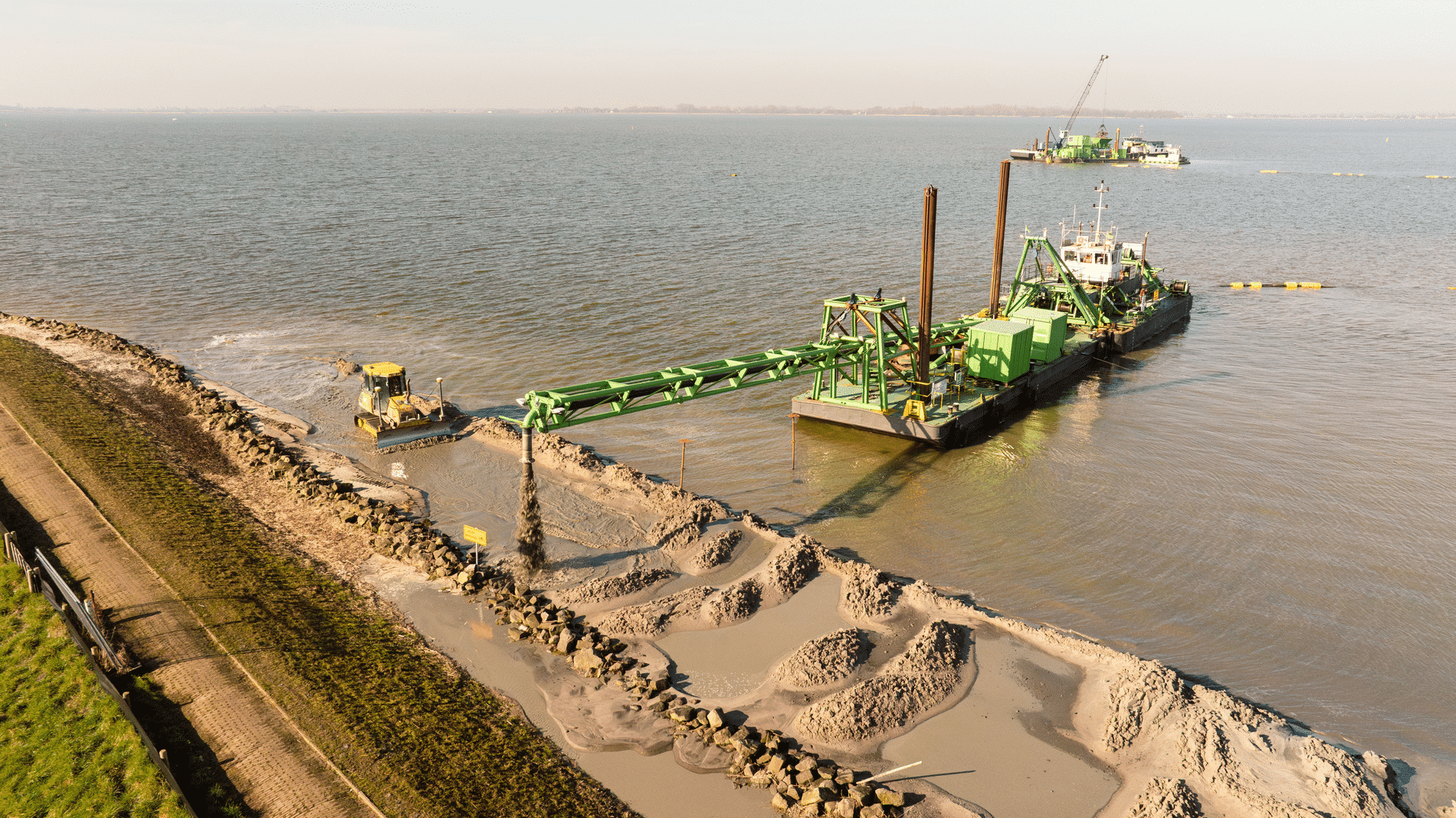
Before the natural stone cladding can be installed, the dike must first be fully prepared. “The subgrade is built up with sand and carefully contoured to the correct slope,” Ligthart explains. “Next, a geotextile is laid down with a layer of coarse gravel. Only then does the real craftsmanship begin: the installation of the basalt stones by our specialized stone masons.” The stones themselves come from the old dike and were removed by the general contractor and temporarily stored in a depot. “These basalt blocks are now being reused. This means that 100 percent of the existing material is recycled, a major advantage of natural stone. Basalt, in fact, has a practically infinite lifespan.”
Using a crane barge, the stones are first sorted and transported from the depot to the dike. “The stones are then brought to the work site, where our stone setters determine where each stone fits best. By pushing, rolling, and sometimes using a small lifting aid, the stones are placed precisely in their spots. It’s literally like putting together a puzzle.” That puzzle-like process is no coincidence. “Basalt is a volcanic rock that naturally solidifies into hexagonal shapes. This allows the stones to be fitted together like a kind of polygonal puzzle. It is precisely this structure that makes basalt so suitable for dike revetment: waves can barely gain a foothold on the structure.”
According to Ligthart, there are strict requirements for laying the stones. “The flatness and the way the stones interlock are all checked. It requires experience and craftsmanship.” There are no longer any training programs. “We train new craftsmen in-house, usually through an apprenticeship program lasting about two years.” Ligthart Stone Masonry has a long tradition. The family has been working with natural stone for four generations. “Our origins actually date back to the 1930s, when my great-grandfather was involved in the construction of the Afsluitdijk.”
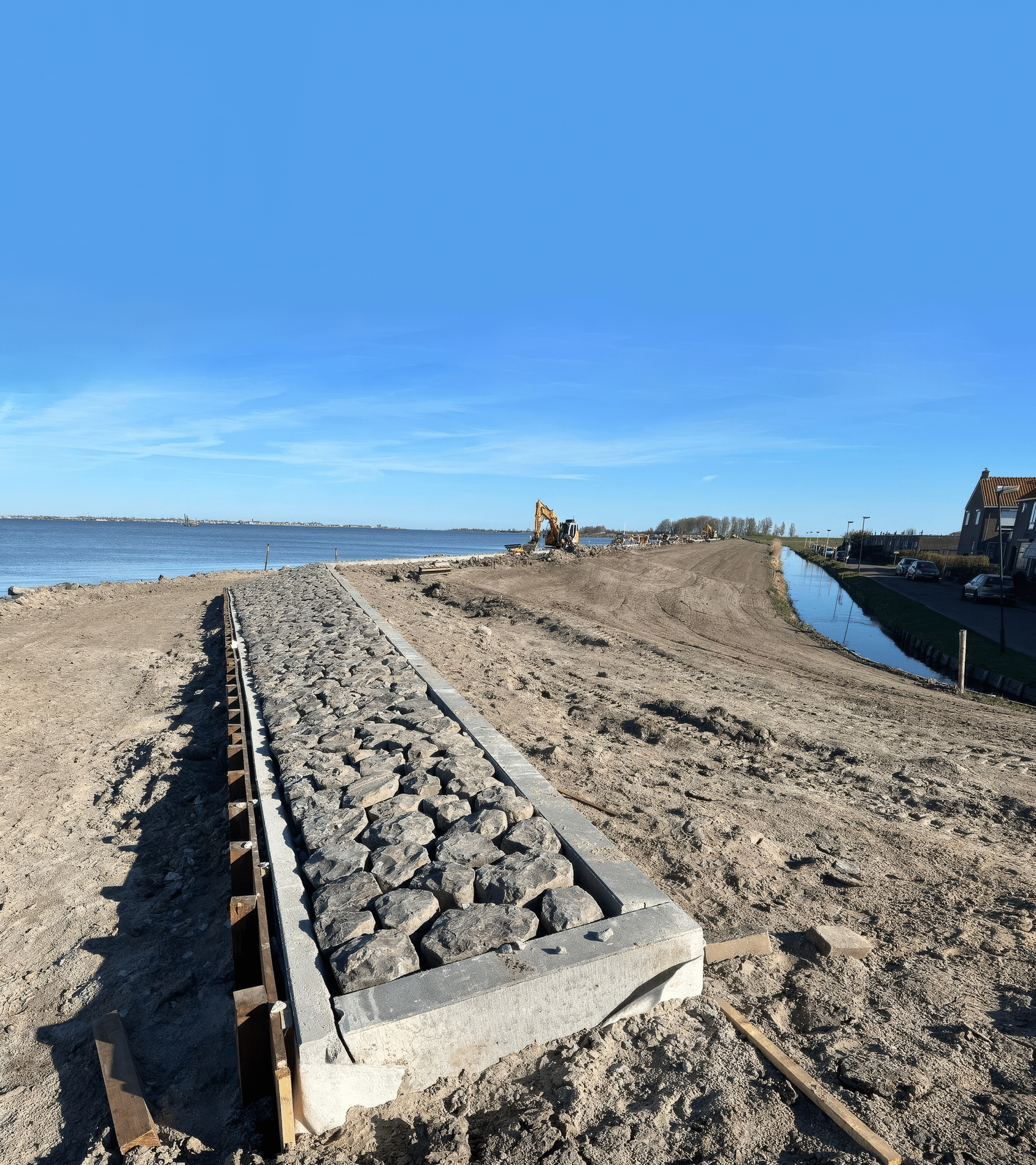
That craftsmanship is once again on full display here on Marken. Following a preparatory phase and the construction of several test sections last year, Steenzetterij Ligthart began cladding the first section of the dike in early April. “A team of seven stone masons is working alongside colleagues who are preparing the slope and laying the subbase. On average, there are about twelve people working on the dike at any given time,” says Ligthart. “While the pace is slower than with modern concrete products, that’s inherent to the craft. We’re building a sustainable dike, stone by stone.”
According to Ligthart, the result will be a revetment that looks like it used to, but meets today’s standards: strong, durable, and respectful of nature and the landscape. Even biodiversity has been taken into account. In some places, so-called “snake nests” are being installed: small cavities beneath the stones where, for example, grass snakes can take shelter. In this way, the dike not only regains its characteristic basalt cladding but also a piece of living heritage.
Neem dan rechtstreeks contact op met Ligthart B.V. Stone Masonry.
 Contact opnemen
Steenzetterij Ligthart B.V. has its roots in the laying of basalt (natural) and concrete blocks for civil engineering projects. Stone laying is a specialized profession, an ancient craft. For more than 30 years, we have been specialists in stone laying. You can rely on the expertise of Steenzetterij Ligthart B.V. when it comes to […]
Bekijk Bedrijfsprofiel