Platform on civil engineering, underground infrastructure, energy, construction equipment & construction machinery
Above all, a logistical puzzle
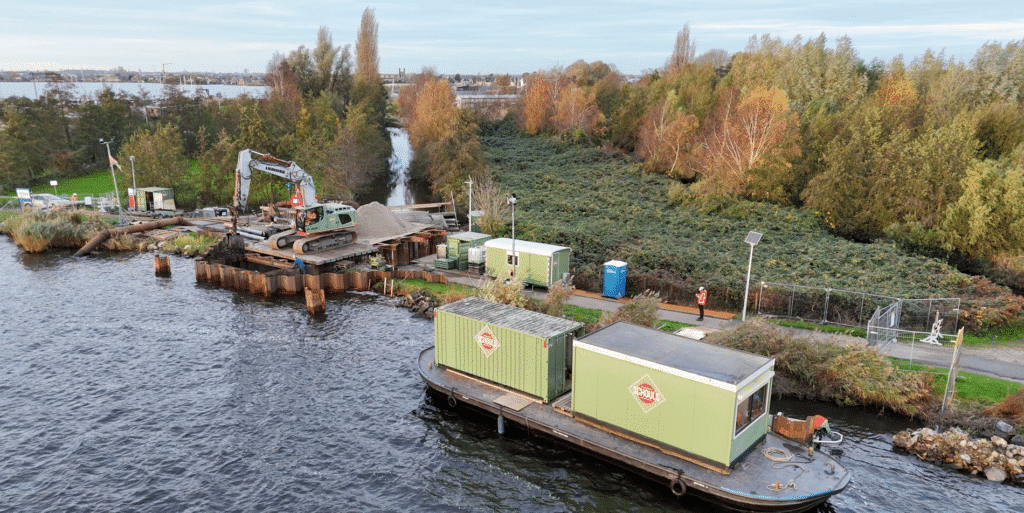
How do you build a new pumping station in a location that’s virtually inaccessible to heavy transport? That logistical puzzle was perhaps the biggest challenge Schouls faced when replacing the Veender- and Lijkerpolder pumping station on the Braassemermeer in Roelofarendsveen. Narrow quays and strict weight restrictions made transport by land virtually impossible. The solution was found on the water.
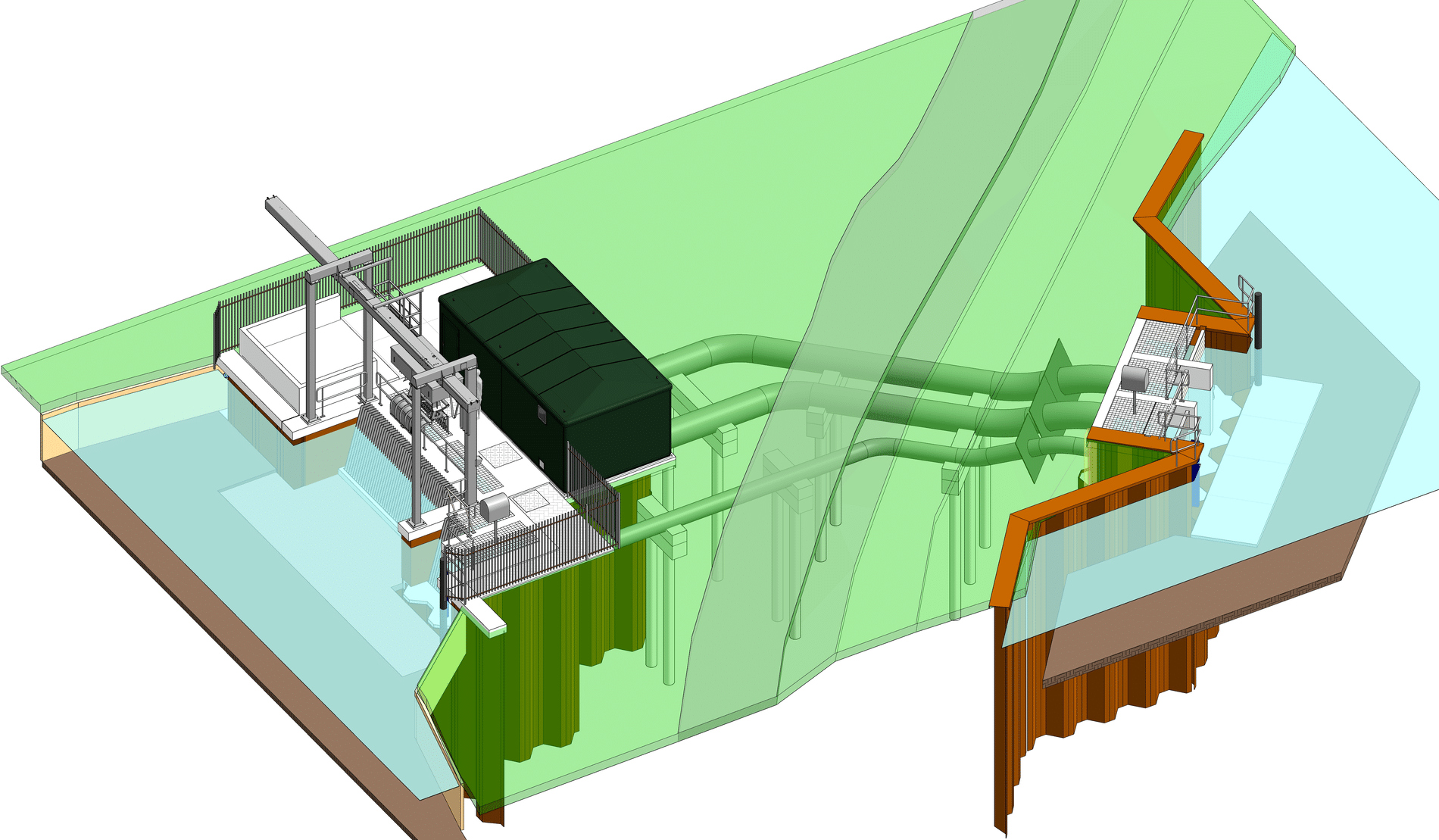
“The existing polder pumping station had reached the end of its service life,” begins Leen van Belen, project manager at Schouls. “Due to new construction and further development in the area around the Braassemermeer, it will be necessary to be able to discharge more water in the future. That called for a pumping station with greater capacity and higher operational reliability. The new pumping station has therefore been significantly scaled up: it is twice as wide and twice as deep as the old one. Whereas a single pump was sufficient before, the new pumping station has two large pumps, each with a capacity of 37 m³ per minute. This makes the system not only more powerful but also more reliable: if one pump fails or if more water needs to be pumped, the other can take over.”
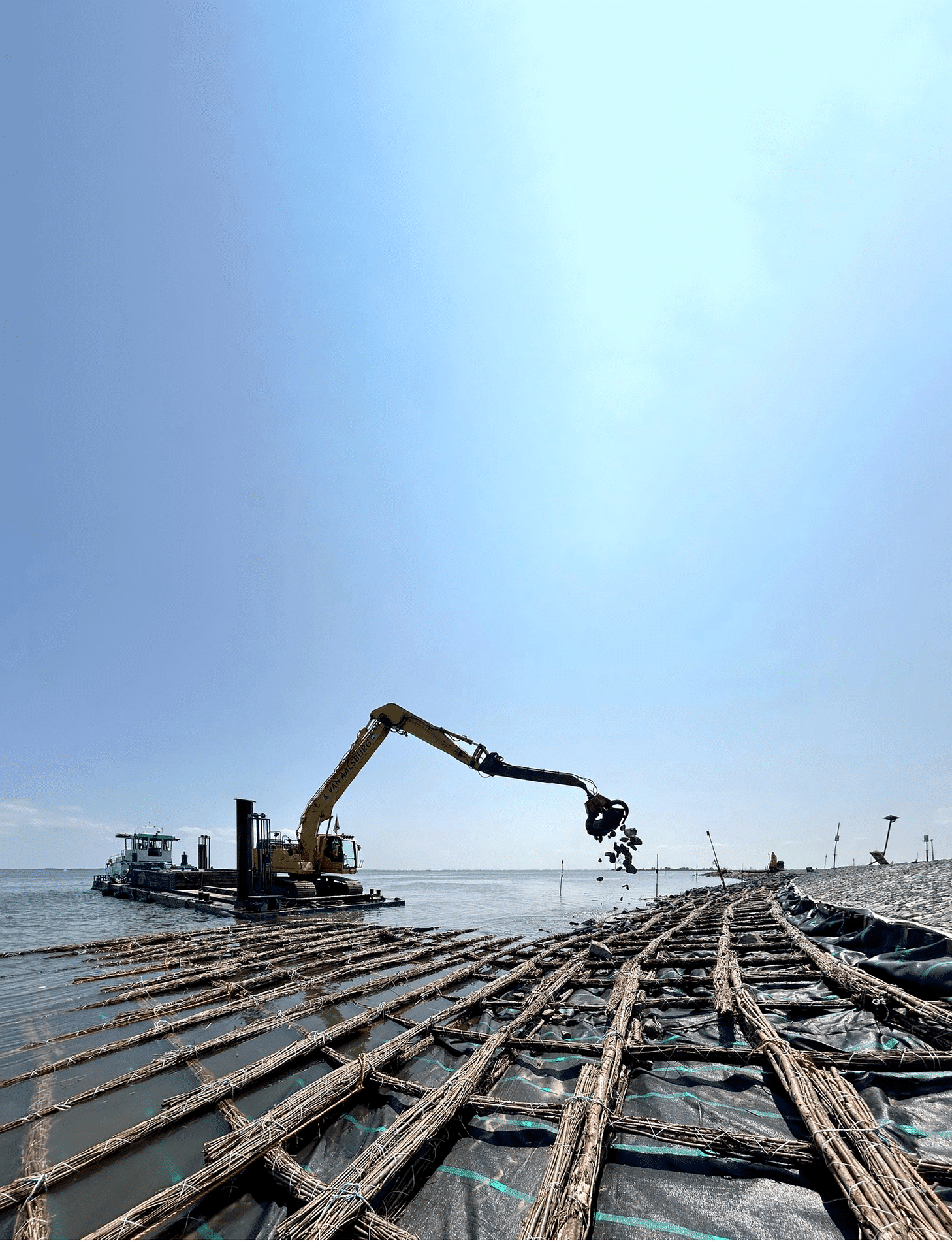
The pumping station’s location on Galgekade made the project even more complex. “The quay is narrow and heavily used by cyclists and local traffic,” says Van Belen. “Furthermore, there is an axle load limit of 5 metric tons, which means heavy construction traffic is not an option.” Initially, overland transport was considered, but that quickly proved unfeasible. Not only because of the road’s limited load-bearing capacity, but also because of the impact on the surrounding area and the safety of local residents and recreational users. The solution? Transport by water. “We brought in the materials via a loading dock on the Oude Wetering and then transported them by boat 2 kilometers to the construction site. That required meticulous logistical planning: boats had to be available on time and carry as much material as possible in a single trip.”
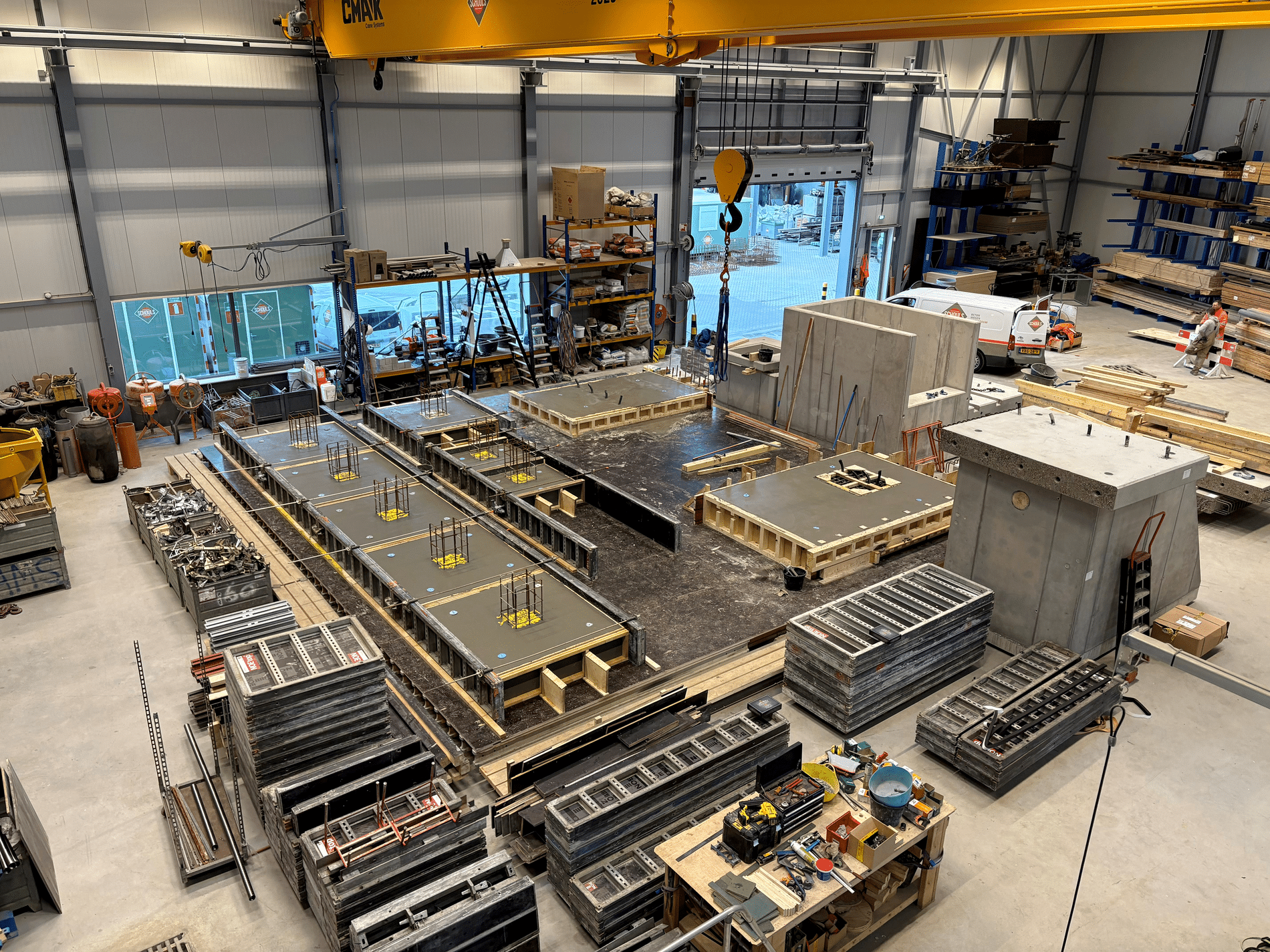
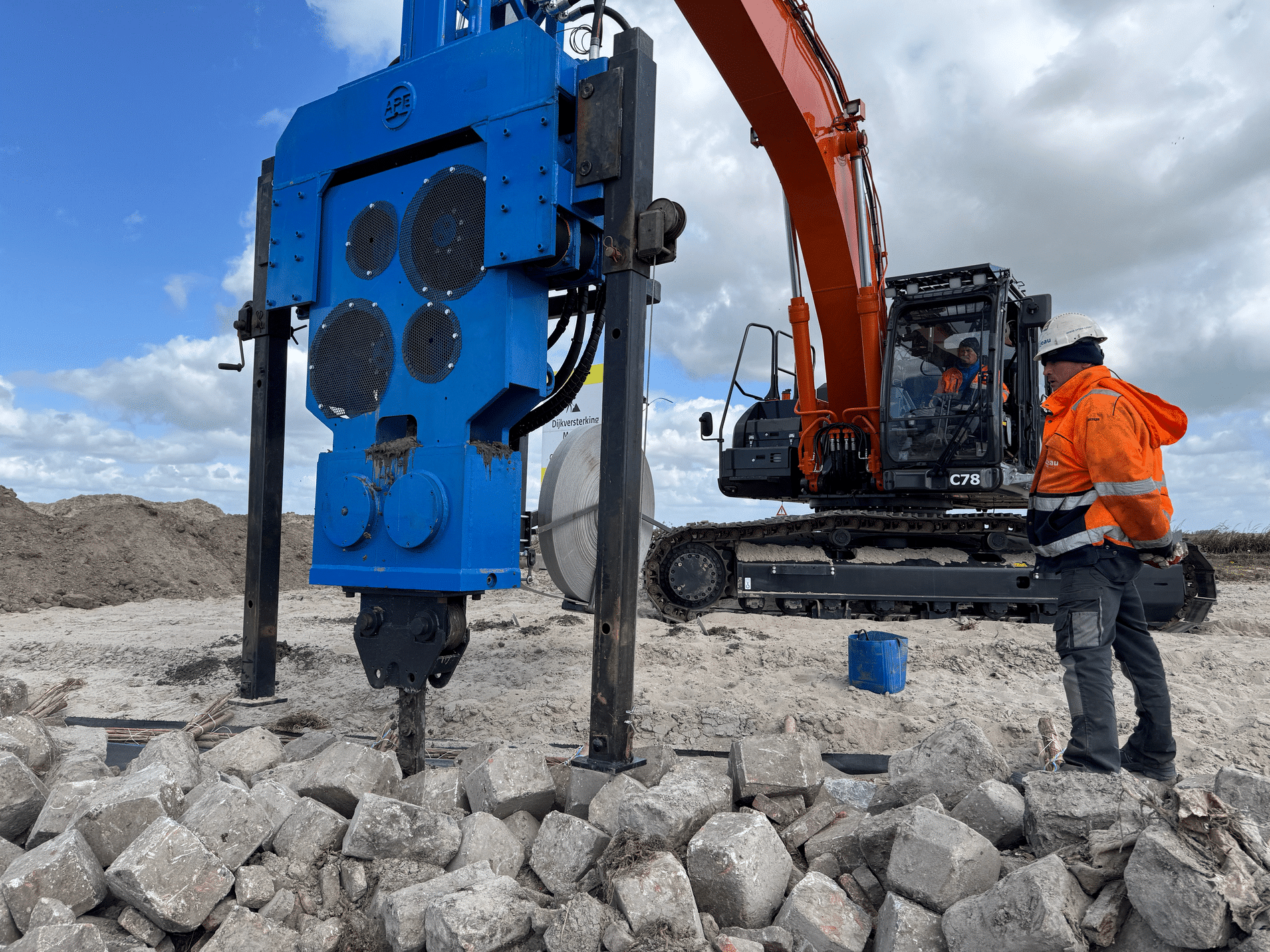
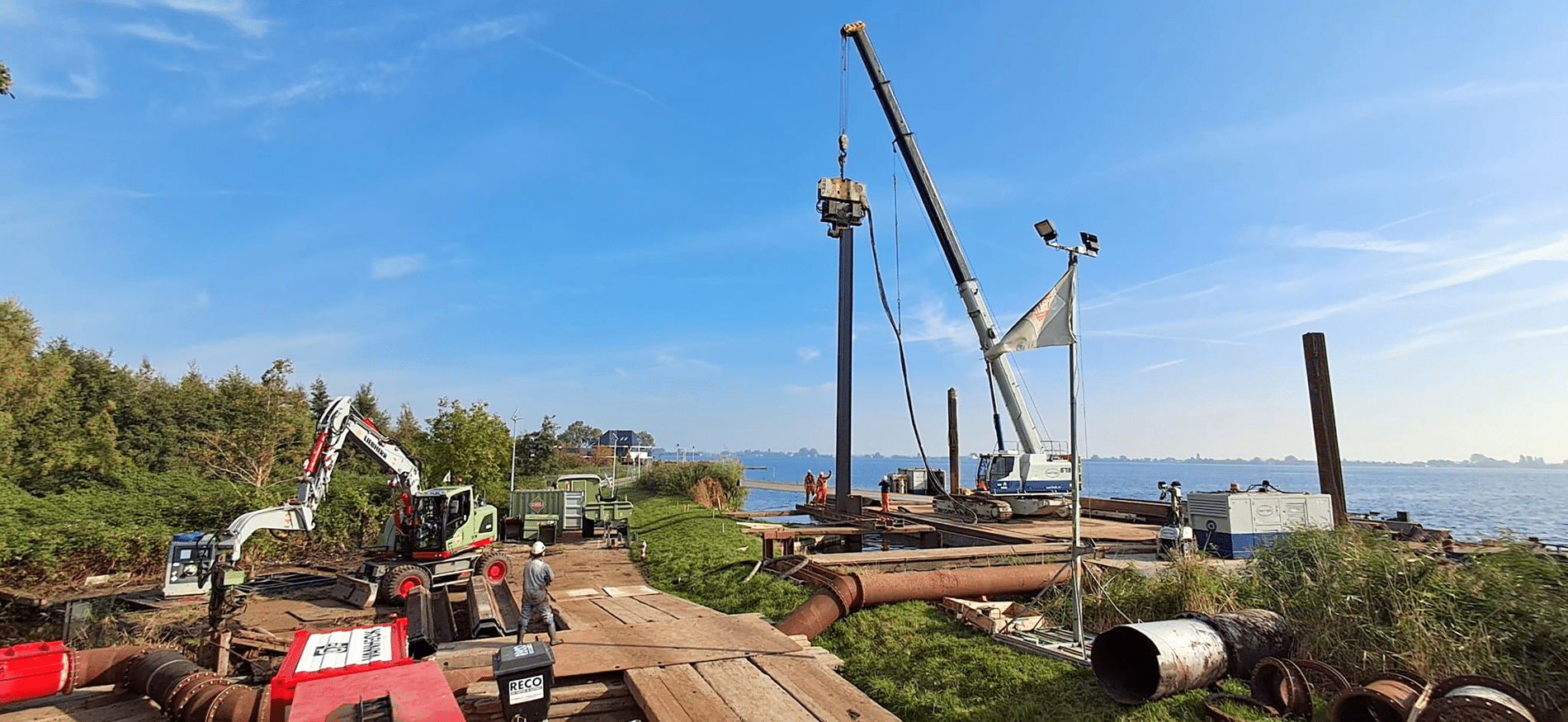
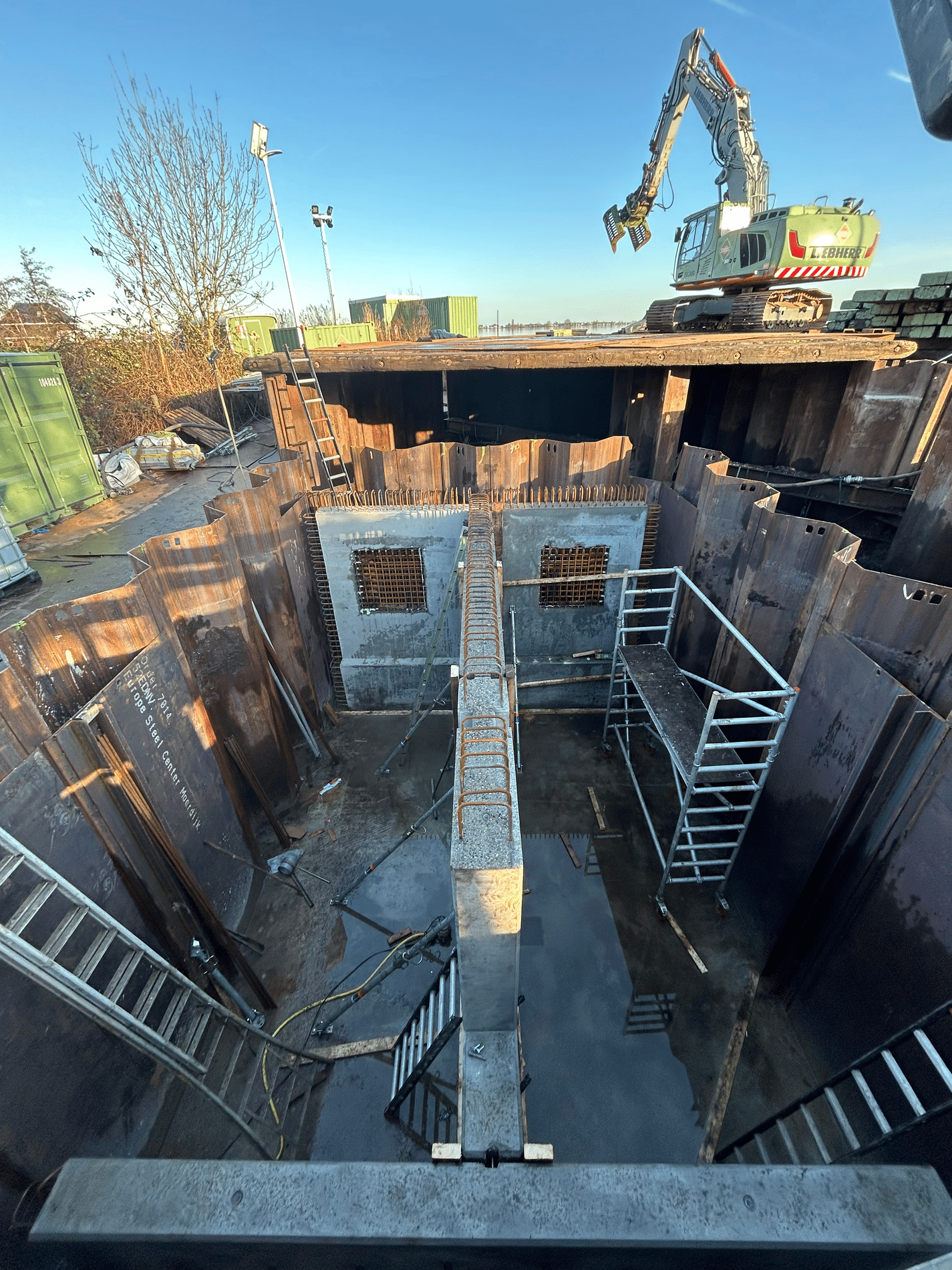
The first major step in the project was the installation of 17-meter-long steel sheet piles to create a construction pit. “A heavy 70-metric-ton crawler crane was used for this, which was initially positioned on a pontoon and later moved onto the sheet piles themselves,” Van Belen explains. “This protected the quay while still allowing us to work safely and efficiently.” The new pumping station was fully assembled within this construction pit. “We made smart use of precast concrete elements. Since traditional concrete mixers couldn’t reach the site, many components were prefabricated in our workshop and transported to the construction site in smaller sections. There, they were hoisted into place using our own crawler crane.”
The floor of the pumping station was poured on site. “Special mini-mixers were used for this, delivering small amounts of concrete (about 1 m³ per trip) at a time. They shuttled back and forth continuously between the public road and the construction site.”
One of the most visible consequences of the construction work was the closure of the pedestrian and bike path along the Galgekade. “The path is popular with recreational users who take a loop around Braassemermeer,” says Van Belen. “Still, the closure was unavoidable: there simply wasn’t enough space to safely guide cyclists past the construction site. As a result, the path was completely closed from the start of construction in September 2025 until completion in May of this year. Cyclists and pedestrians were rerouted via clear signage.” The schedule was therefore very tight. “The work had to be completed before the start of the cycling season. And we succeeded, despite a relatively harsh winter, which, among other things, delayed the concrete work.”
According to Van Belen, a key aspect of this success was the collaboration within a construction team. “Instead of laying everything out in a contract in advance, we worked together to find the best solution—not only from a technical standpoint but also in terms of logistics and the surrounding environment. This approach has proven to be very effective. By pooling knowledge and experience, decisions can be made more quickly and risks can be better managed.” The pumping station in the Veender and Lijkerpolder is not a standalone project. It is part of a larger program in which multiple pumping stations are being modernized under the framework agreement for polder pumping stations with the Rijnland Water Board. “This way of working with fixed teams and long-term contracts offers clear advantages. It ensures continuity and better coordination among all parties involved.”
With the completion of the new Veender- and Lijkerpolder pumping station, the water board is taking an important step toward future-proof water management with a focus on reliability and ecology. “For example, measures have been put in place to automatically remove debris, which simplifies maintenance and optimizes operation, and a fish passage has been constructed.” According to Van Belen, the project is yet another example for the sector. “We might be able to work faster, but by working together, we get further.”