Platform on civil engineering, underground infrastructure, energy, construction equipment & construction machinery
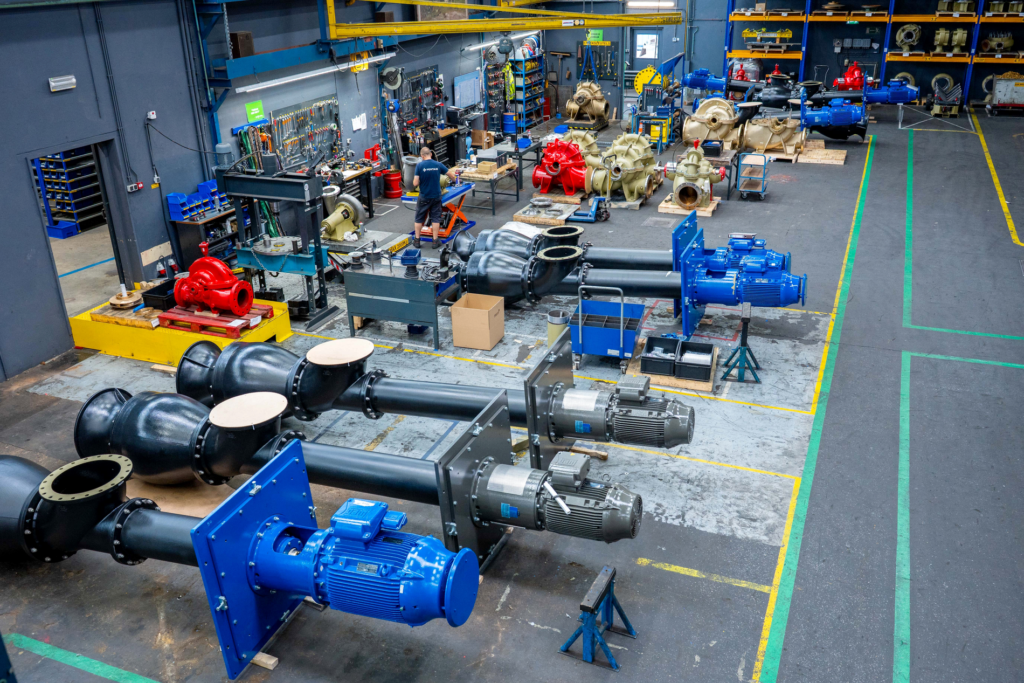
Pumps with a wide operating range, high efficiency, and fish safety
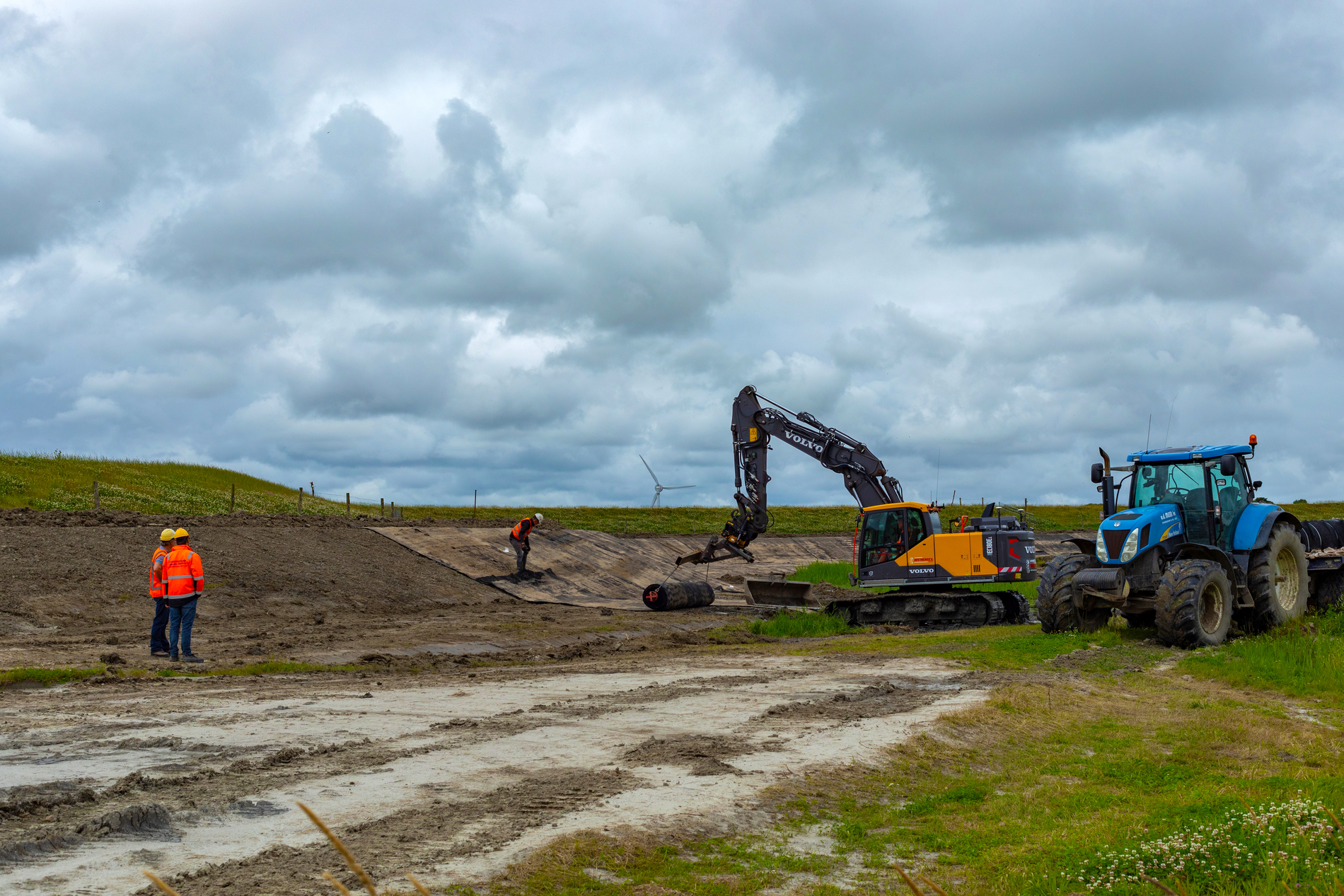
The dike reinforcement project near Arcen will not only improve protection against high water but will also provide a future-proof solution for water management around the historic Wijmarsche Watermill. A key component of the project is the construction of a new pumping station at the Lingsforterbeek. Consulting and engineering firm Tauw, on behalf of the Dijkzone Alliantie consortium (Ploegam, Dura Vermeer, and Hollandia Infra), while Pentair Nijhuis of Winterswijk is responsible for the design, construction, and installation of the three vertical pumps that discharge excess stream water as soon as the Meuse River rises too high.
In addition to reinforcing and realigning the dike, the dike reinforcement project near Arcen aims to restore the Lingsforterbeek with a fish passage and to construct a new pumping station near the watermill in Arcen-Zuid. That pumping station is necessary to keep the historic Wijmarsche Watermill—which now houses the grain distillery and distillery De IJsvogel—dry even during high water on the Meuse. “During high water, the new green dikes and the self-closing flood barrier around Arcen prevent Arcen and the surrounding area from flooding,” explains Harm Damkot, area sales manager at Pentair. “However, the Lingsforterbeek will continue to flow as usual. If that water can no longer flow into the Meuse, a sort of ”bathtub’ will form behind the dike that slowly fills up. That water must be actively pumped out.”
The biggest challenge in this project was selecting pumps that would continue to perform optimally under highly variable conditions. “The wide operating range was a major challenge for us. The pumps must achieve high efficiency at both low and high water levels while also being fish-safe.” This required extensive hydraulic calculations. Various scenarios had to be modeled: how much water needs to be discharged, what water level must be maintained, and how do the pumps perform under varying water levels in the Meuse River? Each pump has a capacity ranging from 27 to 70 cubic meters per minute. In addition, the lift height varies greatly: from just 10 centimeters at low water levels to a maximum of 5.3 meters during extreme conditions. “That’s a wide range within which the pumps must continue to operate efficiently.”
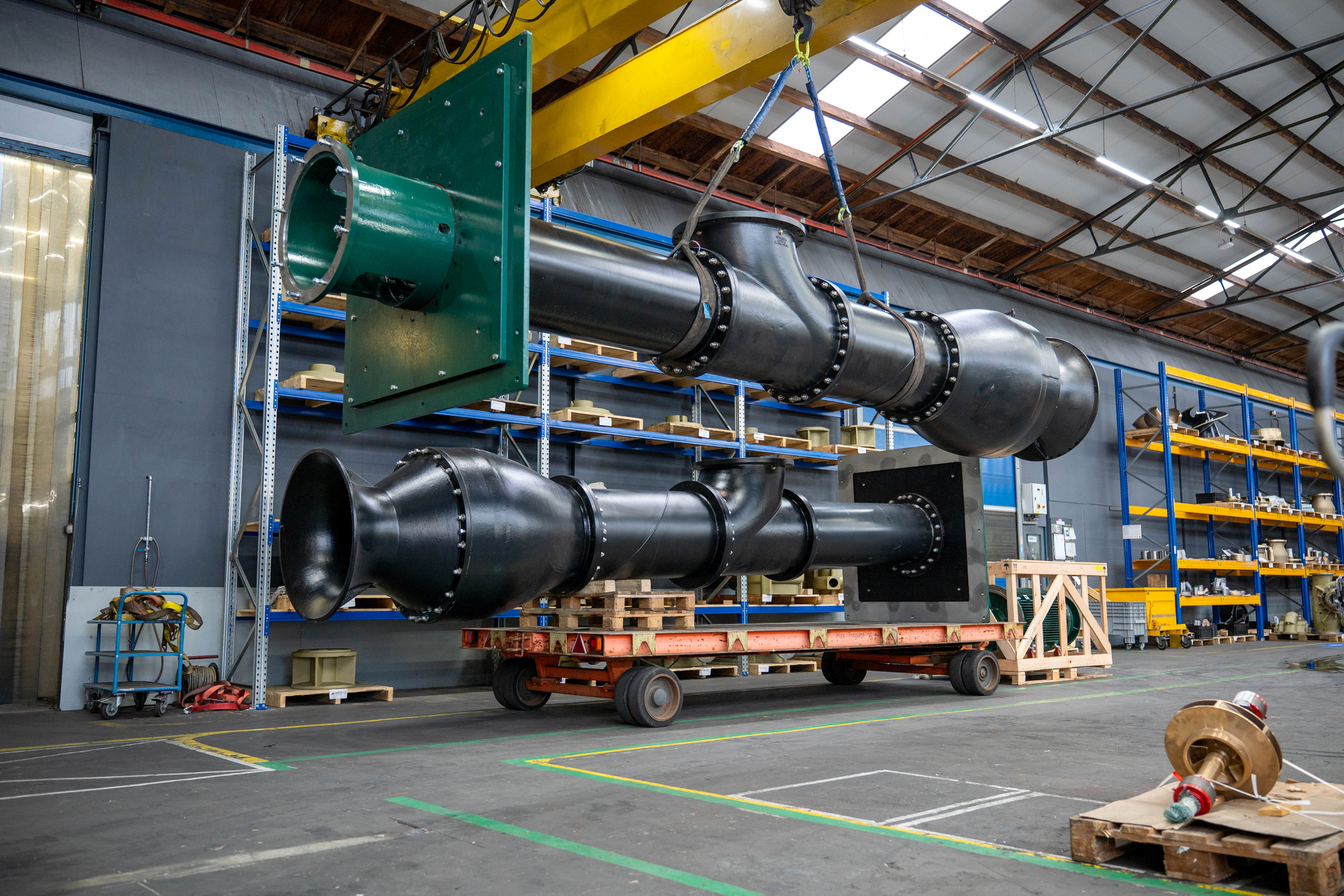
In addition to performance, environmental considerations played an important role in the design. The Lingsforterbeek will be equipped with a fish passage, allowing fish to migrate upstream again. The pumps therefore had to be demonstrably fish-friendly. Pentair uses a specially designed impeller for this purpose, known as the Xcentric. The unique and patented eccentric impeller shape ensures that fish can safely pass through the pump, with a steady flow of water. In combination with the new fish passage, the Lingsforterbeek will once again become more accessible to various fish species, while the pumping station simultaneously provides sufficient capacity to discharge excess water during high water levels and heavy rainfall.
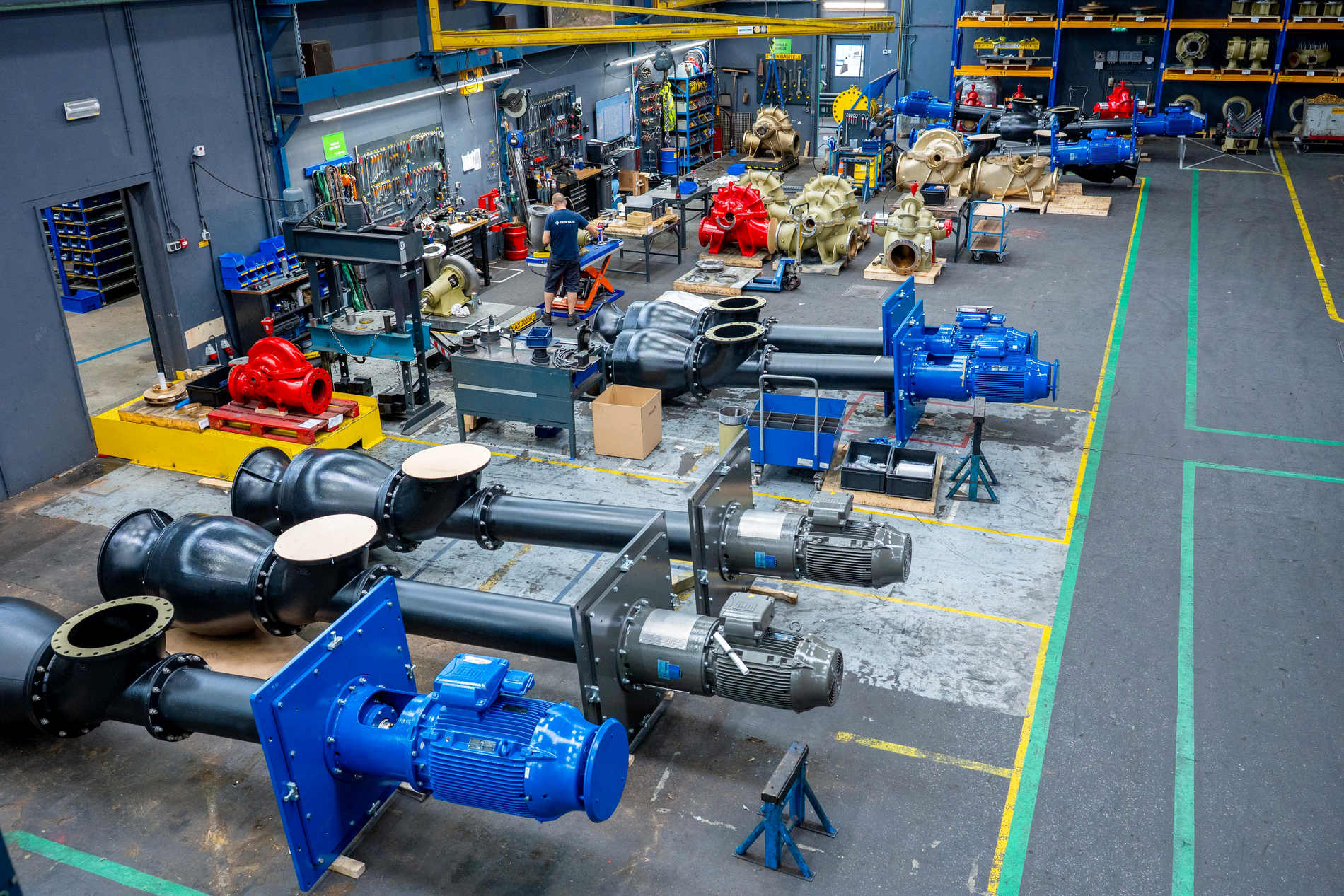
For this project, Pentair is supplying three pumps from the VDX series with a discharge diameter of 600 millimeters. The entire development process takes place in Winterswijk. Harm: “We always say that we work ‘from sand to customer,’ by which we mean that we handle every aspect of the production process in-house. So, in addition to the design, we also handle the assembly, coating, and ultimately the testing of the pumps at our own test facility.” The pumps are currently in full production. They are expected to undergo extensive testing by the end of 2026, after which installation at the new pumping station will take place in early 2027.
Neem dan rechtstreeks contact op met Pentair Fairbanks Nijhuis.
 Contact opnemen
Still pumping like it’s 1975? Many wastewater pumps still in use today were designed half a century ago. These pumps are no longer suitable for today’s wastewater challenges. The innovative Xcentric impeller in the XRW series is designed to pump materials—including wet wipes and solids—without […]
Bekijk Bedrijfsprofiel