Platform on civil engineering, underground infrastructure, energy, construction equipment & construction machinery
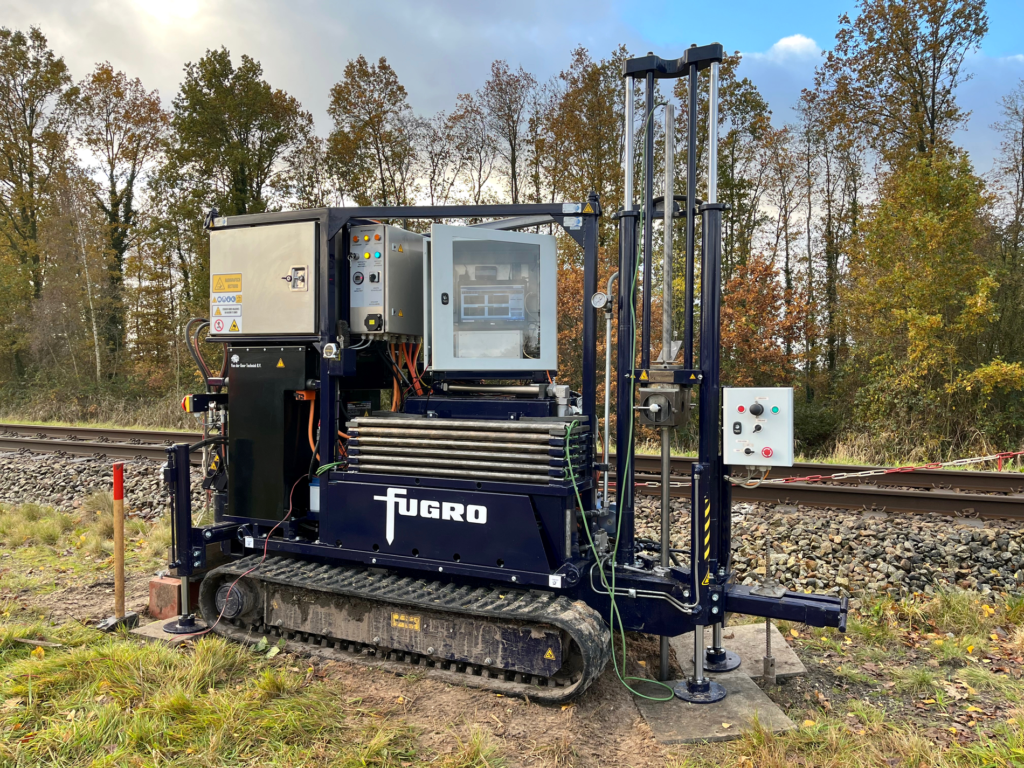
A better understanding of soil leads to better design choices
The safety of a flood barrier is determined not only by what is built above ground, but primarily by the properties of the subsoil. That is why geotechnical specialist Fugro played a key role from the very beginning in the dike reinforcement project in Arcen. Through additional soil investigations and geotechnical designs, the company helped the Arcen Dike Zone Alliance implement safe, sustainable, and cost-effective solutions.
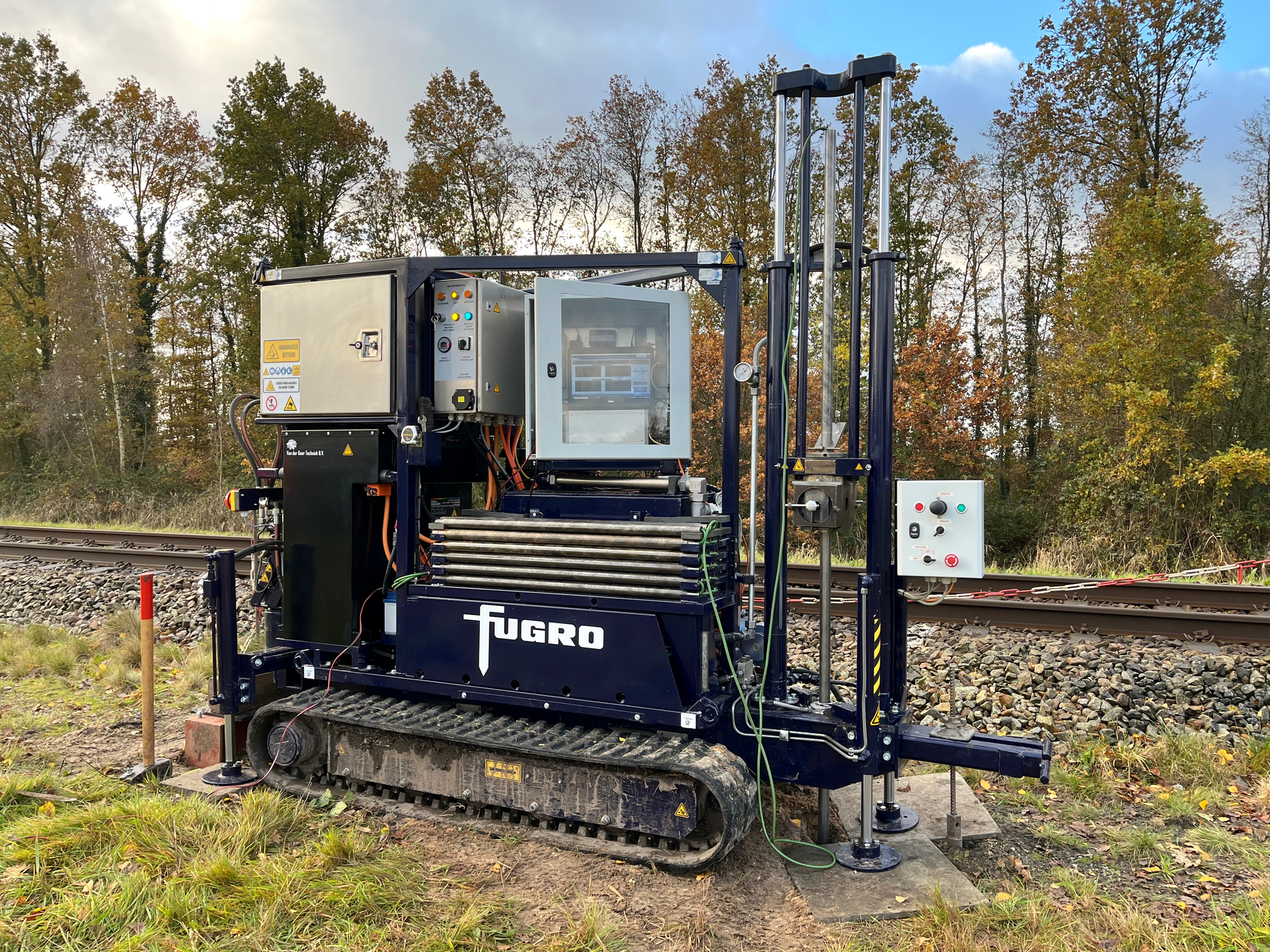
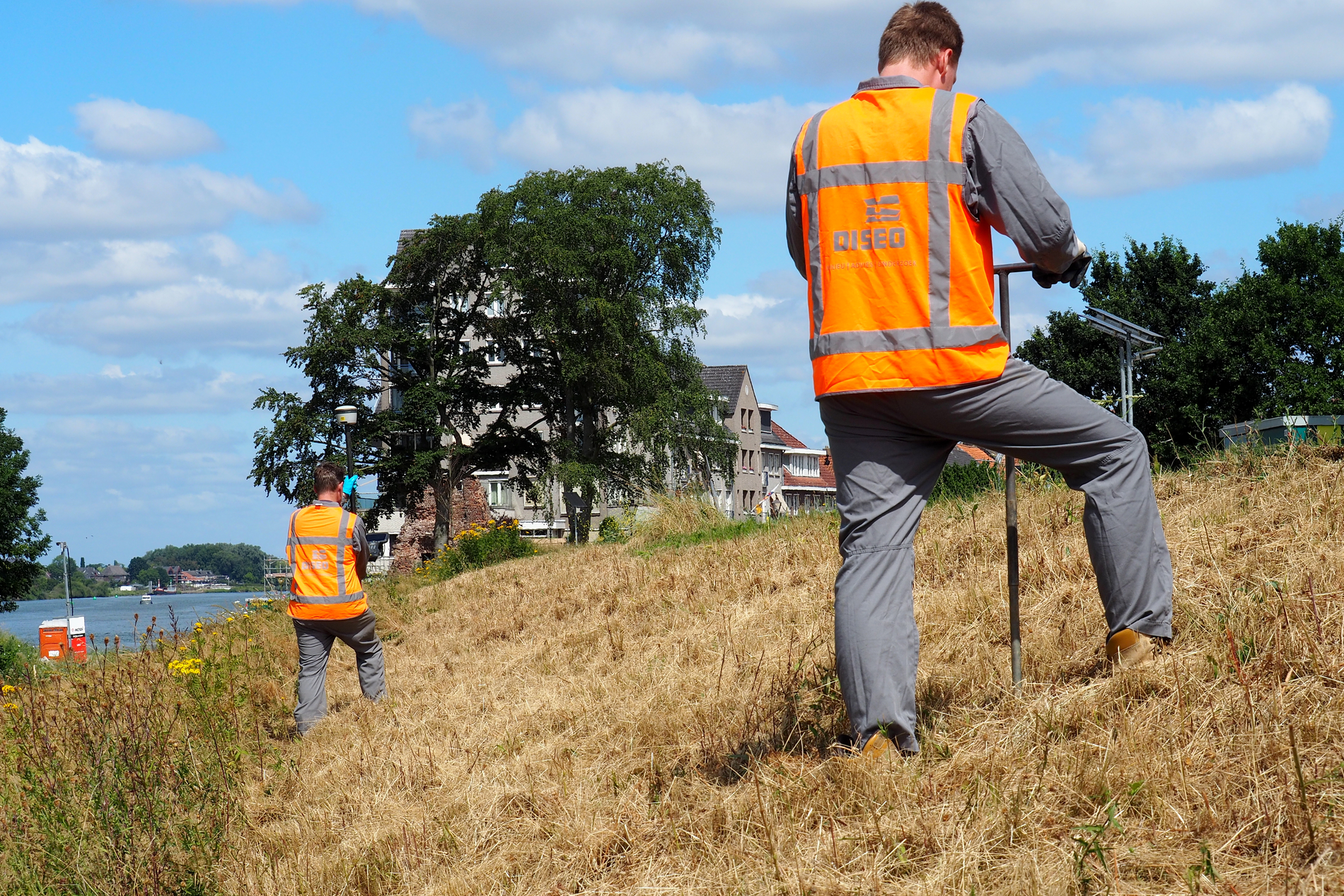
As a long-standing partner of the Dijkzone Alliantie Arcen, flood defenses are familiar territory for Fugro. The company supports the alliance with geotechnical and flood protection advice and investigates how flood defenses can continue to function stably and safely. “The Limburg Water Board had already conducted its own ground investigations,” says Anne Bäcker, senior designer for Geotechnical Engineering and Flood Protection. “We then looked at where additional research could make a difference. These are often locations with higher risks, but also places where there are opportunities to make a design smarter, more cost-effective, or more sustainable.”
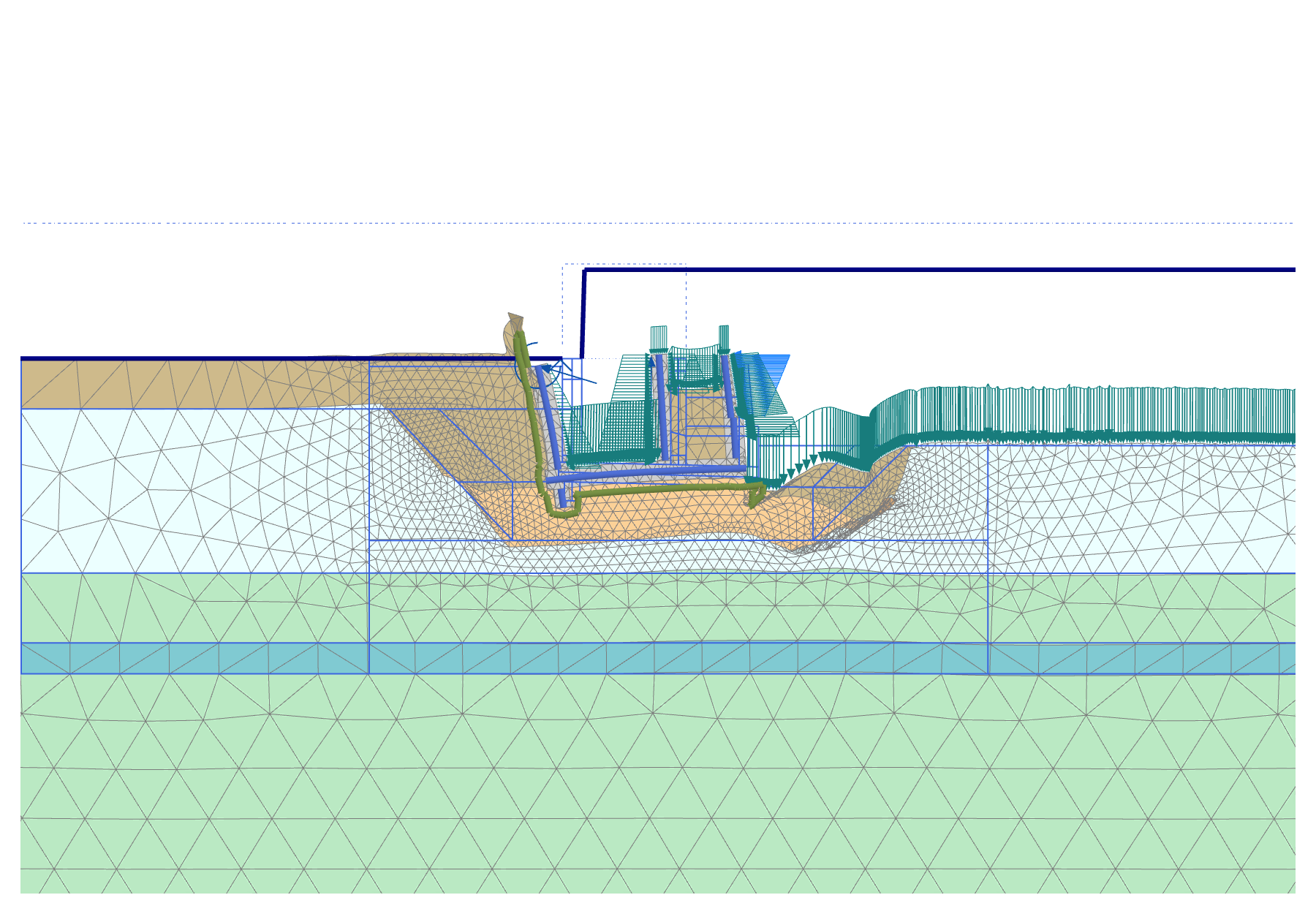
That additional research turned out to be anything but unnecessary. For example, in the existing study, the distance between the survey points was relatively large at some locations along the dike. As a result, it remained unclear exactly how certain soil layers extended. “In some places, for example, you suddenly see a layer of clay appear,” Anne explains. “Then you want to know where that layer begins and ends, because that directly affects the design.” Another concrete example is the approach to piping—the phenomenon in which water flows under a dike and carries sand with it. Along large sections of the green dikes, measures were needed to manage this risk. “Thanks to additional research, we were able to determine more precisely where those measures were actually necessary. As a result, the use of plastic sheet piles could be limited to locations where they were truly needed. In other places, a clay box sufficed, which reduced both costs and material usage.”
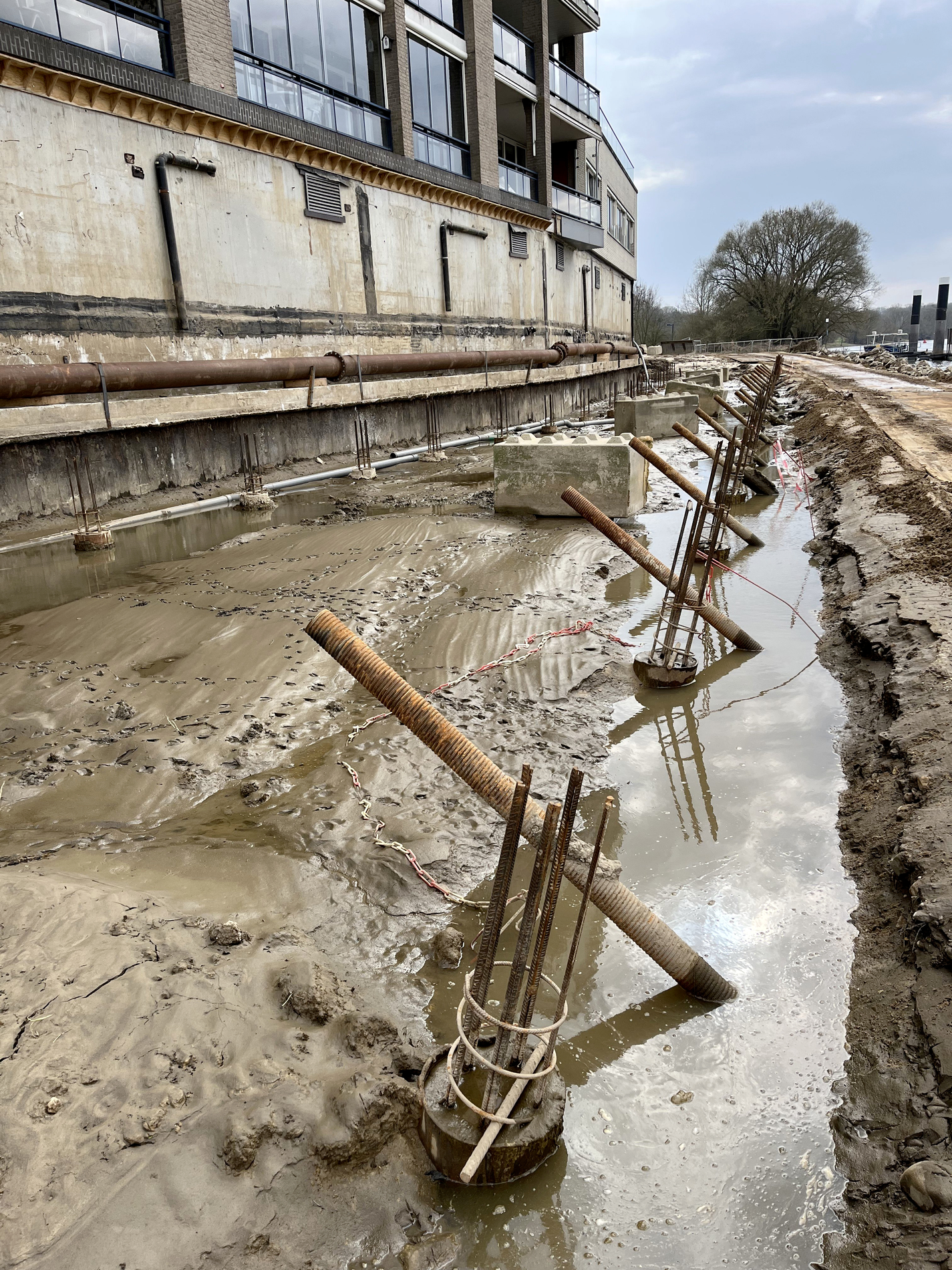
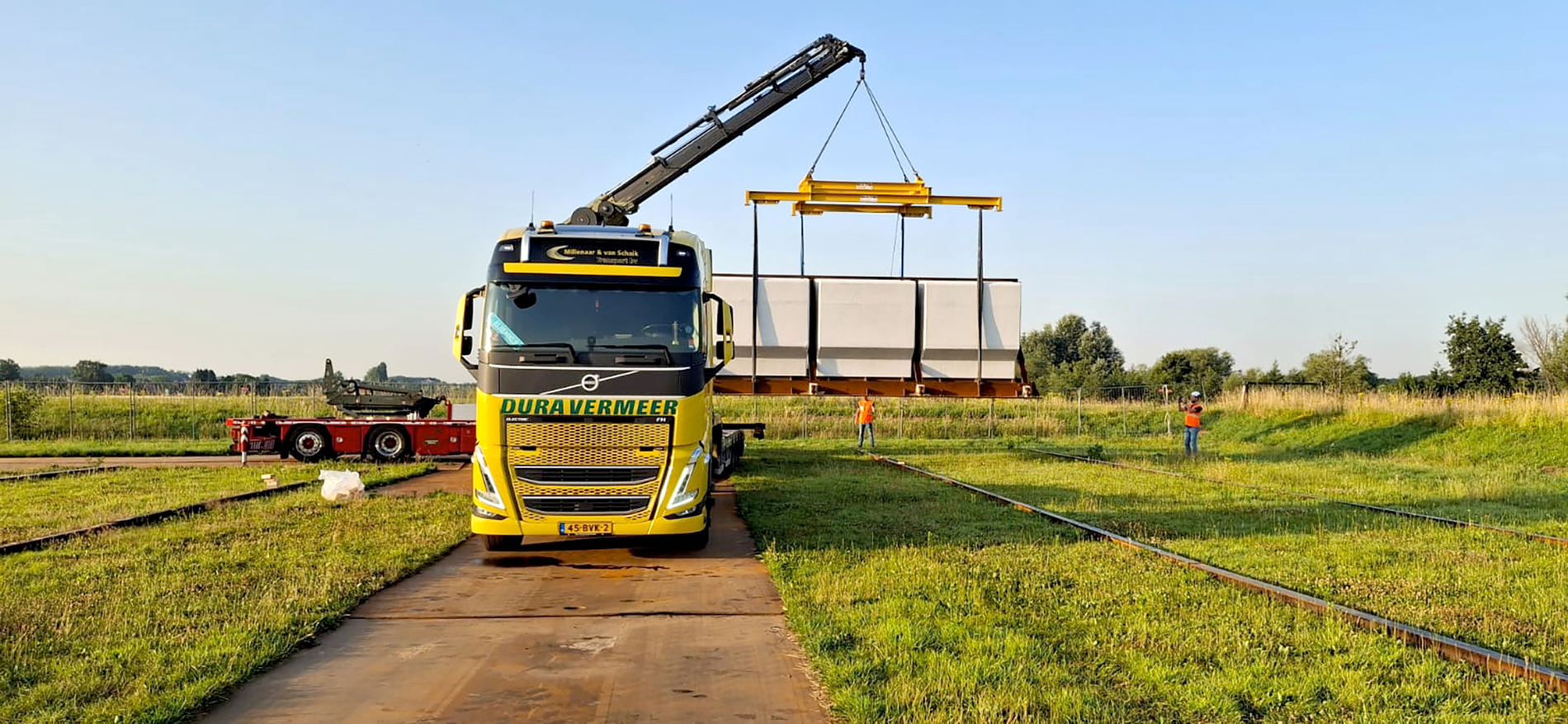
Soil investigations also proved their worth for the new self-closing flood barrier in the center of Arcen. Load-bearing sand was encountered at a relatively shallow depth. As a result, the majority of the approximately 600-meter-long Vlotterkering® could be founded directly on the sand layer, without the need for extensive pile foundations. “We were able to demonstrate that foundation piles were needed only on a limited section of the route,” says Arend Pool, senior designer for Geotechnical Engineering and Flood Protection. “That made the design not only less expensive, but also more sustainable.”
Another point of concern was the culvert—that is, the lockable passage in the dike—next to Brasserie Alt Arce. Arend: “Due to the low elevation of the alley, a complex piping issue arose locally. A traditional sheet pile solution proved unfeasible here. Ultimately, in consultation with the Limburg Water Board, we opted to raise the level of the alleyway in that specific area. This not only ensures water safety but also preserves the desired line of sight toward the Meuse River.”
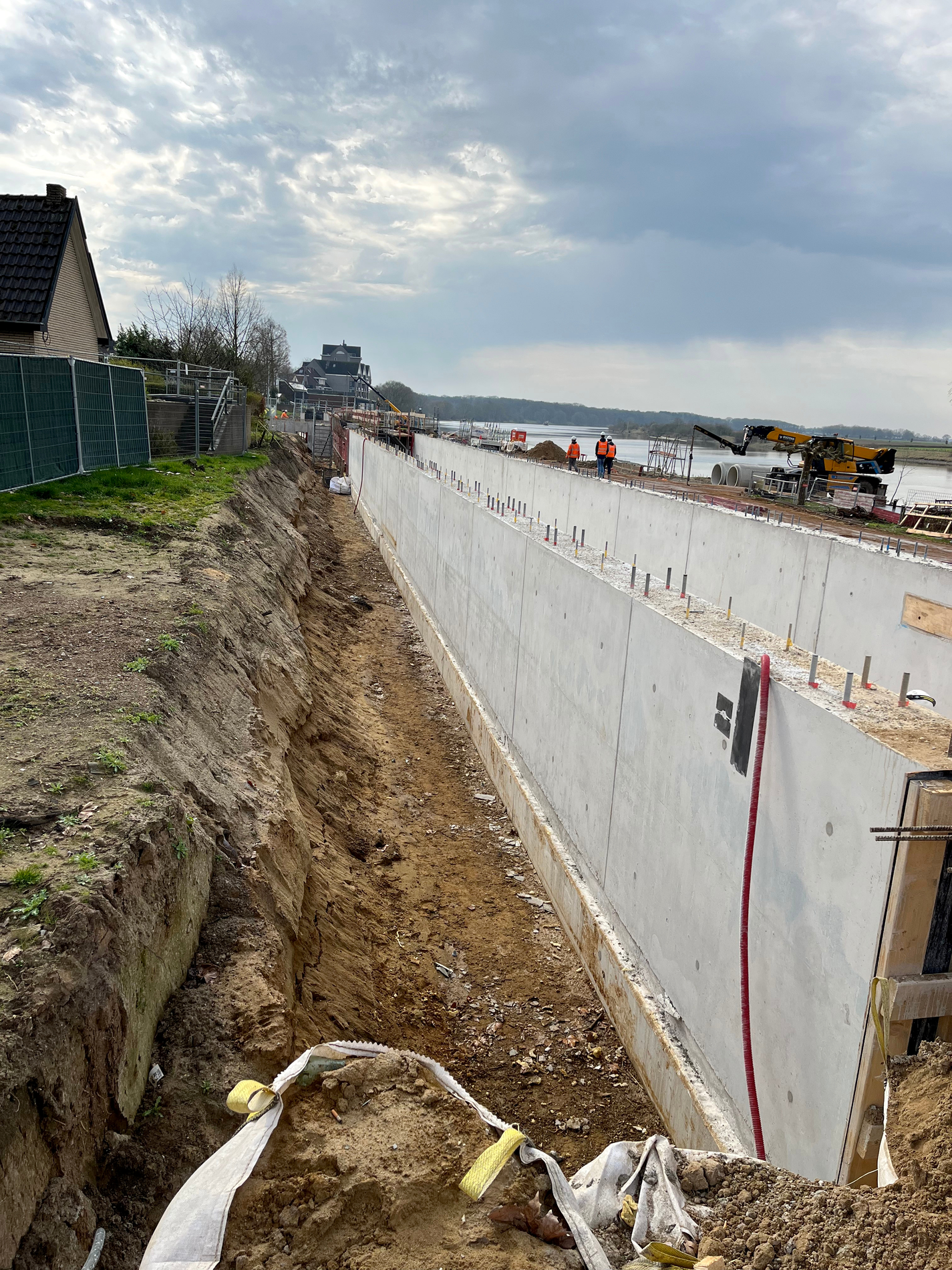
According to Anne, it is precisely this combination of engineering and spatial quality that makes the project special. “This isn’t just about a robust flood barrier. The solution must also blend into the landscape and contribute to the quality of the surroundings. It’s great when you can use geotechnical engineering to help achieve both goals.” For Arend, the appeal lies primarily in the innovative nature of the project. “You don’t often come across a self-closing flood barrier of this scale. It’s interesting to contribute to that as a geotechnical consultant, especially since the residents truly embrace this solution.”
Neem dan rechtstreeks contact op met Fugro.
 Contact opnemen
Fugro is the world's leading Geo-data specialist. We collect and analyze comprehensive information about the earth and the structures built on it. Through integrated data acquisition, analysis and consulting, we use Geo-data to reveal what is needed to help our clients design, build and operate their assets in a safe, sustainable and efficient manner. We [...]
Bekijk Bedrijfsprofiel