Platform on civil engineering, underground infrastructure, energy, construction equipment & construction machinery
Test first, then hoist
As part of the dike reinforcement project in Arcen, the self-closing floodgate is gradually taking shape. The first steel gates were installed in January, but the work is far from complete. Over a total length of approximately 600 meters, the 7-metric-ton valves must be transported, tilted, and installed with precision. For Jenniskens of Nijmegen, this is both a logistical and technical challenge that required thorough preparation.
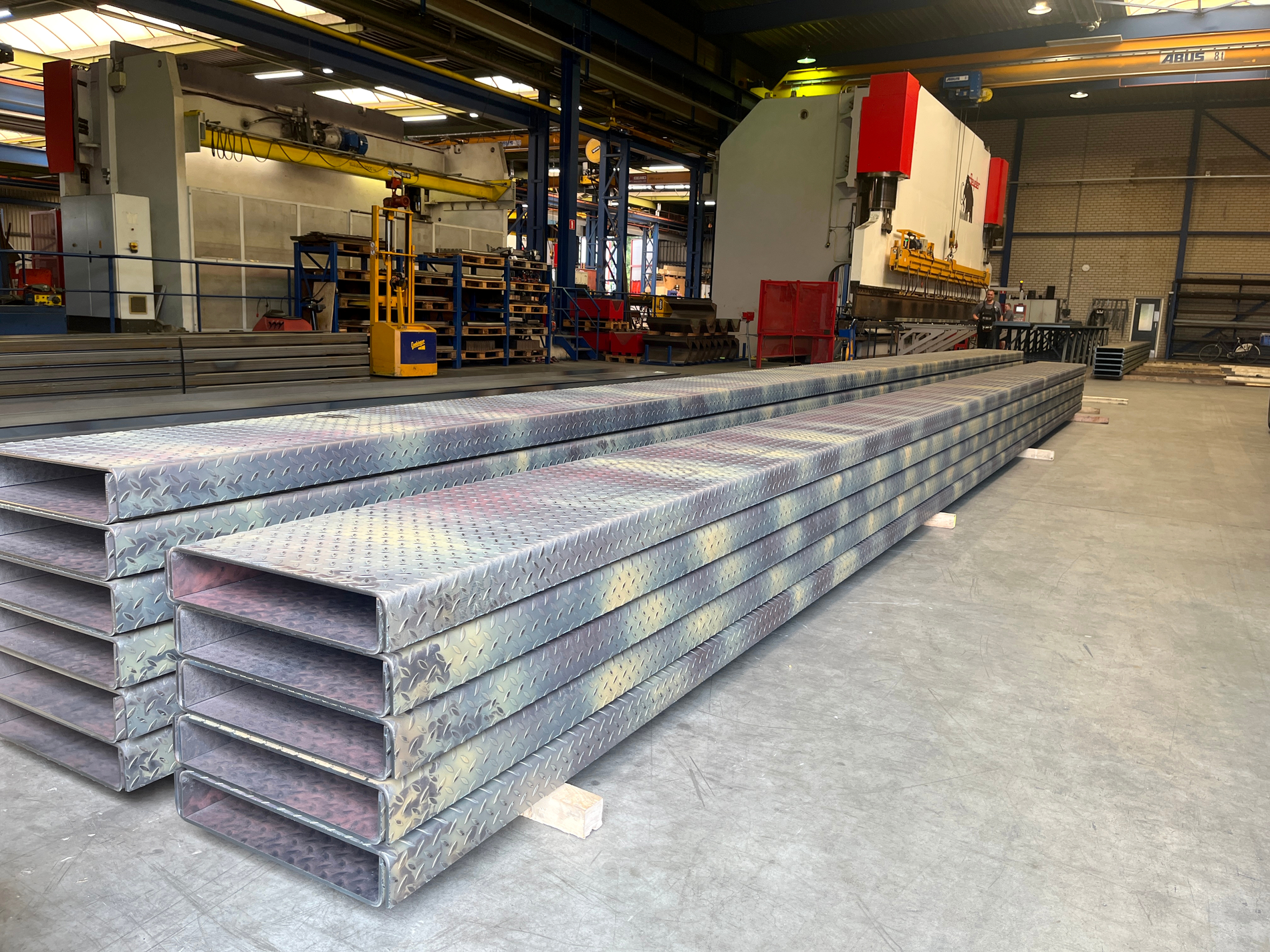
The self-closing floodgate is a key component of the project. The floodgate consists of interconnected steel gates mounted in a concrete basin. When the Meuse River fills the basin during high water, the buoyancy of the plastic causes the gates—which weigh approximately 7,000 kilograms—to rise automatically, forming a flood barrier. The first gates were successfully installed at the end of January. Each gate was custom-manufactured for its specific position along the route and measures approximately 9.5 meters long, nearly 4 meters wide, and 3 meters deep.
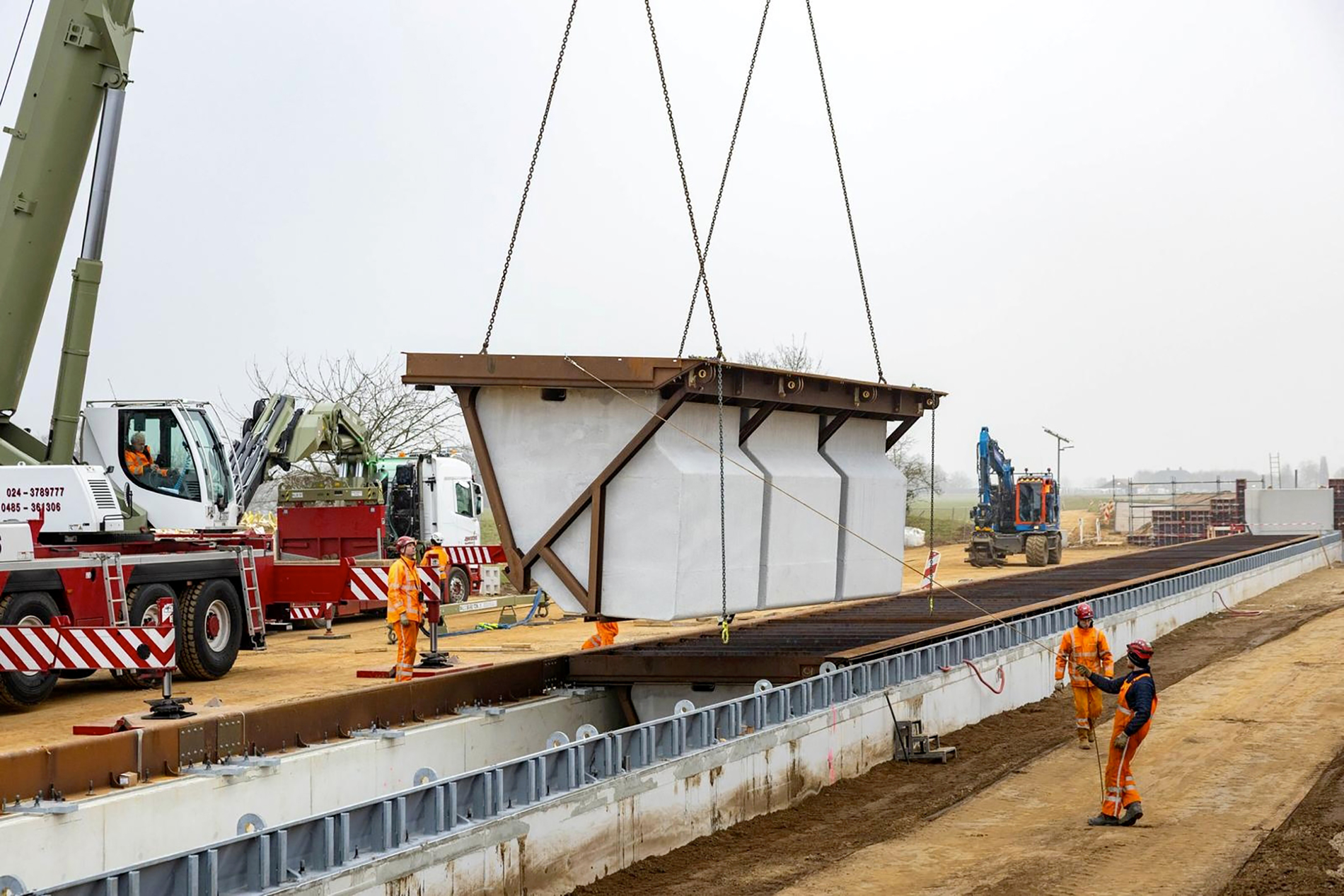
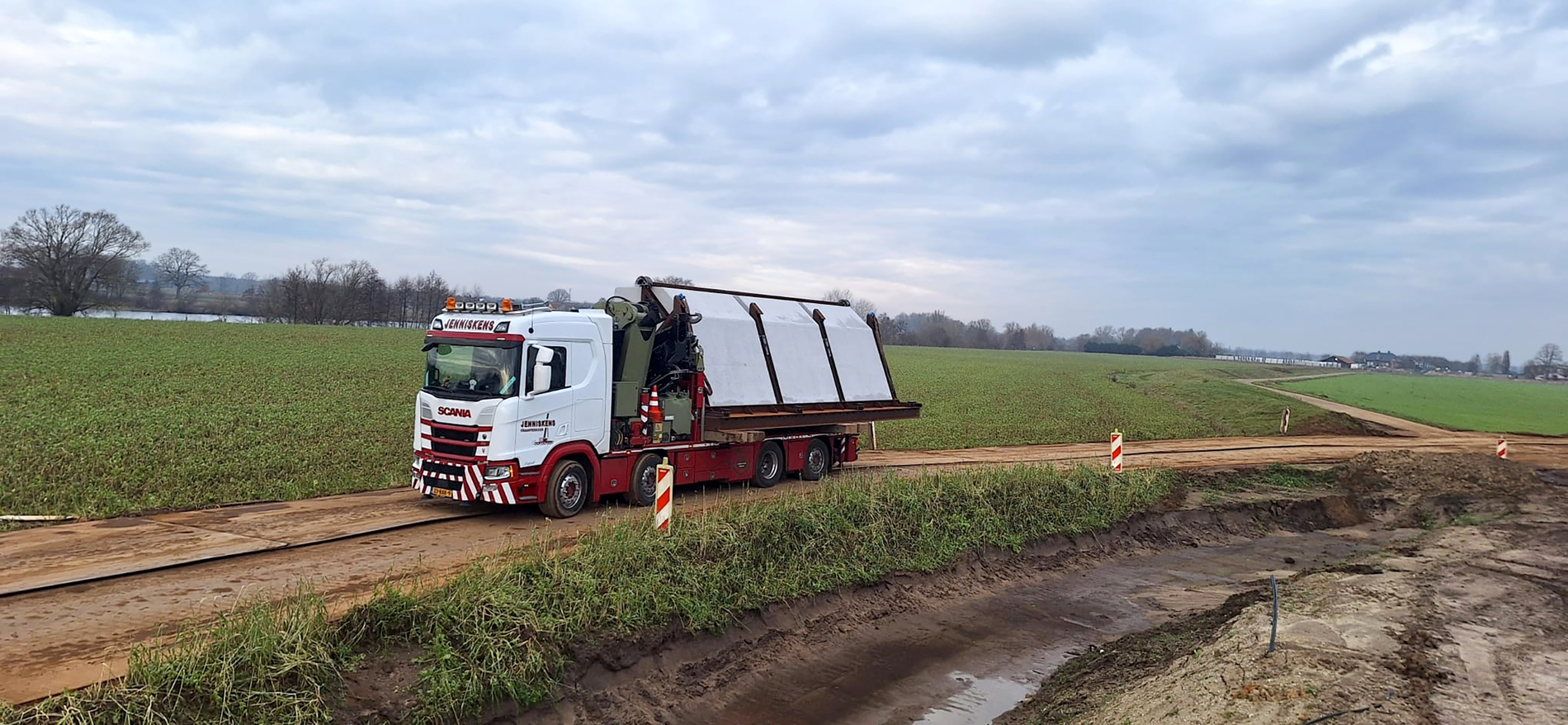
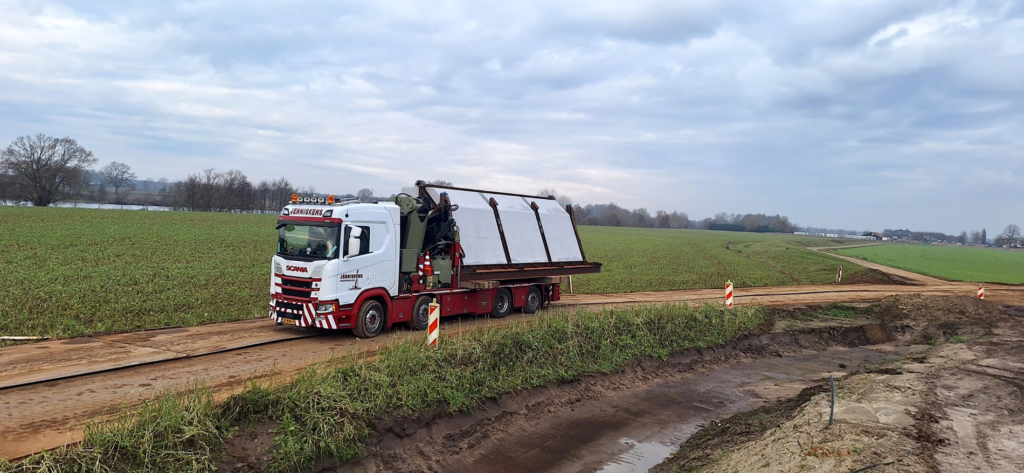
Jenniskens handles both the transportation and the hoisting of the valves. From a temporary construction depot on the outskirts of Arcen, the components are transported to the construction site using a truck-mounted crane. Once on site, a telescopic crane takes over, and the valves are precisely positioned within the concrete structure.
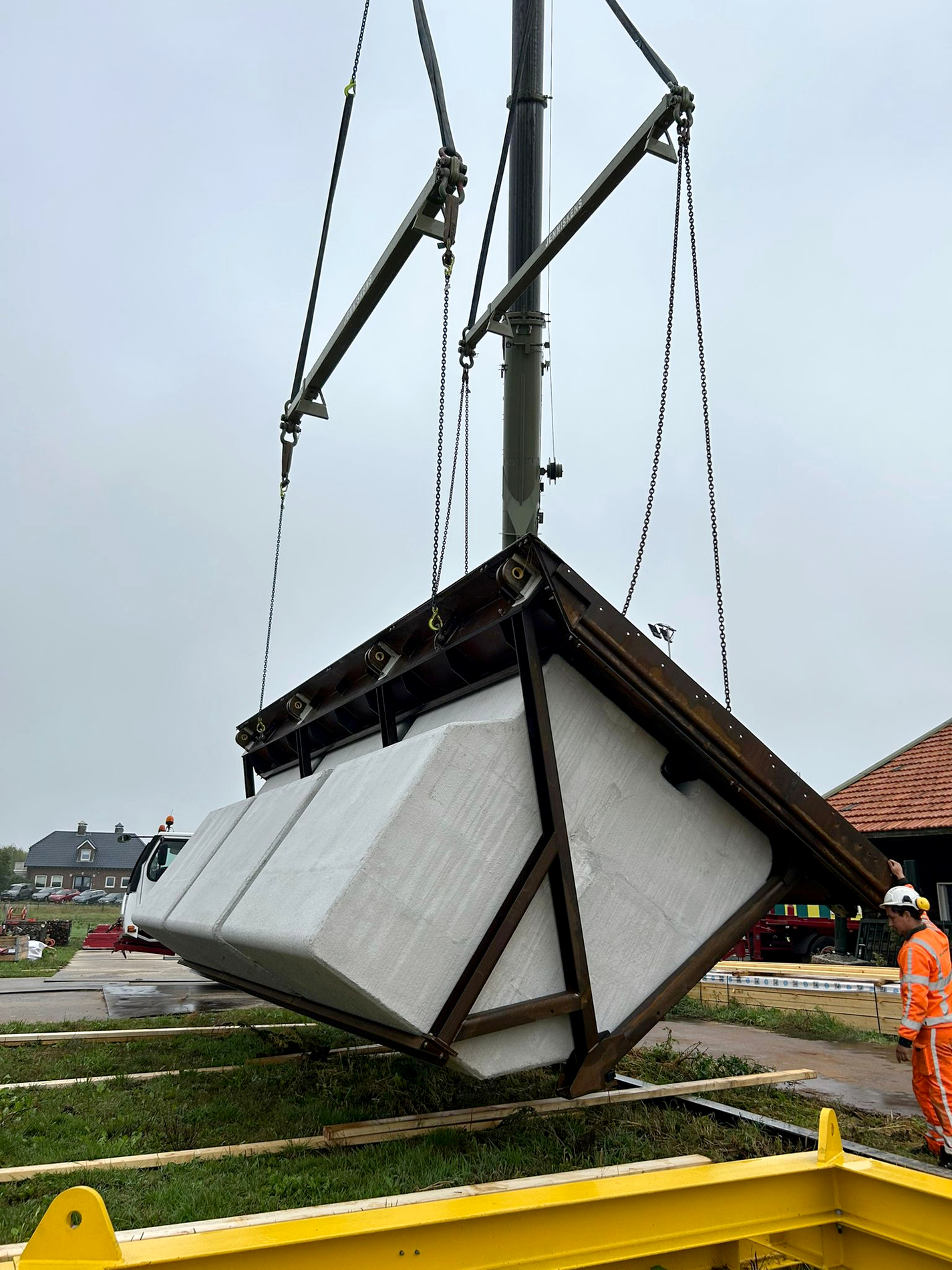
In particular, rotating and hoisting the large steel valves required extensive preparation. Jenniskens therefore worked with the manufacturer, Hollandia Infra, to develop a hoisting plan. “The valves are delivered upside down and must then be turned over before they can be installed in the structure,” said Jaap Wijenberg, work planner at Jenniskens Crane Rental. “That’s when you start thinking: how do you do that safely, what lifting equipment do you need, and where can you safely anchor the loads within the structure?”
The combination of dimensions and weight made the preparation particularly challenging. Ultimately, a method was chosen in which two cranes guide the valve simultaneously as it rotates. One crane holds the bottom, the other the top. This allows the valve to be tilted in the air in a controlled manner before being hoisted into an upright position. Special crossbeams, known as equalizers, are used to distribute the lifting forces evenly. A comprehensive field test was conducted beforehand, during which the lifting points, the rotational movement, and even the optimal length of the lifting chains were checked and adjusted as necessary. This preparation has paid off during the project. Currently, approximately eight valves can be installed per day.
For Jenniskens, this technique isn’t entirely new. The company was previously involved in the installation of the self-closing flood barrier in Steyl and is once again working with largely the same team in Arcen. “That works well,” says Wijenberg. “You know each other, you know what to expect from one another, and that allows you to adapt quickly. With this kind of lifting work, good teamwork is just as important as the equipment.”