Platform on civil engineering, underground infrastructure, energy, construction equipment & construction machinery
With a movable flood barrier, most attention is focused on the steel structure. However, a component that remains virtually invisible is at least as important: the seal. It is precisely this component that determines whether the barrier remains completely watertight even under extreme conditions. That is why sealing specialist Trelleborg was involved in the project as early as the design phase.
A sealing system for a flood barrier must be capable of much more than simply keeping water out. It must accommodate construction tolerances, move in tandem with the steel components of the barrier, withstand high water pressure, and, moreover, continue to function reliably for a hundred years. At the same time, the system must be practical to install. “From the very first design phase, we worked with Hollandia to determine how the seal could be optimally integrated into the steel structure,” says Bob Rijnders, Global Sales Water Infrastructure at Trelleborg. “It is precisely the connection between rubber and steel that ultimately determines whether a flood barrier is completely watertight.”
Because the seal plays such an important role, Trelleborg’s contribution was not limited to supplying products. The company was involved in the entire engineering process: from design and production to testing, validation, and support during implementation. Before the final seals were installed, the project team built a full-scale test setup. Both the watertightness and the installation procedure were thoroughly tested in this mock-up. This allowed any necessary improvements to be made before work began on-site. The team also examined how to organize the installation time on-site as efficiently as possible.
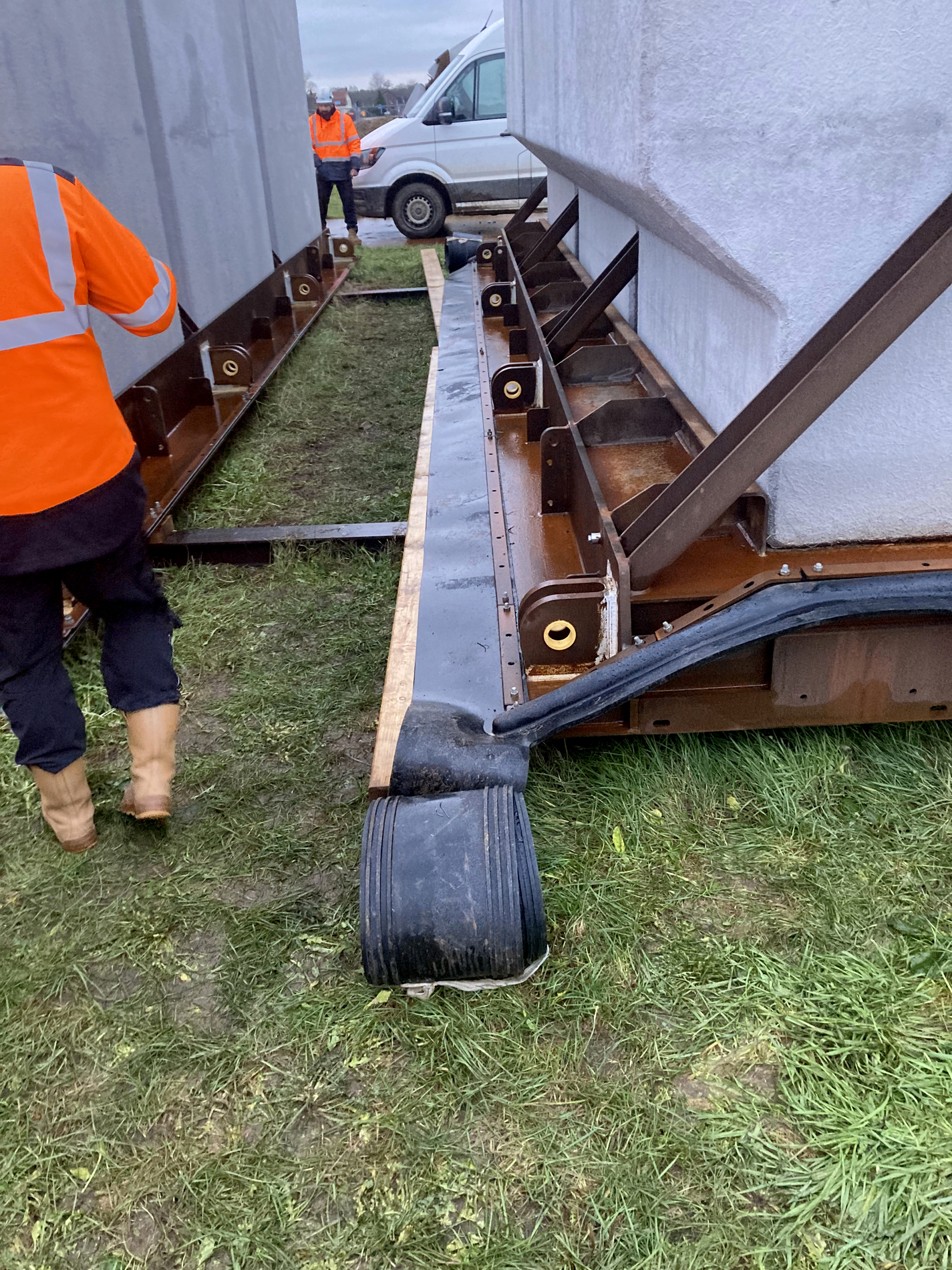
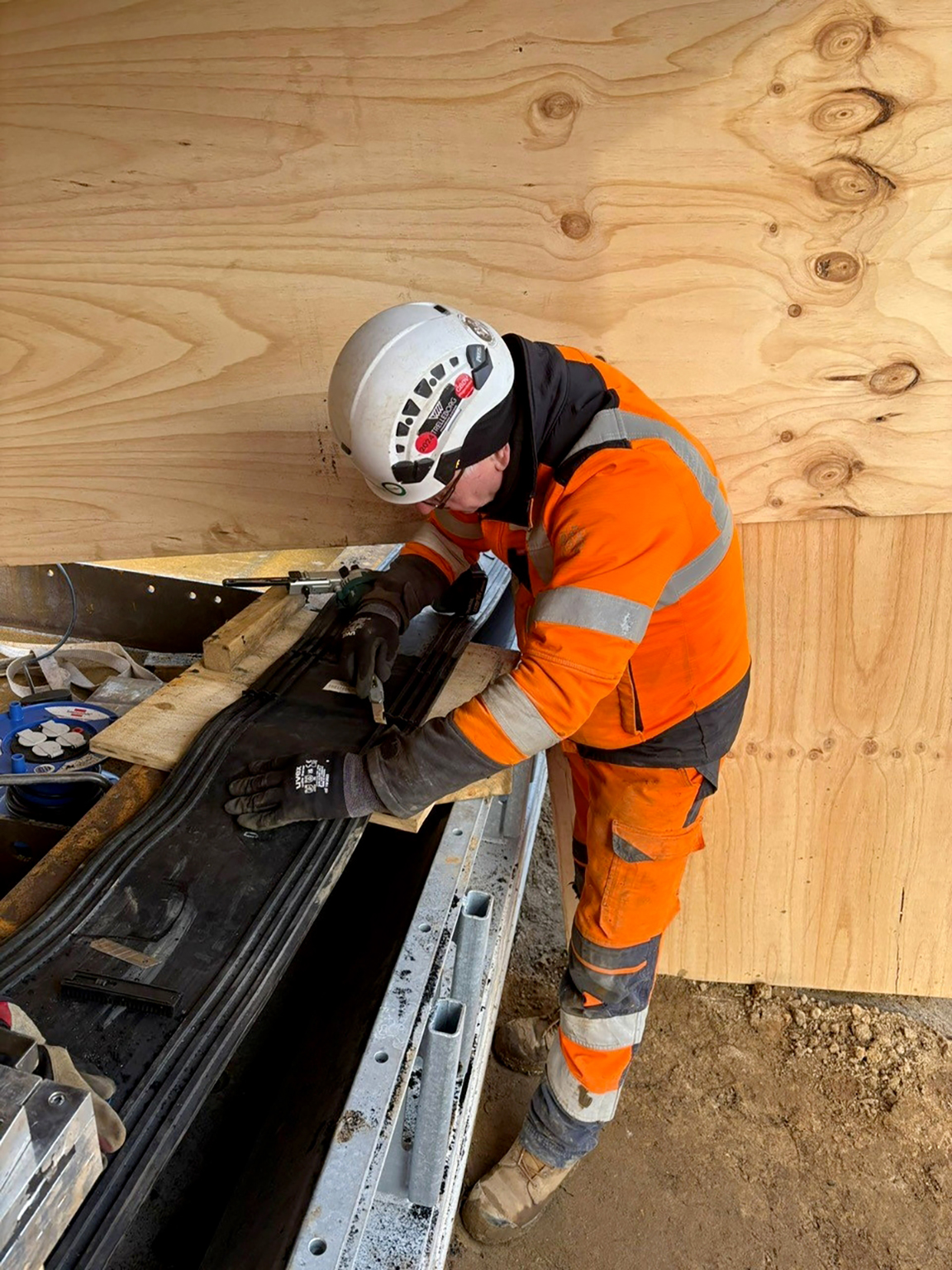
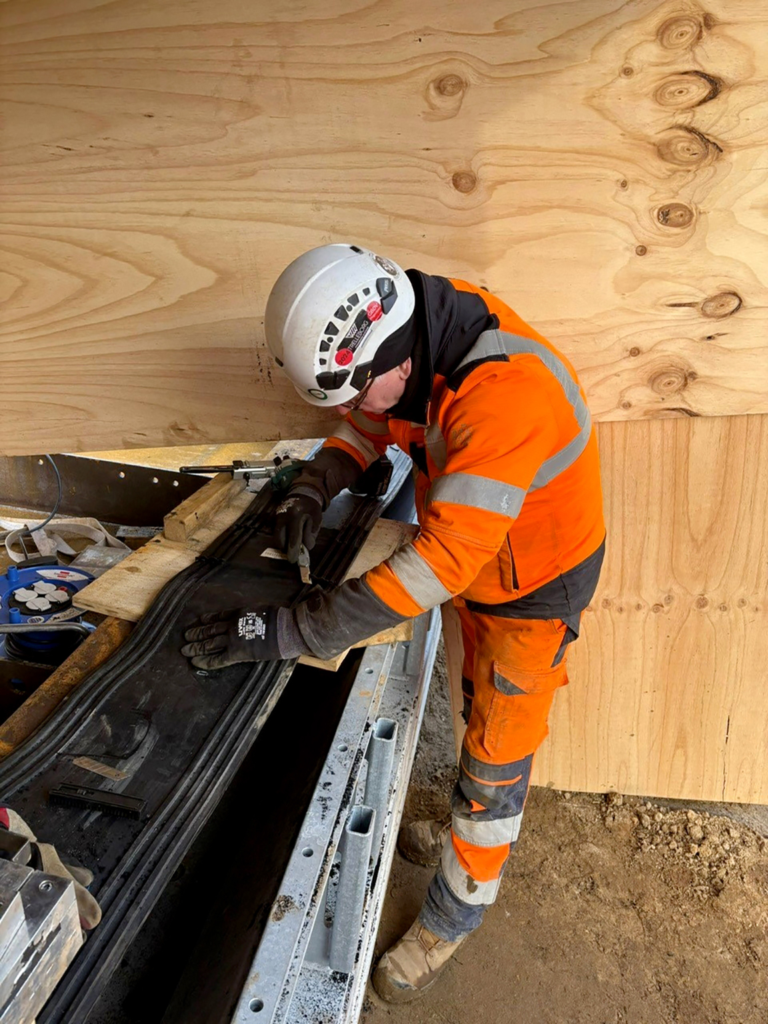
For the flood barrier, a combination of existing sealing techniques—such as Omega and Lip seals—and a custom seal developed specifically for Arcen was used. This allowed the entire system to be precisely tailored to the geometry and performance requirements of the barrier. During development, Trelleborg was able to build on the experience it had previously gained from the flood barrier in Steyl. Nevertheless, Arcen once again requested a project-specific approach. “The methodology was similar, but the design was completely custom,” says Bob. “The flood barrier in Arcen is considerably longer than the one in Steyl. As a result, the seals could not be transported and installed as a single unit. The solution was to manufacture the seals in separate sections and join them together on-site using a vulcanization process. In this process, the rubber is heated under controlled conditions, creating a strong, durable, and completely watertight bond.”
According to Vesco Metikos, project manager at Hollandia, the project’s strength lay primarily in the close collaboration among all parties involved. “Trelleborg not only acted as a supplier but also contributed specialized engineering expertise from the very beginning. This allowed technical challenges to be resolved as early as the design phase, and the sealing system continued to evolve as the project progressed.”
For Trelleborg, the project also provided valuable hands-on experience. Bob: “The engineers and technicians will take those experiences with them to future projects, where we can apply the knowledge gained in Arcen once again and further refine it.”
Neem dan rechtstreeks contact op met Trelleborg Ridderkerk B.V..
 Contact opnemen
Trelleborg Ridderkerk BV specializes in the manufacture of industrial polymer products. These products are used in construction projects such as tunneling, wind energy, water infrastructure, dredging, oil and gas industry and noise, shock and vibration insulation. For over one hundred and forty years, Trelleborg Ridderkerk BV has been a leader in the field of technical rubber products for a wide variety of applications. A specialty, [...]
Bekijk Bedrijfsprofiel