Platform on civil engineering, underground infrastructure, energy, construction equipment & construction machinery
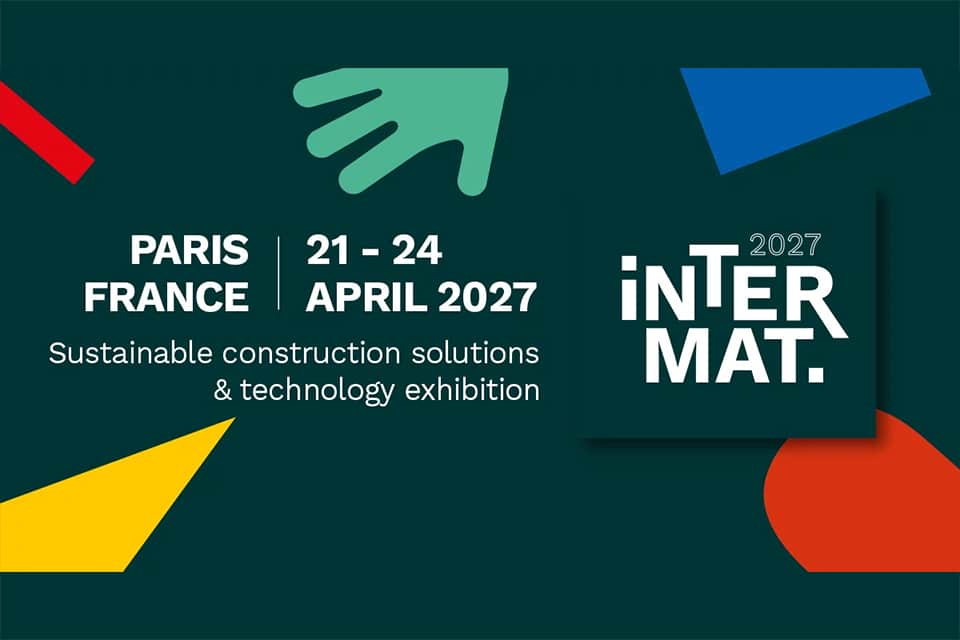
With less than a year to go until the next edition, the international construction equipment trade show INTERMAT is publishing a special edition titled “The Construction Sector and the Challenge of Sustainability.” It provides an overview of the three pillars of sustainability—economic, environmental, and social—that will guide the event in 2027. It reflects the ambition of the five leading professional organizations—C-MAT, EVOLIS, DLR, FFB, and FNTP—to work together toward a sustainable transformation of the sector while maintaining competitiveness. It reflects the spirit of INTERMAT: a space for dialogue and demonstration on a French and international scale. It positions construction companies as THE strategic meeting place for their sector, which aims to leverage sustainability at the intersection of energy, technology, and human issues.
This special edition is based in particular on the discussions that took place during the Sector Day held on January 29, 2026, during which all French and European stakeholders shared their analyses, feedback, and perspectives on the changes in the construction sector.
The sector’s transition to more sustainable models cannot be achieved without economic balance. Amid European climate goals, rising investment costs, and the need to maintain companies’ competitiveness, economic sustainability now appears to be the essential prerequisite for its transformation.
The EU has set an ambitious course with the goal of achieving carbon neutrality by 2050. But for manufacturers, companies, rental firms, and equipment manufacturers, the issue is no longer just a matter of support, but of the resources needed to achieve it. The sector must simultaneously reduce its environmental footprint, comply with increasing regulations, and continue to produce. The European regulatory framework is also shifting the sector’s balance, increasing the burden of administrative obligations, and emphasizing the importance of stability to secure investments.
The issue of cost is another major challenge. Carbon-free equipment remains more expensive than traditional solutions. Public procurement appears to be a lever that can shape the market by focusing tenders on low-carbon solutions.
Finally, the issue of equipment financing remains crucial. After a difficult period, the European market is gradually recovering, but the investments needed for the transition remain substantial. In this context, leasing plays a decisive role in facilitating access to equipment and limiting investment costs. Philippe Cohet, president of DLR, points this out: Approximately 80% of the machines are currently being rented.
INTERMAT makes it possible to compare experiences, highlight existing solutions, and, above all, identify the conditions under which they can be implemented across the industry, with economic models that are sustainable in the long term, says Guillaume Schaeffer, director of INTERMAT
Faced with decarbonization targets and global energy constraints, companies must adapt their equipment, organizational methods, and energy choices. This shift is now moving toward a multi-energy approach, which is considered the most realistic solution for meeting the diverse needs of construction sites.
The electrification of equipment, especially for small machines, is one of the most visible developments. Pilot projects demonstrate that these solutions are technically viable and reduce emissions and noise pollution. Biofuels such as HVO (hydrotreated vegetable oil) also appear to be a credible and immediately applicable solution for reducing emissions from internal combustion engines.
According to Xavier Neuschwander, chair of the FNTP’s Technical and Innovation Committee: Carbon-free energy sources remain scarcer than oil. This means that choices must be made based on usage.
In this context, the (French) sector has organized itself through the CINERGIC Consortium, established at the initiative of C-MAT, EVOLIS, DLR, FFB, and FNTP to coordinate discussions on energy use in the construction sector. It has facilitated a dialogue with government agencies and thereby achieved concrete progress, notably through €20 million in financial support for electric vehicles.
Environmental sustainability is also about changing habits: driver-assistance systems, eco-friendly driving, frequency of use, managing idling, and so on. emphasizes Davy Guillemard, president of C-Mat.
INTERMAT is the place to scale up: a space where solutions and innovations are showcased, compared, and discussed collectively in order to define the conditions for their implementation, according to Guillaume Schaeffer.
The construction industry faces a major challenge: attracting, training, and retaining talent. The sector has significant hiring needs, with more than 210,000 job openings per year in France, nearly three-quarters of which are difficult to fill. This shortage is not due to a lack of opportunities, but rather to a perception that sometimes differs greatly from the current reality of these professions. The underrepresentation of women is also a strategic issue that remains largely unaddressed.
Jean-Claude Fayat, first vice president of EVOLIS and president of the FIM, sums up this challenge: Attracting young people to these professions means painting a clearer picture of how they have evolved. Today, they are more modern, less physically demanding professions that require initiative and offer autonomy.
Their transformation also involves new technologies that are tangibly changing working conditions on construction sites, particularly AI, which is paving the way for predictive maintenance applications.
In this situation, the sector is working on various initiatives: training to support the evolution of the professions, the development of more structured support courses to ensure experience during the first few years, and the diversification of recruitment.
Sébastien Ramé, vice president of the UMGO-FFB, emphasizes: Companies are much more open in their hiring practices. We’re seeing candidates who are changing careers and come from diverse backgrounds, and this is a benefit for the industry.
Sustainability also encompasses the ability to develop careers, attract new talent, and support skills development. INTERMAT brings these transformations to life, particularly through the INTERMAT Academy space and the special open house for the general public on Saturday, April 24. It is this perspective that is essential to supporting the sector in the long term, Guillaume Schaeffer emphasizes.
With 1,200 exhibitors, 150,000 expected visitors, and 130 countries represented, INTERMAT 2027 aims to play a catalytic and central role in supporting the sector’s evolution by bringing all stakeholders together around a shared vision: supporting their activities and innovations through the principles of environmental, social, and economic sustainability.
Whether it involves putting innovations into practice, sharing feedback, or jointly creating the conditions for a sustainable and operational transition, INTERMAT’s ambition is to create a valuable gathering centered on exchange, business, and expertise to address the challenges facing the sector.
The trade show focuses on low-carbon and multi-energy solutions, technological and digital innovations, the challenges of training and the appeal of various professions, live demonstrations of equipment, startups, and emerging innovations, and so on.
In addition, a number of forums and demonstrations—such as the Espace Filière, the INTERMAT Innovation Awards, the Start-up Village, the Espace INTERMAT Academy, the INTERMAT Demo, World of Concrete Europe, and the series of conferences and events—will further enrich the 2027 edition.