Platform on civil engineering, underground infrastructure, energy, construction equipment & construction machinery
Smart maintenance reduces costs, CO2 emissions, and environmental impact
Many road surfaces are only addressed once the damage is visible. But it is precisely what you cannot yet see on the surface that determines how quickly a road deteriorates and what it will ultimately cost. Those who wait until the asphalt is ‘worn out’ before taking action automatically end up with the most expensive and environmentally damaging solution: replacement. The real benefit lies in extending the lifespan by applying the right maintenance at the right time. This way, roads remain in good condition longer, with lower costs, fewer CO₂ emissions, and less impact on the environment.
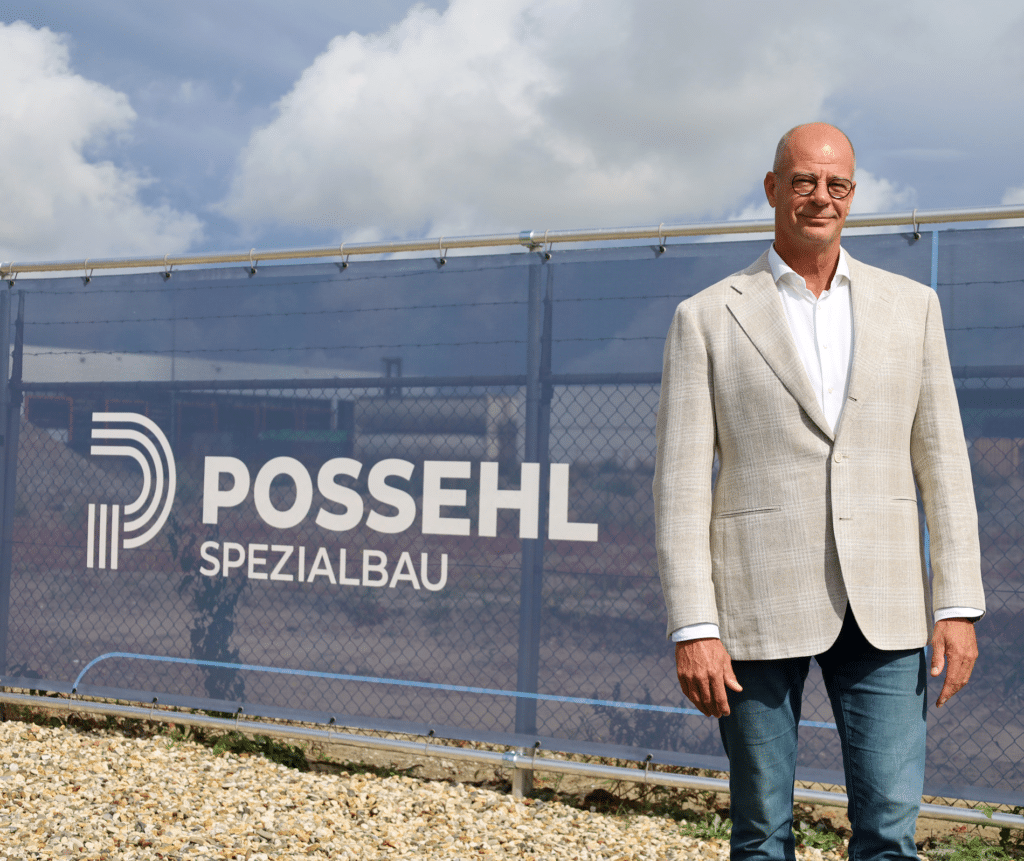
Gemiddeld gaat een asfaltdeklaag zo’n twintig jaar mee. Met een doordachte onderhoudsstrategie kan de levensduur worden verlengd naar dertig tot veertig jaar en soms zelfs langer. Verkeer speelt daarbij een belangrijke rol. “Eén passage van een vrachtwagen staat gelijk aan de belasting van ongeveer 14.000 personenauto’s”, vertelt Erik de Leeuw, directeur bij POSSEHL Spezialbau. “Maar ook olie, brandstof, kadavers, bladluis, vervuiling, regen en zelfs Saharazand tasten het bitumen aan. Daardoor verliest het asfalt geleidelijk zijn flexibiliteit.”
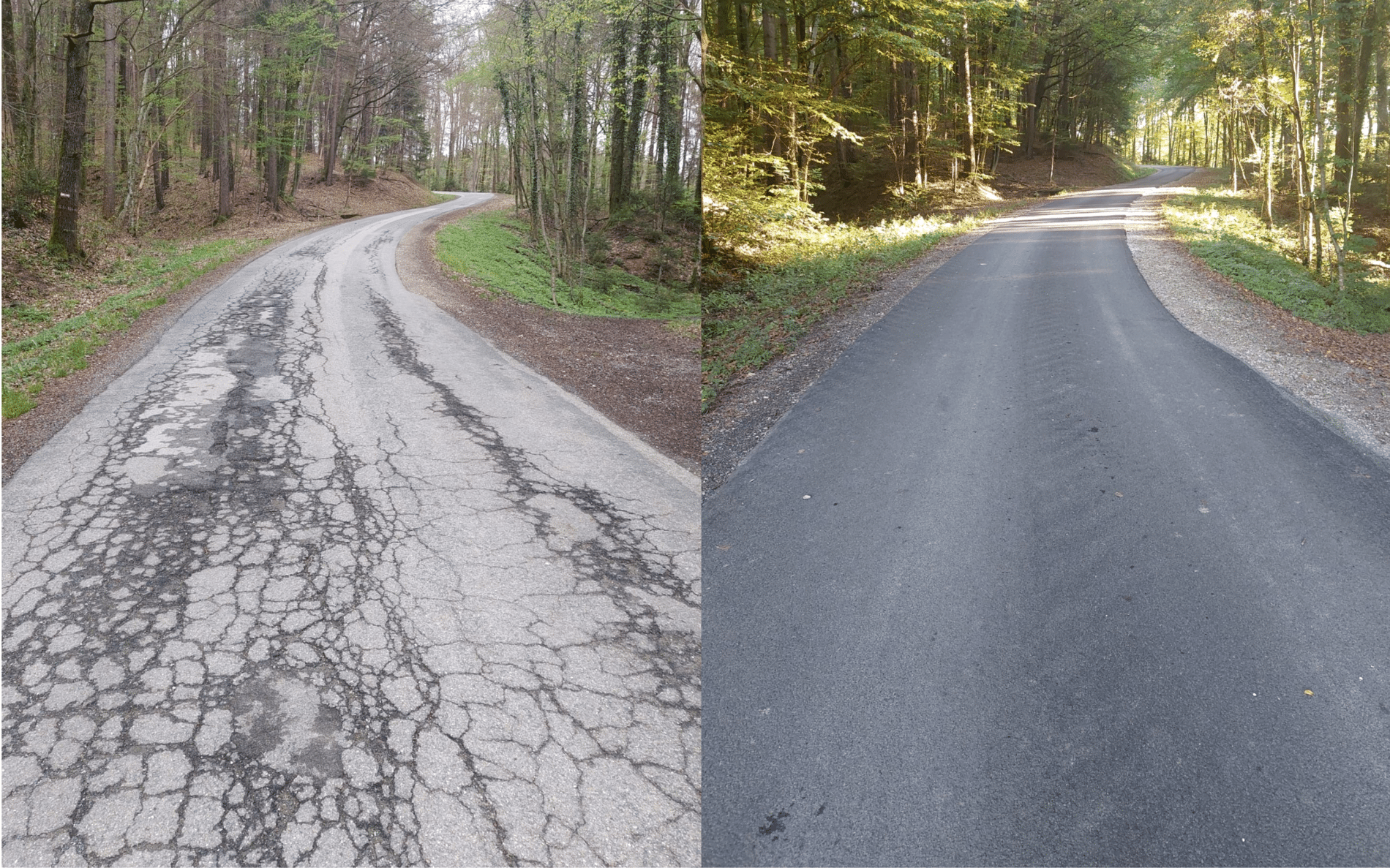
De eerste veroudering speelt zich af in het bitumen, ruim voordat schade zichtbaar wordt. Toch wordt onderhoud vaak uitgesteld omdat het wegdek er nog goed uitziet. Verjongingsmiddelen kunnen dit proces vertragen door het bitumen zijn flexibiliteit terug te geven. “Idealiter gebeurt dit drie tot vier jaar na aanleg”, aldus Erik. “Met een product zoals AsKo (LVOv) kan de levensduur met zeven tot acht jaar worden verlengd, en die behandeling kan later worden herhaald.” Zo blijft het asfalt langer in goede staat.
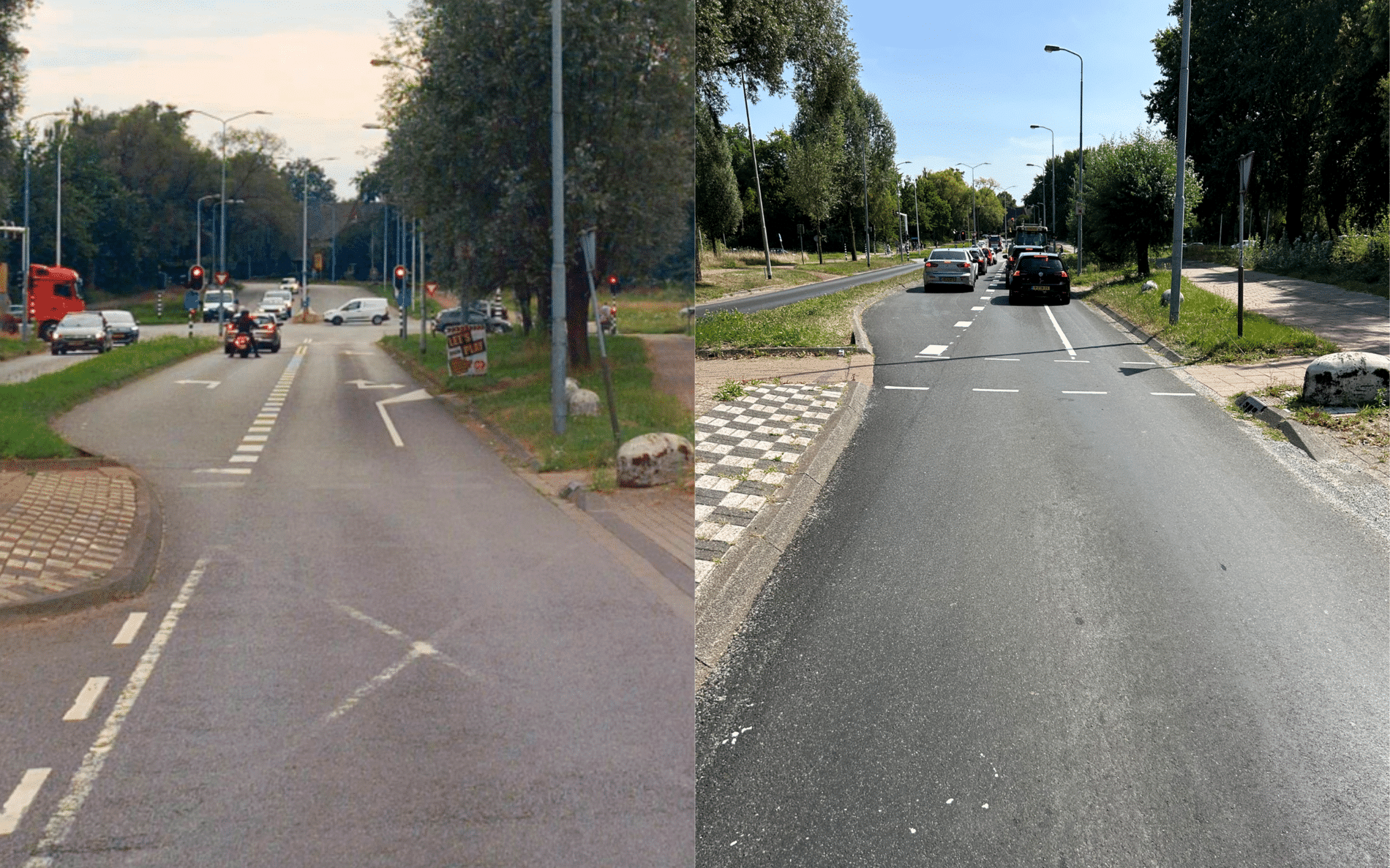
When cracks form, water and road salt penetrate deeper into the asphalt. Freeze-thaw cycles cause the damage to worsen and lead to rutting. At this stage, resurfacing alone is often no longer sufficient. Traditionally, this is followed by milling and the application of new hot asphalt: effective, but costly, energy-intensive, and disruptive to the surrounding area.
A good alternative at this stage is MicroAsphalt, which involves applying two thin layers of emulsified asphalt concrete. The first layer levels out unevenness and cracks, while the second protects the asphalt and seals the surface. Moreover, because of the cold application and quick execution, the impact on the environment and traffic is significantly less than with traditional replacement.
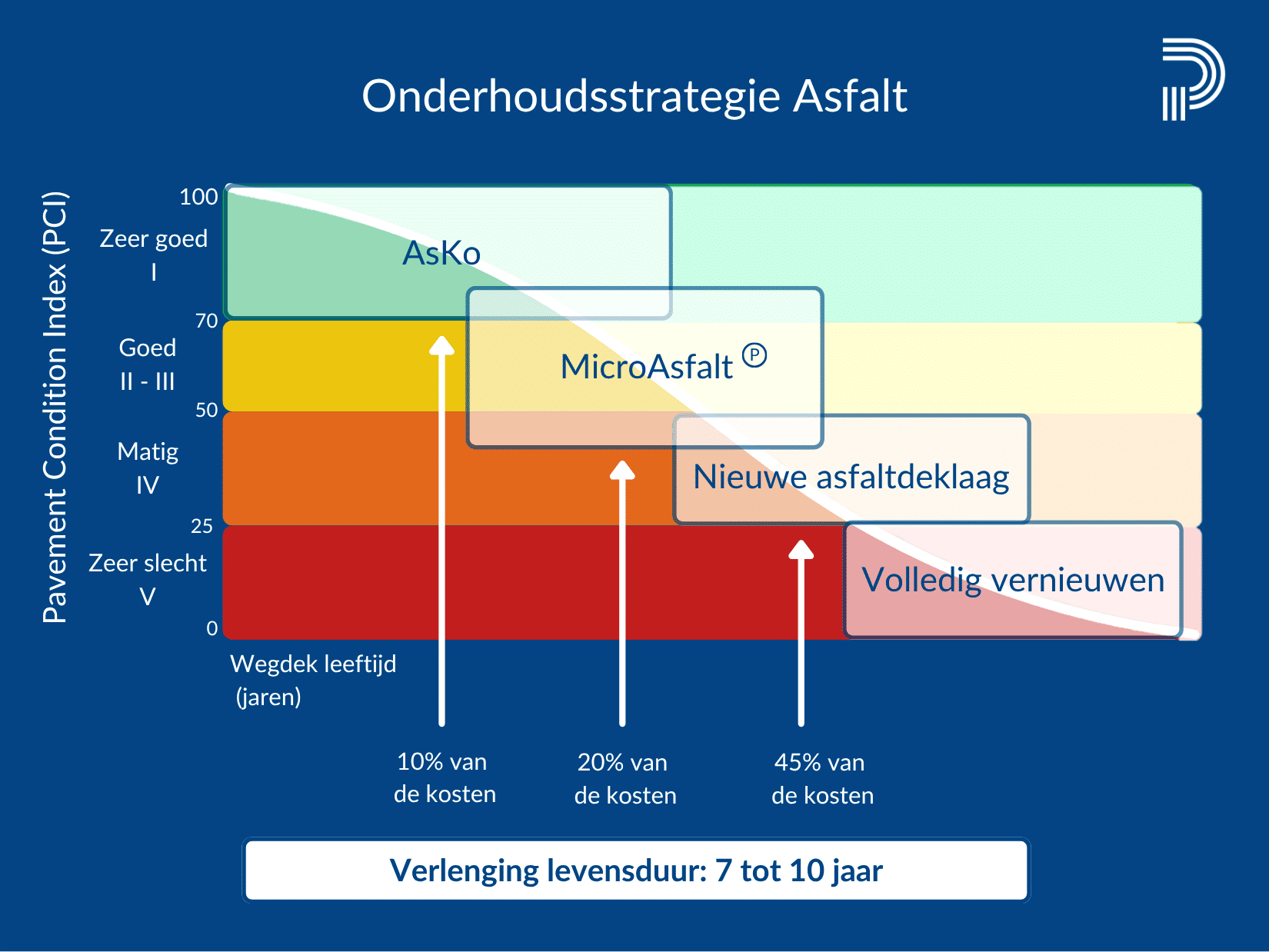
The key lies not in a single measure, but in the right combination and timing. As the illustration shows, phased maintenance can lead to a completely different lifecycle strategy:
Hierdoor blijft het wegdek langer in goede conditie en wordt vervanging uitgesteld.
This offers immediate benefits:
The greatest environmental benefit comes from preventing replacement. By extending the life of asphalt, the most energy-intensive stages of its life cycle are avoided.
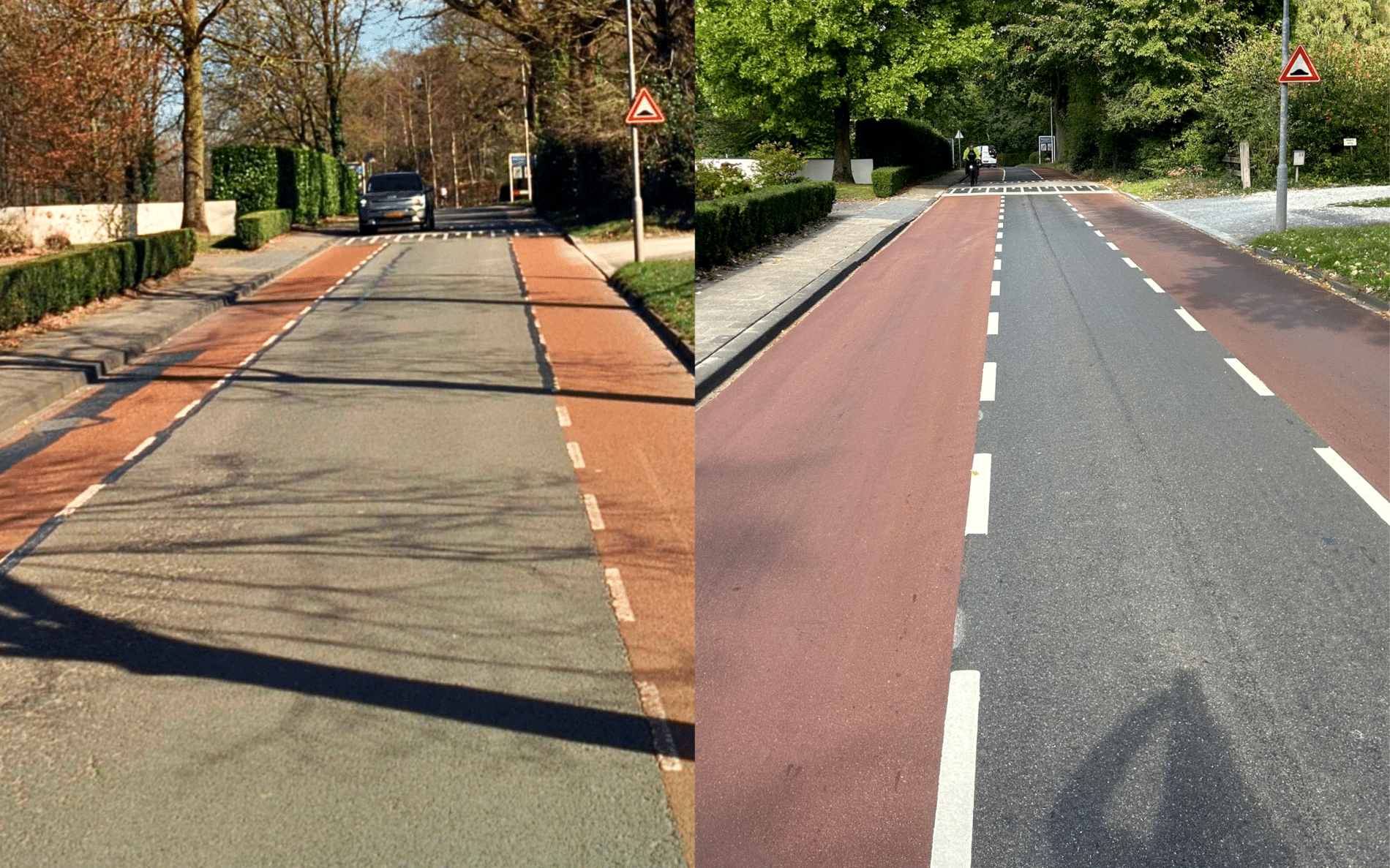
De combinatie van lagere kosten en minder impact maakt deze aanpak interessant voor veel gemeenten. Een groot deel van het wegennet dateert uit de jaren zestig en zeventig, terwijl de verkeersbelasting sindsdien sterk is toegenomen. Tegelijkertijd staan onderhoudsbudgetten onder druk. Door te sturen op levensduurverlengend onderhoud in plaats van reactief vervangen, ontstaat meer grip op kosten, planning en kwaliteit. Wegen blijven langer veilig en betrouwbaar, zonder dat grootschalige reconstructies nodig zijn.
“De grootste winst zit niet in vervangen, maar in het zo lang mogelijk behouden van wat er al ligt”, zegt Erik tot besluit. “Door op het juiste moment in te grijpen, voorkom je zwaardere en duurdere ingrepen. Wie op het juiste moment onderhoud toepast, komt verder met minder kosten, minder CO2 en minder impact.”
Neem dan rechtstreeks contact op met Possehl Contracting Company B.V..
 Contact opnemen
POSSEHL Spezialbau is an international expert in top layers for traffic, recreation, industry and airports, among others. Whether for bicycle paths, the most creative squares or asphalt maintenance, we will be happy to discuss what we can do for you. Thermoflex® - Colorfast durable top layer In the 1980s, we developed our own coating: Thermoflex. We have already [...]
Bekijk Bedrijfsprofiel