[00:01] Introduction
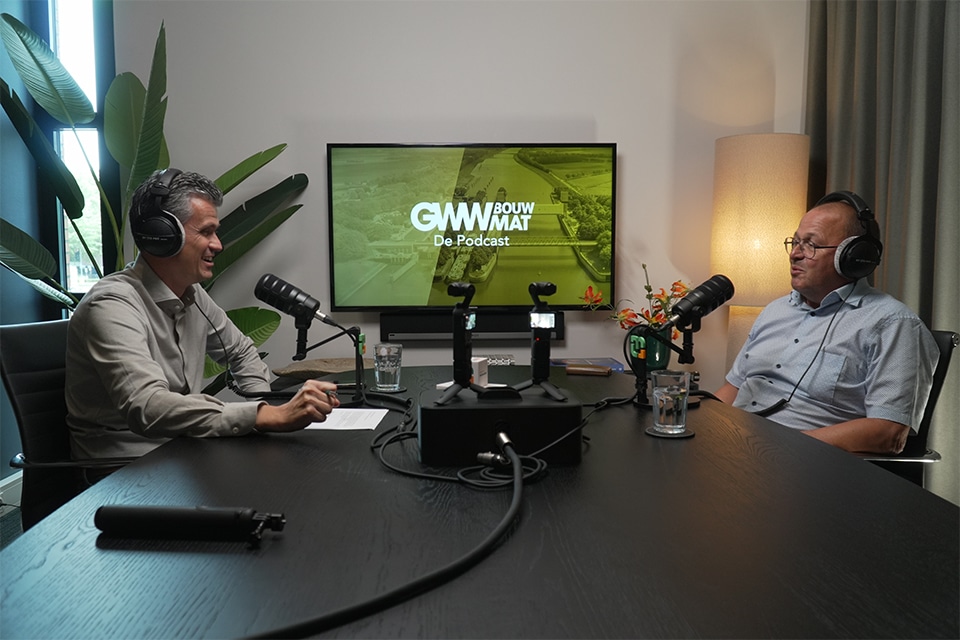
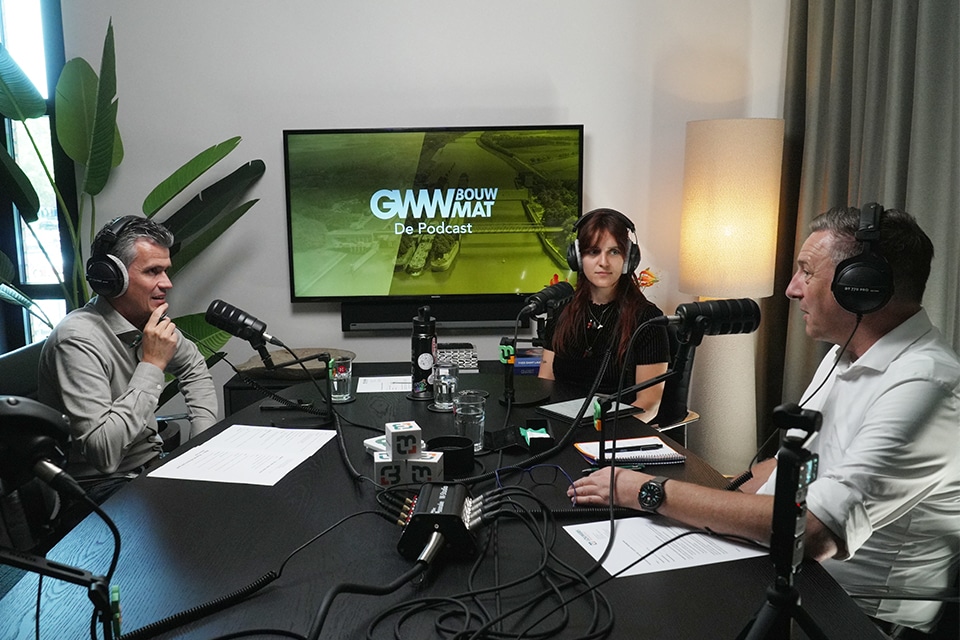
Roel van Gils: Welcome to GWW Bouwmat, the podcast. Do you work on concrete structures, high-rise buildings, or infrastructure projects? Then you know that efficiency, safety, and planning make all the difference. In this episode, we’ll be talking with Doka Nederland, the specialist in formwork, scaffolding, and smart construction solutions.
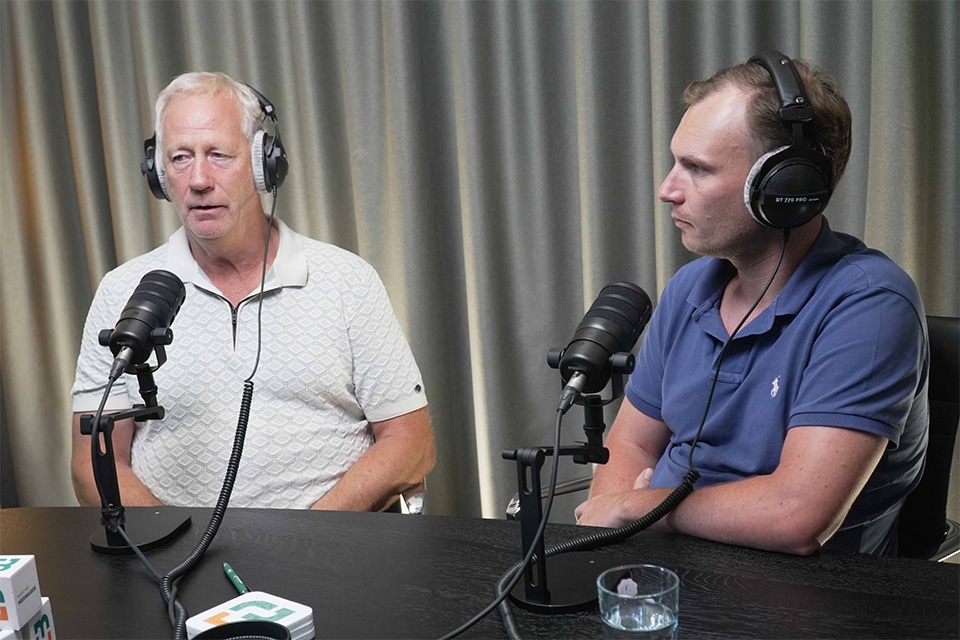
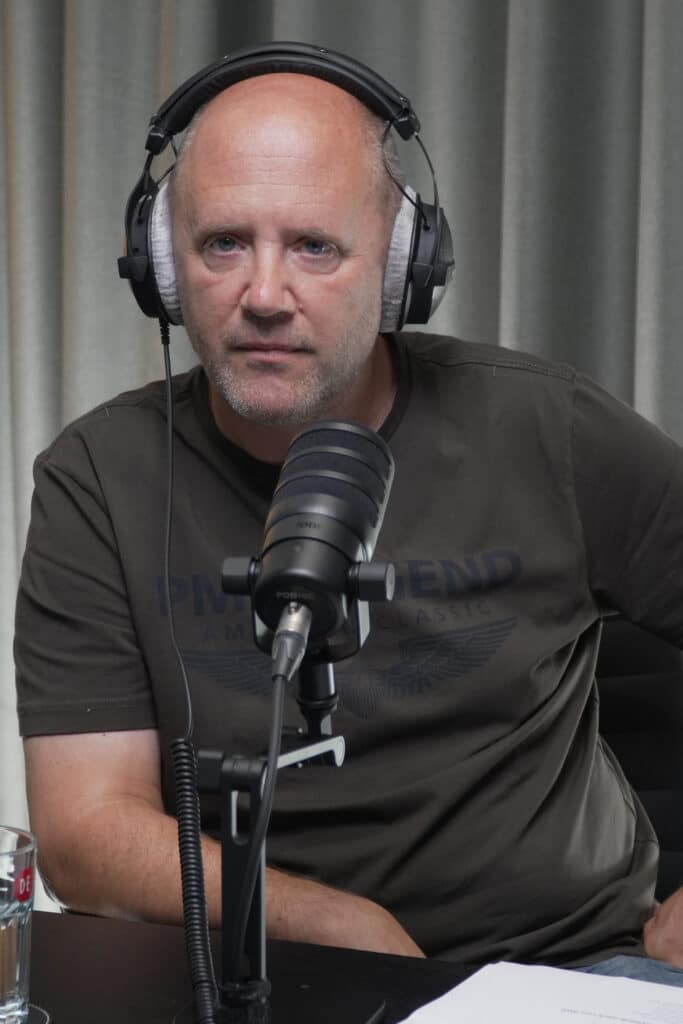
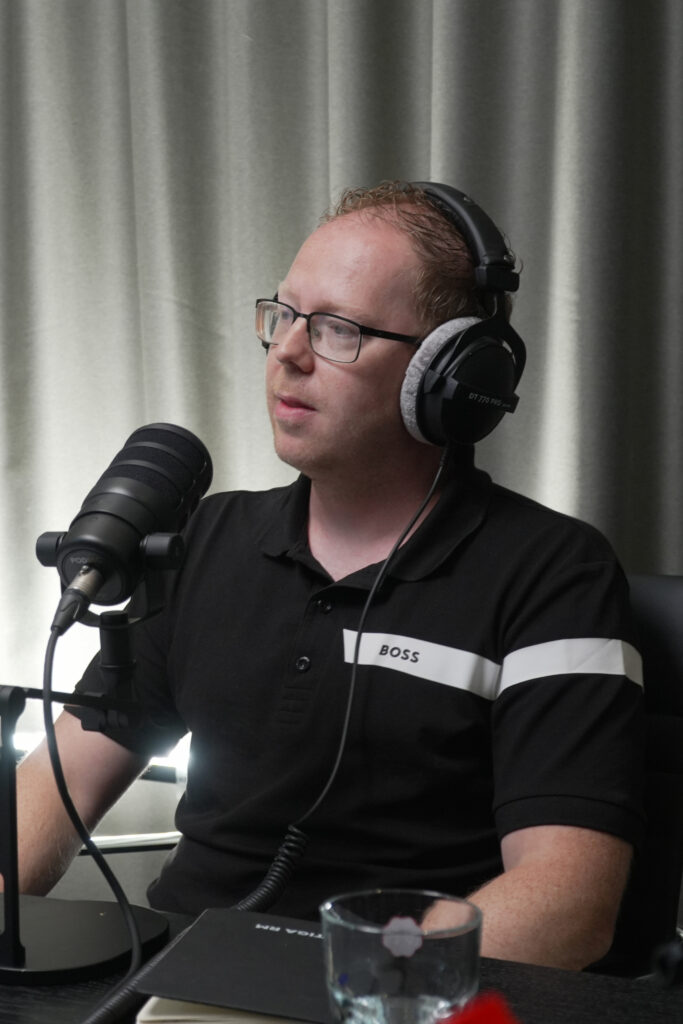
Roel van Gils: What makes Doka a strong partner on the construction site? And how does their expertise help projects run more smoothly, safely, and predictably? Joining me at the table are Erik Caris and Denick van Gemert from Doka Netherlands. Gentlemen, welcome.
Erik Caris: Thank you.
[00:32] Performance
Erik Caris: My name is Erik Caris. I’ve been working at Doka for 18 years, the last two of which as sales manager.
Roel van Gils: Thank you.
Denick van Gemert: My name is Denick van Gemert, and I’ve been a formwork and scaffolding consultant at Doka Netherlands for about six years now.
Roel van Gils: Okay, great. Welcome again. Let’s start at the beginning. Could you briefly explain exactly what Doka Nederland does?
[00:54] Doka Netherlands
Erik Caris: Doka Netherlands is part of the Umdasch Group. Doka itself is a very large international company that operates worldwide. In the Netherlands, we have one branch, located in Oss. We help the Dutch construction industry—especially contractors—to carry out large-scale projects.
Roel van Gils: Yes, and then there are formwork systems, support structures—you even call it digital engineering?
Erik Caris: Yes, engineering, 3D, 2D, and the various products we carry.
Roel van Gils: Engineering and everything else you can think of.
Denick van Gemert: Yes, working out all the details for the client so that everything is complete.
[01:40] Developments in Housing Construction
Roel van Gils: Okay. The construction industry is changing rapidly, of course. That goes for residential construction as well. What do you see as the most important developments?
Denick van Gemert: In the housing construction sector, we have developed a new formwork system. It is specifically designed for the taller walls found in the Netherlands.
Roel van Gils: Because the Netherlands—what makes it unique?
Denick van Gemert: Homes are getting taller and taller.
Roel van Gils: The homes themselves or the floor slabs?
Denick van Gemert: The floor slabs.
Roel van Gils: Oh, I see. And is that really specific to the Netherlands?
Erik Caris: The height itself isn't particularly remarkable, but it's really about the construction method. It just has to be done very quickly, with minimal on-site work. We're currently working on bringing a new product to market for that purpose.
Roel van Gils: And what's that product called?
Erik Caris: The Housing Construction Kit. It’s actually very simple. We haven’t come up with a catchy name for it yet.
Roel van Gils: Of course, that's not necessary.
Erik Caris: We still need to figure that out, but the first pilot projects will get underway after the construction industry’s summer break. The box itself is 2.90 meters tall. That’s not particularly spectacular. The appeal lies mainly in the product’s simplicity. It takes very few steps to set it up. Furthermore, in the construction industry, it’s becoming increasingly important to take the hassle completely off the customer’s hands. I think we’re responding well to that need.
[02:58] Taking the hassle off the customer's hands
Roel van Gils: Can you give an example of that?
Erik Caris: Doka has approximately 100,000 products worldwide.
Roel van Gils: 100,000?
Erik Caris: Yes. Of course, we don’t carry every product in the Netherlands. We have our own selection from which we choose, and we use those products in our projects. The most important thing is providing advice. A customer can come to us for the entire process, from the foundation to the roof deck.
[03:39] Sectors and Projects
Roel van Gils: In which sectors do you operate in the Netherlands?
Erik Caris: Traditionally, we’ve been very strong in high-rise construction. Especially towers in the Netherlands, particularly in the Randstad—Rotterdam, Amsterdam, and Utrecht. That’s going very well.
Roel van Gils: Is it all residential construction, or will there be offices as well?
Erik Caris: It doesn’t really matter that much what the building is ultimately intended for. It’s mainly about the concrete shell. We supply systems for that. We also do a lot of infrastructure projects, such as bridges and tunnels. We’re primarily involved in the more complex structures and larger buildings. We aren’t typically asked to work on single-family homes. An apartment complex, however, is a possibility. We weren’t particularly strong in that area, but a few years ago we decided we wanted to change that.
Roel van Gils: And that's the housing fund?
Erik Caris: Yes.
[04:39] Complex projects and international expertise
Roel van Gils: When it comes to the increasing complexity of projects and the intense pressure on schedules and costs, how do you handle that?
Erik Caris: Doka is, of course, a relatively large company. We have a great many colleagues in various countries. This allows us to adapt to varying workloads and fluctuations in the number of projects. In addition, we have the GECs—the Global Expertise Centers. These centers are staffed by specialists who focus entirely on a single discipline. One group handles high-rise construction, one group handles infrastructure, and one group handles finishing work. This allows us to call on specialists and collaborate with all countries to carry out a project.
Roel van Gils: So if specialized knowledge is needed, you can always rely on that?
Erik Caris: Yes. Take, for example, a bridge built using a free cantilever system. That’s a specialized system. A bridge like that might be built once every ten years in the Netherlands. We’re not going to train people for that here in the Netherlands. Instead, we bring specialists to the Netherlands or collaborate digitally. That’s how we tackle a project like that.
Roel van Gils: What makes a bridge like that special?
Erik Caris: It’s built using a free cantilever system. It’s hard to explain without drawings. The formwork pushes itself forward a little at a time, after which another section of the bridge is poured. Then the system slides forward again and the next section is poured, until both sections of the bridge meet in the middle.
Roel van Gils: So they're building toward each other from two abutments?
Erik Caris: That’s exactly how you should look at it. Eventually, the two sections will meet, and you’ll have a new bridge.
Roel van Gils: And what are the advantages of that system?
Erik Caris: Mainly that the passageway under the bridge can simply remain open. For example, when the bridge is being built over a river.
Roel van Gils: Is that allowed on a road, too?
Erik Caris: Yes, that's also an option. For some projects, they opt for prefabricated beams instead.
[06:41] Doka's Added Value
Roel van Gils: What exactly is your added value?
Erik Caris: Especially in the overall concept and engineering. I think we have a very strong engineering department, combined with high-quality products from our own manufacturing facilities.
Roel van Gils: In the Netherlands, too?
Erik Caris: No, our headquarters are in Austria.
Roel van Gils: Is everything produced there?
Erik Caris: Quite a lot.
Denick van Gemert: Yes.
[07:10] What makes a good formwork system?
Roel van Gils: What makes a good formwork system? How do you set yourselves apart?
Erik Caris: The main difference lies in reliability. Various companies can manufacture formwork, but the biggest difference lies in quality and service life. Throughout Europe—and, in fact, all over the world—we have locations where formwork is stored. We do this through distribution centers. This allows us to deploy materials virtually anywhere they’re needed.
Roel van Gils: So that’s also a matter of logistics. You already mentioned quality. Quick assembly and disassembly are also important.
Denick van Gemert: Yes, making sure the products are easy to handle on the construction site. Most of them can be installed with a hammer.
Roel van Gils: So they're easy to assemble and can often be reused.
Erik Caris: That’s right. When a contractor returns the material, we clean it and inspect it. Then we check to see if we need it ourselves. If not, it might be sent to another country. That way, all Doka countries help each other, and we can serve as many projects as possible with as little material as possible.
[08:28] Safety as a guiding principle
Roel van Gils: Safety, of course, also plays an important role.
Denick van Gemert: We supply safe products. As an organization, we are also currently working on the Safety Culture Ladder.
Roel van Gils: To get certified for that?
Denick van Gemert: Yes. If all goes well, we'll be audited for Level 3 within a few weeks.
Roel van Gils: So by the time this podcast goes live, you’ll be certified. Congratulations in advance.
Erik Caris: Thank you.
Denick van Gemert: Thank you.
Roel van Gils: Safety, of course, involves more than just certification.
Denick van Gemert: We have great systems. You assemble the pour consoles while they’re lying on the floor. They come with a ladder so you can climb up safely and stand securely on top of the formwork. These are great products.
Erik Caris: In high-rise buildings, you’re also seeing safety screens more and more often to limit fall distances.
Roel van Gils: Wasn't that integrated back then?
Erik Caris: In the past, different choices were made. These days, you see that municipalities place a lot of emphasis on safety. Contractors do too, and fortunately, so do we.
Roel van Gils: So the requirements are getting stricter and stricter.
Erik Caris: Yes.
Denick van Gemert: When you're working at a height and you drop something, the fall distance keeps getting longer. So it's not just meant to protect people on the construction site.
Roel van Gils: But also the surroundings.
Denick van Gemert: Yes. When you build high-rise buildings right in the middle of a city center, people walk around them.
Erik Caris: If you drop something, it can end up quite a distance away.
[10:14] Xsafe 60 System
Roel van Gils: Is that part of your Xsafe system, or is it something else?
Erik Caris: We call it a safety screen or windshield, depending on who you're talking to. It's part of the Xsafe 60 system.
Roel van Gils: What else does that system include?
Erik Caris: It’s a comprehensive system. You can use it to build standard climbing formwork. The system can be raised hydraulically or with a crane. You can also use it to set up the safety system. All three applications can be carried out using a single system.
[10:47] Safe Design and Supervision
Roel van Gils: Safety isn't just about the product itself, but also about the design and the way it's assembled. So you factor that into the engineering as well.
Denick van Gemert: Yes. Safety starts right from the design phase, so that the system can be used safely on the construction site.
Roel van Gils: So that also means contributing ideas to the design and implementation.
Denick van Gemert: We also help come up with solutions. If you encounter certain concrete structures, we’ll make sure everything can be carried out safely.
Roel van Gils: And do you also provide support during the performance?
Erik Caris: Yes. We have an instructor who, especially at the start of a project, visits the construction site to explain the products and how to work with them safely and properly.
Roel van Gils: So you don't do the installation yourselves, but you do supervise the setup. And what about disassembly?
Erik Caris: Often, disassembly is even more difficult than assembly. Even then, we explain how to do it properly. I think most accidents actually happen during disassembly.
Roel van Gils: Really?
Erik Caris: Yes. People often think, “We’ll just take it apart.” But that’s exactly when things go wrong.
Roel van Gils: So the instructor will be coming by again, then?
Erik Caris: Sometimes, yes, especially with larger projects. What’s more, our products are designed in such a way that it’s actually hard to assemble them incorrectly. They can only be put together one way. That might be an indirect form of safety, but it’s a very important aspect.
[12:24] Top-selling items in the product line
Roel van Gils: What are the top sellers in your product line right now?
Erik Caris: Traditionally, those are the wall systems. The Framax formwork system is very popular. For foundations, it’s mainly the Framie system. Those are smaller panels used to build walls.
Roel van Gils: So you mean mainly for residential construction?
Erik Caris: Actually, for all walls. Framie and Framax are used across the entire construction industry. Right now, we’re seeing Xdek grow particularly fast. It’s a new system for building floors. Everything can be safely assembled from the ground up.
Roel van Gils: Can you explain how that works?
Denick van Gemert: When you’re installing a wet floor and the walls have been poured, you start laying the panels from a corner. Everything is pressed into place from the bottom up. Once the entire floor area is covered, everything is secure, and you can continue working on top of the floor.
Roel van Gils: Then you continue working your way up, floor by floor.
Denick van Gemert: Yes, that's the entire process.
Erik Caris: We're getting very positive feedback on it. The system has been available in the Netherlands for about a year and a half now, and so far, everyone has been enthusiastic.
Denick van Gemert: It's a very simple system with few parts.
[13:49] Infrastructure and Scaffolding
Roel van Gils: Are there any other products that are in high demand, for example in the infrastructure sector?
Erik Caris: Traditionally, we’ve mainly focused on high-rise construction in the Netherlands. In recent years, we’ve seen new products emerge in the infrastructure sector—much heavier systems and larger beams to span greater distances. That’s been very well received. We weren’t a major player in infrastructure before, but over the past five years, we’ve really been making our mark on major infrastructure projects. We’ve also introduced a new scaffolding system. We didn’t have any scaffolding in the past, but we’ve since acquired a scaffolding company: AT-PAC. That’s also proving to be a big hit.
Roel van Gils: Are those scaffolding structures primarily intended for residential construction?
Denick van Gemert: No, that doesn't matter. For offices, floor supports, scaffolding—basically anything.
Roel van Gils: Are your solutions always custom-made?
Erik Caris: It isn't necessary, but it is possible. Sometimes formwork is designed and assembled specifically for a single project. In other cases, we use modular systems instead.
[15:05] Digitization and AI
Roel van Gils: When you look to the future, what other developments do you foresee? Do you perhaps have any exclusive news?
Erik Caris: You see a lot of developments, especially in the area of digitization. AI is, of course, everywhere. That sounds really exciting, but construction is still a fairly traditional industry. Still, a large company like Doka is definitely responding to these trends.
Roel van Gils: Can you give an example of that?
Erik Caris: You see this especially in engineering. A large portion of the drafting work is now done automatically. Whereas that hardly ever happened in the past, you now see that the software is even training itself. Doka employs about 8,000 people, including some 2,000 engineers. When all those engineers use and train such a program, development happens very quickly.
Roel van Gils: Do you develop that software yourselves?
Erik Caris: Yes, that happens at headquarters. I can't say for sure who's responsible for it there.
Roel van Gils: And that software is based entirely on your own products?
Erik Caris: Yes. It's still in its infancy, but I think this is the direction it will continue to develop in.
[16:30] Doka as an organization
Roel van Gils: We’ve talked about AI, software, and digitization, but ultimately, it’s also about the people. What characterizes Doka as an organization?
Erik Caris: Doka is a very large international company. At the same time, Doka Netherlands is a relatively small organization with about 35 to 40 employees. That makes for a very friendly atmosphere.
Roel van Gils: A family business?
Erik Caris: Yes. The Doka Group is a family business, after all. Doka Netherlands really feels like a family of its own. Personally, I find that very pleasant. You have the advantages of a small organization where everyone knows each other and where you can drop in on anyone. At the same time, you have the expertise of a large international company. If you have a complicated question or a special project, there’s always someone somewhere who has experience with it. We take full advantage of that.
Roel van Gils: What kind of feedback are you getting from customers?
Denick van Gemert: It's basically the same. They appreciate the personal attention. Often, the engineer is also in direct contact with the customer.
Roel van Gils: So, short lines of communication, proactive thinking, and the ability to adapt quickly.
Denick van Gemert: Yes.
[17:45] Careers at Doka
Roel van Gils: What makes working at Doka personally interesting for you?
Denick van Gemert: I’ve known Doka for as long as I’ve been working at other companies. For me, joining Doka was a very logical step. It’s a great company, with great products and a pleasant work environment.
Roel van Gils: And what about you, Erik?
Erik Caris: You’re kind of cutting the ground from under my feet. What I especially like is the variety. One morning you might be working on a small basement under a single-family home, and later that day you could be involved in a huge project. Doka is involved in major projects, and it’s great to be part of the team as a specialist.
Roel van Gils: Soon you'll be driving through the Netherlands and seeing buildings everywhere that you helped build.
Denick van Gemert: You can indeed see the buildings you've worked on.
[18:37] When should you use Doka?
Roel van Gils: Suppose a contractor or engineer is listening and wondering, “When should I call on Doka?” What would you say?
Denick van Gemert: Right on time. We can contribute our ideas from the very beginning. Even during the planning phase, before major projects are awarded, we can provide support, advice, and input.
Roel van Gils: So, as early as the preliminary phase. Maybe even during the design phase.
Erik Caris: For truly special projects, such as a unique bridge, we are indeed involved from an early stage. With other large projects, we find that we sometimes join the discussion relatively late. Yet we might have been able to propose solutions earlier that would have been more cost-effective for the client. Ultimately, that is also our goal: working together.
[19:37] Closing
Roel van Gils: Gentlemen, thank you very much. Doka Nederland helps make construction projects more efficient, safer, and more predictable through a combination of systems, engineering, and collaboration. I believe that’s the conclusion. Thank you again for coming.
Denick van Gemert: You're welcome.
Roel van Gils: And thanks for watching.
Erik Caris: Thank you.