Platform on civil engineering, underground infrastructure, energy, construction equipment & construction machinery
Smart maintenance reduces costs, CO2 emissions, and environmental impact
Many road surfaces are only addressed once the damage is visible. But it is precisely what you cannot yet see on the surface that determines how quickly a road deteriorates and what it will ultimately cost. Those who wait until the asphalt is ‘worn out’ before taking action automatically end up with the most expensive and environmentally damaging solution: replacement. The real benefit lies in extending the lifespan by applying the right maintenance at the right time. This way, roads remain in good condition longer, with lower costs, fewer CO₂ emissions, and less impact on the environment.
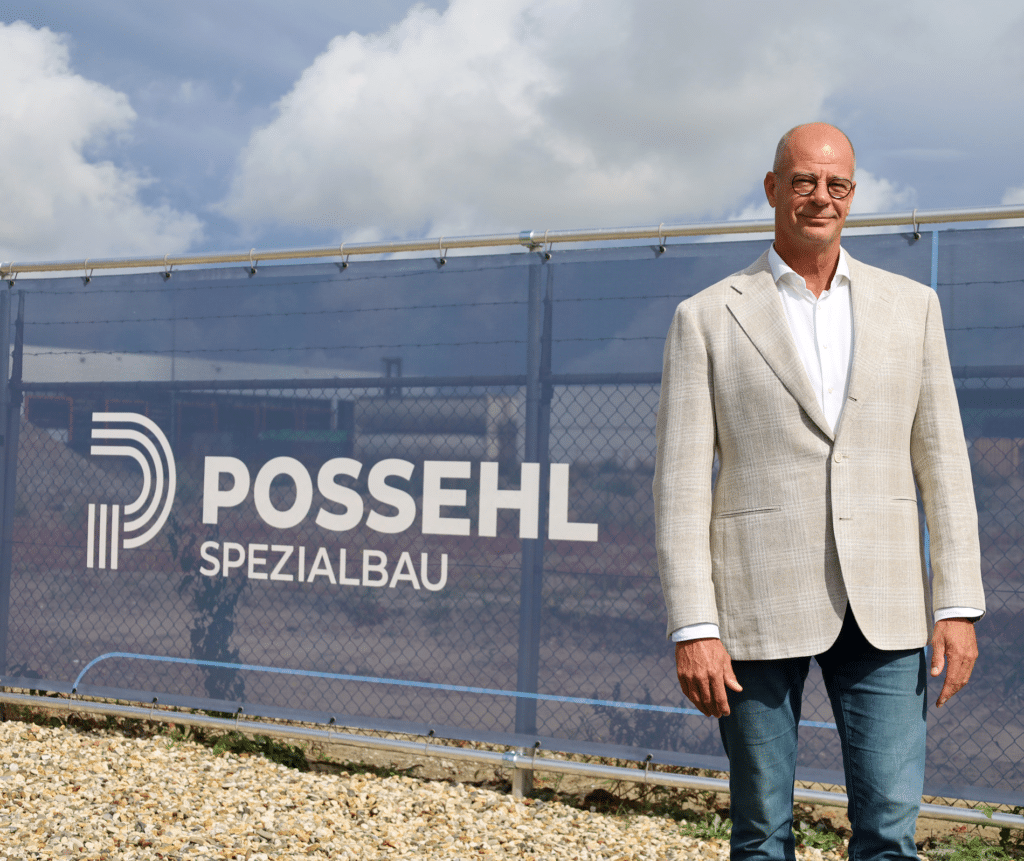
On average, an asphalt pavement lasts about twenty years. With a well-thought-out maintenance strategy, its service life can be extended to thirty to forty years, and sometimes even longer. Traffic plays an important role in this. “A single pass by a truck is equivalent to the load of about 14,000 passenger cars,” says Erik de Leeuw, director at POSSEHL Spezialbau. “But oil, fuel, animal carcasses, aphids, pollution, rain, and even Saharan sand also damage the bitumen. As a result, the asphalt gradually loses its flexibility.”
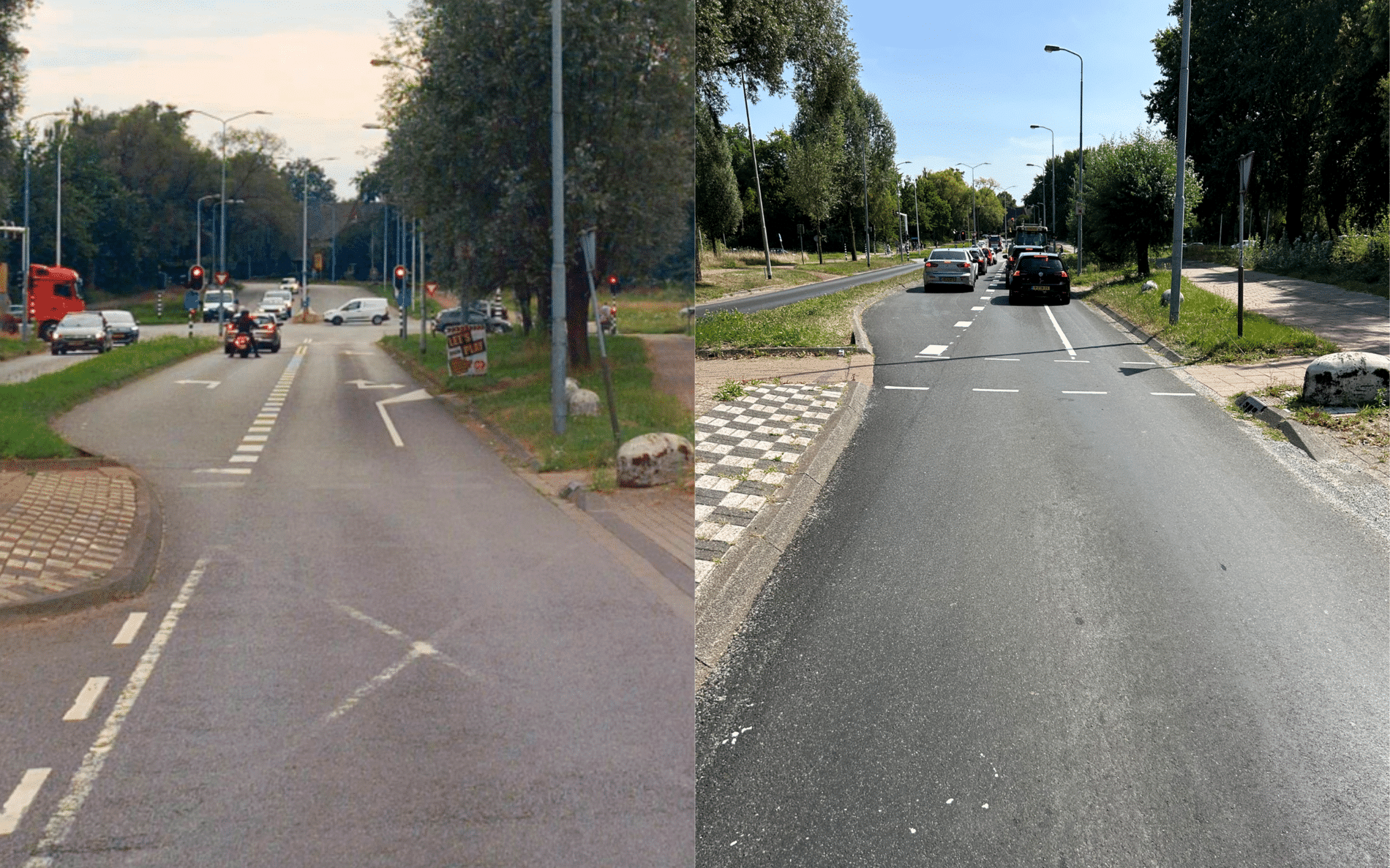
The initial aging process occurs in the bitumen, well before any damage becomes visible. Yet maintenance is often postponed because the road surface still looks good. Rejuvenation agents can slow this process by restoring the bitumen’s flexibility. “Ideally, this should be done three to four years after construction,” says Erik. “With a product like AsKo (LVOv), the service life can be extended by seven to eight years, and the treatment can be repeated later.” This helps keep the asphalt in good condition for longer.
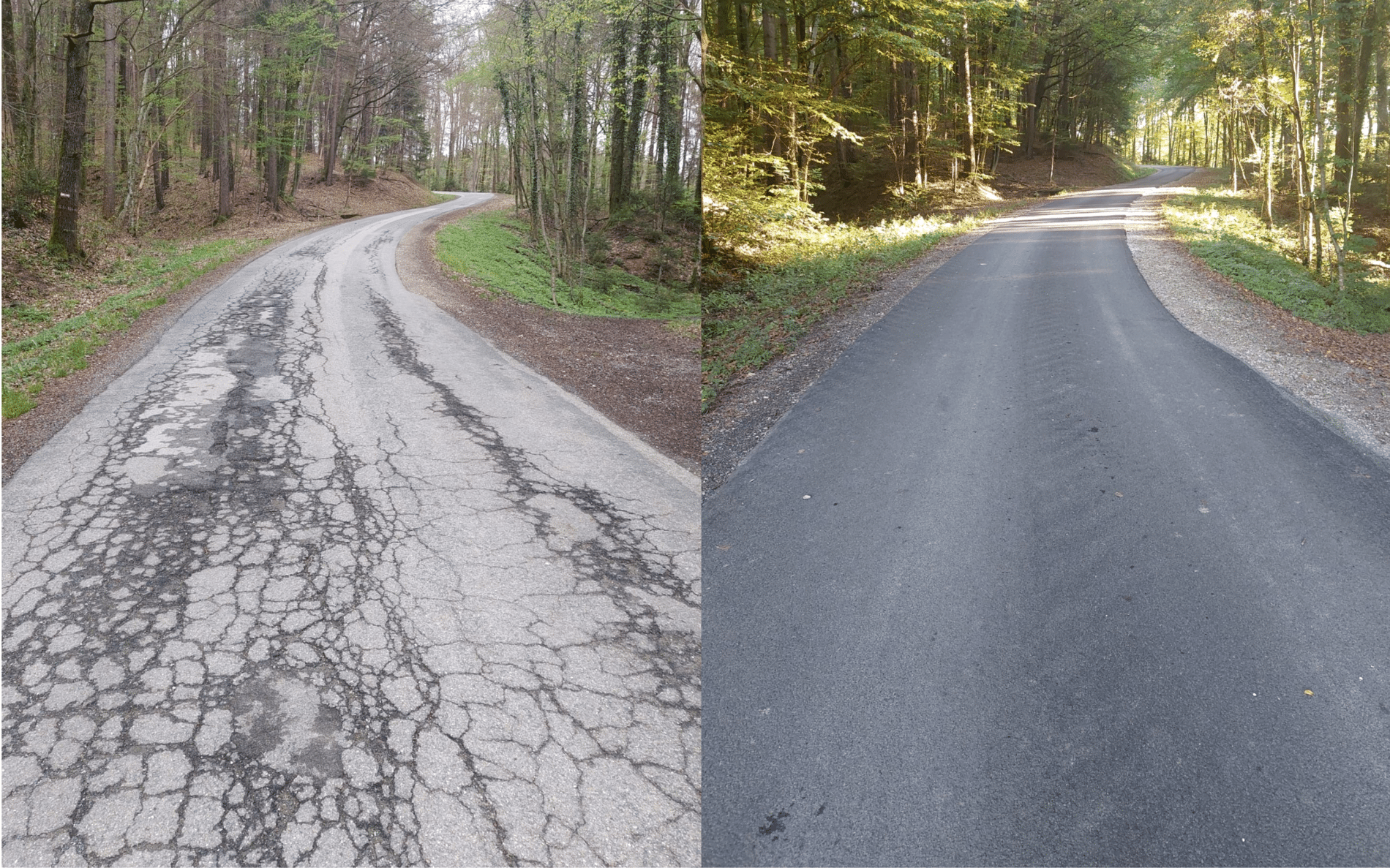
When cracks form, water and road salt penetrate deeper into the asphalt. Freeze-thaw cycles cause the damage to worsen and lead to rutting. At this stage, resurfacing alone is often no longer sufficient. Traditionally, this is followed by milling and the application of new hot asphalt: effective, but costly, energy-intensive, and disruptive to the surrounding area.
A good alternative at this stage is MicroAsphalt, which involves applying two thin layers of emulsified asphalt concrete. The first layer levels out unevenness and cracks, while the second protects the asphalt and seals the surface. Moreover, because of the cold application and quick execution, the impact on the environment and traffic is significantly less than with traditional replacement.
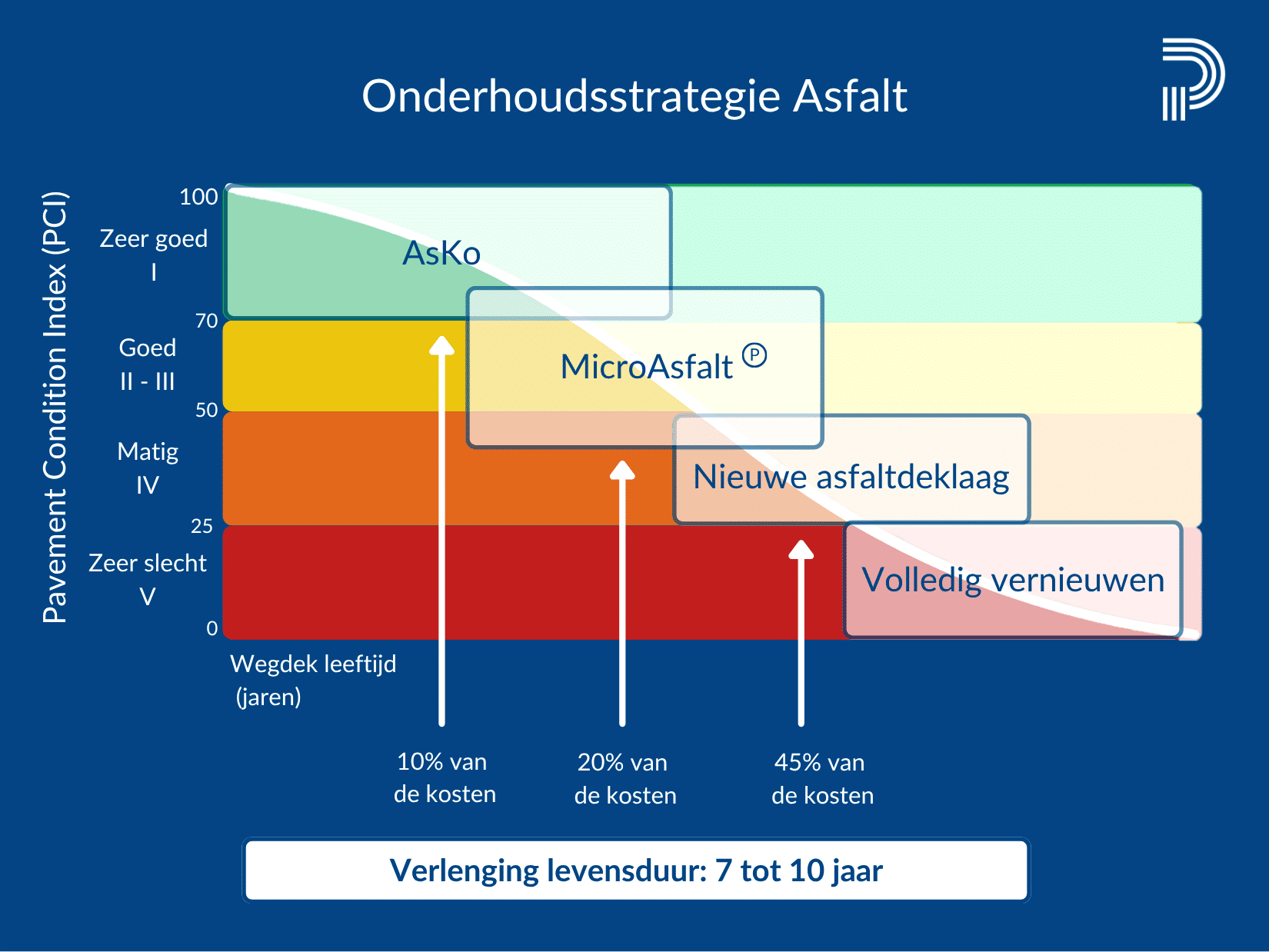
The key lies not in a single measure, but in the right combination and timing. As the illustration shows, phased maintenance can lead to a completely different lifecycle strategy:
As a result, the road surface remains in good condition for longer, and the need for replacement is delayed.
This offers immediate benefits:
The greatest environmental benefit comes from preventing replacement. By extending the life of asphalt, the most energy-intensive stages of its life cycle are avoided.
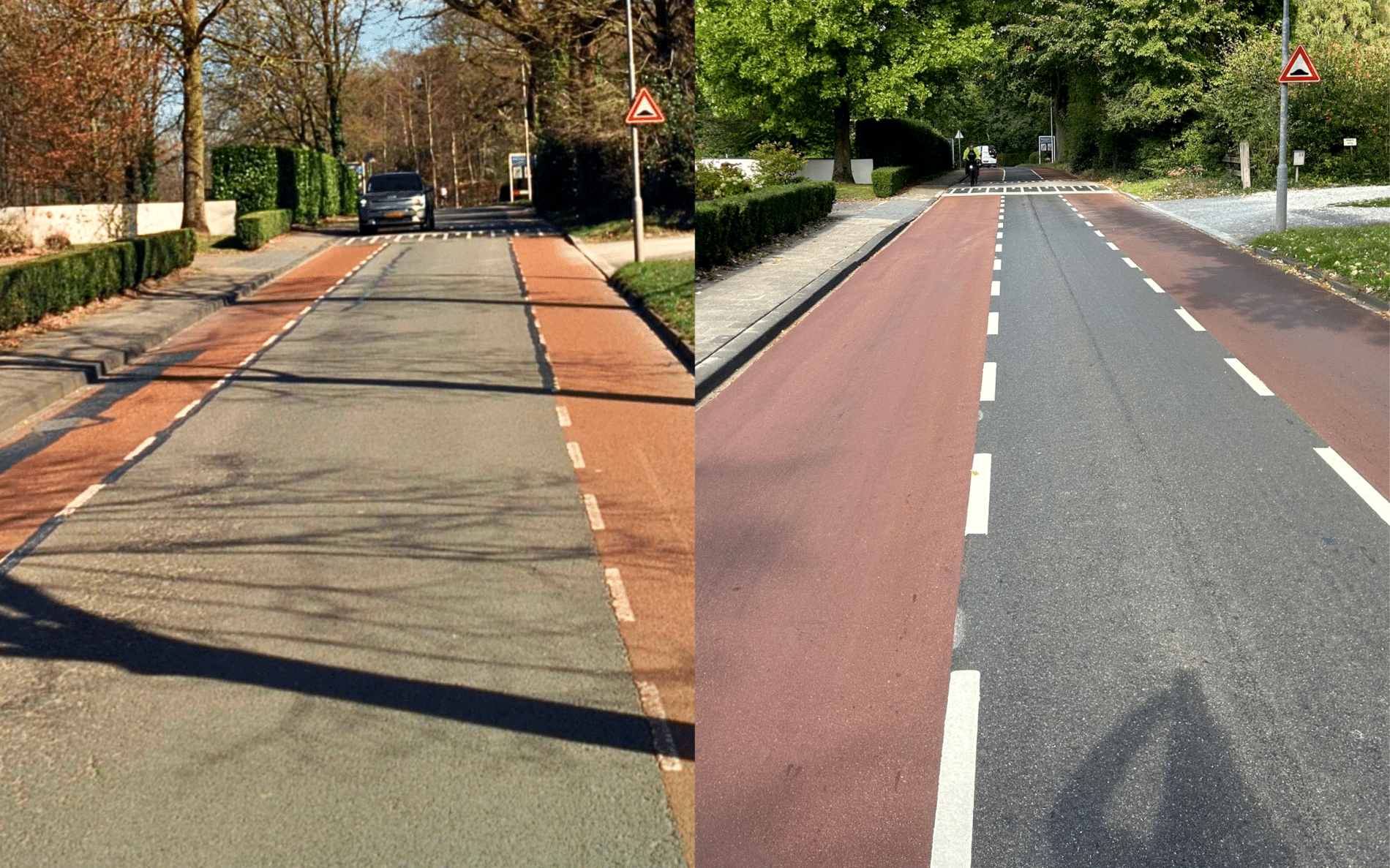
The combination of lower costs and reduced environmental impact makes this approach attractive to many municipalities. A large portion of the road network dates back to the 1960s and 1970s, while traffic volume has increased significantly since then. At the same time, maintenance budgets are under pressure. By focusing on maintenance that extends the lifespan of roads rather than reactive replacement, municipalities gain better control over costs, scheduling, and quality. Roads remain safe and reliable for longer, without the need for large-scale reconstruction projects.
“The greatest benefit isn’t in replacing things, but in preserving what’s already there for as long as possible,” Erik concludes. “By taking action at the right time, you can avoid more extensive and costly interventions. Those who perform maintenance at the right time achieve more with lower costs, lower CO2 emissions, and less environmental impact.”
Neem dan rechtstreeks contact op met Possehl Contracting Company B.V..
 Contact opnemen
POSSEHL Spezialbau is an international expert in top layers for traffic, recreation, industry and airports, among others. Whether for bicycle paths, the most creative squares or asphalt maintenance, we will be happy to discuss what we can do for you. Thermoflex® - Colorfast durable top layer In the 1980s, we developed our own coating: Thermoflex. We have already [...]
Bekijk Bedrijfsprofiel